




“The strength of this research network is really everybody can learn from each other and utilize the different expertise that different groups, different labs have in this group.” Wengzhong Xiao
Danielle Meadows, Vice President of the Open Medicine Foundation’s Research Programs and Operations had a great idea – get the Directors of all five OMF-funded research centers together at the end of the year to talk on what they think is going on in ME/CFS.
The Open Medicine Foundation
With over 30 research projects listed on their website (!), the Open Medicine Foundation is surely the largest private funder of ME/CFS research in the world. One look at their list of projects makes it clear they have their fingers in many pies.
The Open Medicine Foundation has dozens of ME/CFS projects underway.
With their research centers spread across four countries (US, Canada, Australia, Sweden), they’re an international effort and are ensconced in top universities (Harvard (1st ranked medical school in US), (Stanford (6th ranked medical school in US), Uppsala University (“high-quality, research-intensive medical ecosystem”), Melbourne University (“top-tier medical research in Australia and upper-tier globally”), CHU Sainte-Justine / Universitie de Montreal (“high-output, research-intensive academic health ecosystem”).
Note the focus on PhDs among the Directors, the wide variety of backgrounds, and the emphasis on biochemistry and molecular biology. Biochemists, geneticists, pulmonologists, metabolomicists, and neurochemists are all represented. The focus, clearly, is on getting at the molecular roots of ME/CFS.

- ME/CFS Collaborative Research Center at Stanford – Ron Davis, PhD (biochemist, geneticist, and inventor).
- The Ronald G Tompkins Harvard ME/CFS Collaboration – David Systrom, MD (pulmonologist/exercise physiologist) and Wengzhong Xiao (statistician).
- The Melbourne ME/CFS Collaboration – Chris Armstrong PhD (metabolomics).
- The ME/CFS Collaboration at Upsalla University – Jonas Bergquist, MD, PhD (analytical chemistry and neurochemistry).
- ME/CFS Collaborative Research Center at the CHU Sainte-Justine/ Université de Montréal – Alain Moreau, PhD (biochemistry, molecular medicine, arthritis).
They’re poking at the “elephant” from different angles. The difference from the blind men poking at the elephant is that, with their regular zoom calls, they’re constantly in touch with each other. One center’s work informs the others.
Let’s see what they’re thinking about ME/CFS at the end of 2025.
THE GIST
-

The Open Medicine Foundation has dozens of ME/CFS projects underway.
Five research centers spread across four countries. Dozens of research projects. The biggest private research ME/CFS research effort in the world. Where better to go to find out where we are with ME/CFS at the end of 2025 than the Open Medicine Foundation?
- One theme emerged in a video of the OMF Center directors. While NIH funding is tight, researchers are more eager than ever to study ME/CFS, and private funding is increasingly helping to fill the gap.
- Indeed, ME/CFS is no longer considered an impenetrable, waste basket diagnosis. It’s a very complex disease, for sure, but so many research efforts are converging that it’s core components are coming into view.
- Disturbed blood flows are one. Preliminary results suggest multiple issues with the red blood cells, for instance, are present, including a tendency to break down during exertion.
- Ron Davis considered the tantalizing possibility that the severity of ME/CFS simply reflects how many cells are affected. More severely ill people simply have more cells that are affected by the same process.
- Chris Armstrong similarly speculated that the same process is underway in different types of long COVID (kidney long COVID, heart long COVID, and ME/CFS-like COVID) but in different cells.
- If these researchers are right, then the road to long-COVID recovery becomes much simpler. Understanding what’s happening in any form of long COVID will inform what’s happening in every other form.
- The Itaconate Shunt Hypothesis produced by Robert Phair indicates how much more energized this field has become. Ron Davis’s presentation at the University of Utah ultimately resulted in six researchers working on the Itaconate Shunt Hypothesis in various ways. The hypothesis – which posits that a chronically turned-on itaconate shunt is both draining energy and increasing inflammation in ME/CFS – has been tested in two models (E. coli, zebrafish), and thousands of drugs have been assessed.
- One of the top medical universities in the world – Stanford University – presents a case study in how interest in ME/CFS has increased. Ron Davis found it rough going when he first tried to interest researchers in ME/CFS, but major researchers, including Mark Davis, the mighty Snyder lab, and Michelle James, are now studying the disease.
- As we see ever more evidence that blood flow is a problem, muscle biopsy studies suggest that even at baseline, the mitochondria may be impaired in novel ways in ME/CFS. Studies underway at the OMF to stress the muscles are sure to uncover more issues.
- While recovery remains rare, when people with ME/CFS recover – even those who have been very ill – they can recover completely. This, Ron Davis, suggested, indicates that ME/CFS is not like heart disease or stroke where irremediable tissue damage has occurred. Even though people may feel horrible and may be so functionally impacted, they should know that complete recovery is likely possible once the right treatments have been identified.
- Coming up – a talk with Danielle about the OMF’s most exciting project – its big Bioquest study to uncover a biomarker.
Donation Drive Update
Thanks to everyone who have brought us at the end of the year to about 75% of the way to our goal!
Supporting the work of our private organizations is a major goal of Health Rising,. How nice it is to end the year on a positive note that demonstrates the impressive reach of our largest private research funder – the Open Medicine Foundation. Our private organizations are moving the field forward in creative ways that publicly funded research cannot. If learning how your donations are contributing to the end of ME/CFS and long COVID is helpful, please support us!
Health Rising is not a 501 (c3) non-profit.
David Systrom
David Systrom reported that a sea change has occurred in how this disease is being viewed. ME/CFS is no longer a catch-all diagnosis. For instance, Systrom said “incontrovertible” evidence indicated that overly relaxed blood vessels are present. (It’s always nice to see the word “incontrovertible” in relation to ME/CFS.) Blood pooling prevents blood from returning to the heart in sufficient quantities (preload insufficiency), thereby limiting blood flow to the muscles. Problems with blood flow are a major theme in ME/CFS, and we’ll see other ways that they appear to be impacted in this blog.
Systrom introduced Mestinon, a drug that has been able to solve, or help, the preload problem in some patients. By doing so, it’s one of the rare drugs that’s able to increase energy production during exercise (peak VO₂), as well as cardiac output, and help with orthostatic intolerance. The Open Medicine Foundation LIFT trial, which is assessing Mestinon and low dose naltrexone (LDN), is attempting to learn who benefits from these medications and why.)
Ron Davis
When Ron Davis speaks, a “world” tends to come out. It’s never just about a research study. There’s the approach, the funding, the underlying hypothesis, the thought experiments, and the state of the field.
Enrolling researchers to work on ME/CFS is getting easier…
It’s clear Davis has a yearning to test hypotheses. There’s data gathering and hypothesis testing. He’s done both – the severe ME/CFS study was a data gathering study – but one has a feeling that his heart is in hypothesis testing; i.e., he wants an explanation. A hypothesis that explains things is, of course, the holy grail.
He started out saying, “we are really are trying to figure out a hypothesis that makes some sense”, and “we’ve switched from just measuring things, trying to collect data on the patients” to testing hypotheses.
That brought up the increasingly interesting Itaconate Shunt Hypothesis developed by Robert Phair. The hypothesis’s ability to link energy production to immune dysfunction and an infection is nothing if not exciting.
The saga starts, where else, but in the mitochondria, in particular, the citric acid, or Krebs, cycle. The Krebs cycle forms the “first circle” of aerobic energy production. It’s where the resources that the electron transport chain needs to generate ATP are produced.
There’s nothing the matter with the shunt per se. The shunt normally operates during an infection. During an infection, the “shunt” moves carbon out of the citric acid (or TCA or Krebs) cycle into the cytosol of the cell, where it’s used to produce inflammatory products. (Interestingly, citrate – which may be affected in ME/CFS – is one of the products that gets lost to the mitochondria.) The shunt also inhibits complex 2 in the electron transport pathway; i.e. it inhibits ATP production.

The shunt’s location upstream of the inflammatory process means turning it off could have major effects. JAK/STAT inhibitors may be able to do that.
The immune cells usually cope fine with this loss of mitochondrial activity. They rev up their glycolysis engines and use the itaconate to produce the inflammatory factors they need to suppress an infection.
Over time, the shunt has become increasingly important. First found in monocyte/macrophages, it’s now been found in neutrophils, neurons, and liver cells, and is suspected to occur in two of the biggest cells in the immune system – the T and B cells.
So long as the shunt turns itself off at some point, it’s helpful. The key question in ME/CFS is whether it’s gotten chronically turned on. The idea that something got turned on during an infection that never got turned off is, of course, a major theme in ME/CFS from the beginning.
The itaconate pathway’s position “upstream” in the inflammatory process means it has the potential to affect a large part of the immune system. Plus, because it inhibits ATP production (aerobic energy production) in at least two ways, the itaconate shunt could contribute to the fatigue found in “sickness behavior” which causes us to take to our beds during an infection.
If that’s so, a chronically activated itaconate shunt contribute to exercise intolerance and PEM found in ME/CFS and other diseases. Robert Phair believes that it may also be producing brain fog. It might also produce something like Bob Naviaux’s “cell danger response” where the cells remain hunkered down and unresponsive. We’ve seen that scenario in spades in Maureen Hanson’s studies, which have shown that a pervasive “failure to respond” to stress appears to be present.
New Research Group
A couple of drugs may be able to turn off the shunt.
Things really got moving with the itaconate shunt hypothesis about a year after Ron Davis gave a keynote address at the University of Utah. The hypothesis was right up Baldomero M. Olivera’s alley. A researcher at the University of Utah, a co-author of over 400 studies, and a member of the Open Medicine Foundation’s Scientific Advisory board, Olivera, who has specialized in the biochemistry of toxins, got to work. He turned to Kelly Hughes, a microbiologist, who inserted the gene for itaconate production into E. coli and then activated it. With the itaconate gene turned on, E. coli grew very slowly, and the first test was completed.
Then he put the itaconate gene into different organs in zebrafish. Hughes has developed a large-scale zebrafish testing apparatus that enables him to quickly assess the effects of various drugs. Hughes tested 1,000s of approved drugs and found 2 or 3 that can turn off the shunt, which potentially could be tested in ME/CFS. A successful drug could either release the shunt’s lock on the immune system or shut it down. The first could lead to a cure; the second to improvement and ongoing treatment.
Speaking of drugs, there’s the ever-present JAK/STAT pathway…
That JAK/STAT Pathway
With no less than three large studies underway, the long-COVID world has gone bananas over JAK/STAT inhibitors. Indeed, Jonas Bergquist recently published a paper suggesting that genes driving the inflammatory JAK/STAT pathway activated in long COVID while mitochondrial genes were downregulated.
What about ME/CFS? One promising outcome of Phair’s work is that JAK/STAT drugs may also help shut off the shunt in ME/CFS.
A Growth Field…
I remember Ron Davis beating the bushes just about everywhere, but particularly at Stanford, to get researchers interested. It was really tough going at first, but that’s changed. Davis said the prevailing idea that ME/CFS is a psychosomatic disease has been dispelled, and getting researchers interested is “a lot easier”. Consider the University of Utah, where six researchers are involved in itaconate shunt research.

Getting NIH grants is difficult for everyone right now, but more and more researchers are getting enrolled in studying ME/CFS. Private donations have been crucial.
And then there’s ME/CFS boom underway at Stanford. Mark Davis and Vishnu Shankar recently published a fascinating paper linking T-cell problems with oxidative stress and energy production. Michelle James, whom Davis called one of the top imaging specialists in the world, not only holds an NIH grant to study ME/CFS but she also serves on the Open Medicine Foundation’s Advisory Board.
Mike Snyder and his “Snyderverse” at his groundbreaking Stanford lab have begun a study to assess symptom flares in ME/CFS. (“The Snyder Lab was the first to perform a large-scale functional genomics project in any organism, and has developed many technologies in genomics and proteomics.”)
Davis said people want to study this disease. The big barrier now is its sheer complexity and getting grants to study it. Thankfully, some “very generous” donors have been stepping in with what Davis called “essential” support. That donor support is particularly important right now given the chaos at the NIH. Davis said it’s very difficult right now for anyone to get an NIH grant, and even more so for ME/CFS.
(Jarred Younger recently announced that because he can’t get the funding for grants that have already been approved, he’ll be spending 50% of his time next semester teaching instead of doing research.)
Thought Experiments…
In one of Davis’s thought experiments, he asked himself, “Why is this disease so different in some people?” and “Why are some people so much worse off?” (In “The Puzzle Solver“, Tracie White describes Davis’s thought experiment where he simply lies down and turns puzzles over in his mind.)

Could the same process be occurring in all types of long COVID or ME/CFS but in different cells?
Davis reached a fascinating yet simple conclusion. Some people are sicker than others simply because more of their cells are affected. That’s potentially great news for the more severely ill, as it suggests that the same treatment could help everyone.
Chris Armstrong will expand on this idea later in the webinar, suggesting that the same process is underway across the different forms of long COVID (heart long COVID, kidney long COVID, lung long COVID, ME/CFS-like long COVID); it’s just occurring in different cells.
Let’s hope he’s right. That would mean that a breakthrough in one type of long COVID would be a breakthrough in all types of long COVID. That suggests that curing one kind of long COVID could cure all types of long COVID.
DOMINOME (Domino-ME- get it?) Project
Has the OMF’s Dominome project found another red blood cell issue?
Alain Moreau seconded Ron Davis’s assertion that things are starting to build. Stating, “it took us a lot of time and support”, Moreau pointed out that what used to be kind of a sore spot for the OMF – producing publications – has turned into a strength. Over the past 12 months, OMF researchers have published no less than 17 papers, all on ME/CFS. (That doesn’t count Ron Davis’s recent glymphatic or Bergquist’s long-COVID gene transcription paper).
Asserting that the brain cannot be viewed as a separate organ but must be studied in conjunction with the rest of the body, Moreau referenced the OMF’s Dominome project –a collaboration between the Melbourne, Montreal, and Uppsala centers.
The project is using a stress test to assess metabolites, proteins, and gene expression before, during, and after exercise. This has been done before (except perhaps not during), but the really novel thing about this study is that it’s using Moreau’s cuff to assess the effects of very mild exertion in housebound patients.
Preliminary findings suggest OMF researchers may have identified another red blood cell issue. It appears that exertion may lead to increased red blood cell breakdown. The consequences of that potentially loom large. Because broken down red blood cells bind to nitric oxide, which opens the blood vessels, high levels of red blood cell breakdown could result in more vasoconstriction, fewer blood vessels feeding the muscles, and worsened microcirculatory blood flows.
This would seem to fit well with Slaghekke’s finding of fewer capillaries feeding the muscles of people with ME/CFS.
A finding that people with a specific genotype (haptoglobin – HP2-1 variant) may have more problems with exertion fit perfectly. Because haptoglobin cleans up red blood cell fragments – which cause high amounts of oxidative stress – lower haptoglobin levels could result in more oxidative stress, more cellular damage, and lower energy production during and following exercise. They could also increase permeability of the gut and the blood-brain barrier, leading to systemic inflammation in the body and brain. (!)
Has a key component of exercise intolerance and PEM been found? These are preliminary results, but it’s fascinating to see how many different ways to impair muscle functioning: a) appear to have been found; and b) how well they seem to fit together.
The Muscle Biopsy Study
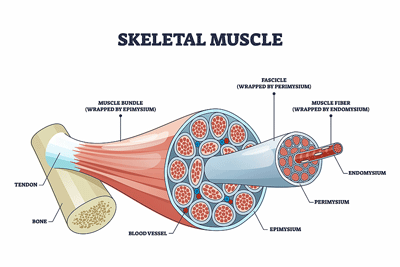
A big yes to another muscle biopsy study!
That brought up yet another OMF study – the muscle biopsy study. Preliminary results suggest a perhaps unique mitochondrial problem involving citrate synthase – a metabolic sensor in the Krebs (TCA, citric acid) cycle may exist in ME/CFS and long COVID – and electron transport problems (the other side of ATP production) is inhibited in some patients.
That was at baseline. Next, they will stress the muscles and see what happens. You can see how one OMF study informs another.
Nothing That is Broken Cannot Be Fixed
Ron noted that the recovery stories suggest that for many people, nothing that is broken that cannot be fixed in this disease. When people recover, they really recover. That suggests that ME/CFS does not cause damage in the same way that a heart attack or a stroke does.
Even though ME/CFS feels like some horrible damage has occurred, and is so functionally debilitating it seems like there’s no way out of it, that’s not what the evidence suggests. If the right treatment is found, a complete recovery is possible.

Recovery stories suggest that when the right treatment is found, for many people, nothing that is broken cannot be fixed.
Ron didn’t mention Whitney, but Whitney Dafoe is a good example. Whitney was unable to communicate for years. One would have thought his brain would have been affected, but as soon as he became able to communicate again, it was clear his brain was just fine! One would have thought that after being tube-fed for years, his stomach would never be able to work again, but at some point, he began to be able to eat again. After not being able to speak for years, now he can speak.
Ron said that provides a clue: the body feels terrible, but it’s not terribly damaged in the way that a heart attack or a stroke causes damage. Of course, we’ve seen that in the brain scans, which don’t show the kind of damage that occurs in, say, multiple sclerosis or Parkinson’s disease.
Free Flying Conjecture
While Ron didn’t talk about “signaling”, signaling came up in spades in a recent study. Some time ago, Suzanne Vernon suggested that dysfunctional signaling could cause ME/CFS. This makes perfect sense in a disease where precious little evidence of overt damage has been found.
Perhaps the body’s systems have become discombobulated and shut themselves down (cell danger response, failure to respond). This seems to hearken back to Nancy Klimas’s hypothesis that ME/CFS patients’ bodies have become stuck in a suboptimal state of functioning and simply need to be moved back into the proper state. Her supercomputer modeling suggests that you don’t need to mend a bone or repair a tissue; you simply need to reset the system.
Dan Clauw’s belief that diseases like FM and ME/CFS are primarily sensory disorders might make sense as well. An overloaded sensory system would probably do what overloaded systems do – it would try to shut things down and put the body in safe mode; i.e. it might try to save itself by initiating something like the cell danger response / aka sickness behavior and shut down energy production.
The video highlighted how much work OMF researchers are doing, but it didn’t cover the most exciting study (to me) the OMF is doing – the huge Bioquest study that will attempt to find one of the holy grails in ME/CFS – a biomarker.
A talk with Danielle about that study is coming up 🙂
Donation Drive Update

OMF researchers are looking at ME/CFS from different angles – and are finding connections.
Thanks to everyone who have brought us at the end of the year to about 75% of the way to our goal!
Supporting the work of our private organizations is a major goal of Health Rising. How nice it is to end the year on a positive note that demonstrates the impressive reach our largest private research funder – the Open Medicine Foundation – has.
Our private organizations are moving the field forward in creative ways that publicly funded research cannot. If learning how our private organizations are contributing to the end of ME/CFS and long COVID is helpful, please support us!
Health Rising is not a 501 (c3) non-profit.



It would be welcome to awake in the AM after a terrible night of unrefreshing sleep to feel “ok”, not like the usual of “death warmed over”. I have all the symptoms of this illness; yet I am fortunate in clinical terms to express a “mild” degree of dysfunction which allows me to keep my life from falling apart. The margin between functional and not able to be functional is perceived to be very slim. A heartfelt thanks to all who dedicate their lives to discovering the pathogenesis and the cure.
I totally agree! That was the absolute worse symptom I had. I could deal with the pain, the fatigue, the brain fog, even the severe legs cramps, but the lack of refreshing sleep was the worst. Hope you find a solution that works or you soon!
Thank you Cort for this amazing work. Thank you. Wishing you health and strength in the New Year. Truthfully, the patient who is suffering for years on end is just looking for an end date to suffering, and we just don’t seem to be getting one. Gloom sets in as a result, and despair. Prisoner know when their term is up, but the incarcerated ME pt has not end date, except if he finishes himself off. so, when will there be serious help? Plus Systrom needs to find another drug–Mestinon is not well tolerated and many pts have stopped it,
Please post some hopeful news folks because this is all too much. Best to all.
Have you tried Abilify? They mention in the video that they had some success with people using Abilify for 4 months when it didn’t work short term. Maybe ask your DR about it. Blessings!
Hello Helene,
I’m sorry that you suffer. I’m on LDN 4mg daily and it’s done wonders. if you haven’t tried it, maybe that’s a possibility.
Kind regards
Tell researchers Drs. Paul Cheney, [USA, deceased] Dan Peterson &
Sarah Myhill [UK] found 90+% ME/CFS patients had/have PFO, patent
foramen ovale heart valve malfunction. Dr. Keith Scott-Mumby [UK,
USA] may be helpful.
USArmy Erik Johnson also is knowledgable re ME/CFS, w/Lisa Petrison.
Thanks for remembering me.
Our local North Lake Tahoe newspaper Moonshine Ink just revisited the
mystery illness outbreak that happened 40 years ago.
You might want to check it out.
https://www.moonshineink.com/tahoe-news/forty-years-ago-a-mysterious-outbreak-plagued-tahoe-truckee/
-Erik
Erik….can you tell us how you recovered from mold illness?
I know avoidance but how did you kill the mold inside of you?
Chronic Fatigue Syndrome was based on a group of people who suffered from inhalation of toxic compounds from mold.
At the time, doctors only saw mold as allergy or infection.
It wasn’t really a matter of mold inside us, in spite of secondary fungal infections from immune suppression.
CFS was a matter of extremely violent hypersensitivity to miniscule trace amounts of the offending agent, very much like a severe peanut allergy.
Imagine what would happen to a person with a peanut allergy if he was hit with a few molecules every day. It would wear him out.
Avoidance was necessary to let the immune system calm down and restore some equilibrium. This strategy has proven superior to any drug that anyone has ever tried.
Thank you so much for all your blog posts. They have been a great inspiration. I have used knowledge from Health Rising to get AI to come up with coherent explanations for the ME/CFS disease mechanism. 10 points summary of the proposed “2025 disease mechanism” for ME/CFS https://followmeindenmark.blogspot.com/2025/12/10-points-summary-of-proposed-2025.html
Hi Helle, perhaps a naive thought, but did you also ask the AI model that you’re using to come up with solutions to the disease mechanisms? I realize this is very likely beyond its capability but it would be interesting to see its response. And I wonder if there are AI models along the lines of Alphafold that might be used for ascertaining potential paths to treatment.
It’s worth a try. I inputted all my history and test findings into ChatGPT and it basically came up with the same answer as Dr. Ruhoy did – mitochondrial problems.
Hi Brad
Yes, I do ask AI to come up with solutions and treatment options. But I don’t use the AI answers on the blog. I don’t feel it safe, I am not an expert. And mostly the AI answers are already known, fx like naltrexone. But I am trying to get some Danish researchers interested in digging deeper. And I have over 200 pages with AI answers and they are getting better and better. I do believe that 2026 is going to bring us almost all the answers we could wish for.
I wish everyone a good and even better 2026! Thank you Cort for your intellectual contribution to this terrible awful disease. Let’s hope that there will finally be a real breakthrough for us!
I second that! A Happier, Healthier, New Year to all! Blessings!
We live in fascinating times! Thanks for this wonderful writeup/tie-together/interpretation … i can literally feel the momentum, so great to see so many threads coming together in a collaborative environment!
Perfectly said.
Thanks for this great article. What were the two to three drugs that Hughes found that shut off the shunt?
I supported this project because my daughter and daughter-in-law were severely affected by long covid syndrome. They have both mostly recovered by a lot of physical therapy, lifestyle changes, clean diet and hope.
I (their mother and MIL ) was affected by a similar syndrome twice in my life; once by a severe case of parvo virus as an adult and another time by pneumonia.
The misery of the symptoms as described here was the same.
These studies are a large ray of hope that researchers are dogging this terrible disease, and the symptoms of other severe infections, down. I hope you receive the funding you need to continue this valuable research and find a cure.
Bless you.