




Health Rising’s Recent Hiatus
 The blogs stopped for quite a spell. This is not because of health problems or my taking a break. Instead, I’ve been immersed in what’s turned out to be a large DIY project to upgrade the solar system in the trailer I live in. I had no idea it was going to take up so much time. I hope to start installing it in the next week or so and the blogs should proceed more or less normally after that. Now, onto the blog!
Geoff’s Translation
The GIST
The Brain Inflammation Collaborative
“We support people who are affected by brain inflammation but are often not included in clinical research or trials.”
“We want to demonstrate that neuroinflammation is not a fringe theory but a foundational principle in understanding mental and physical health”. The Brain Inflammation Collaborative

Making ME/CFS visible has been a common theme. There was Dorothy Wall’s 2005 “Encounters with the Invisible” book, Mari Canon’s “The Invisible Fight”, and Dr. Ruhoy’s recent “Invisible No More” book. Now we have a new take on the visibility theme – one that applies not just to ME/CFS but to long COVID and scores of illnesses of brain inflammation – the unhide® Solve Together Unified Platform run by the Brain Inflammation Collaborative.
Recently I spoke with Christy Jagdfeld CPA, co-founder and President of the Brain Inflammation Collaborative (BIC) and Scientific Director, Meghan Fitzgerald PhD (Neuroscience and Neurology). Both have lived experienced with these diseases (Christy – her daughter; Meghan – long COVID).
For Christy Jagdfield, her youngest daughter kept getting sick. As a baby she had thrush 4 or 5 times. When she was three, she battled strep throat for an entire year. One year, she experienced more than seven infections. Her autonomic nervous system issues (racing heart) started at five. (Her doctor said she was just more aware of her body.)
Flat feet, ankle, knee and wrist pain, and some double-jointedness pointed to Ehlers-Danlos Syndrome (EDS) (missed by the medical profession). Repetitive behaviors (blinking eyes, thumb movements, shrugging shoulders) began with an abscessed tooth in the 5th grade.
Then, in the summer between 6th and 7th grade, a tick bite escalated everything. Despite immediately going on antibiotics, her daughter experienced dizziness, light-headedness, nausea, terrible stomach pains, joint pain, unexplained behavioral and mood changes, insomnia, separation anxiety and irrational fears.
As she looked for help, at times Christy experienced the eye-rolling, and then angry and frustrated doctors that so many of us have experienced.
THE GIST
 Making ME/CFS visible has been a common theme. There was Dorothy Wall’s 2005 “Encounters with the Invisible” book, Mari Canon’s “The Invisible Fight”, and Dr. Ruhoy’s recent “Invisible No More” book. Now we have a new take on the visibility theme – one that applies not just to ME/CFS but to long COVID and scores of illnesses of brain inflammation – the unhide® platform by the Brain Inflammation Collaborative.
- The Brain Inflammation Collaborative was co-founded in 2021 by Christy Jagdfeld after her daughter suffered through a series of mysterious illnesses. IVIG ultimately returned her daughter to health (see blog), but Christy experienced the same dismissals by doctors that many of us have experienced.
- The Brain Inflammation Collaborative (BIC) and its database – the unhide® platform – was created to provide a way for people with brain inflammation illnesses like ME/CFS, long COVID, PANS, POTS, Sjogren’s Syndrome, MS to track their symptoms, produce reports, etc. and for to give researchers easy access to patients for their studies.
- Back in 2020, Solve M.E. created a similar patient registry which evolved into the You+ME registry which had much the same objectives. Patients could easily track their symptoms, input wearable data, take surveys, etc. and participate in research studies.
- In 2025, the BIC, Solve M.E., and two newer organizations, ChronicleBio and the Complex Disorders Alliance joined with CareEvolution to form an expanded platform called the unhide® Solve Together Unified Platform which includes pediatric patients (2 years and up), many more illnesses (30+ neuroinflammatory illnesses), pacing notifications/alerts, brain fog and treatment surveys, opportunities to engage in research and more.
- The unhide® Solve Together Unified Platform presently contains data on more than 3,000 participants, and has over 70,000 days of symptom data. Nearly half of the participants have provided wearable data and a quarter provided electronic health records. Most have ME/CFS or long COVID. A large, older population (20% over 65, 40% over 50) provides data on an understudied group.
- Gathering pediatric data is difficult and rare. Unhide® provides ways to quickly visualize what’s happening in a child’s health. Parents can print a pdf that demonstrates what a month in a child’s life looks, or how they are sleeping, or how they responded to treatments to help doctors that might otherwise dismiss a child’s needs understand what’s happening.
- When you join unhide®, you get the opportunity to participate in bevy of surveys and studies. The “What helps? What Doesn’t?” survey – is a quick easy, peasy 10-minute survey that contains 6 questions about treatments you have tried. It includes open-ended questions such as “What treatments helped you the most?”; “What treatments have somewhat helped?”
- It’s difficult to capture what brain fog is using standardized cognitive tests perhaps because it’s produced by “metacognitive” problems. (See blog for more). The Brain Fog Survey is a 20‑minute, online research instrument that asks simple questions that attempt to capture the metacognitive and real-world nature of brain fog.
- On the research side, unhide® makes researching these conditions easier and less costly by providing a recruitment database, by allowing researchers to target subsets of patients using wearable data, lab reports, duration, sex, sleep patterns, etc., and by giving researchers more access to housebound patients.
- The unhide® Solve Together Unified Platform also has the potential include omics (molecular) data and the Vassar Microbiome study is using the platform. Because unhide® includes so many different conditions, getting more omics data in it could allow us to understand which biological pathways are unique or common to each of these disease.
- Ultimately, the platform could provide a key role in understanding the commonalities and differences these neuroinflammatory diseases share.
- The platform is currently being used to enroll 1,000 trial participants from across the U.S. in the REVERSE-LC trial at Vanderbilt, the big SCRIPPS GLP-1 agonist (tirzepatide) long COVID (LoCITT) trial, and T-cell response studies at University at Mass. Note that the LoCITT trial can be done from home.
- Enrolling in the unhide® Solve Together Unified Platform is easy. If you were already in the SolveTogether platform ,you are already enrolled. If you aren’t ,you can find out more about the unhide® Solve Together platform here and sign up here.
 Making ME/CFS visible has been a common theme. There was Dorothy Wall’s 2005 “
An IVIG Success Story
Her daughter was lucky, though. Over time, Christy learned where to go – a Wisconsin dysautonomia center (now gone), and an Oklahoma researcher (Dr. Kern – now deceased) who was studying autoantibodies in postural orthostatic tachycardia syndrome (POTS).
As they traveled from Wisconsin to Minnesota, Massachusetts, and Oklahoma, the pieces began to fit together. Over time, her daughter was diagnosed with postural orthostatic tachycardia syndrome (POTS), Ehlers Danlos Syndrome (EDS) and mast cell activation syndrome (MCAS).
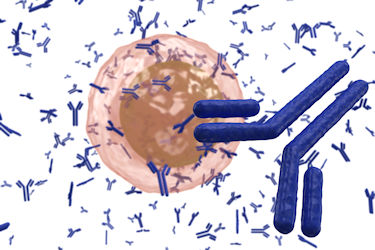
IVIG swamps the immune system with healthy antibodies.
A QSART sweat test in Wisconsin indicated she had dysautonomia. Next, a pinprick test by her local neurologist resulted in a small fiber neuropathy diagnosis. Antibody assessments in an Oklahoma study filled out the picture. With a diagnosis of autoimmune autonomic neuropathy, her daughter had enough evidence for an insurance company to pay for an IVIG trial.
The first dose resulted in aseptic meningitis (!) but they persevered. Within a month of the second dose, her nausea, most of her joint pain in her hips and knees (she also has EDS), and almost all of the neuropathy in her feet and hands were gone. She also gained 25 pounds (putting an anorexia diagnosis by a doctor to shame).
It took a year before the dizziness and light-headedness and other symptoms became manageable. By then she was able to return to competitive swimming. Three years into IVIG, she was swimming competitively – and did so for all 4 years of college. She is now getting a Master’s Degree in anesthesiology at the Medical College of Wisconsin. She still gets IVIG once a month. Attempts to wean her off it have failed.
Interlude: Major Long-COVID IVIG Study Underway
One of the RECOVER Initiative’s few big wins was its 200 person IVIG long-COVID study. The study, which was part of the autonomic nervous system branch of clinical trials, began in March 2024 and is expected to complete, depending on where you look, in July or November of this year. The trial is not only focusing on orthostatic intolerance and dysautonomia but is also gathering data on possible biomarkers.
We don’t know what they’re looking at, but if RECOVER can link success with IVIG to specific biomarkers, it could open the door to more widespread use of IVIG in long COVID. Since we know that IVIG works in some people with ME/CFS, the biomarkers could then be assessed in ME/CFS and other infection-associated conditions.
Interlude: A Single, Comprehensive, Autoimmune Test Coming?
Speaking of autoimmunity, getting an autoimmune diagnosis can open the door to many treatments, but getting one is not easy. Using something called immune receptor sequencing data, Stanford researchers produced a single test that was able to accurately identify dozens of autoimmune illnesses. The BIC, which regularly provides research updates, reported on this study in the video below.
The Brain Inflammation Collaborative’s Early Mental Health Focus
The BIC was cofounded in Dec. 2021 by Christy Jagdfeld. It originally focused on the effects of neuroinflammation on mental health (anxiety, OCD, depression, eating disorders, irritability), neurology (nerve pain, seizures, dizziness), cognition and fatigue. A disease called PANS (Pediatric Acute Onset Neuropsychiatric Syndrome), that is often triggered by infections or inflammatory responses and produces severe neuropsychiatric symptoms, was an initial focus.
Unhide #1 – the Database Begins
In collaboration with a Stanford researcher, BIC launched the unhide® project in 2023 to use AI to decipher what symptom tracking, wearable results and lab results could tell them about neuroinflammatory disorders. An important goal was to create a longitudinal registry that would track illness patterns.
The goals were clear: a) help parents and adult patients not go through what Christy and her family went through; and b) create a platform that would provide the infrastructure for, and stimulate, research.
The BIC believes that when a child presents with frequent colds or is displaying mental health symptoms, doctors should be asking parents their family history of autoimmunity, asthma, allergies, psoriasis, chronic sinus infections, strep infections, rheumatic fever, Epstein-Barr, MS, and Ehlers-Danlos Syndrome.
SolvingTogether

Solve M.E.’s 16-year-old You+ME registry was folded into unhide®.
Solve M.E. had created a similar database about a decade earlier. The SolveCFS Biobank and Patient Registry in was created in 2010 to track ME/CFS progression, symptom patterns, and provide patients for research studies.
In 2020, it became the You + M.E. Registry and Biobank and was expanded to include data from other illnesses, wearables (activity levels, sleep, heart rate, HRV, etc.), better symptom tracking, life event tracking, and was able to generate patient-generate reports for clinicians.
The database provided a “research‑ready cohort” that allowed investigators to more quickly and easily recruit ME/CFS and long-COVID participants, identify controls, and conduct remote studies (critical for homebound patients). The goal was to attract new researchers, provide rigorously characterized samples, and support big‑data style analyses. Over time, the database grew from a simple patient registry into the largest U.S. patient‑reported database for ME/CFS, long COVID, and infection‑associated chronic conditions.
While no master list of studies that have used Solve Together exists, it’s clear that it has been used to for biomarker discovery, genomic/epigenetic work, etc.
A Collaboration Blooms
In April 2025, Solve M.E., Brain Inflammation Collaborative (BIC), ChronicleBio, the Complex Disorders Alliance, and CareEvolution launched a partnership to accelerate research on ME/CFS, Long Covid, and Infection Associated Complex, Chronic Illnesses (IACCI’s). With that the unhide® Solve Together Unified Platform was borne.
Many of us probably don’t know these groups, but the fact that they exist speaks to the increasing interest in the post-infectious and complex, chronic disease space. We all know Solve M.E. – here are the rest.
- ChronicleBio is an AI driven program that is entirely focused on diseases like POTS, ME/CFS, long COVID, persistent Lyme disease, Sjogren’s Syndrome, IBS, migraine, intracranial hypertension, dysautonomia, etc., (but not fibromyalgia?). It’s working with major universities (Stanford, Oxford, UCSF), clinics (Bateman Horne Center, FourPeaks Healthcare), research groups (PrecisionLife), ME/CFS and long-COVID organizations (Solve M.E.) to train their advanced AI engines on patient data (biospecimens, wearables, multi-omics, and lived experience) and uncover patterns and improve diagnostics.
- The Complex Disorders Alliance (CODA) funds and supports research on neuroimmune axis disorders such as long COVID, ME/CFS, POTS/Dysautonomia, Chronic Migraine, Sjögren’s, EDS/HSD, MCAS, CRPS, Fibromyalgia, Endometriosis, Gastroparesis, Food Allergy, IBS, IBD, and others. Founded by Fidji Simo, its Scientific Advisory Board includes Ovid Armitay (former Solve M.E. chief), Peter Rowe MD, and Steve Gardner (President of Precision Life).
- CareEvolution – maintains the MyDataHelps database Solve M.E. created and the Brain Inflammation Collaboration recently took over.
Notice that all these groups are focused on breaking down silos and studying and understanding these diseases as they should be – as interrelated complex, chronic disorders.
The unhide® Solve Together Unified Platform
In 2025 the Solve Together database from Solve M.E. was incorporated into unhide® to form the unhide® Solve Together Unified Platform. Under the new collaboration, the platform includes:
- Children (age 2 and up)
- Many new diagnoses (neuroinflammatory and infection‑associated conditions)
- Wearable data
- Laboratory data
- Pacing notifications/alerts
- Long term assessments
- More mental health questionnaires
- Brain fog / treatment assessment surveys
- Spanish‑language access
- Open‑source data access for vetted researchers
- Cross‑disciplinary research integration to break down silos
Unhide® presently contains data on more than 3,000 participants, and has over 70,000 days of symptom data. Nearly half of the participants have provided wearable data and a quarter provided electronic health records. Most have ME/CFS or long COVID. A large, older population (20% over 65, 40% over 50) provides data on an understudied group.
Pediatric Element Fills an Important Gap
The pediatric element was particularly important as little data exists on pediatric populations in ME/CFS, long COVID or other IACCIs. Megan – the BIC’s chief investigator – noted that children weren’t believed at first to come down with COVID-19 or get long COVID. We now know that they do, and that the symptoms and illness trajectories in children differ from adults – and even differ according to the developmental stage of the children.
Children are difficult to study for a couple of reason. Informed consent is more rigorous and, because their bodies are changing, they’re more complex.
Unhide® provides ways to quickly visualize what’s happening in a child’s health. Parents can print a pdf that demonstrates what a month in a child’s life looks, or how they are sleeping, or how they responded to a treatment, to help doctors that might otherwise dismiss a child’s needs understand what’s happening.
Other than the RECOVER Initiative, unhide® is the only program I know that’s following and documenting the health of children and adolescents with long COVID over time. RECOVER’s cohort is huge (@ 24,000 children and adolescents) but unhide®’s program is more comprehensive as it’s built to include children and adolescents with many neuroinflammatory diseases (ME/CFS, fibromyalgia, POTS and many other diseases. RECOVER is still tracking children but it’s doing so with a smaller cohort now. The BIC will be tracking children’s health for the foreseeable future.
The BIC’s pediatric & adolescent neuroinflammation study is using patient reported data to track how neuroimmune disorders affect brain development, and daily function in children as young as 2 years old.
Surveys
When you join unhide®, you get the opportunity to participate in a bevy of surveys/questionnaires.
The “What helps? What Doesn’t?” survey – is a quick easy, peasy 10-minute survey that contains 6 questions about treatments you have tried. It includes open ended questions such as: “What treatments helped you the most?”, “What treatments have somewhat helped?”
As the data comes in and gets analyzed, the BIC will be trying to see if they can identify subsets of people more likely to respond to certain treatments.
A Metacognitive Disease?
Designed by Columbia University neuropsychologist Dr. Mara Kuvaldina, the brain fog survey is designed to capture the real‑world lived experience of brain fog across ages and diagnoses. “Brain fog” typically produces only small changes on standardized cognitive tests but can be very troubling for those who experience it.
There’s the normal mental work – reasoning, deducting, decision-making, paying attention to something – that standard cognitive tests are good at assessing, and there’s metacognitive work which monitors and manages how the work is going (that they’re not).
Metacognitive processes ask: “Did I understand the paragraph I just read? (No I have to go back and reread it.)”; “Is my answer likely correct? (I’m not sure – I need to look at it again)”, and can lead to conclusions like “I don’t trust my brain today”.
Subjective cognitive states (“My brain is not working well right now”) often do not track well with cognitive test results. Across diseases, people who report feeling cognitively impaired often do better than they expect on cognitive tests. That pattern is so persistent that a new term to describe it, “subjective cognitive decline”, was introduced in 2014. It should be noted that the presence of “subjective cognitive decline” – something many of us experience – does not reliably predict cognitive decline over the next ten years or so.
While many things can potentially cause brain fog (blood flows, mitochondrial problems, oxidative stress, BBB deterioration, etc.), something called the Bayesian brain hypothesis may help understand it better. In the Bayesian brain hypothesis, the brain is constantly trying to understand the world and predict what comes next so we can react appropriately.
When the brain gets it wrong and something it didn’t predict would happen happens, a “prediction error” is produced. At that point, the brain integrates the new information and updates itself so that the next time it’s able to predict better.
The idea in ME/CFS/FM, long COVID, POTS, Lyme disease, etc., is that neuroinflammation is throwing off the usual brain prediction and update process by sending the brain “noisy” signals that produce more and more prediction errors.
The brain’s attempt to deal with these “noisy” signals (this is all happening on an unconscious level) causes it to work harder, resulting in mental fatigue. Plus, extra burden imposed on it causes it to slow down. Note that this is all happening on the metacognitive level that most cognitive tests don’t assess.
Many people may adopt adaptive strategies like avoiding complex tasks, and double-checking everything.
All the problems in these diseases are metacognitive. Straight cognitive problems such as slowed processing speeds and reduced sustained attention exist, and there are ways to deal with them and the metacognitive hits that are present. They include taking scheduled micro-breaks before feelings of decline occur, pre-deciding when to take a break when the errors start to pile up, and pacing – include short rest intervals.
The Brain Fog Survey
The brain fog survey takes a new, and hopefully more illuminating, look at brain fog.
The brain fog survey is a 20‑minute, online research instrument that asks simple questions: “How do you personally experience brain fog”, how severe it is, how it affects work, social or school performance, how it’s triggered, and then my favorite part, it allows the participants to select words or phrases from a word cloud (word-finding difficulty, sluggish thinking, etc.) that best describe their experience.
Since “brain fog” – the term was first used in the 1850s – is found in a variety of diseases (ME/CFS, FM, long COVID, chronic pain, POTS, perimenopause, Lyme disease, traumatic brain injury), this approach may be able to uncover differences within and between diseases. Ultimately, it could be used to target specific areas of the brain.
Other Validated Surveys – unhide® includes other validated surveys that can help assess functioning and other aspects of these diseases over time, and help guide researchers to the patients they want in their studies.
The Caregiver Strain Index – one of the validated surveys is the “caregiver strain index” – a 13 question, timed questionnaire which identifies the different kinds of strains (employment, financial, work, social, emotional) that caregivers have to deal with.
Research
Unhide® can make doing research on these conditions easier and more efficient. There are, after all, only so many dollars available to these researchers. If they can save on recruitment – typically a quite expensive part of a study – by getting patients from unhide, they can include other tests in their studies or enlarge their studies. Recruitment, for instance, is typically quite expensive.

unhide® provides the opportunity for more efficient and productive research efforts.
Because unhide® is online, it opens up the possibility of having patients that rarely participate in studies (homebound patients, patients in rural areas, pediatric patients) participating by answering surveys and having tests delivered to them. Unhide makes it easy to target subsets of patients. The wearable data makes it crystal clear, for instance, how functional a patient is.
Other types of patients – younger, older, longer, shorter duration, poor or better sleep (circadian rhythms, insomnia (bedtime/early morning), deep/REM sleep, etc.) – can easily be targeted.
Being able to access lab records means studies can even more deeply target patients. I, for instance, may be part of a rare subset – consistently high IgG 4 levels – which researchers would hardly be able to target without something like unhide®.
Unhide® also has the potential to include omics (molecular) data and the Vassar Microbiome study is using the platform. Because unhide includes so many different conditions, getting more omics data in it could allow us to understand which biological pathways are unique or common to each of these disease.
Unhide® is currently being used to enroll 1,000 trial participants from across the U.S. in the REVERSE-LC trial at Vanderbilt, the big SCRIPPS GLP-1 agonist (tirzepatide) long COVID (LoCITT) trial, and T-cell response studies at University at Mass. Note that the LoCITT trial can be done from home.
Joining unhide®
If you were a member of Solve M.E.’s database you’re already in unhide®. I was in the Solve M.E .database and quickly and easily uploaded years of Oura ring and Garmin data into the new database. Next, I will add my electronic health data.
The unhide® Solve Together platform is available to people living in the U.S. Find out more about the unhide® Solve Together platform here. Sign up here.




Glad to see you are back uploading. I was worried for a second after not seeing any posts for so long. Will read through this over the next days!
Thanks! All is well – just getting this project done! 🙂 Another blog will be up in a couple of days.
Hello Cort,
Can patients outside the United States sign up for Unhide? And if so, how.
Kind regards en thanks for your blogs.
My apologies for not mentioning this – I just updated the blog – only people in the US can be in unhide. It’s apparently quite difficult to get permissions from other countries.
Comment *No problem, I was just wondering. It’s a pity that other countries can’t take part, but it’s understandable. Who knows, maybe other countries will also see the benefit of it someday.
Kind regards.
Ann
I’ve consistently said for years that this is a connective tissue disease at heart for the vast majority of us, with mcas and immune faults as well as blood and oxygen delivery . I hope these computers can get on with helping us
Hey Cort, don’t know if you’ve seen this yet but I remember you being interested in sublingual cyclobenzaprine under the name Tonmya that doesn’t have a lot of the drawbacks that the oral cyclobenzaprine produces as a result of the oral route creating bad metabolites when going through the liver as opposed to sublingual which bypasses the liver
I checked earlier this week and Tonmya became available to the public a few months back for fibromyalgia treatment
Been thinking about getting some since regular cyclobenzaprine is the most powerful sleep med i have that i keep in case of major overexertion causing bad insomnia but it takes 3 hours to work, always leaves me zonked the next day and often a day or two after that
I looked up the price of the new sublingual one and it looks really expensive without insurance. I’ve got insurance but don’t know yet if it will cover this new med as i haven’t been to my doctor yet
Might be worth looking into what it takes to be eligible for this rx
The manufacturers of Tonmya have a savings program at their website that’s probably worth looking into. With Dayvigo for instance, which is a newer sleep med, one that has done a lot for my sleep fwiw, their savings program brought my cost down from something like $85 with insurance alone to $10 or so with insurance and the savings program, it would have been several hundred without any insurance
Will be interesting hear what this does for pure fibromyalgia patients, hope it’s a win for em
Thanks Lane – I hadn’t heard about pricing.
Dr. Clauw has his patients who aren’t on Tomnya cut flexeril up into quarters or halves and that seems to help. it’s one of his favorite drugs but ironically FM patients are very sensitive to it. Gotta get the dose right.
I live in Switzerland. I had tried Flexeril in the past.With the support of one of my M.D.’s I purchased Tonmya (at an horrendous price) through an international pharmacy . In the first night (at the lower starting dose) I had wild dreams, loud speaking, sleepwalking, hallucinations etc. The next night I did not take anything but still had milder events. My M.D. diagnosed this as a cholinergic crisis (which is not in the list of side effects).
End of Tonmya for me
Yuck – a cholinergic crisis. I do want to point out that Dr. Clauw believes that people with fibromyalgia are so sensitive to Flexeril that if a patient is not sensitive to it he questions whether they have FM (!). So, the wrong dose can produce dramatic effects. He starts off very low – if I remember correctly, a 1/4 of the normal dose.
Hi Cort, I followod the dasage protocol as in the Tonmya insert – 1 sublingual tablet (2.8mg) for the first 14 days, 2 thereafter. The instruction says explicitly not to damage, chew or swallow the tablet, so taking less is impossible (contrary to Flexeril). I took only one. As only minor side effects are mentioned, I was very surprised and als disappointed (especially at the price paid) not to be able to continue the use of Tonmya. I was hopeful it would help with my neuropathic pains. It was really a shocking experience.
Good luck with your energy project ! Massimo
So interesting and hopeful, thank you for this post Cort!
Unfortunately I can’t participate in this one as it looks like you have to be US based. But I’m glad to know it exists and will be cheering them on from London!
Let’s hope it gets to the UK at some point! Thanks 🙂
Hallo Cort, thanks a lot! Can this database be online joined by Patients living in the US?
I live in the US and joined a few months ago. I have shared my Apple Watch data and done the surveys. I’ve been struggling with the decision whether to share my electronic medical record or not.
never do that
I forgot to write that its only available to people living in the US
https://youtu.be/dkGb_4l4aYk?si=M1uajXFQvtEbqAxA
👆listen to dr.murray vimy speak about the toxicity of mercury
Hi Roonie, I thought you’d be interested in this. Chlorpyrifos (Dursban) was a widely used pesticide that is unique in that it is an organophosphate with a chlorinated structure. This means it can hang around a long time and why it has been used to control termites in homes.
The U.S. Environmental Protection Agency (EPA) announced a ban on most residential, home, and garden uses of Dursban (chlorpyrifos) in June 2000 due to risks to human health, particularly children. Production for these uses was phased out through the end of 2000, with further restrictions on its use as a termiticide in new construction following.
There is an animal study showing that Dursban can cause the accumulation of mercury. I have elevated mercury levels and our home was treated with Dursban for fleas right before I became so ill.
Toxicological interactions of chlorpyrifos and methyl mercury in the amphipod, Hyalella azteca
J A Steevens 1, W H Benson
Affiliations Expand
PMID: 10630569 DOI: 10.1093/toxsci/52.2.168
Abstract
The mechanism of interaction between chlorpyrifos, an organophosphate insecticide, and methyl mercury, an organometal, was assessed utilizing the amphipod, Hyalella azteca. Previous studies have demonstrated that chlorpyrifos and methyl mercury interact additively, with survival as the endpoint. In addition, exposure to chlorpyrifos and methyl mercury increased the accumulation and decreased the elimination of methyl mercury. To elucidate the mechanism responsible for these interactions, biochemical mechanisms indicative of chlorpyrifos and methyl mercury toxicity were assessed in H. azteca. Biochemical endpoints that were evaluated include the inhibition of acetylcholinesterase enzyme and indicators of oxidative stress such as glutathione-S-transferase activity, lipid peroxidation, protein oxidation, and glutathione content. Methyl mercury antagonized the effects of chlorpyrifos in vivo on acetylcholinesterase inhibition. Methyl mercury did not induce oxidative damage; however, chlorpyrifos decreased glutathione-S-transferase activity. Additional studies demonstrated that methyl mercury did not affect the in vitro bioactivation of chlorpyrifos or the subsequent inhibition of acetylcholinesterase enzyme activity. Chemical-chemical interactions were examined utilizing chromatographic techniques. Results of thin layer chromatography suggested the formation of a chlorpyrifos-methyl mercury complex. The formation of this complex may result in increased accumulation of methyl mercury, apparent additive toxicity, and protection against chlorpyrifos mediated acetylcholinesterase inhibition.
Dr. Ron Davis of the Open Medicine Foundation reported finding elevated mercury levels in a subset of his ME/CFS patients. Data indicated that approximately 25% to 33% of patients tested showed hair mercury levels exceeding the World Health Organization (WHO) safety limits, potentially contributing to mitochondrial dysfunction.
I was a teeth grinder which dr murray vimy states the mercury vapors off gasses much more than non teeth grinders.
He developed a device that accurately measures off gassing mercury inside the mouth.
This was all documented.There was a Canadian documentary that only aired once.
There was such an uprising over the findings that it was buried and never aired again
At my worst, I had bleeding gums so bad I could easily suck a mouthful of blood.i swear I was near death…I was the walking dead.Dont know what I am now…I feel like im poisoned
Now doing everything possible to pull mercury and other heavy metals out but I believe, because I kept believing in “them” that sooner or later someone would come up with a diognosis for me…35 yrs later.
System failure
Ive been on low dose naltrexone for 1.5 weeks.
I believe its making me worse although the pharmacy told me I will have vivid dreams(which I am) which should mean im finally in R.E.M. sleep.,which should help repair.
Previously I was lucky to get 3 hrs sleep for decades and when all hell broke loose i never slept fir aprox.7 yrs as my reactions to firstly petro chemicals and later everything.im now getting 4hrs to 5 hrs
Mercury dental amalgams have been in use for aprox.150-200 years and there has not been any research into their safety
Has Health Rising become a platform for marketing research participation?
Your previous blog marketing a “patient-funded” research program at $1000 per person was very suspect.
Hi Harold – I understand that you might not be happy with a research program that costs a $1000 to get in. (I think it might end up being worth it for those who contribute their samples) but I don’t understand your concern about a free program that allows people to track their symptoms, get patient reports, provide useful wearable and lab data to researchers, and enables researchers better access to patients so they can engage in more effective research.
The answer is that Health Rising is always looking for opportunities to enable ME/CFS, FM, long COVID etc. research studies. That’s why we have a widget on the right side of HR’s pages which takes people to an Open Medicine Foundation site where they can register to be contacted by researchers. It’s why we’ve covered Solve ME’s patient registry from day one.
Research is expensive and hard to come by and to me anything that cuts down costs and enables it is a good thing.
It’s obviously an ethical conflict of interest.
Dr. Jared Younger briefly reviews a paper attempting to individualize causes, and thus treatments. He breaks down three general pathways for ME/CFS:
1. Impaired energy production
2. Post-exertion metabolic failure
3. Impaired stress response — which likely has a mental health component.
https://www.youtube.com/watch?v=ldg2AdVnlOs
This video outlines the science behind the subsets of people presenting with ME/CFS. I wonder if the same genetic profiling can be applied to fibromyalgia. Thanks for the video.
Jarred is great isn’t he. My favourite ME/CFS researcher, and I think he’s closer than anyone to unraveling the illness. I think the Germans are doing some great stuff too. I like Polybio too.
A great study
Hi!
Do you know if there people with post covid that got negative effects on the brain and have difficult find words and gotten aphasia? And if so, are there things that are helpful for people with post-covid and aphasia?
I might suggest that during hiatuses like this one to simply re-post a past blog entry that people found helpful. It would let folks who are new to the site know that they should use the search tool to access the archive of incredibly valuable info on the site.
Hi Roonie,
When I first got sick, my symptoms looked like mercury poisoning. I had all my amalgams replaced..not fun…but it didn’t make any difference in my illness. I agree with you that we shouldn’t be putting deadly toxins in people’s mouths, but we are slow learners.
Betty….by the time you had your mercury removed,I suspect the damage had already been done.
Look up boyd haley.he is trying to get his drug approved by the FDA.
he had his first version approved and over the counter but for whatever reason,they pulled it so now there is a big push to have it reinstated.
He claims its the only chelator that crosses the blood brain barrier.
I hope u will earth everything properly to avoid electricity pain
Trying to fond out about RECOVER Long Covid IvIG study. Link in article does not work – goes to ‘page not found’ and the search box at that site hasn’t revealed anything either. (Can’t put in links or my message is declined as spam)