




Geoff’s Narration
The GIST
The recent Solve M.E. webinar, “The Discovery of Target Antigens for Dysfunctional T Cells in ME/CFS and Long COVID”, highlights one of the more exciting themes to emerge recently in the ME/CFS and long-COVID fields – a new confidence that researchers will be able to pluck out biologically defined subsets that can be targeted with the drugs.

It will take time and considerable funding, but researchers are increasingly confident they can decipher the underlying mechanisms of these complex diseases and ultimately identify precise treatment targets.
We’re not there yet – that will take more time and resources – but the fact that multiple research groups are envisioning the day when they can say, you have this kind of ME/CFS, and you over there have this kind, and you should be treated with X, while you should be treated by “Y” is something that’s only recently, to my knowledge, popped up.
The ME/CFS and long-COVID T-cell research groups featured in the Solve M.E. Webinar – which Solve has funded with its Ramsay awards – may be the first to do it. They include long-time UMass T-cell expert Liisa Selin, PhD, the head of Translational Medicine at HiFiBiO Therapeutics, Roshan Kumar, PhD, and, more recently, a cutting-edge Harvard immunologist, Ayano Kohlgruber, PhD. These groups are seamlessly operating together – handing off one finding to the next group to deepen it.

Dr. Selin, by the way, is no stranger to ME/CFS. She’s had it for 50 years and has experienced four serious episodes, the last being a reaction to a COVID-19 vaccine. She said she’s been able to come back from what she’s considered to be the living dead four times…
Roshan Kumar is also intimately acquainted with ME/CFS: his wife has had it for 20 years.
THE GIST
-

These researchers see a pathway to understanding exactly what is tweaking the immune system in ME/CFS.
The recent Solve M.E. webinar, “The Discovery of Target Antigens for Dysfunctional T Cells in ME/CFS and Long COVID”, highlights one of the more exciting themes to emerge recently – a new confidence that researchers will be able to pluck out biologically defined subsets that can be targeted with the drugs. (See the blog for the webinar.)
- That will not happen overnight and will take considerable resources, but the path to doing so is becoming increasingly clear.
- A group of T-cell researchers: Dr. Selin, Dr. Kumar, and Dr. Kohlgruber, who are working together in seamless fashion, may have the best shot at doing that.
- Dr. Selin, who’s had ME/CFS for fifty (yes, fifty years!) and who’s survived four severe episodes, the latest produced by a COVID vaccine, but has been able to “come back from the dead” each time, started the T-cell saga off by finding dramatic evidence that the killer T-cells in ME/CFS are exhausted.
- These killer or cytotoxic (CD8) T-cells are responsible for killing pathogen-infected cells. Once they are activated by a pathogen, they produce millions of clones specifically designed to attack and destroy cells that have been infiltrated by that pathogen.
- If they’re not working well – and they’re not working well in ME/CFS or long COVID – they can allow pathogens to persist and allow pathogens that are usually latent – like herpesviruses – to reactivate.
- Dr. Selin also found that female ME/CFS patients, in particular, harbored unusually high levels of a rare hybrid T-cell called a double-positive CD4/CD8 cell, which has been associated with autoimmune diseases.
- She then teamed with Dr. Roshan Kumar, whose wife has had ME/CFS for over 20 years. Kumar then dug deeper, much deeper, into the T-cells and uncovered more dysfunctional T-cells.
- Importantly, he found evidence that exhausted, immune-activated, inflamed, and double-positive T-cells were present in distinct subsets of patients.
- More crucially, he showed that specific T-cell clones were driving each T-cell subset. That meant the T-cells were not just getting activated or just dysfunctional, but that, in each case, they were responding to a specific trigger.
- That was the big breakthrough because it indicated that in every case, either a pathogen or an autoimmune process was driving the T-cells to dysfunction.
- Now, we’re getting much closer to the heart of things than we have before. Now, all that remained was to determine which pathogen or autoimmune process was responsible for initiating the process.
- That’s not an easy thing! In fact, until recently, it was well-nigh impossible. In fact, the inability to do was considered a huge stumbling block in the field of immunology.
- Recently, developments by the third member of the team, Dr. Kohlgruber (and others), have made it possible to decipher what is tweaking the T-cells in autoimmune diseases. She is eager to get going on deciphering a major part of the immune puzzle in ME/CFS.
- Ultimately, ME/CFS and long COVID could comprise a variety of subsets (or diseases), such as EBV- or HHV6-triggered T-cell dysregulation, enterovirus- or coronavirus-triggered T-cell dysregulation. One subset could be dealing with a persistent pathogen while another has an autoimmune process.
- The exciting (and unusual) aspects of this work include the potential to uncover the precise drivers of the intense immune dysregulation found, and possibly of ME/CFS and long COVID themselves. Nobody else has gotten this far.
- Doing so will require time and considerable resources, which the researchers don’t have at present, but they report that the pathway to doing that is now clear.
- The NIH is the logical place to start; it has funded Dr. Selin and large, complex ME/CFS studies before. Other funders (philanthropic donors, Open Medicine Foundation, PLRC, PolyBio, Solve M.E.) could support this effort as well.
- It would seem crazy that this possibly monumental work will not be rewarded. Time will tell, though. We should know relatively soon, I would think, about the fate of the Selin grant application.

Health Rising Donation Drive Update

We’re committed to being there as researchers figure out what’s going in these diseases.
Thanks to everyone who has brought Health Rising almost to 50% of our goal!
We’ve been following Dr. Selin’s work on T-cells in ME/CFS and long COVID every step of the way. First, she showed they were exhausted, and that a strange group of hybrid T-cells was present. Then she added Dr. Kumar to her team, who showed that a pathogen/autoimmune process must be driving the process. Next came Dr. Kohlgruber, who is tasked with determining exactly which pathogen or autoimmune processes are at play across different patient subsets.
It’s been an exciting journey (and it’s getting more exciting). We’ll be there every step of the way. If that supports you, please support us!
Health Rising is not a 501 c (3) non-profit
The First Step: T-cell Exhaustion
Solve M.E. hit the jackpot when their 2019 Ramsay award enabled Selin to snag a major NIH grant on T-cells in 2021. That, in turn, morphed into a 2023 Patient-Led Research Collaborative grant for Selin, and a 2024 grant for Roshan Kumar, Anna Gil, and Selin. Last year, Dr. Kohlgruber joined the effort. This is like the Jarred Younger story all over again: he gets a kickoff from a Solve M.E. grant, and goes on to score several large NIH grants for ME/CFS.
Dr. Selin’s group started a T-cell exhaustion discussion in ME/CFS that has only grown over time. They’ve found multiple lines of evidence (reduced IFN‑γ, TNF, and perforin/granzyme production) indicating that not only have the cytotoxic T-cells in these diseases become exhausted but there are fewer of them as well.
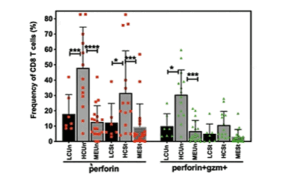
Last year, Dr. Selin reported she’d found dramatic reductions in perforin – the substance T-cells use to kill infected cells – in ME/CFS.
Her idea has, over time, become a familiar one: an infection which the body failed to clear or deal with properly has left one of the big guns of the immune system – the cytotoxic T-cells – in a state of chronic activation. Cytotoxic T-cells are responsible for clearing pathogens hiding inside cells. Being constantly under stress has left them exhausted, disoriented, and functioning poorly.
As any good vicious circle will do, the T-cell exhaustion only makes things worse. Having a major pathogen fighter offline could give the herpesviruses or other viruses the opportunity to reactivate. The immune system responds by trying to activate the T-cells more, leaving them more exhausted than ever. Or, it’s possible that dysfunctional T-cells in ME/CFS are driving an autoimmune response. Either way these heavy hitters in our adaptive, or later, immune response are having problems.
An Aside – A Rich Field
Just as an aside. The ME/CFS field is rather rich in immune cells, which appear to have energy problems!
We’ve known for a long time that cytotoxic NK cells – which bear an interesting resemblance to cytotoxic T-cells – have shot their wad as well. I remember researchers speculating years ago that the T-cells in ME/CFS have the same problem. Now, thanks to Dr. Selin and others, it appears that they do.
It’s not clear whether B-cells exhibit the same exhaustion profile, but they have trouble maturing (an energy-intensive process) and clearly struggle to generate energy. Exercise seems to whack monocytes’ ability to function. Neutrophils also show signs of metabolic stress and impaired energy production. A recent study found a broad pattern of energy production problems across many immune cells in ME/CFS.
One wonders where it will all end. The best evidence for immune exhaustion, though, comes from T-cells.
The Weird T-Cell Population in ME/CFS
Dr. Selin found an 8-fold and a four-fold increase in ME/CFS and long COVID, respectively, in a strange bunch of T-cells called CD4/CD8 double-positive cells. T-cells are supposed to differentiate into CD4 helper and CD8 cytotoxic T-cells, but these cells haven’t; instead, they’ve become a hybrid form of both.
Dr. Selin believes they may reflect an attempt to compensate for the cytotoxic T-cell (CD8) exhaustion.
It perhaps bears noting that these cells have not matured properly, and neither have B-cells in ME/CFS patients (hmm). Whatever the reason for their increase, these CD4/CD8 double-positive cell levels have been observed in autoimmune disease, which aligns with the preponderance of these cells in females (who are at greater risk for autoimmune diseases).
The reason these T-cells may increase the risk of getting an autoimmune disease, Dr. Kumar pointed out, is that they react to more “antigens” – substances that spark an immune reaction – than other types of T-cells. At that point, this is nothing more than a statistical situation: the more antigens a T-cell reacts to, the greater the chance it may make a mistake and begin attacking the tissues in our bodies.
The Big Shift
The First Hand Off
“This finding alone tells us that pathogen or self antigen are driving the disease.” Dr. Selin

We’ll see these groups hand off their findings together in a seamless way. The first handoff – Dr. Selin to Roshan Kumar.
Here’s where it gets really interesting. Plenty of evidence indicates that immune dysregulation is present in ME/CFS, but nobody’s been able to definitively show why it’s happening or what’s driving it. Figure that out, and you might be able to get to the core of these diseases, and that’s what makes these groups’ recent work so exciting.
Dr. Selin reported that they’ve found that the rise in these abnormal T-cell levels is specifically driven by an antigen, which makes all the difference.
T-cells show up in the later stages of fighting off an infection. First, the innate immune system revs up, giving time for the T and B cells to recognize the pathogen and produce massive numbers of clones specifically designed to target and wipe it out.
These T-cells use receptors on their surface to identify infected cells. The first thing to know is that activated cytotoxic T-cells are very specific. They’re like guided missiles which are aimed at only one target. They go around inspecting other cells, and if the particular receptor they’re carrying locks in, they drill a hole into the infected cell using a substance called perforin and kill it.
Or at least they’re supposed to. Dr. Selin’s work dramatically demonstrates how the very low perforin levels in cytotoxic T-cells have essentially made them impotent in diseases like ME/CFS.
Increased levels of abnormal T-cells do not, by themselves, tell us why they are present. An army of T-cells that feature the same receptors, though, indicates they’re targeting one thing – and that’s what Kumar found. Now we don’t have an undifferentiated response; we have a focused response and a potential target.
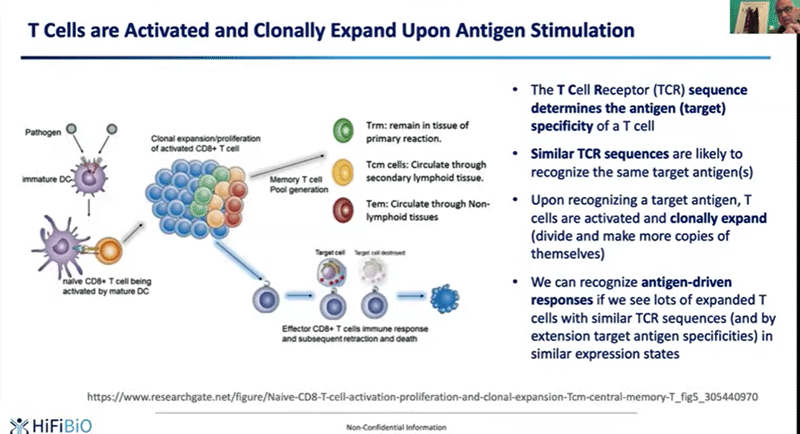
The critical T-cell expansion work.
Kumar’s single-cell approach allowed him to assess the gene expression of each cell. He was able to identify a variety of abnormal T-cell states in both ME/CFS and long COVID (clusters of activated/exhausted cells, T-cells with high NF-kB signaling, T-cells promoting inflammation, and those double-positive CD4/CD8 T-cells).
Note that Kumar’s ability to find a variety of dysregulated T-cell states indicates that different T-cell problems are present in different ME/CFS and long-COVID patients; i.e. while their symptoms are similar, they have fundamentally different diseases.
Every step deeper in these diseases seems to uncover yet more heterogeneity – which is what you would expect to find in these diseases. Finding a variety of dysfunctional T-cell problems is a sign that Kumar is on the right track.
Check out the T-cells with high NF-kB signaling. High NF-kB signaling is a definitive sign that the cell is in a highly activated/inflammatory state. NF-kB activation turns on the switches that allow the cells to jump into action and rapidly clone themselves in response to an invader or self-antigen.
That’s good news regarding a pathogen response but bad news if the T-cells have begun attacking tissues. Indeed, high NF-kB activation is associated with autoimmune diseases such as rheumatoid arthritis, inflammatory bowel disease, and multiple sclerosis. Importantly, it also turns on an anti-suicide (anti-apoptotic) switch, which prevents the damaged T-cell from being purged.
Crucial Link

Dr. Kumar’s finding that the dysregulated T-cell states were characterized by specific clonotypes, or T-cell clones, was the crucial link that allowed the effort to expand dramatically.
Next came the crucial link. It was kind of amazing to see Kumar uncover a variety of dysregulated T-cell / disease states in ME/CFS and long COVID. If things had rested there, it would have been an important finding, but in a way, it would have been a bit superficial.
We would have added more types of T-cell dysfunction to the already abundant evidence of immune dysregulation, but like the other immune findings, we would have been kind of stuck there without a clear pathway forward.
When Kumar found that the specific T-cell states were associated with specific T-cell clones, that potentially changed everything. That meant that the people who had the high NF-kB signaling T-cells, had been tweaked by one thing. The people with the double-positive CD4/CD8 cells had been tweaked by something else. The people with the exhausted T-cells had been tweaked by something else.
Now we’re getting to the nitty-gritty – to evidence that these dysfunctions are being driven by something and the list is not long. It’s either a pathogen or an autoimmune response. Kumar said his findings are “very strong evidence of an antigen-specific immune response”, and specificity is the holy grail here.
Not only are the T-cells in ME/CFS dysregulated in various ways, but they’re also being triggered in different ways. They could be responding to a multitude of factors: Epstein-Barr virus (EBV), HHV6 or CMV, an enterovirus, Borellia, another bacterial infection, “the” coronavirus, another coronavirus, the coronavirus vaccine, another vaccine, mold, peptides being produced by microbes in the gut, an autoimmune process, etc.
What these T-cells are getting activated by constitutes an entirely different challenge. Now it was time to hand them off to a new team member: Dr. Kohlgruber.
The Next Hand Off: Getting at Cause
“We study…the ways infectious exposures (including EBV, and potential triggers of Long COVID and ME/CFS) may initiate or amplify pathology through molecular mimicry or chronic antigen stimulation. Our goal is to understand not just that tolerance fails, but precisely where, when, and against what antigens, because that precision is what makes antigen-specific therapeutic intervention possible”. The Kohlgruber Lab
Dr. Kohlgruber has developed new techniques that are enabling researchers for the first time to understand what T-cells are reacting to.
Dr. Kohlgruber’s job is to try to figure out what’s tweaking/activating/turning on each of these dysfunctional T-cells. This work – “Decoding the antigen-specific basis of human disease” – constitutes the main goals of her Harvard lab.
Determining what a T-cell receptor (i.e. a T-cell) is actually responding to is incredibly complex and has been described as a “massive bottleneck” in immunology. Kohlgruber’s main contributions have been the development of a “high-throughput” system, which accelerates testing, and the development of something called a TCR-MAP, which is essentially an antigen discovery system.
To understand why T-cell responses, in particular, have been so difficult to map, we have to understand how T-cells work. Each T-cell generates a uniquely shaped receptor that binds only one molecular target, called a peptide-MHC complex. The problem is that tens of millions of possible peptide-MHC combinations exist, and a TCR will only bind to one of them.
Finding that one has been so difficult that there’s even a name for these mysterious receptors – they’re called “orphan” TCRs. We know they’re important, we know that they’re driving disease states, but we don’t know what they’re reacting to.
Dr. Kohlgruber’s work has made it possible to search vast libraries of peptides to uncover what each dysfunctional T-cell state responds to.
Her work has changed, for instance, how we understand what’s going on in the joint inflammation that occurs in rheumatoid arthritis. In the past, all we knew was that it was happening. Kohlgruber, though, was able to map the specific tissue targets and identify previously unreported autoantigens leaving the rheumatoid arthritis field with specific molecular targets to focus on.
Now that she has, courtesy of Dr. Kumar, a clean slate of dysfunctional T-cells, Dr. Kohlgrubber is using two huge “libraries” (pathogen/autoimmune) in an attempt to “deorphanize” them.
Dr. Selin was so impressed by the amount of T-cell dysregulation found that she thought multiple pathogens (which the poor T-cells have let escape) and maybe even multiple autoantigens would show up. It’s possible that one may dominate, and that would be the one to first focus on.
Moving Forward
“I think this is really important, groundbreaking work that we’re doing here, and I really hope we get support to get it done.”
This effort has several things in its favor. The researchers (Selin, Kumar, and Kohlgruber) have strong records. Kumar’s ability to provide Kohlgrubber with already identified T-cell subsets is very helpful.
 The big question is funding. Thanks to SolveME’s recent Catalyst Award, Selin et. al. have enough funding to continue their work through the end of this year, but the money runs out after that.
An NIH grant proposal that includes Andrew Grissom (see below) is working its way through the system. It’s hard to imagine this grant not being approved, but then again, the NIH has been in a very strange place for the past year and a half.
Plus, a proposal to give political appointees the final say on NIH grant approvals introduces significant uncertainty into the system. (Remember the Trump administration’s decision to terminate all of RECOVER’s outside researcher grants, even those in studies that were finishing up )
Now that we have good pilot data, this research needs to be significantly scaled up. A gold-standard study that breaks the back of the T-cell problem in ME/CFS and long COVID would include uncovering dysregulated T-cell states in hundreds of patients and handing them off to Dr. Kohlbgruber to work her magic.
According to AI queries, we might be looking at a $10 million 5-year project for a gold-standard study. That may not happen, but it is achievable. Except for the research centers, the NIH has never, to my knowledge, supported a big effort like that. One NIH major grant opportunity (RFA) on T-cell dysregulation, though, could do the trick – and this field is way overdue for an RFA.
There are other ways. Yes, the NIH funding for ME/CFS is putrid compared to its needs, but it does fund major studies – just not a lot of them. The recent NIH ME/CFS mycotoxin grant going to Nancy Klimas’s lab and Azola’s recent blood-brain barrier ME/CFS grant will both pay out about $3 million.
Andrew Grimson’s recent fascinating T-cell work suggested that an infection or even just autonomic nervous system dysregulation (!) was producing epigenetic scarring in the T-cell sphere. Grissom’s ability to hypothetically link the T-cell problems to the monocyte and B-cell problems underscored how fundamental a role the dysregulated T-cells may be playing in these diseases.
Plus Shankar and Davis suggested that constant T-cell activation could be draining the energy stores of the brain and other tissues. ‘
Selin and Grimson now have plenty of ammunition suggesting that T-cells are playing a major role in ME/CFS and are submitting a joint grant proposal to the NIH. (It seems incredible that the NIH wouldn’t fund it.)
The PLRC, the Open Medicine Foundation, and Solve M.E. have all supported T-cell research and could provide funding. PolyBio is another possible source. A big donor, of course, could make all the difference.
It would take time – 5 years – but they’re making rapid progress. Things have moved forward dramatically in the past year, and given the funding, we should expect year-by-year increases in understanding.
Once again, we see ME/CFS and long-COVID fields appear ready to take the next big leap into true precision medicine. All they need is the funding.
Health Rising Donation Drive Update
We’re committed to being there as researchers figure out what’s going in these diseases.Thanks to everyone who has brought Health Rising almost to 50% of our goal!
We’ve been following Dr. Selin’s work on T-cells in ME/CFS and long COVID every step of the way. First, she showed they were exhausted, and that a strange group of hybrid T-cells was present. Then she added Dr. Kumar to her team, who showed that a pathogen/autoimmune process must be driving the process. Next came Dr. Kohlgruber, who is tasked with determining exactly which pathogens or autoimmune processes are at play across different patient subsets.
It’s been an exciting journey (and it’s getting more exciting). We’ll be there every step of the way. If that supports you, please support us!



How does this T-cell “hyper vigilance” or whatever, cause such low energy / high fatigue? Does it mean the immune system is gobbling up the majority of our produced energy, leaving us with a pittance?
Sounds like this could be the most important ME/CFS study. The research is highly complex but it is looking at potentially the core issue. I don’t know if my brain is scrambled due to being only just woken up from sleep, but correction of this energy diversion to the immune system would effectively cure us, no?
My view here is that when there is a plausible abundance of immune triggers (reactivating pathogens and / or diverse autoimmune and autoantibody and / or plentifull celular exhaustion markers triggering the immune system…), allowing ‘full’ or ‘normal’ activation of the immune system would be self destructive.
Exhausted T-cells (barely able to destroy anything, only damage somewhat) could be an ‘asset’ for the body in trying to prevent massive destruction of our own tissue. And https://www.cell.com/cell-metabolism/fulltext/S1550-4131(21)00066-8 has title “Mitochondrial dysfunction defines T cell exhaustion”. More mitochondrial dysfunction, less ‘ability’ of T-cells to do massive damage. And the same holds for hypoxia: too few oxygen, less ability to do massive damage. See https://pubmed.ncbi.nlm.nih.gov/33398183/ with title “Mitochondrial stress induced by continuous stimulation under hypoxia rapidly drives T cell exhaustion”.
Many researchers think we have poor oxygen delivery and plenty also think we have mitochondrial dysfunction. If so, it would reduce (hyper)toxicity of our own T-cells to our own tissues. Other immune cells also are less able to go into ‘full strength damage mode’ with reduced mitochondrial capacity and reduced oxygen delivery. Some immune cells switch to glycolysis as an alternative. That happens to be inhibited in ME/CFS too. Some immune cells try and switch to protein consumption. Blood protein content is reported to be rather low in ME/CFS, with all cells trying to consume it at high rate leaving nothing to spare for a boost.
So my current understanding? The immune system is too confused by too many potential triggers (including those produced during and after even modest exertion in weakened cells). If all immune cells that received ‘pro-attack’ signals would do so in strength, we’d likely be hit by a devastating up to deadly systemic immune activation.
One of the more effective changes the body could do to try and contain this ‘explosion of immune activity’ is to downregulate all energy processes, reduce access to oxygen and nutrients and reduce maximum and medium level mitochondrial ATP production ability. It is close to what we see happening in ME/CFS. And it’s not all that unsimilar to (‘modest’) septic shock response.
Very interesting. Interesting also to hypothesize if ME is trying to put us in a kind of hibernation state to conserve our energy for survival. Or create a state as close to a medically induced coma that our bodies can manage, again in an attempt to keep us alive.
I’ve always said that until we can find the pathogen that triggers all this (autoimmune seems secondary, and may really be our systems trying to attack the pathogens burrowing in our tissues rather than the tissues themselves), and something that can target / kill those pathogens (and secondary ones they permit to be unleashed), we won’t find a cure. Have never been so interested in the studies that focused on all the symptoms / manifestations of the disease, which would likely only lead to treatment of symptoms rather than the root cause.
Thanks for the reminder – yes, Shankar and Davis at Stanford have proposed that the immune system – with its immense need for energy – is sopping up energy that would otherwise go elsewhere. They specifically targeted the T-cells.
The immune cells make up for a total mass that is only a fraction of the total body weight. They would need an extraordinary fast metabolism in order to consume the amount of energy we lack compared to healthy people.
http://www.pnas.org/doi/10.1073/pnas.2308511120 “The total mass, number, and distribution of immune cells in the human body”:
“Our results indicate that the immune system of a reference 73 kg man consists of 1.8 × 10¹² cells (95% CI 1.5–2.3 × 10¹²), weighing 1.2 kg (95% CI 0.8–1.9). Lymphocytes constitute 40% of the total number of immune cells and 15% of the mass and are mainly located in the lymph nodes and spleen. Neutrophils account for similar proportions of both the number and total mass of immune cells, with most neutrophils residing in the bone marrow. Macrophages, present in most tissues, account for 10% of immune cells but contribute nearly 50% of the total cellular mass due to their large size.”
1.2kg out of 73kg is just shy of 2%. Lymphocytes, being B-cells plus T-cells and some others, are about 15% of that mass or 180gr or 0.3% of total body weight.
If the average immune cells would suck up the energy we lack, their energy need per mass would be truely huge. Part of the immune cells rely on aerobic energy production, others on anaerobic energy production. The aerobic ones should IMO not be able to produce anywhere near that amount, let alone if we had mitochondrial dysfunction. It would take massive anaerobic metabolic speeds (around the clock) of those remaining immune cells that rely on anaerobic metabolism. It would IMO need to be that massive that our hole body would go into (beyond) bad acidosys due to massive lactic acid production by these cells.
If this massive energy drain would come from the lost energy that T-cells alone would use up, numbers would be even harder to imagine.
So I don’t see how it could be that the immune cells consume all the energy we lack. I find it much more likely that the increased metabolic rate of the immune cells *modulates* the maximum output of all nearby cells (for example due to the ROS they produce, ROS especially chloride forms of ROS are proven to be excellent at inhibiting aerobic energy production. Much of how bleach kills pathogens depends on this.
My feeling too that it might not be about these cells consuming energy, but rather what are the consequences of this for mitochondrial function/damage in the body, and/or there could be a parallel effect of same infections inhibiting mitochondria in other ways. Am going to ask Cort about it.
I would like to know how Dr. Selin came back from four severe episodes of ME/CFS.
Quite a few people do get better, organically. Of course, some don’t as well
I am very interested to know that too. I asked Google AI ‘How does Liisa Selin treat her me/cfs?’ and it answered that she uses a combination formula called Inspiritol, consisting of glutathione, methylcobalamin, NAC, eucalyptol (1,8 cineole) and B caryophyllene, which together have anti-oxidant, anti-inflammatory and broad spectrum anti-pathogen properties. I understand that is what she uses for her patients – I am not sure if it is what she used on herself. It would be interesting to hear from her. I don’t know if it is generally available, but I suppose one might be able to put it together oneself – certainly some of the components are readily available.
There is a website devoted to inspiritol https://inspiritol.com/ and a small study with Liisa Selin as a co-author where it is used as a treatment https://pmc.ncbi.nlm.nih.gov/articles/PMC10847863/ but it doesn’t appear to be generally available yet.
Hi George, Thanks for this information. Actually Cort did a Health Rising blog on this in 2021. I also looked up a paper on the Inspiritol treatment:
https://www.sciencedirect.com/science/article/pii/S2666354623001345?via%3Dihub
“Identification of CD8 T-cell dysfunction associated with symptoms in myalgic encephalomyelitis/chronic fatigue syndrome (ME/CFS) and Long COVID and treatment with a nebulized antioxidant/anti-pathogen agent in a retrospective case series”
Now it is 5 years later and I guess we still don’t have access to Inspiritol except through the Salerno Clinic.
I didn’t see you second message which references the same study. This is the Health Rising blog.
Inspiritol – A New Investigational Drug Announced for ME/CFS and Long COVID
October 30, 2021
Wow, Inspiritol has been around for 5 years and is still not generally available. I think I am going to try the individual components as they do appear to be generally available according to my internet searches. I have tried some of them before but had negative side effects. AI has offered some mechanisms behind the side effects, and treatments to counter-act them. For example “As Methyl-B12 reactivates cellular division and repairs nerve myelin sheaths, cells rapidly pull potassium out of your bloodstream. This sudden drop in serum potassium (hypokalemia) causes profound muscle weakness, heart palpitations, and heavy fatigue.” (The source for this information is apparently an NIH manual on B12, amongst other sources, so presumably it’s well founded). I foresee a lot of work ahead for a tired brain 😉
Dadgum! Five years and still not available. I was hoping to outlive ME/CFS, but I’m feeling pretty discouraged about that. It’s nearly incomprehensible to me that none of the medications that show true promise (such as Ampligen and Inspiritol) have been made available outside of clinical trials.
Just an FYI. Inspiritrol is an inhalant and although the ingredients are available in oral form, they likely will not have the same effect.
Second. Beta-caryophyllene, better known as BPC has also been around for a while. It’s present in black pepper, cloves, cannabis, and more. The amount used in trials was 100mg a day so don’t buy the cheap stuff online.
The product I used doesn’t seem to be available anymore and a place that I trust that used to sell it isn’t. I’m assuming there are other products that do the same thing a lot cheaper. (It appears to need to be in a capsule as otherwise it needs refrigeration at all times and no exposure to air, in the concentrated form I purchased.
If you look up the research on what it does you’ll find many other products with the same properties.
It was expensive and I can’t say it helped me. Also, if it was a miracle don’t you think we’d know about it by now? I’d be willing to bet Ms Selin was taking a lot of other things as well AND she’s making money selling it. Red flags all around. 🙁
See my comment above. Not miracle cure for most people. 🙁
T Allen, thank you for your thoughtful reply, and for all of the really informative posts you’ve made here. I’ll pass on more experimentation with supplements for now. Thank you for that.
I find all this hoovering of our health info by AI truly scary. I just assume they already have my info, even though I’ve never asked one of those bots to diagnose me (other than, for instance, typing into Google search, what causes leg cramps at night? Does that count as opening myself up to AI? AI bots do follow up with questions, like, What medications are you taking?, I don’t answer those.)
I know all my doctors use patient portals, and I know that I’ve been notified on at least five occasions that my personal info (of all kinds) has been compromised in data breaches. In only two of these breaches was I aware of even doing business with the entity breached–mostly contractors who I never heard of. So, at this point, I feel too overwhelmed by the AI tsunami to try to resist.
You suggested we “be careful” using AI, and I would like to. However, I would be surprised if I haven’t already “given away the store” by not reading the long, dense, jargon-filled legal permissions required to access various sites/services. I will check out Claude.
Again, sincere thanks!
Being a veteran my info has been a couple times from their lack of security and a couple other times from other insurance and healthcare breaches. At this point you can assume everyone has your info because I just learned that Palantir has partnered with my local large healthcare system and the VA’s Optum health care has now added a data center arm. So at this point with my age and health status, I’m with you and not going to even consider it anymore. Just make sure to change you passwords and use secondary measures to secure your financial accounts! Blessings!
I would too!
I have been interacting with Chat Health about my own complicated health history. It is really amazing and a little scary. It knew the name of the neurologist who put platinum coils in my brain in 2016. I have no idea how this happened as it doesn’t have my name. At any rate, it warned me against trying Inspiritol because of the severe reactions I have had to some meds. What is most interesting is that when you go back with another issue, it picks up right where you left off. If you are worried about confidentiality, I wouldn’t since the insurance industry knows all about you if you have put in any claims.
It depends on which AI you use. Some AIs track your posts so they can start up from where you left off. I hadn’t thought about the insurance side of it. But that’s a real concern if they start changing your policy based on your chat conversations. 🙂 Ps. They did get that info from your insurance company because I checked and there were a lot of DRs doing that procedure in 2016. 🙁 I’d stop using that AI and use Claude instead. Every session you start anew and there is no tracking. Plus it’s a lOT more accurate (but not perfect) then other free chats!
Thanks for the Claude recommendation. I used them for the first time yesterday, and I found the service to be so much better than Chatgpt or Google Translate for turning my English into French. I will use for health questions in the future.
Betty- I looked into this further with Claude AI, which doesn’t (supposedly) keep any record of your conversations doesn’t seem to, at least yet. This is the results:
“ChatGPT Health allows users to securely connect medical records and wellness apps, with responses grounded in your own health information. To enable access to trusted U.S. healthcare providers, OpenAI partners with b.well, described as the largest and most secure network of live, connected health data in the U.S. OpenAI
Here’s the key thing: to connect medical records or wellness app data, users log into their patient portals to integrate that information. So the woman almost certainly granted permission at some point — but likely buried in a setup flow she didn’t fully understand. Once connected, ChatGPT Health would have access to her complete records, which would include her surgeon’s name from 2016. Source:Fierce Healthcare
The uncomfortable part is this line from OpenAI’s own announcement: in the future, they plan to use biometric identity through CLEAR to locate patient records “more seamlessly” — essentially making it easier to pull in your health data with less friction. Less friction also means less awareness that it’s happening. Source: Fierce Healthcare
She probably connected her records in a setup step, didn’t register what she was agreeing to, and then was startled months later when the AI referenced something very specific and personal.”
So this isn’t the insurance companies, it’s all AI BUT since the insurance companies are merging wit the big healthcare corporations soon they’ll all have our data unless we attempt to stop them.
The data ecosystem, right now AI tools, is mostly legal. It’s not hackers. It’s contracts and terms of service that most patients never read, connecting systems in ways that would genuinely alarm people if they were explained plainly.
Please be careful.
For anyone wanting to try B-caryopyllene (BPC) read my comments in the thread below and if you are still interested I’d recommend checking out Doterra Copaiba. https://www.doterra.com/US/en/p/copaiba-softgels. More info on othe sources is here: https://pmc.ncbi.nlm.nih.gov/articles/PMC6100473/ I’ve used them but not sure they helped because I had a different reason for my CFS Thiamine enzyme transport issue) Good luck!
Me too..
Great article.
It’s worth noting that low levels of perforin have been established in studies many years ago.
If two major subsets comprise persistent viral factors, and autoimmunity, then that enables two clear treatment avenues.
I am interested to see where Polybio’s antiviral study lands.
These findings on T-cell dysfunction in ME/CFS and long COVID are highly promising, suggesting real biological subtypes and potential targeted therapies. However, large-scale validation, replication across cohorts, and clear identification of causative antigens will be essential before clinical application use.
Hence the need for some major funding.
Thanks for the hard work, as always!
N.B. There appears to be a flawed link or such in the article. After The Gist-section, there is another window, starting with the text “She then teamed with Dr. Roshan Kumar, whose wife has had ME/CFS for over 20 years. (…)”
This window doesn’t appear to be possible to open and read, atleast on mobile/Android. I checked first through the newsletter, and then directly in Chrome.
The text is normal from this paragraph again:
“That was the big breakthrough because it indicated that in every case, either a pathogen or an autoimmune process was driving the T-cells to dysfunction.”
Take care, and thanks again!
Thanks, Tuva! Parts of the GIST got incorporated into the blog or vice versa. Whatever it’s been fixed and thanks for pointing that out 🙂
Pretty sure that (in my case) EBV has entered and changed my memory B cells. I also have a low number of CD-8 cells that suggest “immune exhaustion”.
My initial EBV infection was 31 years ago, which started my M.E. In th last 10 years my EBV has reactivated eight times, topping up the viral load. It is getting worse as I age.
Thank you for this important article.
Wasn’t professor N. Klimas one of the first to talk about NK/T cell dysfunction? This problem has been known for decades.
The key unanswered question is whether the T-cell abnormalities are:
a primary driver of illness?
a consequence of something else (such as chronic stress, nervous system dysregulation, infection, etc.)?
or part of a self-reinforcing loop where each affects the other?
I don’t think it is the primay driver but a conseguence of something else…… the stress/nervous system. It’s a loop…..
I agree.
Often I feel that these questions are overlooked.
These findings are a perfect fit with Williams’ and Ariza’s herpes abortive, lytic reactivation theory.
Exactly!
I definitely err towards t cell abnormalities not being a key driver of the illness.
One of the reasons is that, collectively, there has been a lot of research on the immune system across multiple decades in ME/CFS, and nothing really profound has come from that. It feels a dead end was reached quite a long time ago.
Another reason is that the immune system seems to go from an activated state earlier in the illness, to an exhausted state. While there might be some change in symptoms – for me fatigue improved somewhat, and allergies lessened – the fundamental core symptoms seem to remain.
I think the t cells are a factor but not a primary driver. I do think there’s multi-directional systemic factors at play. Dysfunctional mitochondria affect t cells, and vice versa.
The one caveat is that, while I think it is unlikely, I think there is a chance that reactivated viruses, in some form, might play a role. And that could link to t cells. On that note, I am curious to see how PolyBio’s study on antivirals goes.
Matthias, Selin’s and Kumar’s findings say that Kohlgruber will find out what triggers the T-cells. It’s now just a question of the funding. That’s why Cort is so eagerly discussing it.
If it pans out that it’s herpes, EBV and HHV-6 – as I’ve always said as an acyclovir responder – we will hopefully get better drugs. Because this drug gives me brain rot when I take it continually. We will need and get better therapies than those we have now.
It will be interesting to see how PolyBio’s trial of antivirals goes. I am still skeptical that a primary driver of the illness is viral, but I am open minded at least. And as I have said many times before, I am very happy to be proven wrong if that means effective treatment!
Oh yeah! progress! Something that makes sense too. 🙂 Saw this a few days ago and I still think this could be part of the process as well. Maybe it doesn’t have to be a live pathogen but the protein from fragments that are keeping the immune system over worked? https://www.the-scientist.com/fragments-of-lyme-disease-bacteria-linked-to-liver-dysfunction-73051
While much of the terminology is way over my head, it is very heartening to know there are those with intimate knowledge of this disease who are doing the research. And, while I am soon to be 79 and have fought the battle for almost 40 years, this research will greatly benefit newcomers when not just a cure, but insight into the causes that can be corrected. Keep up the good work.
A very interesting recent video features patient Ken Evans (the 14th patient treated) speaking live: severe post-injection symptoms (massive clots, myocarditis, fatigue, extreme respiratory problems). He received double-filtration plasmapheresis (DFPP) + stem cells (SGF). The result: spectacular and rapid. He calls it a “miracle.” Objective of the protocol: To physically eliminate persistent Spike protein, amyloid/fibrinoid microclots, autoantibodies, and mis-responding proteins. Double filtration specifically targets these large aggregates without removing all the plasma. Dr. Kevin McCairn explains that: – The Spike protein forms amyloid fibrils resistant to normal fibrinolysis = blocked microcirculation (brain, heart, lungs…). – Apheresis + stem cells allows for cleansing and regeneration. The reported results are very positive in the first patients, with a call to expand the protocol.
https://www.youtube.com/watch?v=Thb97LNdL2U
Thank you for sharing the link.
I watched the video. I recommend everyone here watches it.
It’s very disturbing on some levels (ie the politics of vaccines) but it also offers hope….
The amyloid protein issues he speaks of here make sense and could be one of the “subgroup’s”.
Further to the above…same channel hosts another interview re the phenomena of increased Fibrinogen….
https://youtu.be/k0Frpq-Stvs?si=1w8Ye9kVGXLkIsC-
Cort and fellow posters
Is there any published research (= minus the vaccine controversy) which talks about Fibrinogen specifically in relation to ME/CFS?
searching for finbrinogen and ME/CFS did not yield any quick result. But changing to fibrin and then fibrinaloid gave this:
https://orbit.dtu.dk/en/publications/the-occurrence-of-hyperactivated-platelets-and-fibrinaloid-microc/
title “The Occurrence of Hyperactivated Platelets and Fibrinaloid Microclots in Myalgic Encephalomyelitis/Chronic Fatigue Syndrome (ME/CFS)”
saying “ME/CFS samples showed significant hypercoagulability as judged by thromboelastography of both whole blood and platelet-poor plasma. The area of plasma images containing fibrinaloid microclots was commonly more than 10-fold greater in untreated PPP from individuals with ME/CFS than in that of healthy controls. A similar difference was found when the plasma samples were treated with thrombin.” and “We conclude that ME/CFS is accompanied by substantial and measurable changes in coagulability, platelet hyperactivation, and fibrinaloid microclot formation. However, the fibrinaloid microclot load was not as great as was previously noted in Long COVID/PASC.”
My note: part of the difference might be due to how long the patient is ill (I suspect)
https://www.nature.com/articles/s41586-024-07873-4 is on long covid but says plenty of fibrinogen affects things like ROS response and mitochondrial function.
Fibrin also has some association with EBV, with adult onset EBV another notorious ME/CFS starter.
https://www.nature.com/articles/s41586-024-07873-4
title “Fibrin-associated large B-cell lymphoma shows frequent mutations related to immune surveillance and PTEN”
It is correlation, not necessary a cause. And it is about cancer related to EBV.
Thank you dejurgen for your follow up.
The medical procedure of double-filtration plasmapheresis (DFPP) + stem cells (SGF) as developed/modified by Kevin McCairn to essentially clear the brain of spike proteins and other “biological rubbish” (my words!) seems to be in and of itself a “regular” medical procedure. He has tailored/adapted a known and accepted procedure, right? The idea seems to makes sense, but as you can tell, I’m not a scientist!
I regard this idea as much like the concept of using drugs off-label as we see with the use of LDN.
It would be great to see some controlled research on this procedure for a wider group of recipients. Whilst he talks mostly about post vaccination, he does mention at least one ME/CFS sufferer.
There are so many of us suffering that I’m sure there would be many who would happily put their hand up and volunteer to undertake this process within the context of an academic medical setting.
Or am i missing something … eg is it all on the edge of something way too renegade?
I found that I have SNAS, systemic nickel allergy syndrome, and I truly believe it’s the cause of my CFS and fibromyalgia. Both started after a surgery. As I’ve worked to get all surgical metals out of my body since discovering the allergy, and changed my diet to avoid nickel, my CFS has improved by leaps and bounds. After surgery, it was a night and day change. I’ve wondered before how it would fit in with the pathogenic-cause theories of CFS, or how it could cause it at all, and though I don’t fully understand everything in the science here, it would make sense as this is a T-cell allergy.
https://www.bbc.co.uk/news/articles/c4gy2d9y5z3o
See BBC UK news article on lupus yesterday and T cell treatment
So what is the connection between the CNS and T cell dysfunction. Which chemokines are released by T cells and how might this correlate with neuroinflammation and other reproducible CNS dysfunction (ie lower levels of certain neurotransmitters).
How could the PET scan tracer studies in MECFS patients performed by Dr. Michelle James at Stanford broaden the understanding of immune dysfunction at specific tissue sites. Is there a link between immune phenotype and brain or muscle inflammation phenotype. Does one drive the other?
Perhaps this collaboration could occur concurrently as next phase of the discovery of target antigens for dysfunctional T cells in MECFS and Long Covid hopefully gets funded. It could certainly make a stronger and clearer case of shedding light onto neuroimmune drivers of disease.
Cort – do you know which patient cohorts will be potentially tapped for next phase of study? How can patients participate in upcoming studies?
EBV and other herpes viruses abortive lytic replication theory is a perfect fit with these findings. Check it out. Maria Ariza is the leading researcher behind that hypothesis but there are many more finally going into herpes with renewed forces. Yeeeesssss!
Thank you for that blog post, Cort. As an acyclovir responder who believes EBV ALR drives my illness this is such great news. And Selin and her colleagues from the webinar aren’t the only ones that are going in this direction. I feel so relieved. I waited for five years that this kind of research would finally take off. Woooosh.
🙂
Thanks for sharing that you are an acyclovir responder. It’s still on my list of things to try.
Hi Cort, oh Keeper Of The Overview! 🙂 I have a question for you: How would these T-Cell findings tie in with Wirth’s cell ion transfer hypothesis for acquired mitochondropathy?
In response to dejurgen, my feeling too that it might not be about these cells consuming energy, but rather what are the consequences of this for mitochondrial function/damage in the body overall, and/or there could be a parallel effect of same infections inhibiting/sabotaing mitochondria in other ways.
So, what are your thoughts on how T-cells could be linked to mitochondrial function in muscle cells? Maybe you could ask Wirth this question the next time you interview him?
🙂 Hi JR – I’m not sure about Wirth but why or how these energy problems showing up in so many different tissues – may be THE question – I asked ChatGPT about this and it suggested that it might start with either of these cells/tissues.
“ME/CFS may involve a systemic immune–vascular–metabolic state that makes immune cells and skeletal muscle both behave as if energy production is constrained, especially after exertion.
Immune cells do not just “reflect” disease; they can help drive it. If monocytes, T cells, mast cells, or innate immune pathways are chronically activated, they can release cytokines, interferon-related signals, oxidative/nitrosative stress mediators, prostaglandins, complement signals, and vascular mediators. Those can push muscle toward:
reduced mitochondrial oxidative phosphorylation, increased glycolytic dependence, impaired fatty-acid oxidation, reduced repair capacity, greater oxidative stress, and easier triggering of PEM.
Muscle injury or metabolic stress can feed back into immunity
The loop can also run the other way. If muscle cells become energy-stressed during ordinary exertion, they may release danger signals: lactate, ATP metabolites, mitochondrial DNA, oxidized lipids, heat-shock proteins, misfolded proteins, or inflammatory myokines. These can activate innate immune cells and make the immune system interpret exertion as a stressor or tissue-damage event.”
Interesting! Thanks for the question 🙂
I suspect that as ME/CFS progresses, the dysfunction in the brain and muscles is driven primarily by vascular damage—the existence of which has already been proven to result from the chronic inflammatory state. Because these tissues are the most energy-consuming parts of the body, a compromised blood supply means they lack the necessary fuel for aerobic ATP production, forcing cells to switch to more toxic anaerobic pathways. Furthermore, this vascular damage creates a secondary bottleneck: the cell-damaging byproducts of these toxic processes can no longer be cleared away efficiently.
Early-stage ME/CFS, however, presents differently. In the early phase, I believe Bhupesh Prusty and others are correct in pointing toward viral reactivation, which is well-documented to directly disrupt mitochondrial function from the outset.
Thank you for your reply :-)! I find the “the loop can also run the other way” part really interesting.
About the tie-in with Wirth’s theory, Lina below has pointed out vascular damage (as a result of infection) that I think would tie in with impaired circulation being the first step in Wirth’s theory – if you like, have a look and her and my discussion below.
JR, do you understand that Selin and her colleagues expect self-antigens and different pathogens, especially herpes, to show up at the front lines of what the T-cells are fighting? Wirth’s theory is interesting, but it is not systemic, so I have always thought it was a very weak theory.
Coming back to the science discussed in this blog – whatever it exactly is that the T-cells are fighting – it has already been established that this chronic inflammatory state is damaging the vessels throughout the body, and in the case of herpes, also the mitochondria directly. I believe that the neocortex and muscles are the first tissues to lose functionality in that environment, leading to muscular exhaustion and cognitive symptoms, because their activities are highly energy-consuming. There might be a problem with the mitochondria as well, but the vessel damage creates a bottleneck situation in these tissues. From there, the systems switch to more toxic methods of energy production without oxygen, damaging the system further.
Hi Lina, thank you for your reply! I like Wirth’s theory for various reasons, among them: One, because from his comprehensive ublications it seemed to me he sat down and read just about all the ME/CFS literature and then tried to integrate it into his theory. Two, the ion transfer theory seems to tie in with a very early experiment in ME/CFS (the so-called “nanoneedle”, which put ME/CFS-patients’ and healthy controls’ cells between two nano-electrodes to measure electrical impedance before and after exposing the cell to salt walter = hyperosmotic stressor). Three, the very pronounced muscular exertion limits that I experience since my ME/CFS became severe just “feel” like what his theory describes. Four, to me his theory provides an explanation why muscular exertion limits become more and more narrow over time (as they did in my case.)
May I ask what is the reason that makes you say his theory is not systemic?
To me it seemed highly systemic, integrating other findings in the lead-up to the systemic “downstream” outcome of acquired mitochondropathy. For example, in this short article about Wirth’s hypothesis https://www.laborjournal.de/editorials/3345.php he states that he believes an impaired bloodflow to be the first step in his hypothesis.
Which would then lead to the anaerobic energy production you mention, and finally the ion disbalance “vicious circle” he describes.
And I guess that besides the beta-adrenergic antibodies that Wirth points out as a cause for impaired bloodflow in his theory (as far as I understand), the impaired bloodflow might have various other reasons such as the vascular damage you describe (Wirth & Scheibenbogen are aware from Scheibenbogen’s published studies that not all ME/CFS patients have beta-adrenergic antobodies).
So I think you have actually answered my initial question, thank you very much for reminding me of vascular damage! 🙂
And yes, referring to what you write above in reply to Cort, I agree it makes sense that not only ME/CFS might have a multi-tier pathomechanism (as I believe), but that there may also be differences between early and more advance stages. (Just speaking from own experience, I’ve had a gradual course of the illness with symptoms chaning over time – with exertion limits clearly significed by pain attacks in the very beginning, and in later stages losing the pain attacks but gaining severe cognitive problems, and then the very tight muscular exertion limits in the severe stage).
Plus there might be more than one effect on the mitochondria at play and overlapping?
JR, thanks for this thoughtful breakdown! I completely see why Wirth’s model resonates with you, especially regarding the tightening exertion limits and the ionic shifts.
However, when I say the theory lacks a truly systemic root, it’s because Wirth’s model starts downstream – with blood flow issues and autoantibodies. The burning question mainstream research often leaves unanswered is: What is causing that chronic endothelial (vascular) damage and autoantibody production in the first place?
This is where the literature on smoldering, abortive herpesvirus reactivation (like HHV-6 and EBV) bridges the gap perfectly, and why I think it’s the actual driver of the mess.
If you look at the work of researchers like Bhupesh Prusty, they’ve shown that herpesviruses don’t need to fully replicate into a massive blood infection to wreak havoc. Instead, they can undergo ‘abortive reactivation,’ where they produce specific viral proteins (like HHV-6 U94) that cause direct mitochondrial fragmentation and cellular stress.
When this happens chronically in the endothelium (the lining of the blood vessels) and tissue:
– It triggers the localized vascular damage and impaired blood flow Wirth talks about.
-The constant cellular stress and tissue damage spill self-antigens, driving the production of the GPCR autoantibodies that Scheibenbogen studies.
-It directly impairs the energy production needed to keep those vital Na⁺/K⁺-ATPase ion pumps running.
So, it’s not a matter of choosing between a viral theory or Wirth’s metabolic/ionic theory. Smoldering herpes reactivation provides the missing ‘Tier 1’ root cause. It is the hand that pushes the very first domino, setting off the vascular failure that eventually traps the muscles in Wirth’s vicious circle.
(Comment co-written with Gemini to protect my energies!)
Oh, and because I forgot to answer your question: Yes, I understand that Selin and her colleagues expect to identify the exact self-antigens/pathogens that these B-cells target.
My question was about how this “upstream” B-cell action may systemically be linked to the “downstream” effect of cell ion disbalance in Wirth’s theory – and I think you’ve provided answers to this.
I can’t really take the credit! My privilege was that I had found out accidentally and before diagnosis that the flu-like flares I experienced could be suppressed with acyclovir. From there I of course began to follow reserachers like Maria Ariza, Jacqueline Cliff, and Bupesh Prusty who were going after herpes.
I am sorry to inform you that it seems that acyclovir and the much better tolerable famciclovir seem not to be as efficient in the severe ME/CFS patients compared to the mild and moderates. Possibly due to organ damage.
However, there are small numbers of severe patients both in the ME/CFS and LC subreddits who say that they benefit from acyclovir.
Most, importantly, acyclovir/famcyclovir work in this theory because next to their excellent properties to stop lytic HSV, VZV, HMV reactivation, they have a somewhat paradoxical activity too against EBV early phase abortive lytic reactivation. The proof was found in oral hairy leukoplakia in AIDS patients.
The drug will only potentially work for you if you are EBV positive! If you are not you might have HHV-6 abortive reactivations and other solutions needed to be found.
Thank you for both your informative replies! I meant to reply earlier and would have some more thoughts to share for discussion, but have been in a crash since, so that will have to wait a bit longer.
Yes, I am indeed EBV positive – if you mean by that that lab tests have shown that I’ve had the virus, and that lab values have also changed between lab tests indicating there must have been some viral activity in between tests. Or do you mean whether I’m having an active reactivation right now?
Very interesting to learn about acyclovir/famcyclovir having some activity against early phase EBV reactivation too.
If you happen to know of a source describing how to dose/treat with acyvlovir/famcyclovir in ME/CFS, or maybe a protocol you’ve followed yourself, I’d be happy if you could point me to it. Is this a medication you are taking permanently? (I have an passive but pragmatic GP who prescribes when I come up with a credible source and it looks low enough risk :-)).
Don’t worry though if you don’t. I could only do oral treatment not infusions though, don’t know if that would be a problem?
I am so sorry to hear you had a flare-up, but I’m glad you are feeling a little bit better now.
Since acyclovir and famciclovir are only active against early-phase EBV replication, it generally doesn’t make sense to try them if a patient is entirely EBV-negative. However, if your past lab results show that your EBV early antigens (EA) fluctuate—even if they don’t rise high enough to definitive prove a full, acute lytic reactivation—that can be an indicator that your ME/CFS flares are driven by systemic, abortive EBV early-phase reactivation. In that specific scenario, you might still respond well to the drug.
Dosing for this type of antiviral is typically a matter of trial and error. Even in on-label use, you have to individualize the dosage based on your weight and overall immune health, especially since these medications can place a strain on the kidneys. As a rule of thumb, if you are a responder, you will likely need a higher dose to fight off an acute flare, which you can then lower once you switch to a prophylactic dose.
Personally, I am on continuous famciclovir now. As someone with mild-to-moderate ME/CFS, a dose of 2×250 mg works well for my weight (65 kg), and I tolerate it very well. In contrast, valacyclovir put too much of a strain on my brain, causing neurological side effects, so I would only ever use it short-term again, if at all.