




Geoff’s Narration
The GIST
“These substances represent a potentially revolutionary approach to pharmacological pain management,” Crozpek et. Al. 2025
History has shown that our notions of what treatments can do are quite limited. Numerous drugs produced for one purpose have found applications for entirely different purposes.

Many drugs produced for one purpose have been found helpful for very different purposes.
Gabapentin was developed to treat seizures and ended up being helpful for pain. Before Cymbalta became a chronic pain drug, it was first used as an antidepressant. After being used in schizophrenia (apparently because of its anti-inflammatory properties), Abilify found a home in ME/CFS. Thalidomide produced horrid birth defects, but turned out to be a dynamite leprosy treatment. Before AZT changed the way HIV/AIDS was treated, it was a failed cancer drug.
The GLP-1 agonists, originally developed to treat diabetes, are the current poster child for unintended effects, as they’re now being assessed in long COVID and numerous other diseases.
The truth is that we just don’t know what might be helpful. With thousands of drugs available, the chances are very good that something helpful is out there – and that brings us to psychedelics, which may produce the most astonishing turnaround yet.
The GIST
-

A common theme was a new sense of gratitude
If any class of drugs has baggage, psychedelics do. Banned in 1967 and declared a Schedule I class of drugs, which have no medical benefits, psychedelics have hardly been thought of in the public realm as potential medical drugs.
- With thousands of studies conducted prior to their banning, they actually had strong research—the foundation. Johns Hopkins University started studying them again in the late 19980s. The publication of standardized clinical protocols in 2008 helped put them back on the map. Over the past couple of years, hundreds of studies have been done.
- Most of them have been in healthy controls and in diseases like depression, anxiety, and PTSD, but over the past few years, psychedelic studies have been moving into the complex, chronic disease and chronic pain space.
- Recently, two small, exploratory psilocybin studies in fibromyalgia and post-treatment Lyme disease (PTLD) were published. Both had good results.
- Both studies involved extensive exclusionary criteria, preparation sessions before, and follow-up sessions afterwards. Many studies provide guidance during the session. Both studies provided enough of the drug (15/25mg) to produce full-blown psychedelic experiences.
- The fibromyalgia study was very small (n=5) and included some case reports. People reported visiting a “shark habitat, visiting caves, tunnels, and trees,” having an encounter with an “Asian red dragon,” meeting dead relatives, and being lifted into the sky. Feelings of gratitude were common.
- The researchers reported that clinically meaningful improvements in pain severity, pain interference, and sleep disturbance were seen in most participants.
- The post treatment Lyme disease study was more substantial. In it, 20 participants received two doses of psilocybin over 8 weeks and were followed for 6 months.
- Large reductions in general symptoms, total pain, and depressive symptoms, and significant reductions in fatigue, highlighted an abnormally successful treatment trial. The fact that the improvements were largely maintained over 6 months was quite promising.
- The authors wrote “The results of the current trial… underscore the compelling possibility that psilocybin-assisted treatment may significantly mitigate key symptoms of PTLD across several physical and neuropsychiatric domains, that participant quality of life may improve substantially… and that these benefits can persist well beyond the time course of acute drug effects for some patients.”
- How might this be happening? Psilocybin directly activates a “happiness” chemical, serotonin, and indirectly affects another feel-good brain chemical, dopamine. The nervous system pathways associated with these chemicals affect pain-processing, inflammation, fatigue, and other factors.
- Psilocybin enhances a core feature of neuroplasticity called “long-term potentiation” which refers to the famous saying “cells that wire together, fire together”. In LTP, the more the brain makes a connection between nerves, the stronger it becomes. This process allows the brain to work more efficiently by creating pre-programmed circuits.
- Chronic pain represents the dark side of neuroplasticity, where pathological pain-enhancing connections get strengthened. In chronic pain, the brain is essentially stuck in a pain memory loop that leaves pain pathways in the anterior cingulate cortex (ACC), amygdala, prefrontal cortex, and insula abnormally activated.
- Chronic pain represents the dark side of neuroplasticity, in which brain regions become stuck in connections that produce pain. In chronic pain, the brain is essentially stuck in a pain memory loop.
- Because pain is never just sensory, these pathways also produce feelings of fear, catastrophizing, promote pain-related memories, etc. Psilocybin appears to be particularly effective at tamping down these emotional states.
- Numerous studies show that a rewiring of the brain, which accentuates the pain and fear-producing regions of the brain, has occurred in diseases like ME/CFS and fibromyalgia.
- By creating a temporary state of hyperplasticity that loosens old, unhealthy connections, psilocybin appears to enable new, healthier ones to form. The strong experiences it evokes may be able to create new “cognitive frameworks” that can overwrite the entrenched pain memories and fear responses that are characteristic of chronic pain.
- Plus, psychedelics have anti-inflammatory properties that may be able to reduce neuroinflammation.
- Psilocybin appears to affect many, but not all, of the core brain regions affected in ME/CFS. The brainstem is a notable exception and there’s no reason to think that it could impact blood flows to the brain – a key feature of ME/CFS, POTS, and long COVID.
- Neuroplasticity approaches, such as ANS Rewired, attempt to affect similar brain regions but do so using repetition in a much longer time frame. They also most likely impact fewer areas of the brain.
- The authors of the post-treatment Lyme Disease study proposed that these drugs be tried in “other infection-associated chronic conditions such as… ME/CFS, Post-acute sequelae of SARS-CoV-2 infection (PASC), and fibromyalgia” as well as, interestingly, autoimmune and inflammatory diseases.
- The results right now are preliminary but promising. At least three small fibromyalgia psilocybin trials, including Jarred Younger’s trial (London, Netherlands, US). Younger’s placebo-controlled (using dextromethorphan) University of Alabama at Birmingham trial started some time ago and is expected to wind up in mid 2026.
Support Health Rising and Keep the Information Flowing!
Health Rising is not a 501 c (3) non-profit
Psychedelics
If any class of drugs has baggage, psychedelics do. Banned in 1967 and declared a Schedule I class of drugs, which have no medical benefits, psychedelics have hardly been thought of in the public realm as potential medical drugs.
Prior to their banning, though, they actually had a strong research foundation. Up until 1967, the pharmaceutical company Sandoz provided LSD (“Delysid) free of charge to thousands of research efforts at institutions like Harvard, Cambridge, and UCLA. Studies touted LSD’s effectiveness at relieving depression, alcoholism, anxiety, and obsessive-compulsive disorder.

Despite their reputation, psychedelics have received quite a bit of research over time. (Image by Kintehobe from Wikimedia Commons)
Medical research continued until the late 1970s, when the CIA seemingly relegated LSD into the dustbin of medical history by dosing employees and civilians without their permission. It’s hard to keep a potential treatment down, though (see thalidomide!), and Johns Hopkins resumed studying the drug in the late 1980s.
Guidelines for safely studying hallucinogens, published in 2008, provided a growth spurt. Since then, psilocybin and psychedelic research have gone quietly mainstream with hundreds of studies published last year. The Johns Hopkins Center for Psychedelic Research is currently staffed by about a dozen PhDs and MDs.
Clinicaltrials.gov lists over 100 psychedelic clinical trials, most of which are being done on healthy people, and diseases like depression, PTSD, and obsessive-compulsive disorder.
Psychedelic trials are starting to move into the “complex, chronic disease” and chronic pain sphere, though. A small (n = 16) study found significantly reduced cluster headache frequency three weeks following psilocybin administration. Another small, placebo-controlled trial (n = 10) found a greater reduction in weekly migraine days after psilocybin. When used with mirror visual feedback, psilocybin relieved formerly intractable phantom limb pain.
Two small fibromyalgia and post-treatment Lyme disease (PTLD) psilocybin trials were recently published. Both used full-strength psilocybin and hit their marks.
(Note, though, that microdosing, which does not produce profound mind-altering effects, may be able to reduce pain as well. A 2019 review, “Microdosing psychedelics: More questions than answers? An overview and suggestions for future research“, though, emphasized how little we know about the health effects of microdosing.)
Fibromyalgia Study
The “Preliminary safety and effectiveness of psilocybin-assisted therapy in adults with fibromyalgia: an open-label pilot clinical trial” came out of Dr. Clauw’s University of Michigan group. It used “psilocybin-assisted therapy,” which combines psilocybin with psychotherapy. The therapists asked open-ended questions about the session, which were intended to elicit introspective, interpersonal, spiritual, or noetic insights.
This study was slated to have 10 people, but was closed early due, in part, to challenges with recruitment and changing standards for psychedelic research (they were loosened) at the FDA. (It looks like a good number of people changed their mind about participating.)
On the day of drug administration, participants were asked to eat a low-fat breakfast. During the sessions, the participants lay down on a couch or bed, wore eyeshades, and listened to music through headphones or a headband.
After the session, the participants answered the “Challenging Experiences Questionnaire” (CEQ) and the “Mystical Experience Questionnaire, Challenging Experiences Questionnaire“).
Some studies have found that low, non-hallucinogenic doses can be helpful; this study did not stint on the dose. They received two doses of psilocybin (15 mg, followed by 25 mg) approximately two weeks apart.
While one person didn’t find much happened, another found herself transported back to ancient Egypt, being spoken to by the forest, and being told that her pain had its source in a car accident when she was 13 (!).

A common theme was a new sense of gratitude.
Another person traveled to a “shark habitat, visiting caves, tunnels, and trees,” had a brief encounter with an “Asian red dragon,” and met her dead grandparents. She left experiencing gratitude, “even gratitude for this often challenging body, since it means I’m still alive.” A new sense of gratitude was a common theme.
Another person experienced “lifted to the sky to dance,” feeling “physically comfortable,” and was able to “push the music down my body to relieve the pain.” By the end of the experience, she was “warm, cozy, and almost pain-free.” She constructed a narrative that “trauma has a negative connotation, but for me it’s been useful and even beautiful”.
No side effects were seen, and the authors reported that clinically meaningful improvements in pain severity, pain interference, and sleep disturbance were seen in most participants.
Post-Treatment Lyme Disease (PTLD) Study
In the post-treatment Lyme disease (PTLD) study, “Pilot study of psilocybin in patients with post-treatment lyme disease“, 20 participants received a single moderate dose (15 mg) of psilocybin in week 4 of the 8-week intervention, and either a moderately high dose (25 mg) or another moderate dose (15 mg) in week 6.
Researchers are being extraordinarily careful with these studies. As with the FM study, the list of exclusionary criteria was long. (Note that psychiatric diagnoses were not necessarily exclusionary. Five participants met the criteria for major depression (25.0%), five for attention deficit-hyperactivity disorder (ADHD; 25.0%), and one for panic disorder and post-traumatic stress disorder (PTSD; 5.0%).)

These studies typically feature many exclusionary criteria.
The exclusionary criteria included substance use disorder; currently taking antipsychotics, MAO inhibitors, or antidepressant medications other than SSRIs, SNRIs, or bupropion; taking centrally-acting serotonergic medications; current or prior history of major immunosuppressive illness; cardiovascular conditions (angina, significant ECG abnormality, transient ischemic attack (TIA); artificial heart valves, etc.,; current or past history of schizophrenia, psychotic disorder, bipolar I or II disorder; a first degree relative with history of schizophrenia, psychotic disorder or bipolar I disorder; past-year hallucinogen use; cancer or malignancy in the past 2 years; epilepsy with history of seizures; insulin-dependent diabetes; dementia disorders (e.g., Alzheimer’s Disease, Lewy body dementia, etc.); pregnant or nursing; not using effective methods of contraception; high risk for suicide.
As with the FM study, the facilitators guided participants before, during, and after the sessions. (This, in general, is how psychedelic studies are done: there is an extensive preparatory period, there is sometimes coaching during the session, and then follow-up afterwards.) No formal psychotherapy was done. This study was different, though, in that the participants were followed up at 3 and 6-month intervals after the treatment.
Six Months Later (!)
“The results of the current trial… underscore the compelling possibility that psilocybin-assisted treatment may significantly mitigate key symptoms of PTLD across several physical and neuropsychiatric domains, that participant quality of life may improve substantially… and that these benefits can persist well beyond the time course of acute drug effects for some patients.” The authors
Treatment trials rarely follow their participants for 6 months, but this one did. It was remarkable to see some effects lasting for six months – far longer than would be expected for a short-term treatment. Every symptom assessment showed improvements.
The general symptom burden declined by 40-50% over 6 months. This result suggested that most people experienced substantial pain, fatigue, cognitive issues, sleep, and neurologic symptoms that were “far beyond the typical change seen in short‑term treatment studies”.
Depressive symptoms declined by 40-50% over six months.
The 40-50% reduction in total pain (McGill Short Form) is considered a large, clinically meaningful improvement that would produce substantial decreases in pain intensity and less emotional distress associated with pain. This level of improvement is also well above typical treatment outcomes and could lead to significantly improved day‑to‑day functioning.

Substantial improvements in energy were seen.
A 25-30% reduction in fatigue scores (FSS) represents a meaningful, noticeable, and functionally important reduction in fatigue that usually translates into substantial improvements in day‑to‑day energy, reliability, and activity tolerance.
The SF-36 Mental Health Component Summary improved by 12-18% over six months. While this may not seem like much, it’s considered to produce a moderate-to-large, clinically meaningful improvement in mental well‑being. Most people would notice better mood stability, reduced anxiety, improved concentration, more emotional resilience, and better social functioning.
Physical functioning improved 13-17% through six months. This, too, is considered a large, clinically meaningful improvement in physical health, which would show up in gains in mobility, stamina, pain levels, and the ability to perform daily activities.
In other words, the study did very well!
Psilocybin’s Effects
The 2025 review paper, “Classic Psychedelics in Pain Modulation: Mechanisms, Clinical Evidence, and Future Perspectives“, provides some answers to why psychedelics such as psilocybin, lysergic acid diethylamide (LSD), and N, N-dimethyltryptamine (DMT) may be helping with chronic pain. Thus far, the studies are too small to produce anything other than preliminary results, but they’re trending in a positive direction.
It’s notable that each of these drugs primarily activates serotonin 5-HT2A receptors, and psilocybin interacts with 5-HT1A, 5-HT2A, 5-HT2B, and 5-HT2C.
Psilocybin also interacts with several receptors (dopamine (D1R and D2R), adrenergic (α1R), and histaminergic (H1R) receptors), which can affect the cardiovascular system. It indirectly increases dopaminergic activity, influencing reward processing and emotional responses. Several studies suggest that “reward” – a key factor in alleviating fatigue – has been blunted in ME/CFS.
The main receptor mentioned – the HT2a receptor – also activates several pathways (extracellular signal-regulated kinases (ERKs), cyclic adenosine monophosphate (cAMP) response element-binding protein (CREB), and mammalian target of rapamycin (mTOR) pathways that have been associated with ME/CFS, etc.
It turns out that these receptors play a key role in modulating central (brain-initiated) pain-processing circuits and in regulating inflammation. In short, activating these receptors – several of which turn on “feel good” brain chemicals – reduces pain levels. Serotonin is well known as a chemical associated with “happiness”.
Core Neuroplasticity Modulator
Psilocybin enhances something called “long-term potentiation” LTP – a core feature of neuroplasticity. LTP refers to the famous saying “cells that wire together, fire together” aspect of neuroplasticity. In LTP, the more the brain makes a connection between nerves, the stronger it becomes. This process allows the brain to work more efficiently by creating pre-programmed circuits.
Chronic pain represents the dark side of neuroplasticity, where the brain gets stuck in pathological pain-enhancing connections.. In chronic pain, the brain is essentially stuck in a pain memory loop that leaves pain pathways in the anterior cingulate cortex (ACC), amygdala, prefrontal cortex, and insula abnormally activated.
Because pain is never just sensory, these pathways also produce feelings of fear, catastrophizing, promote pain-related memories, etc. Psilocybin appears to be particularly effective at tamping down these emotional states. Antidepressants can do that too, but they do so in a more “juvenile”, less permanent way. Psychedelics have the potential to quickly produce more permanent changes.
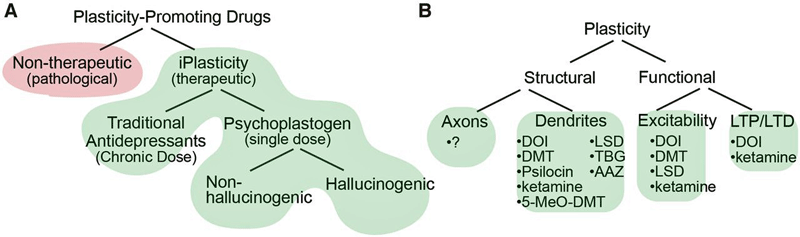
Psychedelics can more quickly produce more permanent changes than antidepressants.
Whether the brain has become rewired in fibromyalgia, ME/CFS, and long COVID to produce pain and/or fatigue is not in question. Numerous studies show that a pathological rewiring of the brain, accentuating the regions mentioned above, has occurred.
Psychedelics have the potential to reorganize the neural networks that maintain chronic pain and fatigue. The strong experiences they evoke may be able to create new “cognitive frameworks” that may be able to overwrite the entrenched pain memories and fear responses that are characteristic of chronic pain.
They do this by producing a temporary state of hyperplasticity and synapse formation that loosens old, unhealthy, connections, allowing new, healthier ones to form.
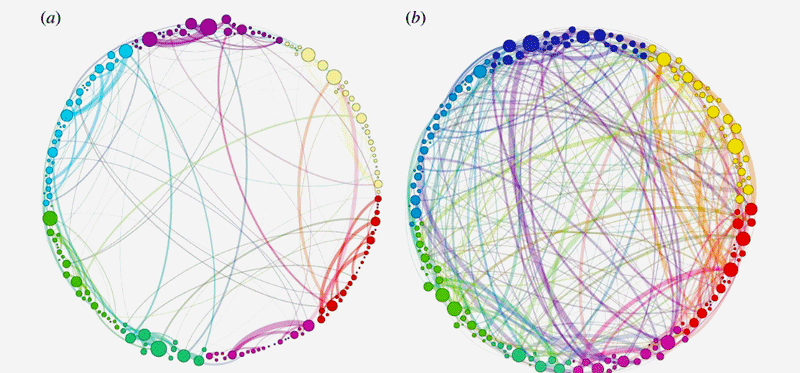
Many more connections show up in the brain on psilocybin (right). (Image-Petri- Homological scaffolds of brain functional networks Wikimedia Commons)
Additionally, psychedelics exhibit anti-inflammatory properties. Preclinical studies suggest that psychedelics also modulate glial cell activity, further contributing to pain relief. Human studies are lacking, though, and it’s not clear if they can impact the kind of widespread neuroinflammation found in ME/CFS.
While psilocybin hits core brain regions affected in these diseases (default mode network, prefrontal cortex, anterior cingulate, insula, and amygdala), little work has been done on its ability to affect another key region in ME/CFS – the brainstem. (The brainstem, though, is rich in the serotonergic receptors psilocybin activates).
Whether or how well psilocybin and other psychedelics can jolt these brain networks out of their funks and into new, healthier relationships is an open question that will be solved by brain imaging studies.
Whether psilocybin could also affect cerebral blood flows and improve autonomic dysfunction in these diseases remains another question. Because it affects parts of the brain that regulate the autonomic nervous system, there is potential for some help with dysautonomia. While it may be able to affect inter-brain blood flows, there’s no reason to believe at this point that it could increase blood flows to the brain.
Other Neuroplasticity Approaches
Neuroplasticity practices such as the Amygdala and Insula Retraining, ANS Rewired, and DNRS attempt to affect some of the same brain regions but on a much longer timeframe. Psychedelics can produce a dramatic and rapid shift that affects more parts of the brain. Neuroplasticity approaches use repetition, cognitive reframing, emotional regulation, and exposure in an attempt to slowly reprogram fewer parts of the brain.
Both appear to affect some of the same brain regions (prefrontal cortex, anterior cingulate, insula, amygdala) that studies show are affected in ME/CFS. (That said, neuroplastic brain imaging studies have not been done in ME/CFS/FM.)
While both operate on different levels – one pharmacologically quickly alters the brain, while the other uses a more long-term top-down cognitive approach – both attempt to do some of the same things: reduce reactivity, fear-processed thinking, and create and strengthen new brain connections.
A few small studies and case reports suggest that these approaches, in general, can be moderately helpful in ME/CFS, fibromyalgia, and long COVID. Anecdotal reports bear this out but also suggest they can be very helpful for some people.
Psilocybin Trials Underway
It’ll be interesting to see how far psychedelics can go with these diseases. I don’t think anyone considers them a cure, but the authors of the post-treatment Lyme Disease post are excited about their potential to help. They proposed that these drugs be tried in “other infection-associated chronic conditions such as… ME/CFS, Post-acute sequelae of SARS-CoV-2 infection (PASC), and fibromyalgia” as well as, interestingly, autoimmune and inflammatory diseases.
It’s still very early, but some studies suggest psilocybin may be helpful in these diseases by triggering the brain to tamp down inflammation in the body. That’s an interesting possibility given that neuroinflammation in ME/CFS could be triggering inflammation, autonomic nervous dysfunction, etc., in the body. Note that sympathetic nervous system activation (low heart rate variability) – an inflammation exacerbator – is present in many chronic illnesses. Could psilocybin help with these diseases by reducing the body’s alarm level? Even if tamping down the stress response might not cure an autoimmune disease, doing so has the potential to ameliorate them. (See “The Last Best Cure” book).
The results right now are preliminary but promising. At least three small fibromyalgia psilocybin trials, including Jarred Younger’s trial (London, Netherlands, US).
Younger’s placebo-controlled (using dextromethorphan) University of Alabama at Birmingham trial started some time ago and is expected to wind up in mid 2026. It’s listed as still-recruiting. Trials are also underway in headache, IBS, chronic low back pain, and other chronic pain illnesses.




Been doing micro for yrs.
Trust me,its available
I have been microdosing for a year. Important: In self-experiments, it is always difficult to say whether this is causality or correlation, but I feel significantly better. I will never stop taking psilocybin again.
I have never commented here before, yet I have always read the comments on these posts as I have often found what others who have something similar to me have tried, what has worked (or not worked) for you all, to be the best solutions and advice I’ve gathered so far.
I have the trifecta of MCAS/POTS/hypermobile EDS-along with AuDHD. I do believe theses issues are oftentimes overlapping, and/or comorbidities. I also believe that I have had ME/CFS for about 18 years, with it becoming more pronounced and becoming severely moderate in 2016 after a huge move, which really brought the identifying symptom of PEM to the forefront, at which point I lost much of my functionality, and became mostly house-bound. My best guess is that the original cause of the ME/CFS was post-viral.
Because the loss of function at that time (in 2016) became so severe, I was desperate to try anything, and like many of you, I turned myself into my own scientific trial. My background was in the Medical Lab Technical field, so when I went about trying new things, I was very systematic about it.
One of the things I tried was micro-dosing psilocybin. And, for me, I can say with 100% certainty that it never provided any relief of any of my symptoms, and may have even exacerbated the ones I did have- such as causing greater fatigue, more nausea, and more peripheral pain. Since those were my greatest complaints at the time, I abandoned the “trial” after 3 months.
These were MY experiences, and perhaps because I had used psychedelics (more than most people) throughout the decade before I became noticeably sicker with ME/CFS, it could have (paradoxically) had a more dramatic effect on me. Physically I never tolerated any psychadelics well, they always made me feel very ill and would often cause me to vomit- which I had always attributed to the digestive symptoms I had due to these particular diagnosises/illnesses, not that that stopped me.
I am writing as a warning to use extreme caution if you are like I was, and desperate to try anything. I absolutely don’t recommend using psychedelics if it would cause you to do something illegal, as I just don’t believe it to be the magic bullet some people are hoping for.
The best way I have found to manage this illness is through radical acceptance, (and dealing with the resulting grief), prayer, and radical rest. Taking rest seriously, as if it were medication, I feel, has been the most helpful thing for me. When I am in a continuous cycle of push/crash I have ALWAYS lost more and more functionality, but when I pace my energy appropriately, take lots of breaks, and do my best to stay within my energy envelope in order to avoid PEM (energy tracking wearables like Visible really help with this), I have found that I can greatly slow down the loss of function that seems to be hallmark to this illness.
One other thing I had tried with rather devastating results was graded exercise therapy. I can confirm that this absolutely did not work for me, and caused me to lose much functionality quite rapidly. When I started I was walking 3 miles per day, and as I continued I was able to do less and less, to the point where I am now unable to walk for more than a block without major PEM symptoms setting in. When the body shifts into using adrenaline as fuel, PEM is always the result once the adrenaline has cleared the body, which could explain why PEM sets in 12-36 hrs after the activity, depending on how quickly your particular body can detox it. Another woman on this forum stated that dysregulated sleep was always the first and last symptom she experienced with PEM, and I have also noticed that to be true. If my sleep starts to become dysregulated I know I’m in PEM, and when it becomes regulated, I know that I am closer to my baseline, which is always much lower functionality than I had realized.
These are my own experiences, and I have tried many other things, as many of you have also, but for brevity sake, these are the ones that have had the greatest and worst results for me, so I felt compelled to share on this post in particular.
I’m so sorry for all of you (us) who have found yourself in this same position, who have also found little help, aside from some small amounts of symptom relief, from the medical community. Instead, facing a lot of gaslighting by medical professionals, and forced to search out answers in sometimes unusual places. I, like many of you, still wait in hope, that some of these current or future trials will provide us with some answers, and at the very least, give greater awareness about this illness that has stolen what we thought would be our future. I often have to remind myself, that as unfair as it may seem, that this might just be the life I am meant to have, and that has helped me to make peace with what I have been left with, and to make the best of this situation I have found myself in, just like so many of you have.
Your comments and stories have helped me more than you will ever know. I am so grateful for each of your voices, and the wisdom you have shared here on these comments, so I thank you for using what little energy you have to share. I am also so grateful to you Cort for continuing to write this blog, as it is the best one out there for the latest info on ME/CFS that I have found. You are a beacon in the darkness. Thank you.
Well said
I became ill on NOVEMBER 27th, 1969–Yes, 1969…Severe Mono that I never recovered from. Like all of you, We hope and pray for a bridge to cross that says…ENOUGH! I’m now 71 years old, I was 15 then and have been bedbound/homebound most of these years in between. I wish you the very best.
Thank You.
Great comment, might come back to reread.
“Taking rest seriously, as if it were medication” – That’s a sentence that, as we might say in Germany, I should “write behind my ears” :D! 14 yrs in, that’s still not something I have really learned – even though everytime I manage, I feel the benefits. Based on some symptoms that I don’t think other ME/CFS patients have, I have a strong suspicion that besides ME/CFS I might also have ADHD, which I suppose makes resting more of a challenge. I don’t think that’s the only reason though, as ME/CFS itself is known in some patients to produce a wired-up state, plus a life situation where you’re swamped with ToDos that you cannot adress due to severe ME/CFS naturally contributes to being wired-up.
A method I sometimes use is to set a timer to 10 min as minimum rest, and sometimes resting then gets easier after those first ten minutes.
I’ll try if your sentence helps me learn it :-).
“When the body shifts into using adrenaline as fuel, PEM is always the result once the adrenaline has cleared the body” – Yes. I think a classic case is the patient being functional during a doctor’s appointment, crashing once adrenaline wanes after the appointment (in my case, that’s about 20 min).
“…, which could explain why PEM sets in 12-36 hrs after the activity, depending on how quickly your particular body can detox it.” – Interesting thought about the detox. I keep thinking that besides Crash and Baseline, there’s a third state in ME/CFS: Push state or overactivated state, “fueled” by adrenaline or other activating neurotransmitters such as dopamine, which often precedes a crash. In my experience it’s even possible to maintain such an “adrenalin-fueled” state over a longer period of time, it’s how I became house-bound – I could then feel the tipping point where it felt like all “energy reserves” were used up and not even adrenaline worked anymore – wonder if that corresponds to adrenal exhaustion or used-up energy resources.
“Another woman on this forum stated that dysregulated sleep was always the first and last symptom she experienced with PEM (…) If my sleep starts to become dysregulated I know I’m in PEM, and when it becomes regulated, I know that I am closer to my baseline” – Thanks for sharing. I always have sleep problems, but will try paying attention if there’s a pattern.
Thanks for your comment!
Thanks Cort.
Psilocybin is converted in the body to psilocin, which acts as a partial agonist at serotonin 5-HT2A receptors and alters neural activity in brain regions related to mood and perception.
Historically, some Native American groups used Psilocybe mushrooms in rituals to help process trauma after war.
In the 1990s, some individuals with PTSD who used MDMA reported lasting increases in empathy, connectedness, self-awareness, and mental clarity. MDMA’s effects are primarily due to a strong release of the neurotransmitters serotonin, dopamine, and noradrenaline in the brain.
A potential risk is psychological dependence, as people in pain may continue (over)using these substances to avoid returning to distressing feelings.
As I understand it, psilocybin makes you face your deep issues making wanting to return for further use less common.
I have no personal experience with psychedelics. However, until 2016 I worked with individuals who had experienced severe childhood trauma and were searching for relief from PTSD, recurring flashbacks, and the chronic inflammation often associated with prolonged trauma.
For some, the euphoria produced by MDMA gave them a sense of what it felt like to be free from pain. Because they did not recognize that the relief and heightened happiness were temporary effects of the drug, the experience often led to continued use and, eventually, dependence.
For others, the experience brought greater awareness of patterns such as co-dependency, which ultimately led them to refrain from further psychedelic use.
Mdma is a different kind of psychedelic though. It specifically induces euphoria which could obviously be something you want to feel again!
Psilocybin can induce very scary, or deep insights into ones issues, they can induce euphoria too bit its not the calling card of the substance.
I’ve never heard of anyone becoming , or wanting to become dependent on psilocybin.
I think its an area that has unfortunately been massively overlooked
NO THANK YOU! Back in the day I did some psychedelics and I will NEVER take them again. They don’t mix well with my biology! I might add that my brother has severe schizophrenia which you have listed that family should not try this then.
:)…Yes, that is a risk factor…
I’ve taken shrooms nearly a dozen times. When healthy (mild CFS or remission) they’ve been great—a detachment from the competitive mind, a more grounded perspective on life. But when dealing with day to day, relentless CFS— shrooms just reinforce the miserable state of the illness
https://youtu.be/S3flx2QjdXo?si=tTXzgV1Fbs9tVBGw
I do all these things Roonie. I’m big on electrolytes (daily) and do eat a lot of potassium rich foods and supplement with Magnesium. It helps a little but doesn’t get to the deeper “root” of things.
Very interesting! I have done a psilocybin therapy session years ago, plus some microdosing, which helped dramatically with PTSD and depression symptoms. As in, I no longer have ANY depression or PTSD– yay!! Unfortunately it did not make a difference in my ME/CFS, brain fog, or PEM. I developed no “psychological addiction” that people worry about… in fact, it was such an intense experience that I have little desire to do it again. But well worth it!