



If I could wish for anything, it might be something (besides caffeine) that leaves me more alert and functioning better cognitively during the daytime. Stimulants are one possibility. They can be very helpful in these diseases (blog is coming up), but they have their drawbacks. But how about a stimulating non-stimulant? That’s the possibility that solriamfetol (Sunosi) brings to the party.
While norepinephrine and dopamine reuptake inhibitors have been trialed in ME/CFS, the small solriamfetol (Sunosi) ME/CFS trial, “Solriamfetol improves daily fatigue symptoms in adults with myalgic encephalomyelitis/chronic fatigue syndrome after 8 weeks of treatment” is the first time that a duo norepinephrine and dopamine reuptake inhibitor (NDRI) has been trialed.
THE GIST
-

The RECOVER Initiative’s Sunosi trial to combat daytime sleepiness is still open.
If I could wish for anything, it might be something (besides caffeine) that leaves me more alert and functioning better cognitively during the daytime.
- Stimulants are one possibility. They can be very helpful in these diseases (blog is coming up), but they have their drawbacks. But how about a stimulating non-stimulant? That’s the possibility that the solriamfetol (Sunosi) ME/CFS trial brings to the party.
- While not classified as a stimulant, Sunosi is stimulating. Instead of triggering the release of norepinephrine and dopamine as amphetamines do, Sunosi increases levels of these neurotransmitters by inhibiting their reuptake; i.e. it tries to wring more out of what’s there.
- Sunosi has been described as potentially producing stronger wakefulness effects than modafinil in some people, as well as cleaner and steadier releases of energy than amphetamines, with less euphoria.
- Sunosi has been FDA-approved for daytime sleepiness associated with narcolepsy – an intriguing connection given suggestions that ME/CFS may be part of the narcoleptic spectrum of diseases.
- In the 38-person, double-blinded, placebo-controlled, 8-week trial, participants started at 75mg and gradually increased to 150 mg once daily in the morning.
- No significant changes were found until the 8th (and last) week of the study when ME/CFS patients on Sunosi increased their scores on the primary endpoint, the Fatigue Severity Index (FSI), to a significant degree. A reduction like this suggests that someone with “very severe fatigue” could move closer to having “moderate fatigue”. It suggests that at least some people experienced a real, noticeable reduction in their fatigue severity.
- Strangely, however, no improvement in the amount of interference fatigue plays in the lives of ME/CFS patients was observed. Usually, reductions in fatigue come with reductions in the amount of interference they say fatigue plays in a person’s life. This could have been due to the fact that fatigue only dropped significantly in the last week of the study; however, further study of this crucial factor is needed.
- A “meaningful shift” in planning, organizing, working memory, and task monitoring also appeared to have occurred.
- Jarred Younger (see video) noted that while the study was too small to tell us much about this drug, its ability to produce some significant improvements (given its small size) was encouraging. This study should lay the ground for a much-needed, larger study.
- A large RECOVER Initiative long-COVID Sunosi trial is still open. Check out the 47 sites – most of which are still recruiting – here.
- Without insurance, Sunosi is very expensive. While prices aren’t clear, some information suggests that with insurance, Sunosi might cost anywhere from $40 to several hundred dollars a month.
- The Arseneau test evaluates factors like the credibility of the source, evidence, benefit/risk to determine whether to try a new treatment. Check out the blog to see how this potential treatment fared.
Stimulating but not a “Stimulant”
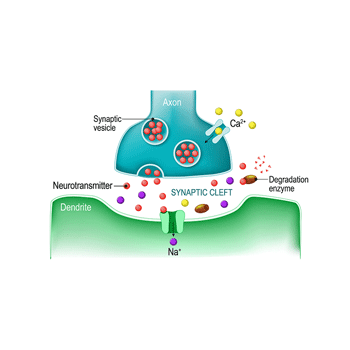
Sunosi is trying to get neurotransmitters like dopamine and norepinephrine to hang around more in the synapse between the nerves.
While not classified as a stimulant, Sunosi is stimulating. Instead of triggering the release of norepinephrine and dopamine as amphetamines do, Sunosi increases levels of these neurotransmitters by inhibiting their reuptake by blocking transporter proteins that move them out of the synaptic cleft between the neurons (see image). With these neurotransmitters hanging around more in the synaptic space between the nerves, they should spark more activity in the wake-producing parts of the brain, such as the locus coeruleus, hypothalamus, and basal forebrain.
Sunosi, then, is trying to wring more from the norepinephrine/dopamine that is there.
Stabilizer – Recent research indicates that by activating TAARI (Trace Amine-Associated Receptor), Sunosi also regulates and stabilizes dopamine and norepinephrine release, and even enhances it slightly; i.e., it also acts like a weak stimulant. It was described as potentially producing stronger wakefulness effects than modafinil in some people, as well as cleaner and steadier releases of energy than amphetamines, with less euphoria.

(TAAR1 has become a therapeutic target for disorders of sleep/wake regulation and ADHD).
Better Than Stimulants?
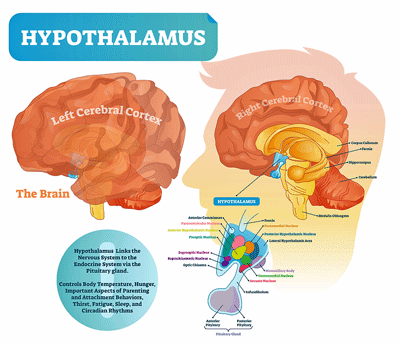
Sunosi seeks to stimulate wake-producing parts of the brain like the hypothalamus without triggering large releases of dopamine and norephinephrine like stimulants do.
The fact that Sunosi doesn’t trigger the release of monoamines like dopamine, norepinephrine, and serotonin, like stimulants do, is potentially a plus. While the large, rapid releases of dopamine and norepinephrine produced by stimulants do quickly increase wakefulness and attention, they also have a high potential for abuse and dependence. While the authors agree that stimulants can be helpful in ME/CFS, they assert that Sunosi’s milder side effect profile and lower risk of abuse and dependence make it a better choice.
Narcolepsy Connection
Sunosi has been FDA-approved for daytime sleepiness associated with narcolepsy or obstructive sleep apnea, but can be used for off-label uses.
Sunosi’s narcolepsy connection is intriguing, given Health Rising’s recent blog which described why a former doctor believes that ME/CFS is on the narcoleptic spectrum. (It’s hard to believe that it’s not, given Xyrem’s good results in fibromyalgia.)
While Xyrem directly supplies orexin, the depleted substance that causes narcolepsy, Sunosi is a dopamine-norepinephrine reuptake inhibitor; i.e., it tries to get the body to wake up. Orexin levels are being assessed for the first time in ME/CFS in the Open Medicine Foundation’s study.
The Study
Despite the fact that nothing about this trial indicated it was a phase IV trial (small, single-center, initial efficacy/side-effect assessment), the authors called it a phase IV trial. It was funded by Sunosi’s manufacturer, Axsome Therapeutics.
In the 38-person, double-blinded, placebo-controlled, 8-week trial, participants started at 75mg and gradually increased to 150 mg once daily in the morning. (Sunosi should not be taken 9 hours before bedtime).
The trial organizers aimed for two historically not-so-easy symptoms to impact: fatigue and executive functioning.
Effectiveness
Fatigue Reduced

By the 8th week, Sunosi significantly improved fatigue in some participants. Like any treatment, some people will benefit while others will not.
No significant changes were found until the 8th (and last) week of the study, when ME/CFS patients on Sunosi increased their scores on the primary endpoint, the Fatigue Severity Index (FSI), by 2.02 points compared to the .46 improvement in the placebo group.
A difference like that could bring someone with “very severe fatigue” to closer to ‘moderate fatigue”. It suggests that at least some people experienced a real, noticeable reduction in fatigue severity.
Strangely, though, no improvement in the amount of interference fatigue plays in the ME/CFS patients’ lives was seen. Improvements in fatigue severity almost always come with an increase in functionality but this was not seen in this study. The fact that it took 8 weeks for fatigue severity to drop significantly, though, may indicate that more time on the drug was needed to result in functionality. It could also be that the reduction in fatigue caused patients to do too much and overreach.
Planning/Organizing Improved

Sunosi appeared to improve planning and organizing capabilities.
The study also measured executive functioning using the “Behavioral Rating of Executive Function for Adults) (BRIEF A) symptom assessment. The Brief-A is a 75-question assessment that examines aspects such as working memory, planning/organization, task monitoring, material organization, emotional control, self-monitoring, initiation, and others.
The 2.13 reduction in overall BRIEF-A scale (GEC) –2.13 suggested that a “meaningful shift in day-to-day functioning” (e.g., planning, organizing, working memory, self-monitoring)” occurred.
The BRIEF-A MI subscale assesses “metacognition index; i.e., “thinking and organizing” part of executive functioning, which includes things like initiating tasks, working memory, planning/organizing, and organization, was significantly improved in the ME/CFS group taking Sunosi.
The 1.56 reduction, combined with the strong probability assessment (p<.0004), suggested that the patients also experienced a “real, noticeable improvement” in initiating, planning/organizing, working memory, and task monitoring.
Put together, the results suggest that the improvements in the “thinking/organizing” part of executive functioning drove the improvements in the overall BRIEF-A score.
Symptom Severity Moderately Improved
The –0.73 change on the PGI-S (p < .02) suggests that, with regard to severity, the patients perceived a “noticeable” but moderate change in the severity of their symptoms.
Note that all of these changes took 6-8 weeks to show up.
Side Effects
The number of side effects reported by the Sunosi and placebo groups was roughly equal. Note that Sunosi can produce modest increases in blood pressure and heart rate. If you are in the high norepinephrine category, this drug is clearly not for you.
Conclusion
The results were mostly encouraging. While Sunosi is in no way a cure, it did manage to move the needle on two difficult-to-treat symptoms: fatigue and executive functioning.
The lack of functional improvement is a concern, but could reflect over-engagement by the patients or that more time on the drug was needed. The functional aspect needs to be assessed more deeply, given its importance in ME/CFS.
Using a Sympathetic Nervous System Enhancer in ME/CFS (????)

Using a sympathetic nervous system-enhancing drug may seem strange, but sometimes they can help
Given the sympathetic nervous system dominance typically seen in ME/CFS and POTS, why would anyone think that a norepinephrine-enhancing drug like Sunosi would help? One answer is that these are very complex systems!
Mestinon (pyridostigmine bromide) is another drug that one might think would not work in ME/CFS or POTS. Mestinon enhances norepinephrine release and sympathetic nervous system functioning but it clearly works quite well for some people. Mestinon is believed to enhance “autonomic tone” and improve “vascular resistance”; i.e., blood vessel functioning. POTS studies show that Mestinon, this SNS enhancer, actually reduces tachycardia upon standing, and is believed to increase blood flows to the brain.
Modafinil is another sympathetic nervous system enhancer that can also increase heart rates, but it did not increase heart rates. (It did increase blood pressure.) In other words, it’s hard to predict what will happen.
Because Sunosi can raise heart rates, it might not be appropriate for people with hyperadrenergic POTS. People with hypotensive/low-blood-volume POTS, on the other hand, might benefit from a slight increase in blood pressure that helps drive more blood to the muscles and the brain.
The takeaway (especially if you have hyperadrenergic POTS) is, as always, to start low and go slow. This study started at 75 mg, but you can split the scored pill and start at 37.5 mg. Because Sunosi increases heart rate and blood pressure in a “dose-dependent” fashion, at low doses, it might not produce any increased heart rate.
Jarred Younger noted that while the study was too small to tell us much about this drug, its ability to produce some significant improvements (given its small size) was encouraging. This study should lay the ground for a much-needed, larger study.
Speaking of larger studies, there is RECOVER’s Long COVID Sunosi study.
RECOVER Sunosi and Modafinil Long COVID Trial Still Open
The RECOVER Initiative did a surprising thing by going out on a limb a bit and targeting “daytime sleepiness in its Sunosi / Modafinil combo trial. (Altogether, RECOVER’s daytime sleepiness (Sunosi/melatonin)/complex sleepiness (melatonin/lighting) studies are projected to contain almost 1,100 participants. (It’s nice to have money…)
The RECOVER Initiative’s Sunosi trial to combat daytime sleepiness is still open.
RECOVER’s focus on hypersomnia – abnormally long sleep times – was questionable, though, as studies have indicated that while hypersomnia can be present long term in some patients, that, at least in ME/CFS, it generally fades over time in both in children and adults with /CFS. Plus, the few long-COVID sleep studies done suggest that hypersomnia is relatively rare. RECOVER has its own sleep data however, and may be going off that.
Still, daytime sleepiness can occur with or without hypersomnia and is clearly common in both ME/CFS and long COVID. The 10-week study – now underway in dozens of centers across the US – will tell us much about Sunosi’s short-term effectiveness in long COVID.
The study due to end up in December of this year – is still open. Check out the 47 sites – most of which are still recruiting – here. Given that Sunosi is not a cheap drug (see below), a clinical trial is a good way to see if it’s helpful.
Controlled Substance
Sunosi is also a Schedule IV controlled substance in the United States. Schedule IV drugs have the second-lowest risk of abuse. (There are 5 “schedules”). Sunosi, benzodiazepines, and modafinil are all Schedule IV drugs. With Schedule IV drugs, the doctor must be DEA-registered (most are), and up to 5 refills are allowed before a new prescription is required. All in all, the abuse potential is considered low, and this drug is more lightly regulated than others.
Expense
The fly in the ointment is expense. Paying retail would make this a very expensive drug indeed (@$1,000/month). If you have insurance (Aetna, Cigna, Anthem, or UnitedHealthcare), one source said copays can range from a more manageable $40–$150 per month, or if Sunosi is considered a non-preferred brand (Tier 3 or higher), coinsurance rates of 25% to 45% after the deductible may apply. Some plans cap out-of-pocket costs to about $100–$200 per prescription.
Coupons and savings cards can also bring the price down a couple of hundred dollars.
Sunosi Savings Card – Sunosi offers a savings card for eligible patients to pay as little as $9 for a 30-day prescription, but the savings card only works if you have an FDA-approved condition, i.e., daytime sleepiness with narcolepsy or obstructive sleep apnea.
Applying the Arseneau Test

To try or not to try?
The Arseneau test evaluates the factors below to help determine whether to try a new treatment. My version of it comes from a presentation given by Dr. Ric Arsenau, a Canadian doctor specializing in ME/CFS/FM. The factors are:
- The credibility of the source – study evidence plus the drug is FDA-approved for two conditions; i.e., the credibility of the source is excellent.
- The quality of the evidence – fair; it was a good, well-constructed study, but the size was too small to determine how well the drug works in the ME/CFS population as a whole.
- The benefit, cost, and the risk-benefit analysis – the benefit appears to be moderate, the cost can vary from very high to moderately high ($100/month) depending on insurance, and the risk appears to be low.
In cases like this, where the risk is low, the benefit is moderate (but can be significant), and the cost may be high, much depends on the state of one’s personal finances. For me, if I could get my insurance to bring the cost down dramatically, I would give it a try for a month to see if a personal sore spot (executive functioning – organizing/planning/initiating) and my daytime fatigue improved.




Fasting is the way out of this horrible disease.
I’m curious why you say this. I’ve never heard it before. What is your evidence, and what would the mechanism be?
Its not me saying this…its Gez medinger who pulled himself out of long covid by fasting….the title says “the science”
https://youtu.be/5cD3dWuNjh4?si=5u1rETFqI8F5dqcU
I am never persuaded by single examples, and especially when their illness is not of long standing. If I had done this, I would have been diving down hundreds of pointless rabbit holes over the past 21 years. Believe me when I tell you that those of us with long-standing ME/CFS have read of hundreds of such instances over the years, each with a different story to tell.
From his eraly videos on Youtube it was very clear that Gez Medinger was able to stabilize his ME/CFS with pacing fast. He was able to learn to rest and pace fast because the ME/CFS community provided him with all the necessary information on the management of ME/CFS to the first Long COVID patients.
If you have a fast diagnosis and stabilazation in ME/CFS it is widely reckognized that a full remission is possible spontaneously.
Don’t you know about all that?
I’ve tried numerous stimulants. SNRIs, amphetamines, nicotine etc. I have had good results with Pristiq (a SNRI).
However, they all (Pristiq included) feel more like “band-aids” than actual treatments. Any increase in functionality and quality of life is good though.
I think I may have tried Sunosi when I initially became ill and was working with a sleep doctor. It must not have given me much improvement because it wasn’t something I continued. But, that’s just my experience. From the trial results, Sunosi sounds like it’d be worth a shot for someone with decent insurance.
I think you’re right on both accounts. They are bandaids yet in the right person they can help.
Yep these things can help.
But yes, we need to get to the heart of the matter, which is the neuroinflammation in ME/CFS. That is the root cause of the issues with neurotransmitters.
It should be noted that nicotine not only impacts neurotransmitters, but also neuroinflammation.
I am cautiously hopeful on the medications that are being trialled for neuroinflammation.
In particular bezisterim
This medication seems completely unsuitable to me for ME patients with tachycardia and POTS, and an overactive autonomic nervous system.
Great question – I guess it was more an assertion :). Thanks for bringing it up as I dug a little deeper and added a section to the blog.
One would think so and if you have hyperadrenergic POTS, Sunosi might worsen the tachycardia. It might help people with hypotensive/low blood volume POTS, on the other hand.
Modafinil is an interesting test case. It can raise heart rates as well but a Modafinil/POTS study found that it helped with alertness and fatigue and did not increase heart rates. Mestinon is in the same boat – it enhances SNS activity but can help.
These systems are so complex and we can all react so differently that I think you really have to try these drugs – starting at a low dose – to see how it affects you.
This is extremely speculative, but I recently learned that for oily skin acne, not using a moisturizer can paradoxically worsen acne, because the skin tries to compensate by making more sebum, which makes more acne, so in effect the attempted compensation overshoots.
So I’m wondering if /wildly speculating that the reason supporting the SNS by giving SNS enhancers is the same deal: If the reason the SNS measures as overactive in ME/CFS is because it is under-supported and overshooting in trying to compensate for actually being deficient, then supporting/ supplementing/ enhancing the SNS with modafinil/stimulants/Sunosi paradoxically helps the SNS to calm down and restores some balance to the SNS-PNS equilibrium.
But, as Cort says, these systems are complex.
“but I recently learned that for oily skin acne, not using a moisturizer can paradoxically worsen acne, because the skin tries to compensate by making more sebum, which makes more acne, so in effect the attempted compensation overshoots.”
A dry skin is more prone to allergens like pollen. A greassy skin is a bit better a warding of / keeping at a distance those allergens. Apply a bit of well tolerated oil, and one gets less prone to immune reactions creating things like acne or excema. With me, I learned that either applying some oily moisterizer or avoiding pollen (use cap, go outside on low pollen hours only) reduces scalp acne a lot.
So it seems the skin may make more sebum when being more prone to allergens. When I overdo it, I both become more prone to allergens, have more greassy skin and acne follows.
Just an anecdotal story about modafinil if it helps anyone…
I did a trial of the lowest dose of modafinil (and when I couldn’t sleep, I cut that dose in half). I still had trouble sleeping so I only took that small dose 2x/week and a tylenol pm on those nights.
The modafinil worked very well in that it gave me energy to get out of the house those 2 days.
Unfortunately I developed a side effect (listed as “less common”) of severely stiff leg and lower back muscles that no amount of stretching helped. I did some research and found this side effect was more pronounced in less active people. 🙄
I had to quit taking it.
Have no idea if my other meds affected it. (Paxil, neurontin and 10 mg of oral hydrocortisone.)
From looking up the side effects for this drug, it is the ones I always get: my gastric tract does not like them.
And I’d worry about the quality of the wakefulness, as brain fog is a major symptom. It is alleviated somewhat by a routine which keeps me going back to bed over and over until I have accumulated at least 7 hours in a night – so I’m more awake – but I’m not necessarily more functional.
I think I’ll wait until they have a LOT more data. But more functional time would be great.
The short duration is definitely a concerning thing. My Psychiatrist tried me on Modafinil because the ME meant so could no longer compensate for my ADHD.
I remember the first couple of weeks feeling amazing – I wasn’t fatigued and I could think clearly. But it made pacing impossible. Within a couple more weeks I felt like a corpse that someone else had revived and was controlling. In that my body was heavy and exhausted, it was screaming for rest, but I absolutely couldn’t rest. My body had to move despite the overwhelming fatigue and despite my mind knowing I HAD to be doing less.
We definitely need longer term studies that are specifically looking at if an initial improvement is sustainable. It’d also be amazing if these studies were structured in such a way that we could identify if there were commonalities between people who cannot tolerate the medication v those who benefit.
Exactly my experience on modafinal
Why I use it I only take it intermittently and it is helpful.
Cort, I’d love to understand what you mean by “intermittently” and especially how you came to this cycling of drugs like modafinil.
Thanks Megan, it’s nice to know I’m not alone
Most studies are, unfortunately, not very long – the RECOVER Sunosi study – is 10 weeks.
It’s interesting that it took 8 weeks for this drug to have an effect, while my experience with stimulants is that they have almost immediate effects.
Since it did take so long for this drug to have an effect I agree that we need longer studies to see how long the positive effect lasts and if things turn bad at some point.
Kat, your reaction sounds like akathisia, which is a known side effect of several anti-psychotic medications. The body just has to keep moving, despite deep fatigue felt by the patient.
I see an interesting three-way intersection between Sunosi, Strattera, and Provigil and the catecholamines they affect. Anything that increases dopamine in the brain is bound to have side effects that many of us won’t tolerate.
I haven’t taken Sunosi, but I take Strattera (atomoxetine) for my ADHD which does help somewhat for my ME/CFS energy deficit. But over the years, I’ve had to dial down the dose from 25mg to 10mg because of BP increase and tanking of my appetite. But even 10mg helps with my focus and concentration.
I used to take Provigil (modafinil) years ago before I found a CPAP machine and mask I could tolerate, but started developing killer headaches, even at 50mg, one quarter of the typical dose, so I had to stop. I suspect Sunosi would do the same, so I don’t even want to try it.
Let’s not forget that Sunosi isn’t generic yet, and some insurance plans (like mine) don’t cover it. With a GoodRx coupon, one month is over $900. Ouch!
ME/CFS pioneeering clinician Jay Goldstein saw over 20,000 ‘neurosomatic’ (incorporating ME/CFS) patients in his time. For him, dopamine (DA) and noradrenaline (NE) issues were a key part of the picture. While his many off-label drug treatments apparently had a lot of short-term success, the issue was always sustainability. IE the drugs stopped working after a time. And that DA/NE question seems to be a recurrent one in ME/CFS research. EG the NIH intramural study found reduced cerebrospinal levels of catecholamines (eg dopamine), potentially as a ‘downstream’ consequence of immune activation.
Treatments in this sphere seem to offer some help too. Look at low-dose abilify (LDA)(aripiprazole). Again we have an agent that appears to help a substantial number of ME/CFS patients, seemingly via its effect on dopamine … but again there is the Goldsteinesque issue with sustainability. It often stops working after 2 to 3 months. That was my experience. I have a number of other drug experiences over three decades of illness that indicate dopamine is important, but that manipulating it only ever seems to deliver very short-term results. (I agree with the ‘band-aid’ characterisation in a couple of other comments). Still — I’d be interested to try this medication, as inhibiting re-uptake is a new angle … and executive function/lack of drive & energy are major issues for me.
Good point. It may be important to cycle on and off many brain affecting drugs. That’s what I try to generally do.
This seems like a treatment based on a profound misapprehension of the disease. Exertion intolerance means (for me) that I must absolutely obey my experienced fatigue in order to avoid setback (and setbacks can last for months). Anything that would mask the fatigue would be dangerous for me. And that blowback could take a while to show itself, so it makes zero sense to me that a study lasting only 8 weeks helps us know anything at all about the impact of this drug.
Why do you think this is just masking fatigue instead of simply reducing it? This drug could be increasing blood flows to the brain (hence the increase in executive functioning) or the muscles or increasing levels of dopamine – which appears to be low. The fact that symptoms were reduced suggested the participants did OK. I haven’t tried this drug but for me blowback is pretty quick.
“so it makes zero sense to me that a study lasting only 8 weeks helps us know anything at all about the impact of this drug.”
It tells us, to the extent that a small study can, what happens when people take 2 months of this drug. That’s a pretty normal time for a drug trial. I don’t know if we’re going to get anything longer. The RECOVER Sunosi trial is 10 weeks.
I think it can help with the symptoms. But we need to address the neuroinflammation to more fundamentally address the disease.
Interleukin 6 in the brain has been shown to strongly link to the periphery, to muscle function, muscle fatigue etc.
Like a broken record, I have been saying for 15 years that the core problem – and solution – lies in the brain.
Science is starting to make good progress and I think we will have some good treatment options in the next few years.
It seems to me that, unless it is addressing the root causes of the exertion intolerance, then it is masking rather than merely relieving a symptom that is a crucial signal to help us prevent setback and worsening of the underlying disease. Increasing “wakefulness” and “alertness,” which of course will stimulate more activity, seems to me to be problematic if we don’t know how the medication is affecting the the pathologies that cause PEM.
As far as time frames go, I have several times experienced serious setback after attempting a very low-and-slow increase in planned exercise, and it certainly didn’t happen within days…more like a month or so. In fact, the setbacks resulting from cumulative overexertion (accrued imperceptibly over weeks) are much more severe and long-lasting for me than those that happen due to one or two days with evident overexertion. I just spent the entire summer housebound (and for much of it, bedbound) after attempting a course of PT that was supposed to improve my function. All seemed okay for a couple of months, and then BOOM.
I would be interested to hear if other folks with ME have had this experience. Anyway, naturally, it makes me very wary of any drug that might encourage me to increase activity. So far, in the two decades of my illness, I can only increase activity in a sustained way through the extremely gradual expansion of my energy envelope, which seems to happen naturally if I honor my existing limits and avoid overexertion like the plague.
Agatha, that’s exactly my experience! I’ve also had MECFS for 20 years (following an infection), and every attempt to push my narrow limits goes well for a few weeks and then—BOOM. EVERY TIME! As soon as I feel fairly stable, I cautiously start extending my walks by 100 meters or writing something, everyone claps their hands and rejoices, and then—BOOM. Albert Einstein once said, “Insanity is doing the same thing over and over again and expecting different results.” So I’ve now made a deal with myself and forbidden myself from pushing my limits at all—ALL of them. It’s hard. But I want to finally get out of this up-and-down cycle.
Translated with DeepL.com (free version)
Agatha and all others …you need to watch this from the joe rogan podcast. You will then have a better understanding of what is really happening .you will have your eyes opened..VERY WIDE
https://youtu.be/207W1A_bJqI?si=BTZfRJx0_4xPBAsQ
Rogan is a controversial figure. He has been criticized for promoting conspiracy theories, COVID-19 misinformation, and for hosting guests who spread misinformation and pseudoscience.
I’m not sure he makes a credible source.
I have exactly the same experiences as you have, Agatha. My key wellness tools are pace and rest, mindfulness (not as a brain retraining but as a part of my Buddhist practice), yoga, gym, cardio, healthy food, and lots of fresh air.
My therapy is Chinese medicine.
I was once a moderate. I am now a low mild case again. I was mild for many years. Unfortunately, without a diagnosis.
I have achieved stabilization two years ago and am now very slowly watching my baseline going up again. The better my baseline the more I can do.
The more I can do the more I am motivated to manage my ME/CFS as perfectly as I can. The better I do. So I am one of the lucky ones – so far. I understand that anything can happen anytime with this illness.
I come here often because I am really interested in the research progress into the pathomechanism of ME/CFS. And I am very happy because we have more and more research again directly into EBV and HHV-6b as the cause of ME episodes.
I am one of those patients whose episodes are fully suppressed with the anti-viral aciclovir.
It’s probably these circumstances that allow me to keep away from constantly reading up on drug research.
I’m actually encouraged by this study as I’ve been taking 150’mg of Sunosi for ME/CFS since it came on the market several years ago. Before Sunosi. I had been on a short course of Modafinil, but that kept me awake 17-20 hours a day and I couldn’t sleep when I went to bed at night. That wasn’t sustainable for me.
Sunosi was a whole different experience. I find it mild, but effective at helping me wake up in the morning. Without Sunosi I practically need a bomb to go off to wake up and begin functioning and I might not ever feel fully awake during the day. So I take Sunosi about 30 minutes before I need to wake up, roll over and go back to sleep. About 30 minutes later I wake up gently and it feels like my brain has turned on. It allows me to function at a mild level throughout my day, and I can still take a nap when I need one, but there are many days I don’t take one. Still, I’m mostly bed bound except for medical excursions that require me to leave the house.
While I can’t say with certainty whether or not Sunosi improves blood flow to the head, I can make an educated guess that for me it does not. Since December I have been serving as a Beta tester for Lumia, a wearable device that tracks blood flow to head in real time via the left external carotid artery, and plots it on a graph against heart rate. According to my Lumia data, I experience significant drops in blood flow when I change position: lying down to sitting up, sitting up to standing, etc. I don’t have POTS, as I don’t experience low blood pressure with these changes, but the opposite.- my blood pressure spikes and remains intractable. It’s as though the drop in blood flow to my head causes my brain to send a message to my heart that it is hypoxic and not receiving enough oxygen, so my heart compensates by increasing blood pressure to try to get more blood to the brain.
Armed with this information, in January I began 90 minute HBOT treatments 3x a week. The goal with this was to increase oxygenation of the brain and decrease neuro-inflammation. With HBOT an interesting thing happened – by receiving 100% oxygen at 2 atmospheres of pressure, I discovered I could read again. For the past several years I was limited to reading only short articles because the brain fog made reading comprehension and retention really difficult and exhausting. I’ve been a student all my life and losing the capacity to read was devastating. But inside the HBOT unit I wasn’t allowed electronics, so I brought a book. And lo and behold, while I’m in the HBOT unit receiving treatment I can read technical material with ease and remember it. Unfortunately, these benefits don’t last once I leave the unit. Still, for me, it’s one more indicator that low blood flow to the head (and hypoxia) is a major driver of my incapacity and the ability to read for 90 minutes is a joy returned to me.
All this to say, the effectiveness of Sunosi and its ability to wake me up gently and consistently, is one piece of a larger puzzle. No, it doesn’t eliminate fatigue or increase blood flow to my head, but it does make my day easier and for that I’m grateful.
Congratulations on working through that and sharing your experience. Really interesting stuff. Hopefully you’ll find a combo of treatments that will get you out of the house.
I took Sunosi for 2 weeks and it left me in a severe crash. I went from mild to moderate as a result. I also have hyperPOTS, so I think that’s why. Glad it helps some people, but perhaps it’s best to be cautious if you also have hyperPOTS.