




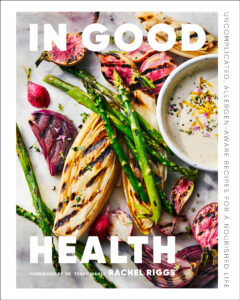
 I owned a specialty food shop when my life was upended by ME/CFS, forcing me to completely reinvent myself and my relationship with food. My debut cookbook, In Good Health (out now in the US, out November 13th in the UK and Europe), was written—literally—from bed, after discovering I could no longer tolerate many of the foods I had built my life and career around.
This wasn’t a lifestyle choice—it was a survival strategy. But along the way, something unexpected happened: I became deeply passionate about this new way of eating—one rooted in health and resilience.
Big Picture Vision
At the core, my passion is nutrient-dense cooking—food that fuels long-term health without sacrificing flavor. It’s about wellness over weight, and creating meals that truly nourish.
Generational Perspective: Gen X vs. Gen Z
As a Gen X-er, I’ve noticed a pattern: we often wait until our 40s or 50s—typically prompted by lab results or health scares—before making real lifestyle changes.

Gen Z is flipping that script. They’re engaging with wellness early—teens and twenties—asking smart questions, doing their research, and making intentional choices.
It’s the ripple effect of the Information Age: science is more accessible, and we’re rethinking outdated beliefs. Take alcohol, for example—we grew up hearing a glass of red wine was heart-healthy. Now, research shows no amount is beneficial.
Gen Z is responding with trends like mocktails and sober curiosity.
The Heart of the Book
This cookbook is the one I wished I had when I overhauled my own diet—rooted in both restraint and abundance.
Every recipe is intentional:
- Short ingredient lists, manageable prep
- Bright, unfussy, seasonal cooking with California sensibilities
- No gimmicks, no fads—just modern, fresh, timeless food
These are nutrient-dense recipes that quietly skip inflammatory ingredients like gluten, dairy, refined sugar, and nightshades—without announcing it or relying on faux versions. They’re inclusive by design—because even if you don’t have dietary restrictions, someone at your table probably does.
Visually, it’s a clean, beautiful book—photographed and styled to feel timeless and unfussy. No tricks. Just vibrant, wellness-driven cooking that happens to be delicious.
Why Nutrient Density Matters More Than Ever
We’re often starting from a deficit:
- Chronic conditions that impair absorption
- Environmental stress and modern illnesses that increase nutrient needs
- Agricultural shifts and soil depletion that have reduced the nutrient content of our food
That’s why nutrient density isn’t optional—it’s essential.
Feel-Good Food
I wanted the baked goods in this book to feel homey and deeply satisfying—something delicious on the counter for an unexpected guest or afternoon snack.
These are sweets that support how we want to feel today:
- Everyday cakes whisked in one bowl
- Made with almond flour and maple syrup for better blood sugar and satiety
- Filled with scent, warmth, and comfort—but also intention
It’s a quiet revolution in how we eat.
We’re sharing a few easy favorites that prove: healthy and delicious can absolutely coexist
RECIPES
This hearty beef dish, paired with your favorite vegetable mash, is as simple as it is comforting. It fills your home with the warm, inviting aroma of French onion soup and provides essential nutrients that can be lacking if red meat isn’t part of your regular rotation. Low-effort yet high-volume, it’s a meal you can enjoy for several days in a row or freeze for a quick, satisfying dinner down the line.
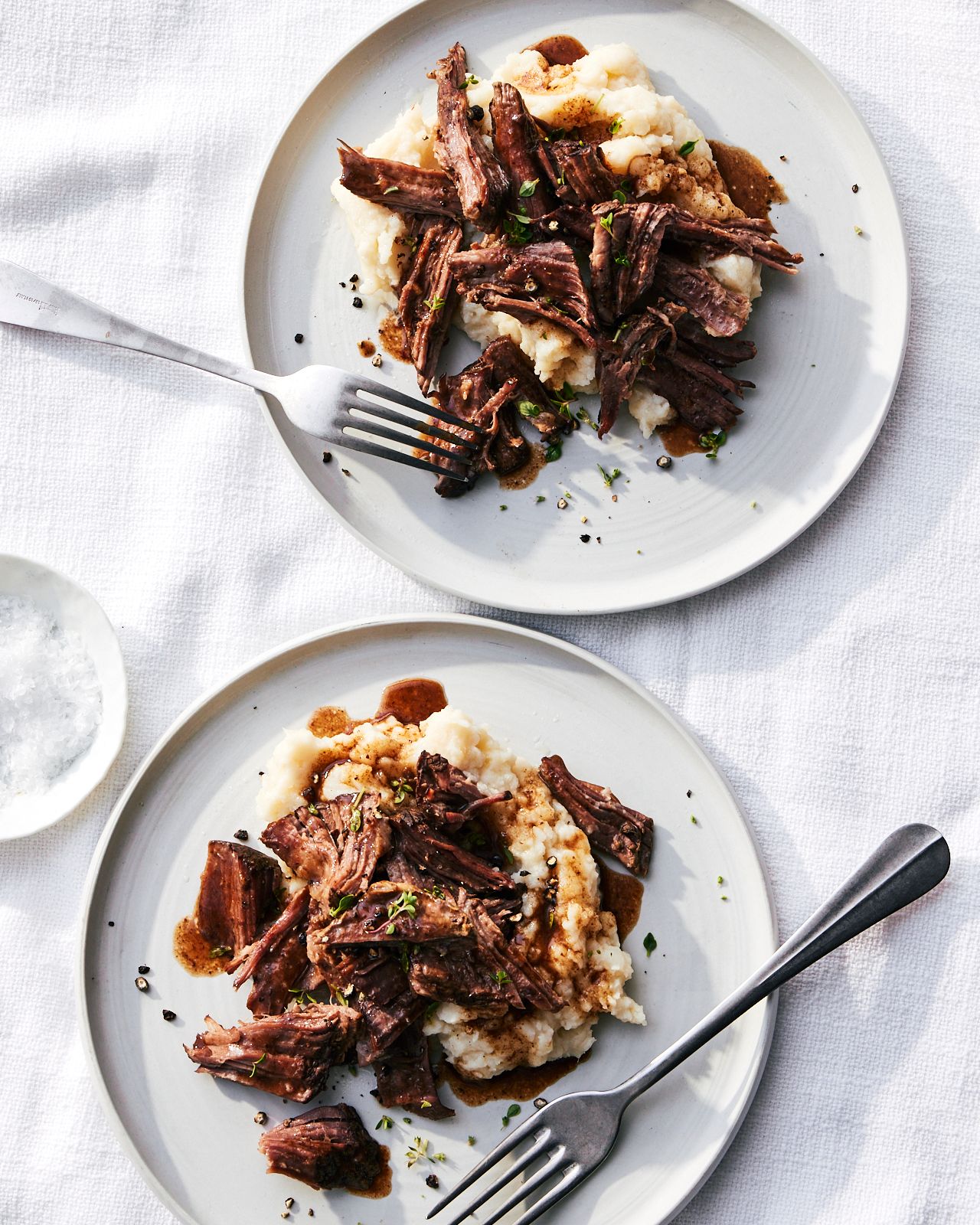
Savory French Onion Beef
SERVES 10
- 1/2 red onion, thinly sliced on a mandoline (see Note)
- 1 yellow onion, thinly sliced on a mandoline (see Note)
- 10 garlic cloves, minced
- 1 tablespoon pink salt
- 1 tablespoon apple cider vinegar
- 4 lbs (1.8 kg) boneless beef chuck roast, twine removed
- Chopped chives, for garnish (optional)
- Maldon flake salt, for sprinkling
- Vegetable mash of choice, to serve
Combine all ingredients, except chives and flake salt, in a slow cooker in the order listed, with the chuck roast sitting on top. Cover, set it to high, and cook for 3 hours.
Use a pair of tongs to flip over the roast, then cook for another 3 hours.
Using 2 forks, break roast into smaller chunks so it will cook evenly and absorb all the other flavors. Cook for another 2 hours.
Pick out any undesirable tendons or fat and discard. Using 2 forks, shred the beef so it combines with the juices.
Serve beef over the vegetable mash of your choice. Garnish with chives and sprinkle with flake salt, if desired.
NOTES
The ingredients fit perfectly into a 3.5-quart slow cooker. It’s important to slice the onions paper-thin so they eventually disappear into the beef.
This creamy cauliflower mash is a righteous stand-in for mashed potatoes. Simmering the cauliflower in coconut milk—instead of boiling in water and pouring it away—preserves its nutrients. Serve it alongside Roast Chicken (page 135), Savory French Onion Beef (page 139), or Bison Meatloaf (page 140). It reheats well, so you can make it in advance if that’s more convenient.
Garlic Mashed Cauliflower
SERVES 6–8
- 2 large heads of cauliflower, finely chopped
- 1 (13.5-oz/400-ml) can full-fat, additive-free coconut milk
- 3 large garlic cloves, roughly chopped
- 2 teaspoons pink salt, plus extra to taste
- Maldon flake salt, for sprinkling
- Chopped chives, for garnish
In a stockpot, combine cauliflower, coconut milk, garlic, and pink salt. Cover and bring to a boil. Reduce heat to medium-low and gently simmer for 20 minutes, until cauliflower is very tender. Remove from the heat, uncover, and allow it to sit for 10 minutes so the excess moisture can evaporate.
Transfer the mixture to a food processor and process until smooth. (Alternatively, you can use an immersion blender for a denser, silkier purée.) Season to taste with more pink salt.
Transfer to a serving bowl, then sprinkle with flake salt and chives.
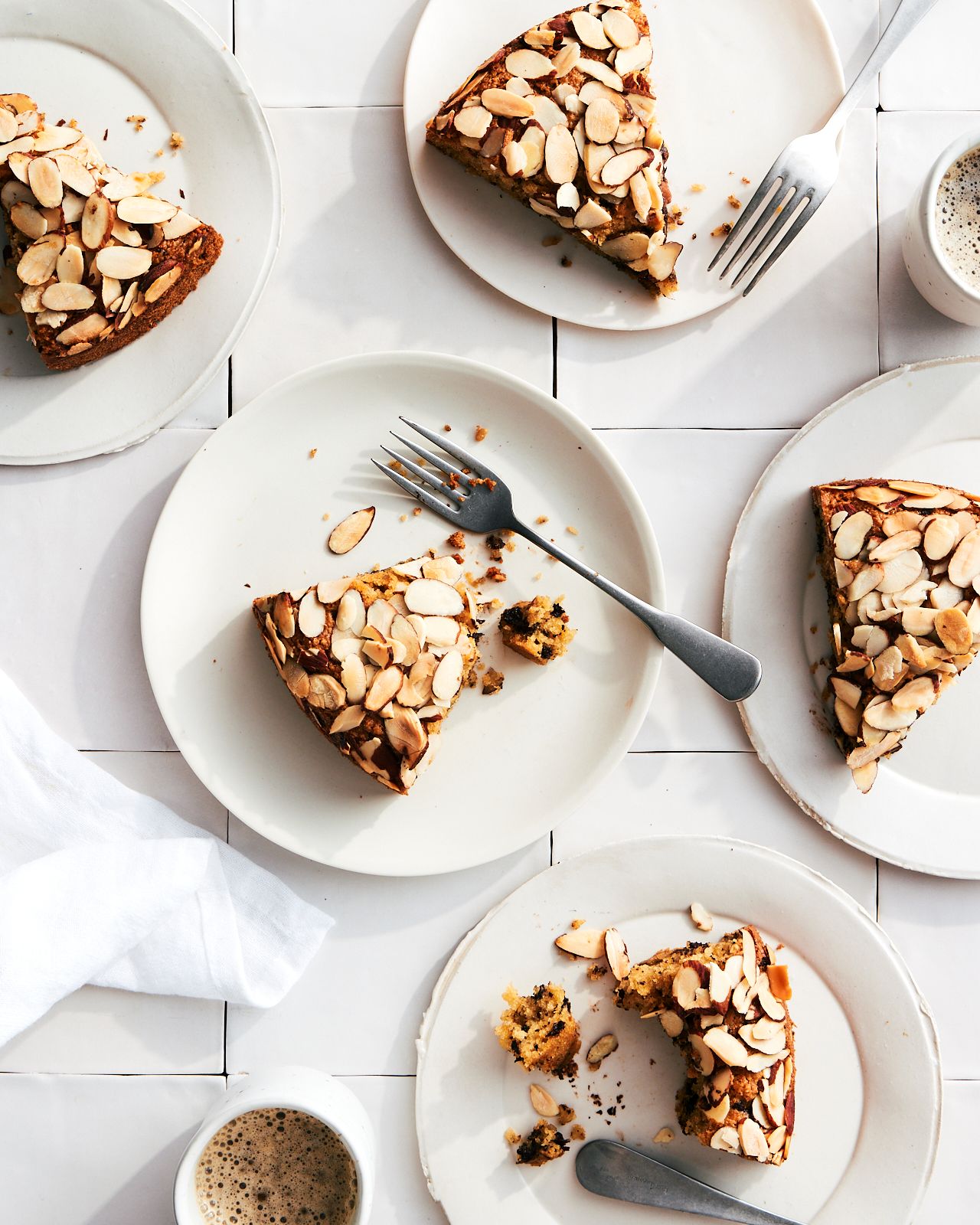
Marzipan lovers, this one’s for you! Nutrient-dense almond flour contains more protein than other gluten-free flours. It’s also denser and therefore less forgiving, so I don’t recommend any substitutions. Please see my notes on measuring and sourcing almond flour (pages 18 and 25) to ensure it turns out perfectly! This cake will hold in the fridge for up to a week—simply reheat each slice for 15 seconds in the microwave to return it to fresh-baked status.
Coconut-Almond Snack Cake + Dark Chocolate Chunks
SERVES 8
- 2 1/2 cups (260 g) super-fine blanched almond flour
- 3/4 cup (75 g) finely shredded unsweetened coconut
- 1 teaspoon baking powder
- 1/2 teaspoon baking soda
- 3/4 teaspoon pink salt
- 4 large eggs, room temperature (see Note)
- 2 tablespoons melted coconut oil, plus extra for greasing
- 2/3 cup (210 g) pure maple syrup
- 11/2 teaspoons almond extract
- 5 oz (142 g) coarsely chopped dark chocolate (see Note)
- 1/2 cup (62 g) sliced almonds, for the topping
Preheat oven to 350°F. Grease a 9-inch (23-cm) nonstick springform pan and line the bottom with a parchment paper round.
In a medium mixing bowl, whisk together almond flour, coconut, baking powder, baking soda, and salt, breaking up any lumps. Add the eggs, coconut oil, maple syrup, and almond extract and whisk until the ingredients are well combined and the batter is smooth.
When you get to the chocolate, swap your whisk for a rubber spatula and fold the chocolate into the batter until it’s evenly distributed. Pour the batter into the springform pan and spread it toward the edges. Tap the pan on the counter to level the batter. Sprinkle the sliced almonds evenly over the top, with the goal of covering all the batter.
Bake on the center rack for 30 minutes. Cool before transferring to a serving plate.
Variation: Coconut-Almond Muffins – Prepare a muffin tin with 12 paper liners. Make the batter as directed. Use a spoon to divide the batter among the 12 muffin cups. (Cups will be full because almond flour doesn’t rise as much as all-purpose flour.) Sprinkle the tops with the sliced almonds, covering as much of the batter as possible. Bake on the center rack for 23 minutes.
NOTES
Use room-temperature eggs, as cold eggs may cause the coconut oil to solidify. You may be tempted to use chocolate chips instead of chopped dark chocolate, but they won’t produce the same luxurious puddles of melted chocolate.
Excerpted from In Good Health: Uncomplicated, Allergen-Aware Recipes for a Nourished Life © 2025 by Rachel Riggs. Reproduced with the permission of Figure 1 Publishing. Photography by Colin Price and styled by Marian Cooper Cairns.
LINKS:
- Newsletter: https://rachelriggs.substack.com/
- Instagram: https://www.instagram.com/the.rachel.riggs/
- Amazon: https://tinyurl.com/275sbjrw
Health Rising does not receive any funds from the sale of this book




Wowie! I just got my pre-ordered book yesterday, and all I can say is FANTASTIC. This cookbook is full of stunning photos of beautiful foods and dishes, and it is easy to read, and even fun to read. Plus, I already have many of the ingredients in my kitchen. How did that happen? I assume it happened because Rachel was thinking about our needs (and our limitations) when she wrote this book. Rachel, you knocked it out of the park with this one. Thank you for all your work! In fact, I just ordered another copy of the cookbook for my mom. I recommend we all buy as many copies as we can (holiday gifts, anyone?), so we can support Rachel, who has been a key member of our community for a long time. Good work, Rachel. Be proud!
Thank you, sweet Rivka—I’m thrilled you like it!!!
Wow! Congratulations on getting this book into production. Because of CFS, I gave up any real amount of cooking about 6 years ago. I am curious to check your book out. Thanks for the opportunity here.
Thank you, Jayne!
We only really need a few good recipes in our repertoire to make a difference. I’m only able to do it because cooking is an absolute priority. It’s not really a choice, as anything pre-made or processed makes me much sicker.
I hope you find one or two that you can make on repeat – x
I agree! Honestly, just a few good recipes would go a long way 🙂 I kind of live off my homemade colesaw and salads, my brown rice and chicken pots, and my veggie mashes (sweet potato base plus whatever – sprinkle with spices, salt and olive oil). Its all good – but I could use some more options.
Just three or four more would be great. 🙂
(I’m drooling over the Savory French Onion Beef. My living situation precludes slow cookers but it’ll be top of my list :))
This is totally true! Food for us with ME/POTS/FM is very important to make a difference.
Still it’s very difficult because the most of us have a food intolerance.
So true—I have massive intolerances.
The cookbook is free of gluten, grains and pseudo-grains, dairy, soy, nightshades (eggplant, tomatoes, peppers, and potatoes), legumes, squash, spinach, pork, shellfish, refined sugar, artificial sweeteners, cashews and peanuts.
I hope that helps!
Dear Rachel
The book is going to be translated into Spanish? Thank you very much for your great work
Hi Marian!
No, I’m sorry, we are not planning a translation.
The recipes sound delicious, but they require WAY more energy and effort than I have available! Hard to believe these are suggested by someone who is disabled by this illness.
Linda,
I’ve been living with ME/CFS for 23 years, housebound for the last 12 years. Many of us have a spouse or family member who can help with the cooking. In my case, I have no choice but to make it a priority as anything not produced in my own kitchen makes me feel poisoned.
The cookbook is not ME-specific as our needs are too individual. But we need resources! And this book is the resource I wish I’d had when I completely overhauled my diet.
It looks like a lovely cookbook, Rachel, it really does, and I am glad for those who are able to cook like that. I’m sure it will be an excellent resource for many. I’ve written two books (over many years) and I know how much work goes into writing and producing one, so kudos to you for accomplishing it!
It’s just beyond what I’m able to do. I have been dealing with this for 36 years now, and as you say, it is different for everyone. I am often bedridden for weeks at a time, and housebound at least 85% of the time, and I guess I sometimes forget that everyone isn’t so sick. I am glad that this illness allows some people to actually cook : ) !!
I send you very best wishes!
Linda
Like Linda, I cannot handle meal prep or cooking. My wife’s health isn’t good enough to do it either. Add to that my recurrent large hiatal hernia, many food sensitivities, limited palate & aversion to meat, & I’m unlikely to be able eat these lovely dishes anyway. Truly wish I could.
Sadly, there’s no good answer for severe folks, especially with limited income & limited help.
The book sounds amazing tho. Well done, Rachel!
I’m so sorry, Deanne.
I really hear you. I hope with all my heart that this won’t always be the case for us—that something more effective will come along. From the outside, I may seem more functional than I really am. I’ve been housebound for 12 years, and cooking is something I prioritize over nearly everything else—sometimes even basic self-care like showering.
I truly wish things were different for all of us. Sending care.
Admittedly, I’m better off, but I could see doing them. I get that anything with more than three ingredients can seem daunting – which is why when I find something I usually stick with it, and cook it again and again and again. I’m ready for more of a culinary challenge and some better eats 🙂 My biggest problem, honestly, is probably turning things off before they burn.
Thank you Rachel!!! ♡
xoxo
This is how I eat already so I am excited to see this cookbook! I am in need, of course, of optimizing what I am doing currently.
I hope you love it!!!
I do, thanks 😊
I received my book and am currently reading it! It aligns with how I eat already and is a great addition to my current practice. I’m excited to try the recipes!
I only have a little chronic fatigue and some pain issues, but it is enough to disrupt my life and drags me down sometimes. I simply must cook most of my own food to stay healthy. Nutritious eating (not the popular versions) plus exercise and focusing on my sleep habits are the way I keep going.
Thanks, Rachel!
The foods sound delicious, but way more prep effort than I can do. I use a drafting chair now to roll around the kitchen just frying and egg and making toast. Congrats on the book! Tewnty five years into my mono turned ME/CFS journey, I’m keeping my eye on the cuffent research and possibilities. so I’m still holding out hope that maybe someday I’ll be able to use it.
Hi Lanetta,
That is the dream… and I’m holding out hope too! xx
My son-in-law is so impressed – clear recipes and stunning photos! That’s saying a lot as he’s a great cook, and he and family have serious food limitations. He and my teenage grandson are starting out with Dark Chocolate Pots de Crème.
I’m ordering two more copies for family members who are also passionate about yummy clean eating.
I see that many folks in our ME community, like me, aren’t able to cook – and will hopefully understand the wide appeal of this book. It can be shared with many who are able to cook and seek direction for tasty dishes that avoid allergens and sensitivities.
Big hooray for Rachel, who’s been a vital support for our ME community. Thank you!
Many thanks, Jane!!! x
Looks great! Any options to buy somewhere other than Amazon? Can it be ordered from small book shops, or direct from publisher?
Ty!
Hi—Yes! The book is available on BookShop and anywhere books are sold. Thanks for asking!
Hello Rachel,
I was wondering if there were any vegan and vegetarian recipes in the book?
Hi Martine!
Ok, I had to count them!
There are 77 recipes in total—15 are vegetarian and 30 are vegan. There would be many more vegetarian recipes except that many of them contain either chicken stock or anchovies/fish sauce. You could probably get away with using veg stock instead of chicken stock in the soup recipes but you will lose some of the umami flavor.
I hope that helps!
Yes, that helps a lot. Thank you. I think i will order it. Can’t wait to cook my first recipe!
Cool! Note that the Brownie recipe includes a vegan option using a flax egg, and the Creamy Coconut Carrot soup also includes a vegan option to replace the chicken stock with an extra can of additive-free coconut milk. You will undoubtedly find other ways to adapt the recipes to be vegan—for example, the Lemon-Scented Fennel Soup is vegan but I didn’t include it in my count because it’s topped with grilled salmon. You can simply omit the salmon.
Hope you love it!!!
Thanks again! Yes, i am pretty good at adapting recipes! I also shared this post on a facebook group of recipes for persons with ME/CFS and long covid.
Thank you!!!
Long before getting long covid, allergy testing revealed that I should avoid a number of foods. I tested them and, although I could eventually manage several in moderation, almonds consistently result in exasperation of my osteoarthritis symptoms for days afterwards.
Have you found that coconut flour works in place of almond flour in your recipes? Or possibly ground walnuts? Thanks.
Hi Maxine,
Unfortunately, no. Almond flour/maple syrup cakes are very tricky to get the moisture balance and the crumb right because of the density and amount of liquid. Coconut flour is hyper-absorbent and would require a complete reworking of the recipe—and require many more eggs. Walnut flour is very different than almond flour too. It has a coarser texture, different fat content and flavor, I recommend asking google for cake recipes that use coconut flour or walnut flour. I think you will find lots of options that way!
Rachel, the recipes that Cort printed from your book sound delicious, but far too much work for someone who has even moderate ME/CFS or Long Covid. (I know. I have both.) Wouldn’t it be wonderful if some healthier person would start a business where they would cook and deliver a week’s worth of specialty meals that could be eaten or frozen for later. There are a lot of food service companies out there, but my single son can tell you that most are awful. There is a delightful film called The Nonnas where Italian grandmothers are brought in to cook traditional food.
Hi Betty,
Thank you so much for your thoughtful comment. I really hear what you’re saying—cooking can feel like a huge mountain to climb when you’re dealing with something as energy-limiting as ME/CFS or Long Covid.
Just to share a bit from my own experience: I have moderate-to-severe ME/CFS myself, and I do cook all my own meals—though it definitely takes creativity, pacing, and sometimes doing things in very small steps. I’ve often joked that if I had kids, pets, or even plants, I wouldn’t be able to manage!
The cookbook isn’t written specifically for people with ME/CFS or chronic illness, but I did approach it from the perspective of someone who lives with limited energy and needs to make food that genuinely supports their body. I know that won’t make it accessible for everyone, but I hope that for those who do still cook—even occasionally—it offers some ideas that feel worthwhile.
And yes, I completely agree—it would be such a gift to have more trustworthy, health-conscious meal services tailored to individual needs.
Hi Betty, I was thinking the same thing. And ive also seen the film you mention, it would be perfect. Also something I would definately look at using. My son does a lot of the cooking for our household, I manage maybe 1 day a week. My.mum does 2 and my son does the rest. A hone service like this would be perfect for me. I doubt that both my son and mum would want to eat the same as it quite restricting of the often used foods her. We love things like tomatoes, peppers, potatoes, pasta, rice. They are our staples. Added to which my friend is allergic to garlic and she eats with us every day. It would prove so time consuming to makes 2 or 3 different meals a day.
My copy arrived a few weeks ago (I ordered from Bookshop.org) and it is a work of art! Really beautiful. I have been going through it and putting little sticky notes on the recipes I plan to try.
I am on the higher end of functioning, having largely recovered from severe long COVID. I do understand what many are saying when they say even these recipes are too much for them to handle. My problem isn’t energy anymore per se; it’s that I don’t LOVE cooking. So I’m always drawn to easier recipes, and I have to say that sometimes the recipe list appears daunting, but the work required isn’t such a big lift. This appears to be the case with many of the recipes in In Good Health.
Rachel, I appreciate the work and the passion you put into this. Congratulations!
Amy!!
So glad to hear the book has landed with you in a meaningful way. I really appreciate your support—and love that you’re already diving in with sticky notes! I know cooking isn’t really your thing, but I hope it inspires you to explore a few recipes when the mood strikes.
Well done Rachel, writing a book from bed with CFS, is quite an achievement. My daughter has CFS as well as other conditions such as MCAS and there are many foods she can’t tolerate, such as the ones you have excluded but also; coconut milk, chili, garlic and onion. We’re also vegetarian. You can see what a challenge it is for me to think of what to cook each evening. Would any of your dinner-time recipes be suitable for us?
Hi Leanne,
There are definitely recipes in the book that meet your criteria, though probably not many dinner recipes. Since ingredients like dairy have been omitted, the soups often use coconut milk for creaminess, and many of the savory dishes rely on onion and garlic for flavor.
If you’re avoiding onion and garlic, you might want to look for a vegetarian cookbook that’s specifically designed to be low-FODMAP.
I’ve just ordered three! Thanks for sharing.
Fantastic resource Rachel.
Thank you, Sally—I hope you LOVE it!!!
Love the sound of these, but why do so many recipes have garlic in. My friend is allergic to garlic. We have to leave it out of 90% of modern recipes. Can’t we have more recipes without garlic please.