




Geoff’s Narration
The GIST
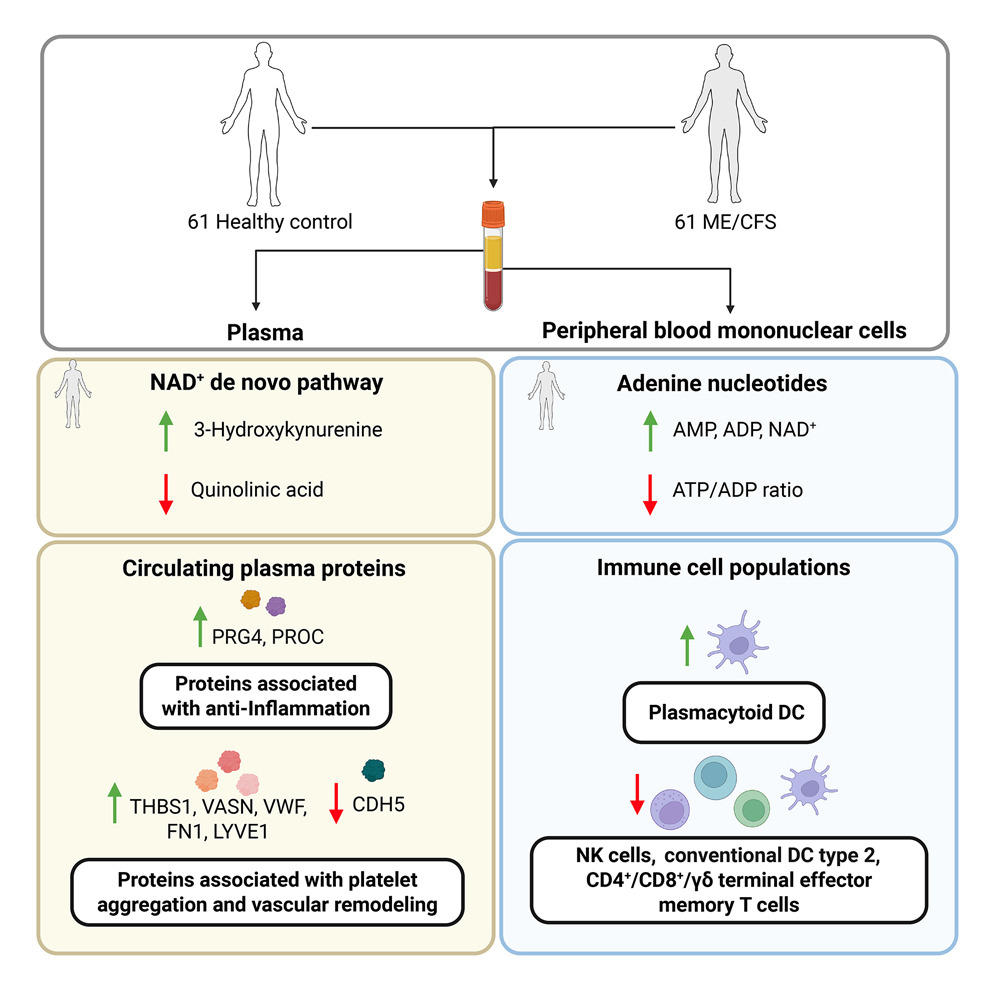
ME/CFS studies keep getting more comprehensive and more complex. Take this nice robust recent Australian study, “Mapping the complexity of ME/CFS: Evidence for abnormal energy metabolism, altered immune profile, and vascular dysfunction“, which integrated energy metabolism, immune-cell subsets, and plasma proteomics in 61 age and sex matched people with ME/CFS and 61 healthy controls.

These more complex studies are providing more keys to what’s going on in ME/CFS and similar diseases.
This study was significant in several ways. It was fairly large, and used a “multi-modal” approach which integrated energy metabolism, blood proteins, and immune cell findings together to determine how the different systems in the body are interacting with each other.
A recent paper from the Open Medicine Foundation’s Chris Armstrong, “Machine learning and multi-omics in precision medicine for ME/CFS“, asserted that ME/CFS is simply too complex to be understood without using these sophisticated, multisystemic, AI-driven analyses.

Energy Metabolism
Instead of assessing energy metabolism by focusing on plasma, which contains a multitude of factors (proteins, clotting factors, electrolytes, etc.) as most studies have, this study went straight to the immune cells (PBMCs).

A strong model result suggests this group is on the right track.
THE GIST
- ME/CFS studies keep getting more comprehensive and more complex. This nice, robust recent Australian study used a “multi-modal” approach which, instead of studying systems separately, integrated energy metabolism, blood proteins, and immune cell findings together determine how the different systems in the body are interacting with each other.
- Instead of assessing energy production in the plasma (which contains many factors) this study concentrated on the immune cells. The study found that the poor immune cells in people with ME/CFS are exhausted, metabolically stressed, and oxidatively challenged (!).
- Low levels of mature immune cells suggests that immature immune cells simply may not have the energy to mature. Because these cells are primarily responsible for clearing pathogens, their relative dearth may explain why people with ME/CFS may have trouble fighting off infections or herpesvirus reactivations.
- These mature immune cells are also responsible for cleaning up the tissue damage, gut permeability, blood vessel problems, etc. that exertion typically temporarily produces. With those cells out for the count, repairing any exertion-caused damage takes longer, causing danger signals to persist for longer periods of time, which in turn causes prolonged symptoms, aka post-exertional malaise. This is all potentially because of the loss of the mature immune cells.
- Because the innate immune system operates on a local level, it never produces the cytokine storms researchers are so enamored with. Hyperactive innate immune systems can, however, sensitize the nerves, affect blood flows, remodel the tissues, and produce the flu-like symptoms people with ME/CFS often experience after exertion.
- After exertion, you may feel like you’ve caught a cold, but you haven’t been exposed to a new virus. Instead, a deficient immune response that gets hammered after exertion, in particular, may also allow herpesviruses or other latent viruses to temporarily reactivate.
- This could lead to – as has been suggested – the innate immune system (monocytes/macrophages/complement) shouldering the burden.
- A very strong model result that accurately predicted who has or does not have ME/CFS suggested these researchers are on the right track. Hopefully, they can validate and deepen their findings with a larger, more comprehensive study.
Last Days of the Donation Drive

This is it – last days of the donation drive!
We’re in the last days of the end of last year/beginning of this year’s donation drive. Thanks to everyone who has contributed, the drive is going very well (and better than the widget suggests as the numbers do not reflect the checks we’ve received).
This study was complex, and the results – particularly the immune cell energetics results – took quite a bit of digging. That’s good news. For one, it indicates researchers are digging deeper into the nitty-gritty of this disease. Every step, though, reveals just how complex the body is, as every step seems to uncover yet more complexity, and more avenues to check out.
Nobody said this was going to be easy! We could throw up our hands and run from the complexity, or embrace it and try and understand it. We’re choosing the second option. If being along for the ride for that turns you on, please support us. 🙂
HEALTH RISING IS NOT A 501 (c) 3 NON-PROFIT
Immune Cells
So often it seems to come down to energy production. This study found a raft of energy production problems in ME/CFS patients’ immune cells. They include higher NAD⁺, AMP, ADP levels, NADP/NADPH ratios, and lower ATP/ADP ratios in immune cells, and higher AMP and lower ATP/ADP ratios in plasma.
Exhausted – Lower ATP/ADP ratio – Because ADP is what is left over after ATP is consumed, the lower ATP/ADP ratio in the immune cells suggested they were in a state of exhaustion. The low ATP and high ADP levels indicated the ATP had been used up. Simply put, the immune cells were using up more energy than they were producing. Various problems: chronic immune cell activation, mitochondrial problems and/or issues with glycolysis could be causing this. All have been suggested by past studies.

Metabolically, oxidatively, or simply exhausted – the immune cells of ME/CFS patients appeared to be stressed in every which way.
Metabolically Stressed – the higher AMP and ADP levels fit the exhaustion scenario nicely. Cells convert ADP into ATP to recharge them, but if they’re under too much energy stress, instead of producing ATP, they begin to accumulate AMP and ADP.
Shades of the cell danger response, those danger signals can cause the immune cells to produce AMPK which shuts down everything but essential functions to save the cell from dying.
Higher NAD⁺ levels – This seemed a little strange. NAD⁺ is the carrier that transports electrons in the electron transport chain that produces ATP, and people with ME/CFS had lots of NAD⁺. NAD⁺ should be transformed, though, into NADH, which feeds electrons into the electron transport chain. Really high NAD⁺ levels suggest not enough NADH is being produced to drive ATP production.
Several problems (glycolysis, TCA bottleneck, fatty acids, electron transport chain inefficiencies, leaky mitochondria, etc.) could produce low NADH levels.
Oxidatively Stressed Cells – with high NADP/NADPH ratios, a major marker of oxidative stress shows up. This is exactly the opposite of what you’d like to see.
Because NADP is the oxidized form of NADPH, high NADP levels suggest that high levels of oxidative stress are wreaking havoc on NADPH. NADPH plays a crucial protective role by recharging glutathione – the main intracellular antioxidant. Because it is also used to power up neutrophils and monocytes, reduced levels of NADPH may also lead to an underpowered immune system.
Chronic immune cell activation can blunt NADPH levels and result in increased NADP/NADPH ratios.
In the end, we have exhausted, low-energy, metabolically stressed, and oxidatively challenged immune cells (!). The energy production problems might not completely originate with the immune cells. The kynurenine findings suggest that that pathway might be smacking the mitochondria as well.
Immune Cell Types
The immune findings had something for everyone.

Reduced levels of mature immune cells could give pathogens more free reign.
Impaired Pathogen Fighting – the low levels of mature memory T-cells, NK cells, and dendritic cells fit with the idea that energy levels are low, and that the immune system is less than ready to take on pathogens. Immune cells need to rev up their engines in order to become activated. The low levels of mature immune cells suggests the immature immune cells simply don’t have enough energy to develop.
Lower levels of a specific subset of NK cells (CD56lowCD16+ NK cells) that are particularly effective at battling viruses suggest, as other studies have, an inherent vulnerability to viral infections exists. Other findings (decreased fraction of CD56+ NK cells, increased CD27+CD28+ early effector memory subsets of CD4+ and CD8+ T cells) could also indicate that an inability to respond effectively to infections exists.
No evidence of increased pro-inflammatory cytokines such as IFN-γ, TNF, IL-12/IL-18 suggests the later, or adaptive, immune system is not properly getting activated and clearing pathogens.
This could lead to – as has been suggested – the innate immune system (monocytes/macrophages/complement) shouldering the burden. Because the innate immune system operates on a more localized level, it doesn’t necessarily result in high systemic cytokine levels (see below).
Interestingly, the risk of autoimmunity could either be increased (due to a higher reliance on antibodies to stifle infections) or reduced (if the B-cells are not being activated).
Post-Exertional Malaise (Not from the paper)
Interestingly, the impaired activation of the adaptive arm seen in this study may fit nicely with the unique kind of post-exertional malaise people with ME/CFS experience. We don’t see the classic “cytokine storm” that’s associated with infections, but that doesn’t matter; this kind of immune activation can still produce the flu-like symptoms, aka the “sickness behavior”, that people with these diseases are so familiar with.

Once again we see evidence that repair mechanisms may not be kicking in.
This is because the “terminal”, or mature, T and NK cells that are responsible for cleaning up the tissue damage, increased gut permeability, endothelial activation, etc., that is produced during exertion, are missing. With those cells out for the count, repairing any damage takes longer, causing the danger signals to persist for longer periods of time.
That sets the stage for localized stress signals (DAMPS, endothelial activation) that emanate from the tissues to set off the innate immune system (monocytes/macrophages/complement). Because the stress signals are localized, the innate immune activation never produces the cytokine storms researchers are so enamored with. It can, however, sensitize the nerves, affect blood flows, remodel the tissues, etc.
Because the immune system lacks the mature adaptive immune cells that are able to reign in infections, people with ME/CFS may also be more susceptible to viral reactivation when PEM is present. You may feel like you’ve caught a cold, but you haven’t been exposed to a new virus. Instead, a deficient immune response that gets hammered after exertion, in particular, may allow herpesviruses or other latent viruses to temporarily reactivate.
A Strong Model
Being able to use data from a study to generate a model that is able to distinguish people with ME/CFS from healthy controls is a nice check on a study’s validity. This research group must have smiled when these results popped up.
- AUC 0.962 – a strong result suggesting that, overall, the model separates cases from controls extremely well.
- Sensitivity (85%) – the model correctly labels 85.2% of the ME/CFS patients as having ME/CFS.
- Specificity (96.7%) – the model correctly labels 96.7% of the healthy controls as healthy controls.
- Accuracy (91.6%) – overall, the model identifies 91% of the people correctly.
These appear to be very strong numbers for an exploratory model and bodes well for this group’s work.
If I understand it correctly, the model suggests that blood vessel /extracellular matrix issues (think connective tissues) are more determinative. They’re triggering the production of danger signals that are further stressing the system. The immune system is kicking in, but may be a bit downstream.
It’s great to see studies validating each other. The big question, of course, is what is driving what? The immune cells seem exhausted and oxidatively and metabolically stressed. Is chronic immune activation the cause, or something else? Could a core immune dysfunction (B-cells, T-cells, monocytes?) be throwing the rest of the immune system off? What is it? If energy production problems, on the other hand, are impairing the ability of the immune system to do its work, then we need to find what’s causing that.
We haven’t gotten to the source, but the good news is that the deeper researchers dig into this disease, the more they find.
Next Steps?

A strong model result suggests this group is on the right track.
Next steps might include keeping the methodology constant but doing a bigger study, which also uses other diseases (fibromyalgia/POTS/long COVID/autoimmune diseases?) as controls to see if a disease-specific signature is present.
Instead of testing PBMCs as a group, assess the energy production of immune cell types (T/B/NK/monocytes, etc.) separately to determine where the chief deficits are. Given that energy production problems (“immunometabolism”) in T-cells, NK cells, B-cells, and neutrophils (depleted respiratory burst) have been found in many immune cells, is it possible they are all depleted?
Assessing immune cell energetics and the cell danger response (purines) over time – at baseline, immediately post exertion, +4–6h, +24h, +48h – in conjunction with symptoms would be huge.
Last Days of the Donation Drive
This is it – last days of the donation drive!
We’re in the last days of the end of last year/beginning of this year’s donation drive. Thanks to everyone who has contributed, the drive is going very well (and better than the widget suggests, as the numbers do not reflect the checks we’ve received).
This study was complex, and the results – particularly the immune cell energetics results – took quite a bit of digging. That’s good news. For one, it indicates researchers are digging deeper into the nitty-gritty of this disease. Every step, though, reveals just how complex the body is, as every step seems to uncover yet more complexity and more avenues to check out.
Nobody said this was going to be easy! We could throw up our hands and run from the complexity, or embrace it and try and understand it. We’re choosing the second option. If being along for the ride for that turns you on, please support us. 🙂
HEALTH RISING IS NOT A 501 (c) 3 NON-PROFIT





Good study, but we sort of know this right?
Need to find the causative factor
In one sense that’s a very good thing. We need validation. It’s great to see different teams using different methods come to similar results. That said, they are starting to pile up aren’t they?
We have broad clarity but not specific clarity. The field should naturally move to the next steps. That’s after what researchers do – they build on past findings. I guess the big question is how do we get to identifying the specific drivers of this illness? I would think that’s the next step – it’s a big one! Precision Life has their answer and a blog and interview is coming up soon.
Really? How about treatment options?
I am all for educating oneself, but the amount of time some posters spend reading about their ME/CFS may be causing more harm than good, not to mention is associated with Somatic Symptom Disorder.
https://www.workingfit.co.uk/medical-evidence/unexplained-and-exaggerated-symptoms/dsm-5-somatic-symptom-and-related-disorders
Listen Brian,
You OBVIOUSLY don’t have ME/CFS and only came here to troll people if you question other people doing their work to get better in this way.
It is sad that modern medicine still has the need to systematically discriminate agains diseases primarily affecting women.
Hey we don’t have an explanation yet, should we label them crazy and bill them money instead of doing our work….
I won’t tell you the word I have in mind for people like that.
Nadine,
You did not really read what I wrote; you just negatively hyper-reacted based on your mispeception. There is no reasoning with childish personal attacks (toward somebody you don’t know).
Have a good day.
Brian, the key to all of the disorders mentioned in your reference article is that the symptoms are “medically unexplained”. For decades ME patients had to put up with and fight that diagnosis because so little research was being done on ME that it did indeed fall into the category of “medically unexplained”. But with more research that is changing. There are scientific and medical explanations being explored now. So we patients, so long miscast as suffering psychiatric disorders are unsurprisingly following the new research that disputes that. I’d say it’s not an obsession but an expression of hope
Elizabeth,
Yes, good points, but I did not say ME/CFS is not an actual syndrome. Rather, I noted the research which shows that spending excessive time and effort study any health condition has downsides, in some cases leading to an almost obsessive focus on one’s symptoms — and may amplify the same — along with less time and energy for building on one’s strengths and relationships. At the extreme it’s a mental disorder.
Every human being is susceptible to experiencing a mental disorder; it’s not, or should not be, a shameful thing– it’s just very human.
Brian, you are talking about yourself…
Hi Brian,
Unfortunately, what you are saying is very similar to what the psychiatric school )BPS) school has been telling us for many years and has impeded research on ME. Being interested in the research of our condition can actually be helpful to us, in addition to being in a community of similarly minded people.
I find the word ‘obsessive’ pejorative, the BPSers try to tell us that this kind of activity is what keeps us sick. No, it does not! We are sick already, that is why we are trying to find out why. I find getting involved in research developments helps me to cope with my illness. I’ve just thanked Cort for helping to keep my morale up with his reports! Sure, some treatment would be great, but we need to find the right thing to treat.
You can’t really separate mind and body though, even if your read uis correct.
So much evidence on genetic predispositions loading the gun for mental health issues. Gut issues, environmental toxins etc.
But we know m.e. is far more complex than the specific ‘ disorder ‘ you’re naming
If it’s simply a matter of “mind over matter” or just being able to overcome the ailment by “pulling oneself up by your bootstraps” thing…people would have done this. People don’t want to be sick. It’s obviously NOT something you can outthink or be stronger than. It’s not like medical providers are really helping people, who have to try to go to work and not get fired for being brain-fogged or fatigued. People are reading about this disorder, because they aren’t really getting help or getting better.
If you don’t want to read the latest ME/CFS research: don’t. Just because others are intellectually curious (beyond treatment suggestions, as we’d read zero research if that was the bar) doesn’t mean they have SSD. I highly doubt the average ME/CFS patient reading this article meets the definition of SSD, but on behalf of all readers, thank you for warning us of the risk of reading too much about our condition. We appreciate your concerns for our wellbeing.
🙂
Brava, Karen!
The source for this article appears to be a disability status determination entity, and seems to follow the now discredited psychiatric explanation for symptoms associated with ME/CFS and other conditions that are not fully understood.
I find that I only spend time researching my condition when I’m not feeling well; when I am better, the same information seems boring and tedious.
So perhaps sufferers focus on their illness because they aren’t feeling well, rather than the other way around, as this article would like to suggest.
When patients are given no help for something utterly debilitating, they read to try and gather some information that could ultimately lead to change. If a patient is deeply interested in understanding more about their disease, then reading posters is a valuable experience. What’s causing harm is the disinterest in finding answers over these decades and the attitude towards women by the profession. This is not a somatically caused illness, there are clear markers of changes to the blood, immune system, and mitochondrial failure that impacts all patients. Harm is suggesting that patients cannot benefit from information – are we not smart enough in your view?
https://www.biotoxinjourney.com
Long term exposure to macrocyclic group of mycotoxins, gliotoxin derivatives, aflatoxins b1,b2,g1, g2, may result in,
“MOG Antibody Disease- Symptoms, Causes, Treatment | NORD”
https://rarediseases.org/rare-diseases/mog-antibody-disease/
https://fq100.com
Very interesting study just published with theory on causative mechanisms:
https://www.nature.com/articles/s41419-025-08162-2
Nice – I have thought from the beginning that blood flows must matter. The ideas are are similar to this study.
“A mechanistic explanation of disease induction and maintenance is lacking” I love mechanisms…that is the next step – identifying the mechanisms.
Blood vessels
Here, we propose that acute viral infection results in (in)direct endothelial dysfunction and senescence, which at the blood-brain barrier, cerebral arteries, gastrointestinal tract, and skeletal muscle can explain symptoms.
Impaired pathogen defense/immune repair/clearance
Immune abnormalities in ME/CFS and long COVID can account for the persistence of endothelial senescence long past the acute infection by preventing their clearance, thereby providing a mechanism for the chronic nature of ME/CFS and long COVID.
Immune dysfunction, including reduced NK cell cytotoxicity, impaired macrophage phagocytosis, dysregulated NETosis, and shortcomings in complement function—which, incidentally, are common features of ME/CFS and Long COVID—lead to ineffective clearance of senescent cells
Their slant on cell senescence seems brand new.
They suggest doing this: What might offer valuable information are biopsies of both small and large vessels and subsequent immunohistochemistry and imaging processing of tissues
And treatment possibilities
Senotherapeutics are a new class of drugs and natural products that consist of two classes: senomorphics and senolytics [222]. Senolytics selectively clear senescent cells, while senomorphics are compounds that modulate their behaviour. If, as we argue here, endothelial senescence is central to ME/CFS and Long COVID, then it is reasonable that senotherapeutics and related treatments [220] might offer therapeutic benefit to ME/CFS and long COVID patients.
Senomorphics include metformin and rapamycin.
Do we know when trial results are anticipated for these meds?
The discussion about endothelial dysfunction function has me thinking about low VEGF and low Ferritin which are a problem for me and I have seen in many other chronic illnesses. Cort can you do a poll and see how many people have Ferritin (low or High) and low VEGF. In the Shoemaker mold protocol, the combination of a low Amylose diet and VIP assuming that you have cleared the mold supposedly corrects the low VEGF. The issue is VIP can cause pancreatitis so that needs to be monitored. I used VIP with Cheney a long time ago and did develop pancreatitis which I fixed years later via FMT. However, I did not know what I know now back then and he was not looking at VEGF specifically, but just for overall health improvements. Also, my gut is messed up again since Covid.
My ferritin is always high.i have to get rid of blood periodically. Doc says its dangerous to have high ferritin
Very recent. Thanks, Mathias
Hi Cort, first time donator, longtime reader, It has been thru your reporting that I’ve come to know of things that plug in for me. That has led me to some hard won gains thru hEDS diagnosis, multiple structural neurosurgeries & the addition of valuable supplements & medications that have, over time led to a better level of functioning. NAC, PEA, LDN, Mestinon, Guanfacine, to name a few. I’m blessed with a cooperative PCP. I’m looking forward to these studies translating into effective treatments soon. I’m grateful for the quality of life I’ve been able to achieve compared to bedbound 20 out of 24 hrs a day. Still, I have a long way to go, don’t we all? Thank you for bringing us insight into the most current work being done, putting it out there in terms the foggiest brains can get the sense of. Please keep it up, it is a lifeline that I & so many others rely upon.
Hezza– so inspiring to hear you 1) have a cooperative PCP and 2) are seeing improvements. Where is this PCP located?
Many types of immune cells are actually build to do exactly that when activated long enough. It’s a mechanism of self inhibition of the immune system in order to prevent the immune system causing havoc to the body itself.
When first activated, many types of immune cells get a large boost in ATP production and start to multiply in order to quickly try and defeat the threath. Then they reach a peak and start to decline in both strength of activation and speed of multiplication. A significant part of that switch is their energy supply switching away from fast anaerobic metabolism to aerobic metabolism and start to make aerobic energy production less and less efficient. Increases in oxidative stress and itaconate production help with that inhibition.
For many types of immune cells, then there is a phase of increased dying speed due to the immune cells having weakend themselves so much by becoming victim of their own long time very powerfull production of ROS. That reduces the abnormal amounts of some types of immune cells, due to the earlier quick multiplication phase, to normal levels quicker then waiting for them do die of old age.
Hypoxia makes the situation a bit more complex. It works as a clear inhibitor for immune cells relying on aerobic metabolism but it also has the ability to extend the lifespan of many of them. That isn’t a contradiction, as less oxygen gives these immune cells less energy to produce massive amounts of highly (also self-)destructive ROS.
=> So rather then seeing exhausted immune cells and hypoxia as the source of the problem, I tend to see it as a logical result from too long and too strong prior immune activation. That image also fits with ME/CFS and Long Covid often following periods of serious immune challenges.
Crippling the energy supply of immune cells makes them a lesser danger to the own body if they remain activated too long. Crippling oxygen supply is part of that strategy. It also helps to prevent immune cells from dying to too low numbers and be in too bad shape. It seems that our bodies find a balance at which we are at least able to survive long time, albeit with very low quality of life. In case of an immune system that can’t for some reasons return to its old normal mode of operation, that may already be sort of an accomplishment. For many people an uncontroled immune system leads to death by an overactive immune system, sepsis, opportunistic pathogens growing out of control (each year many weaker people die from flu and hospital infections…) or (more questionable how well ME/CFS inhibition ‘prevents this’) things like being prone to auto-immune disease and cancer.
Being a product of a strong immune response makes sense.
I got the disease after the HPV vaccine, a vaccine known to cause ME/CFS and which induces a very strong immune response.
I thought I was dying when I got it.
Any idea of possible treatments? Can it be reversed or we are screwed for life?
I know someone who experienced something similar after a Covid vaccination. I myself react strongly to flu vaccines. For some people, vaccines can hammer their immune system. Better understanding of this problem and addapted dosing should be high on the list to research.
I believe most of this disease can be reversed. Some of it will IMO stay with us and some of the adaptations are IMO even beneficial. Some adaptations in ME/CFS resemble to adaptations that help in aging better, so long we could get rid of the negatives of other ME/CFS adaptations.
As to treatements, that’s the challenging part. I take the long route, aiming to get better by a thousand small improvements over a few decades. So far I managed to rarely get PEM anymore if I restrict myself. My abilities improved also a lot, from extremely poor to very poor but that gives a lot better quality of life. It’s very hard to move the needle here, but that is the next phase I am currently working on. My approach isn’t a realistic nor reasonable way to deal with it however. Science ought to do better and hopefully soon.
Just wanted to say after having ME/CFS for over 20 years, I developed Psoriatic Arthritis & HS, which are both autoimmune disorders. I also developed colon & skin cancers. I may be an anomaly, but it sure seems like ME/CFS isn’t making my body more resistant to those things. Still, your discussion is interesting.
You are not an abnormality. I know someone with ME/CFS well who has this too. When looking at the ME/CFS community I seem to perceive a ‘camel distribution’ on incidence of auto-immune and cancer incidence. That means a big subgroup seems to experience less of those diseases then average and another big subgroup seems to experience more of them.
IF the immune system is off-balance with plenty of types of immune cells exhausted, cancer should be rampant (even worse then what the second subgroup experiences) among ALL ME/CFS patients as it’s a healthy balanced immune system that supresses them.
As to auto-immune diseases, IF our immune systems WOULD not entirely leave the activation phase ever, not every patient quickly developping one already is sort of surprising too.
That’s why I wrote ‘questionable if’ on those diseases. It sort of seems to be the question if the body is willing and able to inhibit our metabolism even further to try and prevent these diseases or not. That’s short term choices: inhibit today more then what is needed today for extra long term protection against these diseases or not? Long term, both groups can IMO get equally disabled however.
I believe I am in the ‘more then needed inhibition’ subgroup. Still I do have modest signs of controled auto-immune problems too.
Cort, in what % of patients were immature immune cells found? Too sick to look it up. Thank you!
Finally the OMF in Australia is kicking goals. Well done Chris Armstrong and team.
Now let’s see some treatments.
Doesn’t seem to be Chris Armstrong’s team. Looks like a NSW group. Chris’s team are in Melbourne. I only recognise Richard Schloeffel’s name, I am pretty sure he recently retired but was very vocal about tick-borne diseases.
Oh wow! With my most recent bout of herpes, I decided to stay on famciclovir for an extra week to really knock it on the head. I started feeling better and my Visible scores improved ( lots of 4’s and only one 2 in the last month).
I decided to continue on famciclovir for a bit longer to assist my immune system, and am feeling tired but not sick. So interesting.
I’m often in a quandary about the benefits of antibiotics when I have a virus, versus the impact on my my gut health and corresponding worse fatigue from ME/CFS.
I currently have had a ‘virus’ for 8 weeks and it’s starting to get me down. I wonder if something middle ground will work?!
Hi Nick, just a note that antibiotics do not treat viruses only bacteria, but maybe you know that..? Best wishes!
Yes of course. Sorry. The virus has turned into a bacterial infection, as I’ve had this current one so long. Took one lymecycline (left over from previous batch) and I’ve had an amazing, fatigue free afternoon 👏🏼
That’s greata But if you start antibiotics, you have to take the whole course of days. Or else it can turn into antibiotic resistent bacteria, aka superbacteria, which can be very bad. Hope you feel better soon!
Lisa, that’s interesting to hear. Know that we are a big group of people who can suppress their ME/CFS flairs fully with certain herpes drugs. I use aciclovir.
However, the patients I have chatted with who had taken it for a long time mentioned that the drug loses it’s activity or in one case even stopped fully after nine months.
The herpes viruses are known to build resistancies fast. That might be the explanation. I am therefore using aciclovir only in an emergency situation and for the rest of the time I manage the illness with rest and pace. Also the mild flares (what others call their PEM or a crash).
Check out HHV-6b research in ME/CFS. The leader is Jacqueline Cliff at Brunel in London. This is a fit for the group who can suppress flares with herpes drugs.
Hi Lina, thank you very much for your message. I am planning to cease famciclovir this week, and see how I am doing after that.
Interesting to know that others avoid flares successfully with antivirals. Thanks for that.
Yes, and it’s not about additional herpes reactivation on top of ME symptoms. In our group aciclovir stops the genuine ME flares.
I wish you all the best with coming off the drug and for the time to come. By the way, I always avoid a cold turkey with my antiviral because it leads to weird neurological symptoms when I go off it fast.
Would like to see more about the intersection of EDS/ Connective tissue disorders, vascular compressions and ME/CFS, POTS.
My daughter has just had another compression added to her list (May-Thurner).
The latest podcast episode of Standing Up To Pots interviewed 2 vascular surgeons in the US who believe 95-97% of their OI/ POTS patients have Nutcracker Syndrome and May- Thurner Syndrome.
Definitely the root cause of this disease for the vast majority of us.
Did you see the omf study on whitney dafoe, hypothesising that it’s likely to be a key factor in the illness
Thank you Cort!
What could be the cause of all this – indeed the right question .😉
Possibly, a first step would be to curate a database of reliable (!) ME/CFS studies (i.e., studies with well-selected patients and state-of-the-art methods).
This database would reflect a whole slew of dysfunctions (limitations in function) on diverse physiological planes (like: specific immune dysfunctions, endothelial/vascular dysfunction, autonomous dysfunction etc…) as well as pathological biological phenomena (like: neuroinflammation, oxidative stress, viral reactivation etc…). Most importantly, it would reflect the unique clinical characteristics of the disease (including, of course, the delayed clinical exacerbation after exertion of any modality…).
With all these cards on the table we´d have to find a super intelligent clairevoyant who can tell us how the arrows run, i.e., how all this fits together causally.
I am sure that a well trained and well prompted AI model fed with reliable data could establish a set of plausible meta-hypotheses, i.e. hypotheses about the causal pathobiological basis of ME/CFS that appear compatible with the known evidence. These meta-hypotheses could then be challenged and improved with any new findings that come in. This AI framework could also suggest pivotal research questions, i.e., suggest avenues of research which either approve or disprove certain assumptions and thus help narrow down the framework of hypotheses…
Probably, and hopefully, all this is already being done and we´ll see this clairevoyant in action very soon (and probably, I am too optimistic, too – indeed I know next to nothing about research with AI models, this is really just an uninformed guess!).
I am really startng to think the causative factor revolves around feedback loops, between a range of bodily systems – brain, immune, ANS, gut,endothelial etc
If this is correct – and it may not be – then the key question is how to interrupt those feedback loops to realise meaningful therapeutic gains.
It may be that treatments that impact on multiple body systems are necessary. Some singular treatments have potential to work on multiple systems
I agree. In my case, I believe my ME/CFS is very ANS related. I’ve found that anything that stimulates (red light therapy, cold showers, caffeine, exercise, etc.) my body tends to make my symptoms worse. Those things which relax and calm my body drastically improve my symptoms – meditation and breathing, warm showers, walking, massage, and yes, even the occasional alcohol. Lately, I’ve started using a continuous glucose monitor and have found additional improvement as I’ve better stabilized my glucose levels. I hypothesize this is because my body is no longer working as hard to regulate my blood sugar.
In general, stability, predictability, comfort seems to calm my ANS, free up additional energy, and make crashes much less frequent. I don’t think everyone will respond like I have, but for those who find meditation and breathing helpful, there are a series of other interventions will might help you.
I’m happy to further explain my routine for anyone who might find it useful.
I’ve started to build an AI agent with these inputs and find it helpful as a “coach” and “advisor.” I don’t follow it blindly but it does provide another source of info and perspective.
Here’s your super intelligent clairvoyant: Chronic HHV-6b reactivation is a perfect fit for the evolving picture. All the findings of this study are a perfect match for the idea that chronic herpes viral reactivation is at the root of ME/CFS.
As a patient I want that everyone wakes up and that we decide to fo after HHV-6b with full force at last. We would have more crucial answers about the role of herpes in ME/CFS within a very short time.
I absolutely can’t follow your idea that we now need to process all these information in a super computer to bring us new ideas. For one, this is not what these programmes can achieve. Secondly, we already know what could be at the root of ME. Herpes reactivation.
What is your goal? Do you want to delay any breakthrough ad nauseam because if we would find the answer you would lose your current important position within the ME/CFS field?
Writing all this on aciclovir which allows me to vent my emotions without needing to be afraid of provoking a flare. : )
Hui, hold your horses, Lina, no need to be offensive here… Also, i do not have any important position… hmmm, best wishes, i guess
Connective tissue at ground zero again….
There’s interesting research I sometimes stumble over on things that could be relevant to ME/CFS, but the research isn’t directly looking at ME/CFS. I found this research very interesting, given there is evidence to suggest both the microbiome and microglia are out of whack in ME/CFS:
https://www.nature.com/articles/s41577-025-01188-9
Everything really does work together.
Really interesting…
Thank you for presenting this study, Cort. I am very satisfied to hear the immune cell findings are being replicated and that it all points to herpes reactivation playing an important role.
It is important to understand that the idea that ME/CFS is a complex illness is strongly tied to the autoimmunity theories. Autoimmunity researchers have stated that if ME/CFS is a autoimmune disease the pathomechanism would be complex.
If it turns out however, that ME/CFS is caused by chronic herpes reactivation it wouldn’t be a complex disease.
The observation that researchers haven’t found out for decades about the cause of ME isn’t a proof that it is complex. Because we all know that there was never a critical amount of research to find out about the cause of ME conclusively.
Clinical Therapeutics
Volume 46, Issue 7, July 2024, Pages 597-600
Clinical Therapeutics
Successful Subcutaneous Immunoglobulin Therapy in a Case Series of Patients With Myalgic Encephalomyelitis/Chronic Fatigue Syndrome
has this been tried anywhere in australia