




Geoff’s Narration
The GIST
Jarred Younger, founder of the Neuroinflammation, Pain and Fatigue Laboratory, talked about what’s exciting him in these diseases.
Jarred Younger pioneered the first LDN trials in FM, and helped develop a new, less invasive method for measuring brain inflammation, as well as a way to determine whether immune cells from the body are getting into the brain. He’s assessed the effects of dextromethorphan and botanical agents, is currently assessing the effects of psilocybin in fibromyalgia, and is about to begin a major NIH-funded LDN study.
I call him the “neuroinflammation man”. He’s proposed that neuroinflammation plays a major role in diseases like ME/CFS and fibromyalgia for over 15 years, and more recently, long COVID, and he’s never been more convinced of that than he is now.
Besides ME/CFS and fibromyalgia, he’s also studied Gulf War Illness, rheumatoid arthritis, traumatic brain injury, TMJ, and others. He established the Neuroinflammation, Pain and Fatigue lab at UAB in Birmingham in 2014. I got to talk with him in a Zoom interview last month.

Jarred Younger Talks
Jarred Younger looked decidedly under the weather in our talk, but no worries – the area around his eyes has simply swelled after an eye test. After the ceiling in his office collapsed, he also temporarily ended up in a dreary space with weird yellow paint. He’ll be moving into a beautiful new building soon.
I wanted to go over what’s exciting Jarred in the ME/CFS, fibromyalgia, and long-COVID fields right now. It turned out there was quite a lot.
THE GIST
 I did a Zoom interview with Jarred Younger about a month ago. My focus was on what’s exciting him now. (See the blog for the Zoom interview).
- Jarred Younger pioneered the first LDN trials in FM, helped develop a new, less invasive method for measuring brain inflammation, and a way to determine whether immune cells from the body are getting into the brain. He’s assessed the effects of dextromethorphan and botanical agents, is currently assessing the effects of psilocybin in fibromyalgia, and is about to begin a major NIH-funded LDN study.
- I call him the “neuroinflammation man”. He’s been convinced that neuroinflammation plays a major role in diseases like ME/CFS for over 15 years – and he’s never been more sure of that than now.
- I spoke with him last month about what’s exciting him in the ME/CFS, fibromyalgia, and long-COVID fields right now.
- The new machine – Younger is getting his hands on a new machine that he thinks will help us understand what’s going on in the brain like never before. The new machine can, for the first time, assess ATP availability in the brain.
- A recent long-COVID study found a significant energy deficit right smack dab in a part of the brain called the anterior cingulate cortex (ACC), which Younger believes may function as a kind of hub in these diseases.
- Younger explained that this part of the brain gathers signals from other parts of the brain to determine if you have the resources to carry out a task. Based on that, it determines how effortful to make a task. If, for instance, you want to walk to the other side of the room, an energy-depleted ACC might just decide to try to stop you in your tracks.
- In our interview, Jarred described how powerful this part of the brain is: “The worst thing you can do is try something and run out of energy for your basic processes, so it’s designed to be extremely powerful and to stop you. Unless it determines that you have the resources; it will not let you do that thing. It’s like you said, like a force field.”
- Interestingly, given the recent blogs on the brain and movement, this part of the brain also links to several other brain regions that generate movement, so it could conceivably impair muscle recruitment and contribute to muscle fatigue.
- He said this way of determining “effort” is not psychological but is a conserved mechanism found in all mammals.
- He didn’t know what was causing energy levels to plunge in this area of the brain, but pockets of inflammation could be the culprit. (It’s part of several areas of the brain that appear to be particularly vulnerable to cytokine (immune) -caused inflammation.)
- Because the ACC also interacts with the “reward/motivation” area of the brain – the basal ganglia – it’s possible that people with these diseases are getting hit with brain-produced high effort levels and low feelings of reward/motivation.
- A more frontal part of the anterior cingulate cortex is abnormally activated in fibromyalgia. This part of the brain determines how painful a pain sensation is. It adds to the emotional or suffering aspect of pain; i.e., it amps up the misery index.
- Younger’s attempt to determine if immune cells from the body were invading the brain in ME/CFS went “poof” when, at the last minute, the radiochemists suddenly pulled up their stakes and headed to Canada. The study had been in progress for years and could have revolutionized our understanding of this disease. He called it the most frustrating event in his academic career.
- Younger has been razor-focused on neuroinflammation. His rheumatoid arthritis study showed that, in some people, the inflammation in RA leaps to the brain, where it produces ME/CFS/FM-like symptoms such as severe fatigue, widespread pain, sleep problems, etc.
- Autoimmune drugs do not help with the fatigue, widespread pain, etc., perhaps because they are stopped by the blood-brain barrier.
- Younger, therefore, has been looking for drugs that can cross the blood-brain barrier and stop inflammation. Low-dose naltrexone (LDN) is one drug that can do this. His new NIH-funded large LDN trial will not only determine the best doses for ME/CFS but also include numerous brain scans to tell us what LDN is doing when it works.
- Younger noted that there is enormous interest in this area and that new possibilities are popping up almost daily. What’s needed is the funding to assess them.
- tFUS ultrasound is a neuromodulatory option because, among all the neuromodulatory approaches, it’s the only one that can reach deep into the brain and target regions such as the anterior cingulate cortex. Jarred is currently reviewing tFUS machines and hopes to produce a trial.
- Perhaps the most exciting option is something called dextro-naltrexone, which Younger has been interested in for about 15 years. A purer form of LDN, it should be able to be used in much larger quantities and avoid the side effects that plague some people using LDN.
- Younger took the bull by the horns about 8 months ago and asked for help getting the trial underway, and succeeded in securing enough private donations to start it. He expects to have the substance in the lab in the coming months and will begin preliminary testing.
- Lastly, Younger sounded excited and indeed astonished by the rapid growth of these fields and was optimistic about the future – something he could not have said five years ago.
 I did a Zoom interview with Jarred Younger about a month ago. My focus was on what’s exciting him now. (See the blog for the Zoom interview).
Support Health Rising and Keep the Information Flowing!
Health Rising is not a 501 c (3) non-profit
Measuring ATP in the Brain
First we talked about a “beautiful” long-COVID study which prompted him to get a new device. The researchers used a magnetic resonance spectroscopy (MRS) device to measure energy availability in the brain.
He noted that studies using this technique in ME/CFS found reduced energy availability in the muscles, but no one had applied it to the brain, which he thought was a shame because: a) the brain must be involved; b) it generates all our experiences; and c) because it generates its own ATP, you can’t tell diddly (my term) about energy production in the brain by looking at the body.
There’s a reason no one has used this technique on the brain in ME/CFS, though. It won’t work with standard MRIs, and specialized coils that are tuned to detect phosphorus are needed; hence the name “phosphorus-31 magnetic resonance spectroscopic imaging (31P—MRS).

Finally, a way to directly measure energy availability in the brain.
Jarred explained that these coils have usually been produced in-house by a team of physicists and engineers. Unless your academic institution had that kind of capability, you were just out of luck. This is how academic institutions often work. They engineer a hot new technique and then keep it to themselves. Several groups are now producing them, and they are becoming available.
They’re not cheap (@120k), but they’re nothing like an MRI machine. When we talked, he was waiting on the last coil to arrive. A nice thing about this technique is that should his ME/CFS study be successful, other groups should be able to get the coils and validate and expand on his results.
Regarding ATP (adenosine triphosphate). The premier energy producer of the cell – ATP contains a base (adenine), a sugar (ribose), and three phosphate groups. The energy in ATP lies in the bonds between the phosphate groups. When those bonds are broken, energy is released.
The study didn’t suggest that the mitochondria were necessarily impaired. Instead, it pointed an arrow at a possible energy transport problem. ATP produced by the mitochondria must be broken down and transported to parts of the cell that need it. The transport mechanism called the CK shuttle, which uses creatine, appeared to have broken down.
While Jarred noted that the study assessed people with long COVID, its findings – the ATP decrease and the location of that decrease – made perfect sense with what we know about ME/CFS.
The Anterior Cingulate Cortex – the Brain Hub in ME/CFS/FM and Long COVID?
This long-COVID study zeroed in on the anterior cingulate cortex. That was a fascinating finding, given that Younger had said in an earlier video that if he could impact one area of the brain in ME/CFS, it would be this part.
He explained that the cingulate cortex is made up of three different parts. The part that he’s most interested in in ME/CFS is the anterior mid-cingulate which takes information from many parts of the brain to determine if we have the resources to do something.
Say, a smoke detector on the second floor of a house starts beeping. You probably need to bring a ladder or get a chair or something to help you get to the detector, then you have to remove the cover (without falling :)), find out what kind of batteries to get, get those batteries, put them in, and move the ladder or chair back to where you got it.
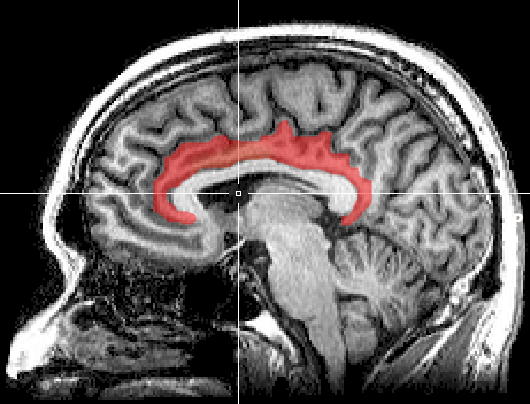
The cingulate cortex. Jarred believes the anterior part of the cortex may be making effort and movement difficult in ME/CFS and long COVID.
It’s a relatively simple task for a healthy human being, but simply getting up to the second floor could be too much for someone with ME/CFS. Your anterior cingulate might decide that you don’t have the resources and slam on the effort brake. I related how early on, I would walk up the block and decide to go down another block. I would tell myself “Ok, go”, and it felt like there was a force field holding me back.
Jarred said, “The worst thing you can do is try something and run out of energy for your basic processes, so it’s designed to be extremely powerful and to stop you, unless it determines that you have the resources; it will not let you do that thing. It’s like you said, like a force field.”
It’s not a psychological thing, he said: it’s a conserved mechanism in mammals that goes way back. Younger didn’t know what was causing energy levels to plunge in the cingulate, but pockets of inflammation could be the cause.
There are parts of the brain where localized inflammation would go almost unnoticed but not so with the anterior mid-cingulate. He did note that a systemic, chronic problem would require cutting down on our energy expenditure, and that low ATP and inflammation might be how it manifests.
We didn’t discuss this in the interview, but studies that have used endotoxins or vaccines to trigger immune activation in the brain indicate that the anterior cingulate cortex is affected. It’s one of a group of brain regions (basal ganglia/ventral striatum, insula, amygdala, hypothalamus) that seem particularly driven by cytokine-induced inflammation.
As such, low energy production in the ACC could make it the locus of the “effort” factor in “sickness behavior”, wherein the brain makes everything effortful in order to keep us in bed, conserving our energy, and not spreading an infection when we have a cold.
Note that the anterior mid-cingulate – the effort part of the cingulate cortex – influences large parts of the brain – most of which have been found affected in these diseases. One of the more interesting parts, given recent ME/CFS and long-COVID studies, is those that involve movement. It turns out the anterior cingulate cortex affects five brain areas involved in generating movement: the supplementary motor area, premotor cortex, primary motor cortex, basal ganglia, and cerebellar-motor networks (!).
Problems in the ACC, then, could be affecting our ability to move. It’s no wonder that Jarred Younger believes it may be a kind of brain hub for ME/CFS and long-COVID dysfunction.
The basal ganglia connection is fascinating because they are the “reward/motivation” areas of the brain and, again, play a role in “effort allocation”. Without a sufficient “reward”, the brain will not gear up to take on a task.
It’s possible that, when it comes to effort, people with ME/CFS and long COVID may be getting hit every which way: low energy levels in the anterior mid-cingulate make things seem very effortful and may also block motor cortex activity (muscle recruitment). Meanwhile, a battered basal ganglia clamps down on a crucial element of activity: reward/motivation.
It makes sense that so many brain regions may be involved: it must take a lot, after all, to produce one of the most functionally disabling conditions known to man.
Fibromyalgia, the ACC, and the Misery Index
When I asked about fibromyalgia, Jarred reported that a more frontal part of the anterior cingulate cortex is abnormally activated. This part of the cingulate cortex determines how painful a pain sensation is. It adds in the emotional or suffering aspect of pain. If pain is making you particularly miserable, this part of the brain is likely responsible.

The part of the ACC affected in fibromyalgia amps up the misery component of pain.
Jarred noted that the ACC plays an important role in helping us heal from an injury by preventing us from moving the affected limb, but in fibromyalgia, it restricts everything. Once again, we have a part of the brain whose role it is to restrict movement and activity, and once again, Jarred suspected neuroinflammation; i.e., microglial activation was responsible.
The Neuroinflammation Man
It’s the same process: inflammation consumes tons of resources, including ATP, lowering the brain’s energy levels. So, what about neuroinflammation, I asked Jarred? What is going on with that?
His heat-mapping and metabolite studies have identified neuroinflammation, and PET studies have as well. The elevated lactate levels he’s found indicate that something has gone wrong with aerobic energy production in the brain, causing it to switch to an alternative energy source.
Jarred, though, is dealing with a similar resources issue to the one he had last time we talked: not enough graduate students to write up the papers. This does not seem to be an uncommon issue. Ron Davis has talked about how difficult it is to keep good post-docs around. They get hired by industry or have the opportunity to get a tenure track at another university, or whatever. In Jarred’s case, his graduate students have completed their degrees and moved on.
Jarred said he has six papers that clearly show brain inflammation. It’ll be good to get those done because, for all the talk about neuroinflammation, we still lack the large studies that validate it, and his papers should do that. The neuroinflammation news was encouraging (it’s there!) and frustrating (help needed to write it up) at the same time, but for real frustration, the brain invasion study takes the cake.
At the Last Minute, the Brain Invasion Study Goes “Poof”!
“That was the most, without a doubt, the most disappointing event in my academic career” Jarred Younger
What an exciting project this was. In fact, of all the projects underway, this may have been the most exciting. Why? Because it could have revolutionized the field.
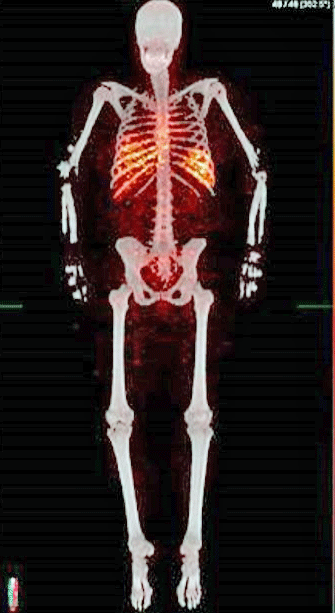
The tests had been done and Jarred was ready to start assessing ME/CFS patients when the radiochemist/radiologists pulled out…
About ten years ago, ME Research UK (MERUK), to its everlasting credit, funded a high-risk/high-gain study to determine whether immune cells from the body were invading the brain in ME/CFS. Incontrovertibly, determining this would slam the door shut on whether ME/CFS was a real and serious disorder. (Given their funding levels, the NIH clearly doesn’t believe this.) It would undoubtedly have sparked a lot of interest. Jarred said he’d been working on this new technique for about ten years.
The thing is that the brain has its own unique set of immune cells, and it doesn’t play well at all with the body’s immune cells. Unless the brain has no other options, it will always keep the body’s immune cells out. If it lets them in, or if they just find a way in on their own, there’s going to be damage.
The study was to use a radiotracer to determine whether T-cells were entering the brain. It’s relatively easy to assess T-cells in the body because they spread quickly, but they can take about 3 days to reach the brain. Until the radiochemists he was working with developed a way to track them for longer periods, there was no way to watch them long enough to see if they’re entering the brain.
The back-and-forth with the FDA over the use of a new technique to assess T-cells in the brain proved enormously complicated. At one point, they had to start over because the FDA disallowed a reagent they’d been using.
Last summer, he reported that initial tests on healthy controls indicated the new technique was successful and he was ready to begin testing people with ME/CFS. At some point, the radiochemist and radiologist suddenly departed for Canada, and the project collapsed.
Unless he can find another radiochemist, the project is over. (He mentioned Michelle James at Stanford (???). One of the heroes of the story has been MERUK, which funded an extraordinary project in the first place and has shown remarkable patience.
A similar thing happened with the nanoneedle in ME/CFS when the inventor left for another university, which offered him a tenure-track position but did not allow him to continue his nanoneedle work.
The Centrality of Fatigue
Speaking of neuroinflammation, or the lack of it. I asked Jarred about his neuroinflammatory study, which found widespread neuroinflammation in rheumatoid arthritis patients with fatigue, but only localized inflammation in those without fatigue.
RA provides an interesting test case of the widespread neuroinflammation/ME/CFS/FM/long COVID hypothesis because a subset of people with RA (or any chronic pain condition) come down with fatigue, pain, sleep, and cognitive problems that look very much like ME/CFS/FM. (A recent study found that over 16 years, 15% of female ME/CFS patients also developed RA.)
Younger believes, and his study showed, that in these patients, the dramatic inflammation they experienced in their joints had spread to their brain.
While RA-only patients now have a wide swath of drugs available to them, none of those drugs help with the fatigue, widespread pain, etc. that the “RA+” patients have. This is why Daniel Clauw, a prominent rheumatologist, chronic pain doctor, and researcher, doesn’t believe people with ME/CFS/FM have an autoimmune disease.
Younger believes the classic autoimmune drugs don’t help dispel the fatigue, pain, etc. in RA+ patients, because these drugs can’t make it past the blood-brain barrier. The RA+ example suggests that effective treatment of these conditions may require drugs that can pass the blood-brain barrier.
(As always, there are exceptions. We know that some people can respond well to peripheral-acting drugs. It’s possible that knocking down inflammation in the body (and possibly tightening the blood-brain barrier (BBB) at the same time?) could reduce neuroinflammation in the brain. Rinvoq, for instance, does not cross the blood-brain barrier but returned a very ill person with ME/CFS to health. IVIG and Mestinon unquestionably help some people, but neither crosses the BBB.)
Still, a drug that crosses the BBB may have the best chance of succeeding. It’s not always clear which drugs do or do not cross the BBB, but low-dose naltrexone (LDN), baricitinib, bezesterim, GLP-1 agonists, and maraviroc all appear to cross it to at least some extent.
Younger’s Big Search
“That’s my number one issue, how do you get… promising agents…through the blood-brain barrier?
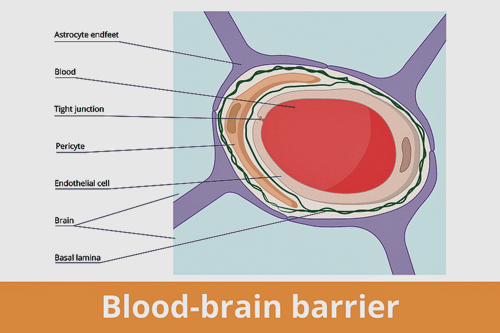
Jarred Younger’s big search: find neuroinflammation-reducing drugs that can make it past the blood-brain barrier.
Jarred noted, “If you have central involvement, it’s going to be much more complicated, and you have to have different medications to handle that, and that’s what I work on. There aren’t a lot of centrally active (brain) anti-inflammatories… That’s my number one issue, how do you get stuff… we’ve got tons of promising agents, but how do you get them effectively through the blood-brain barrier? And that’s why I’m looking at a lot of different interventions.”
His focus is on drugs that can tame the microglia. Every day, he sees possibilities crop up on PubMed that do exactly what he wants them to. They simply need to be tested. He mentioned two recent possibilities: a secretion called temporin from a frog and a peptide (sedanolide) derived from celery.
It’s an exciting time, given how much interest there is in neuroinflammatory treatments, and a frustrating one, given how poor funding remains for diseases like ME/CFS and FM in the U.S.
Neuromodulatory Approaches
That brought up neuromodulatory tools that use ultrasound or magnets to alter the brain’s functioning. Repetitive transcranial magnetic stimulation (rTMS) appears to have some positive effects, but Jarred pointed out that because it can only reach a couple of centimeters into the brain, it can’t come close to affecting what may be the hub organ in the brain – the anterior cingulate cortex.
A new technique called tFUS ultrasound is another story. It’s the only neuromodulatory approach that can reach into the deeper parts of the brain. It’s a powerful tool, though, and that can cut both ways. Younger is excited about its potential, but given the “Wild West” nature of the tFUS field right now, he’s being cautious and hasn’t made a choice yet.
The Big NIH-Funded LDN Trial
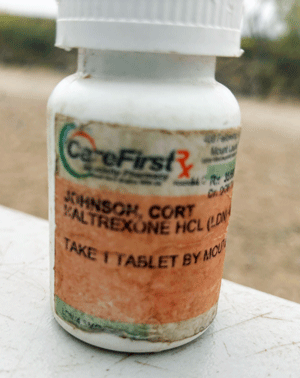
We will finally learn what LDN is doing in the brain.
Younger just got a rare NIH grant to do a major clinical LDN trial. LDN trials have suddenly become a kind of hot topic, with several underway in ME/CFS and long COVID.
Younger’s, though, is different. The best LDN dose has always been a question, and he’ll assess multiple doses in the first, lengthy, preliminary phase of the trial to determine it. Because it will mostly be a remote trial, people who are bedbound will be able to participate.
He’s also going to use extensive brain scans – and that means assessing ATP production, doing thermal mapping and assessing metabolites – in a subset of patients to try and finally get clear on what LDN is doing when it works. (The brain scans by themselves will be very informative.)
Jarred pointed out that determining why LDN works when it does is important not just for understanding LDN better but also for understanding what’s happening in ME/CFS. If, as he expects, LDN is tamping down inflammation, this study will indicate that we need to prioritize therapies that fight inflammation in the brain.
Dextro-Naltrexone
The big NIH LDN trial and the dextro-naltrexone saga show that NIH can support clinical trials but highlights its inherently conservative nature. It’s perhaps no surprise that the NIH would begin supporting LDN trials for these diseases after other groups began doing the same.
Younger tried to get the NIH to fund an exploratory trial of a potentially much more potent form of naltrexone, called dextro-naltrexone, but it was, not surprisingly, a bridge too far for the NIH.
Dextro-naltrexone’s superpower is its potential for higher dosing and therefore more effectiveness. LDN’s dosing is rate-limited because at a certain point, it starts to knock out the endogenous opioid system – nothing that anyone with a chronic pain condition would ever want to contemplate. Among other things, that can produce “deep unhappiness”.
Jarred believes the side effects that start to kick in for some people are caused by this process. Because dextro-naltrexone doesn’t inhibit the endogenous opioid system, it’s possible that much higher doses – and that potentially means – a greater reduction in neuroinflammation could result.
Stating, “I’ve been talking about this forever, you know?”, Jarred noted that he’s been talking up dextro-naltrexone for 15 years. Despite its potential, it’s never been trialed in humans. In fact, if I have it right, it didn’t even physically exist; i.e., no one was producing it.
About 8 months ago, Jarred took the bull by the horns and said: “If no one else is going to do this, I will find a way.” He put out a video, got funding from “lots of private donors”, and then got an Australian company to produce enough to do preliminary testing. He expects to have it in a couple of months.
The State of Things
“The sheer amount of new stuff(coming out) … is so exciting”
When I mentioned that things seem to be moving forward on a technological level, in particular, he agreed and referenced all the new players in the ME/CFS field. Ten years ago he could look at the title of a paper and knew who had written it because the field was so small.
Now he regularly sees papers on ME/CFS popping out by people he’s never heard of. He said a lot of new expertise and ideas are flooding into these fields, and that “the sheer amount of new stuff (coming out), while it’s daunting, and… (and is) almost impossible to stay on top of, is so exciting.”
Still, interest in ME/CFS and post-infectious diseases has blossomed in Europe to the extent that he expected that, if things keep going the way they are, Europe would end up more productive than the US.
Lastly, the Sex Hormones
Then we moved back in time to a 2018 paper where he found that progesterone and testosterone play a protective effect in fibromyalgia. Nancy Klimas’s research suggests something similar, and some doctors are treating their FM patients with testosterone.
The gender issue; i.e., the female predominance issue, suggests that the sex hormones probably are involved, yet research into the sex hormones has been paltry.
Jarred noted that the sex hormones also impact immune functioning and that not only are women more vulnerable to immune events like infections at particular times during their menstrual cycle, but this also includes the primary immune cells of the brain – the microglia.

Did some women get an infection at just the wrong time? (Image by Sydney Fought, CC BY-SA 4.0 via Wikimedia Commons)
One hypothesis is that high estradiol levels, which occur about 1/2 way through the menstrual cycle, may chronically sensitize microglia in some people with these diseases.
Younger wondered whether a genetic predisposition to microglial activation could come into play. Someone sneezes into the face of a female with a predisposition to microglial activation at a time in their menstrual cycle when their microglia were already buzzing away, and the rest could be history.
He noted that it’s been clear for decades that lower testosterone is associated with an increased risk of pain disorders in men.
Coming Up
To sum up, Jarred Younger has a lot coming up! He’s got 1/2 dozen papers to write, which will cement the proposition that widespread neuroinflammation is present in ME/CFS. He has psilocybin/LDN/dextro-naltrexone trials either underway or in process; he’ll be applying for a grant to use the new technique to assess ATP availability in the brain, and he’s checking out tFUS instruments that can reach deep enough in the brain to get to where he believes the real action is in ME/CFS.
Plus, he’s excited about the new interest in these fields. Yes, it always takes longer than we would want, but as former Solve M.E. head Carole Head said, the arc is upward.




Been looking forward to this!
No mention of Bezisterim, Cort? Passes the BBB. Results on a study of its use in long covid should be out soon. Not getting my hopes up, but fingers and toes crossed. It sounds great theoretically, but the proof of the pudding will be in the study results
Nice one! (I will add it to the blog) And yes! the trial has ended up. The last participant completed the last visit last week, and BioVie says it expects to release topline results before the end of September 2026. (I had no idea it was so close). This may be the first major immunodulatory drug trial to produce results.
This was a nice-sized (n=203) randomized, placebo-controlled, blinded Phase 2 trial. It was looking at fatigue, cognition, PEM and others. It was also looking at various biomarkers.
A nicely conceived trial 🙂
Let’s hope it’s a good result! We all need progress on the treatment front, it’s been far too barren for far too long.
Also interested in the NIH’s study on a mitochondria treatment
You know, I’m not looking for a home run. I think it would be astonishing if anything at this point produced a home run, because I don’t think we know enough about these diseases to produce that.
A nice result would be great, though – and it would embolden these fields. One nice strong result would be huge!
I am not looking for or expecting a‘cure’.
But I am looking for, and expecting, treatments that help significantly with some key symptoms. And I am quite optimistic that will come in the next 2-3 years
Great for me to hear you are optimistic. It helps to feel hope!
‘Major Immunomodulatory drug’ – in a way, although perhaps a slight mischaracterisation. It crosses the blood brain barrier to treat neuroinflammation. Hence, it is being looked at in other illnesses such as Parkinsons.
Would be really nice to see a positive study outcome.
What a lot of interesting info and more to look forward to.
Happy to see us Aussies contributing. 🐨
Glad you have the capacity to evaluate all this for us Cort, fingers crossed you can stay put for a bit.
How about that – a company in Australia! God knows how Jarred found them!
Me too… Unless something weird happens like it snows, I should be good for a while 🙂
Do you know the name of the company?
Afraid not.
”I related how early on, I would walk up the block and decide to go down another block. I would tell myself “Ok, go”, and it felt like there was a force field holding me back.”
Well said Cort! I feel the same 🙂
I appreciate the work, but I’m not convinced ME/CFS is primarily a brain disorder.
Prof. Ron Davis’s research found that healthy peoples cells placed in ME/CFS serum (i.e. in vitro outside of the body) they behaved abnormally under stress, while ME/CFS cells placed in healthy serum regained their normal function. The brain can’t communicate with cells in a dish. (Unless the brain had previously helped produce extracellular chemical signals in the body prior to collecting that serum).
I agree though that the brain is involved. But that’s because I believe everything in the body is under an energy deficit, driven by an innate immune response that’s locked on.
The fact that exertion can trigger PEM and in turn too many hits of PEM can progressively worsen the disease also suggests involvement of muscles and other tissues. I suspect cells throughout the body may signal one another into a hibernation like state. Stress in one group could affect others, and repeated exertion reinforces the process.
Because ME/CFS continues after a trigger pathogen is gone, but the immune switch that normally ends the sickness response in healthy people, unfortunately in ME/CFS it remains active. (That switch could be in the brain.) However, I suspect it’s extracellular signalling, possibly involving autoantibodies targeting a receptor that should shut off this response, that could keep the system locked on. Perhaps the signal to turn off the sickness response in cells is locked on, but that could well be localised. I noticed my legs were a culprit in worsening the disease. Arm movement much less so, as there are much fewer muscle cells to start faulting with incorrect signalling. (almost like ME/CFS is a cell malware problem that affects other cells, possibly caused upstream by autoantibody interference)
My main reason to suspect autoimmune is the prevalence of autoimmune disease among relatives of people with ME/CFS may indicate an inherited susceptibility to that type of immune dysfunction. And I think we should do a poll on that one day. Patients can ask their parents how many people in their family had autoimmune diseases. (My family is high, with six close relatives I know of. And my mother’s cousin has ME/CFS too.)
Also, many ME/CFS patients also have medication intolerance, aka drug intolerance, which is also associated with autoimmune disease. Interestingly, there are also non IgE mediated forms of drug intolerance, so it’s unlikely to be solely mast cell related.
I do agree that immune modulating medications are much needed to reduce inflammation in the brain.
I wonder if another finding with ultrasound, where they were able to get micro-bubbles of different sizes that normally couldn’t pass the blood-brain barrier to pass through, could open up a whole new area for medications.
What was interesting was that after the ultrasound was stopped, the blood-brain barrier gradually closed again and stopped those molecules passing through.
This technique could open up a lot of medications that previously couldn’t get across the BBB. However, we would have to carefully screen patients to make sure they didn’t have a pathogen that could get past during that period when the ultrasound was turned on. As the last thing a patient needs getting through is a worm, like the one currently controlling RFK Jr.’s brain lol.
“But that’s because I believe everything in the body is under an energy deficit”
I remember Sanjay (?) and Mark Davis from Stanford suggesting that immune system activation is stealing energy from the brain.
Autoimmune poll – nice idea! 🙂
What happens when the eliocecal valve stays open allowing bacteria from the large intestine to creep into the small intestines and gets absorbed into the bloodstream?
All hell breaks loose.
That bacteria from the large intestine is now circulating throughout the body causing,guess what..
INFLAMMATION.
once this bacteria enters the blood and other muscle, organs etc. It becomes a one way street.bacteria where it is not supposed to be..SIBO
Im curious what Dr. Younger thinks about the recent negative trial result for LDN in FM? Is the dose just too small?
Corey G,
Could you tell us where to find the details of this trial. I’m taking LDN and fell out has definitely helped me with lowering brain fog and a few other issues. I have ME CFS and fibro.
(feel it has definitely helped me)
Neuroinflammation…
A broad SYMPTOM; anybody who has had a bad flu or concussion knows that.
I respect Dr. Younger, but I don’t share his optimism — at least based on his research presentations.
I think that latest trial had some shortcomings. Patients could not regulate dose themselves, and we know individual dosing is extremely important for the med to work. It was also a relatively short study, and LDN does take a long time to work for many. Last, I think you will find great individual differences. Some will do great, others have no effect or a negative effect. The study also had a really big Placebo-effect, I think 30% in the placebo-effect group? I found this to be a strangely high number. So maybe not a stratified enough group, or coincidence this time. LDN did it better than the placebo group still, but not enough.
Is anyone considering the effects on neuroinflammation of drugs like Mounjaro when taken in very small doses?
Yes they are. See Precision Life’s latest You Tube drop.
Very important to focus on the ACC, indeed.
But the functional context should also be mentioned. Here it gets exciting because this brings the other big player from recent studies – the locus coeruleus. Here my interrogation with ChatGPT:
“The Locus Coeruleus (LC) and Anterior Cingulate Cortex (ACC) have a crucial,
reciprocal relationship, with LC neurons sending norepinephrine (NE) projections to the ACC, modulating its activity for arousal, attention, stress, and pain processing, while the ACC influences LC activity, affecting functions like parental care and sustained wakefulness, creating a circuit important for state-dependent cognitive control and emotional responses.
Key aspects of this relationship:
• Neuromodulation: LC is the main source of NE in the brain, and its projections significantly alter ACC neuron function, enhancing excitatory signals, particularly in response to pain or stress.
• Arousal & Attention: LC activation influences coordinated neural activity in the ACC, linking to changes in arousal, attention, and vigilance, often paralleling pupil dilation.
• Pain & Emotion: LC-NE input to the ACC potentiates brain responses to pain and itch, influencing sensory perception and emotional responses, like maternal sensitivity to distressed pups.
• Context-Dependent Effects: The nature of LC-ACC interaction changes with context; baseline LC activity might decrease ACC correlations, while sudden events enhance them, modulating information processing.
• Reciprocal Circuitry: There’s also feedback, with ACC activity influencing the LC, forming a circuit vital for goal-directed behaviors, such as a mother’s response to crying offspring.
Always good to try to connect the dots…
Wow. I got little goosebumps reading that! At some point, the connections are all going to make sense and everything is going to fit together. Time will tell on this one – but it’s so nice to these potential connections.
A big in-depth study would do wonders! These groups do appear to be plugging away at this -and that’s good – as yet I don’t see any signs of a major study. Fingers crossed.
Thank you Jarred is an amazing researcher. I wonder though if the symptom of extreme effort unable to do more than whatever our individual limits at any given time, can be entirely brain mediated. PEM is triggered before we even feel that, and the delay means at first, before diagnosis/knowledge of ME, many didn’t even connect the flare ups with the exertion for several months or more. That’s why it’s so hard to manage- why so many end up deteriorating because we had no idea we were triggering PEM, or that pushing through was making us worse. Also how does it tie in with research finding muscle abnormalities eg Rob Wust, and other research as others have mentioned finding abnormal cell behaviour outside the brain. Also, can muscle damage/abnormalities cause changes in brain function, could it be the other way round? Apologies if asking stupid questions am not scientist and , no irony, my brain is not working well! Good wishes to all and thank you Cort for all your work !
There are several ways this could all fit together. It could start with muscle injury aka Rob Wust – which tells the brain to stop trying to activate them. There is a muscle-brain axis which is apparently quite powerful.
In the brain all this taking place at the subconscious level. It may take time for the brain to really get that PEM is happening. It’s been too long (45 years!) quite frankly, for me to remember when I realized PEM was occurring. I just remember feeling very, very, very fatigued…
Thank you Cort!
… and another comment: i wouldn´t get too excited about LDN – so far all higher level evidence trials have failed (both in FM and apparently in ME/CFS too – as reported at the Charite conference in Mai…
https://s4me.info/threads/efficacy-of-low-dose-naltrexone-for-fibromyalgia-double-blind-placebo-rct-with-12-months-of-follow-up-2026-luciano-et-al.50575/
time to move on?
The problem is that there are subgroups. Maybe it helps for a smaller percentage, 20-30%? I don’t know. In science, they take the whole heterogeneous group of CFS patients together and see what comes out. I keep noticing in the studies that when they find something—medication effects or abnormalities—it usually applies to around 30%. As a researcher, you really have to be able to distinguish subgroups. But you and most patients already know that.
It has been rather underwhelming. There was always some question if LDN could do for fatigue what it appeared to be doing for pain – although I see that was an FM study! I think it’s clear there are some people who really benefit but it’s not looking like a standard treatment right now.
Now we have at least two large clinical trials going – Younger’s and RECOVER’s long COVID trial.
That should be enough…
not to forget Naul´s Canadian LDN trial – which seems to show zero effect for the main outcome…
https://thesicktimes.org/2026/05/26/international-me-cfs-conference-roundup-setbacks-and-new-hopes-for-therapeutic-research/
I know he works in good faith and I respect that but Younger has promised so much over the years, talking about ill-defined “Neuroinflammation” as a driver of ME without proofing it and saying he will do studies and trials about various things that never came, that I have completely lost any trust in what he says.
He makes videos every month talking about ME, but the last meaningful study he published on this topic was 6 years ago. Since then it has been talks and showing sole case-studies that fit his definiton of “Neuroinflammation” and being stuck on LDN, something almost everyone with severe ME has already tried to no avail.
Well, well, well! 🙂
It’s true Jarred hasn’t published a major work on ME/CFS since 2020 – I was a little surprised it’s been so long – but he has published on several fibromyalgia studies and I believe a GWI study.
Jarred, though, won two LARGE NIH grants on ME/CFS – the good/bad day study and the neuroinflammation study, and now he has the privately funded dextronaltrexone grant.
As he explained in two interviews he has been missing the graduate students he needs to help write up those studies. That’s apparently been a new development since the pandemic.
So, while he hasn’t published much, he does have a great deal of ME/CFS data and hopefully we will see a flood of papers (which he was very excited about) soon – and the Jarred Younger ME/CFS drought will be over.
Let’s hope! We need a major study which pins neuroinflammation down. All we have are small studies – we need one to validate and Jarred said this study will.
How are people sleeping? I cannot shut my brain off.
For me – ezsoplicone, gabapentin, and high THC – mostly taken on separate nights help. Having enough rest during the day is crucial as well.
Health Rising has done several sleep blogs.
https://www.healthrising.org/blog/2022/08/17/four-experts-sleep-chronic-fatigue-syndrome-fibromyalgia/
Tomnya was recently FDA approved for fibromyalgia. If you can get it it’s worth a try 🙂
Thank you Cort. I appreciate your continued research updates. So helpful.
Quite a few ME/CFS folks improved sleep a lot using the new orexin antagonists (daridorexant or vornorexant) – for me: a blessing 😉
No medical advice of course, but: some money can be saved using the higher strength formulation (50mg in the case of Daridorexant) and cut it in half (its not an extended release formulation so this can be an option.
Even better: Vornorexant (works exactly like daridorexant and is approved in Japan) – cheaper if imported from Japan, 5 mg works as well as 10 mg in the dose finding studies – so a pack of 100 10 mg tablets will take through at least half a year… – but needs to be ordered from Japan, no idea how this works in the US, in Germany it is not a problem but needs a prescription
How interesting! I had never heard of these before. We should be getting the results of Dr. Mullington’s sleep study which focused on orexin any day now.
https://www.healthrising.org/blog/2024/12/04/chronic-fatigue-syndrome-sleep-study/
Antagonists for sleep.
And potentially agonists for daytime sleepiness / fatigue!
Solidarity, Elizabeth, it’s so hard! I don’t have a clear answer and have struggled with sleep for years. However, I’ve found supplements that are anti-inflammatory to be helpful (PEA/Palmitoylethanolamide, Proteolytic Enzymes, currently trying a humic acid binder).
The sleep I’ve experienced with these isn’t necessarily the classic 8h per night. Instead, my body basically needs to sleep *immediately* (at whatever point of the day) and I fall asleep for a few hours.
I’m bedbound-level ME, so that may play into all of this too.
I also struggle with sleep. I also find that ultra micronized PEA can be helpful. It seems to tamp down any brain inflammation as well.
Re: CK shuttle and creatine…
I really think there’s something about creatine in ME/CFS. Our daughter benefitted a lot, in terms of energy levels, for a couple of months on high dose creatine. The benefits subsided after a while. But it suggested to me that creatine is somehow involved.
NAC and L- Carnitine were energy improvement game changers for me.
NAC kicked in within three days = brain fog lifted noticably.
L-Cart took a few weeks before it kicked in, but energy levels and mood improvement change was profound.
As we all know, we sit in subgroups.
This combo may or may not help others.
I believe my subgroup is neuro/gastro/mitochondrial/EDS? if I was to try and name it!
I love following along Jarod’s work! The force field description landed for me too — and Jessica’s question above is the one I keep running into.
I’m a counsellor working with chronic illness in BC, and I have POTS, MCAS and ME/CFS myself, so I get this from both directions.
Here’s what the effort-brake model doesn’t quite cover on its own. I have at least three different things that stop me, and in the moment they feel almost identical: post-exertional malaise, an orthostatic crash, and a mast cell flare. The right response to each is different and in some cases opposite. PEM means stop and stay stopped for days. Orthostatic means lie down with salt and fluid and I’m functional in twenty minutes. A mast cell reaction means an antihistamine.
Last week I tried a seated exercise class. Twenty-five minutes in: BP 137/72, heart rate 98, head tingling, grey vision. Was that the anterior cingulate refusing, was it my blood pressure, or was it mast cells? I couldn’t know until I saw whether a delayed crash arrived at 24 to 48 hours — by which point the decision about whether to keep going had already been made.
That’s the gap I’d most like to see research close. Not only what generates the effort signal, but how we discriminate between mechanisms in real time, because pacing depends entirely on getting that right.