




Geoff’s Narration
The GIST
Mestinon has done it again. Another study has shown that in the short term, at least, Mestinon can move the needle on two factors, energy production and strength, that are in short supply in ME/CFS.
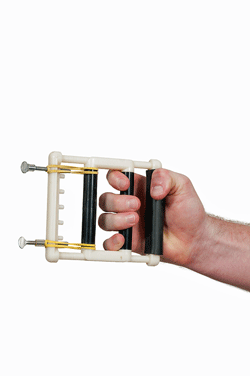
Handgrip strength tells us a surprising amount about overall health. Dynamometers cost around $20-$30.
This study assessed handgrip strength. What, you might ask, could handgrip strength have to do with anything? It turns out a lot.
Dozens (dozens!) of large studies have found that weaker grip strength is associated with a higher risk of death from any cause. It’s more strongly predictive of cardiovascular death than high blood pressure. Reduced handgrip strength has been linked to higher rates of heart attack, stroke, type II diabetes, metabolic syndrome, and deaths from cancer. People with lower grip strength tend to have longer hospital stays and experience more complications. Higher grip strength is even associated with better cognitive function and a lower risk of dementia.

Meta-analyses have found that for every 5kg decrease in grip strength, the risk of all-cause mortality rises by almost 15–20%.
Besides keeping us stronger, our muscles play a vital role in our metabolism by regulating glucose, and the myokines they produce affect the immune system, metabolism, and the brain.
Because inflammation, insulin resistance, oxidative stress, hormonal problems, and poor mitochondrial health can all whack the muscles, people with these problems often have poor handgrip strength.
Grip strength is also a measure of what’s called “physiologic reserve” – the capacity you have to withstand stress. That’s why people with stronger grips tend to recover better from surgery, hospitalization, and acute illness. The opposite of “physiologic reserve” is “frailty” – the inability of the body to deal well with shocks.
THE GIST
-

Mestinon helped the muscles of ME/CFS patients get stronger after exercise. The question is how. An answer may be coming up.
Mestinon has done it again. Another study has shown that in the short term, Mestinon can move the needle on two factors, energy production and strength, that are in short supply in ME/CFS.
- This study assessed handgrip strength, which turns out to be quite a proxy for overall health.
- Dozens (dozens!) of large studies have found that weaker grip strength is associated with a higher risk of death from any cause. It’s more strongly predictive of cardiovascular death than high blood pressure. Reduced handgrip strength has been linked to higher rates of heart attack, stroke, type II diabetes. The list goes on and on.
- Besides keeping us stronger, our muscles play a vital role in our metabolism by regulating glucose, and the myokines they produce affect the immune system, metabolism, and the brain.
- Because inflammation, insulin resistance, oxidative stress, hormonal problems, and poor mitochondrial health can all whack the muscles, people with these problems often have poor handgrip strength.
- Given that, it’s perhaps no surprise that several studies have not only found reduced handgrip strength in ME/CFS but that it’s correlated with ME/CFS severity, and the amount of post-exertional malaise and muscle pain people with ME/CFS experience.
- The small study involved two visits. The first was done to assess handgrip strength and orthostatic intolerance at baseline, and then again hour later. During the next visit, Mestinon was administered immediately after the first handgrip strength test to assess its impact on the second handgrip strength test conducted an hour later.
- Unfortunately, the study did not break up the results by gender. (Men have much higher handgrip strengths than women.) The mean baseline handgrip strength, though, was very low (16.5 kg), and it declined during the second test an hour later.
- After taking Mestinon, though, the ME/CFS patients’ handgrip strength not only did not decline but actually increased.
- This is the second short-term study to show that Mestinon increased energy production/strength. Systrom’s earlier study showed that Mestinon increased energy production during an invasive exercise test. Mestinon, then, has scored on two important factors in ME/CFS.
- Mestinon could be doing a number of things. It could be aiding muscle recruitment during exertion. (Reduced muscle recruitment during exertion could be causing everything from mitochondrial problems, orthostatic intolerance, and low preload.) By improving autonomic nervous system activity, it could be enhancing blood flows. By improving calcium handling in the cells, it could be enhancing mitochondrial activity.
- We should know more about Mestinon and ME/CFS soon. The Open Medicine Foundation’s LIFT trial with David Systrom will not only be assessing how effective Mestinon and low dose naltrexone are, it’ll be digging deep into their pathophysiology to understand how these drugs are helping, which kinds of patients they are helping, and what pathways to focus on.
Support Health Rising and Keep the Information Flowing!
Health Rising is not a 501 c (3) non-profit
Handgrip Strength and ME/CFS
Given that handgrip strength is a proxy for muscle functioning, physiologic reserve, and others, it’s no surprise that several studies, including a UK ME/CFS Biobank study, have not only found reduced handgrip strength in ME/CFS but that it’s correlated with ME/CFS severity, and the amount of post-exertional malaise and muscle pain people with ME/CFS experience.
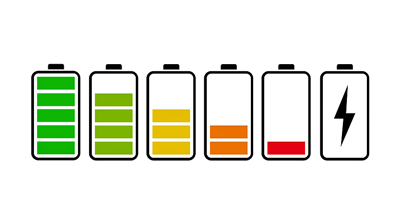
Low handgrip strength denotes low physiologic reserve.
Not only that, but handgrip strength tests can even provoke post-exertional malaise. In a rather eye-opening display of PEM, after doing ten 3-second pulls (with 5-second relaxation periods), people with ME/CFS could not, an hour later, pull at the same strength. Thirty seconds of pulls left them weakened an hour later! (Handgrip strength in the healthy controls fully recovered.)
Demonstrating that muscle strength is diminished not just in the hands but bodywide in ME/CFS, the Jakel study out of Dr. Scheibenbogen’s Universitätsmedizin Berlin group, also found quadriceps strength that was reduced at baseline and diminished after exertion. Their findings suggest that people with cancer-related fatigue are in the same boat.
The UK ME/CFS Biobank study found that the handgrip strength of ME/CFS patients was about the same as people with multiple sclerosis.
The Study
We rarely see studies be able to make a difference in such a fundamental factor. That’s one of the reasons this study is so intriguing.
The “Pyridostigmine improves hand grip strength in patients with myalgic encephalomyelitis/ chronic fatigue syndrome” study involved two visits. The first was done to assess handgrip strength and orthostatic intolerance at baseline, and then again an hour later. During the next visit, Mestinon was administered immediately after the first handgrip strength test to assess its impact on the second handgrip strength test.
Note that the study was quite small (n=20 people with ME/CFS) and healthy controls were not included. Orthostatic intolerance was assessed using what appeared to be a short (10-min) NASA lean test.
(Ten minutes is the defined time in the NASA lean test instructions. We know, though, that 10 minutes will not pick up all signs of orthostatic intolerance. Also note that many people with ME/CFS who do not have increased heart rate, or decreased blood pressure, will experience symptoms and exhibit reduced blood flows to the brain. Those people would have been missed in this test.)
Muscle strength was also assessed using the Besinger score, which was originally developed for myasthenia gravis. During the Besinger test, participants are simply asked to do things like hold out or up their arms, legs, head, etc. for a as long as they can until they feel fatigue or weak.
Results
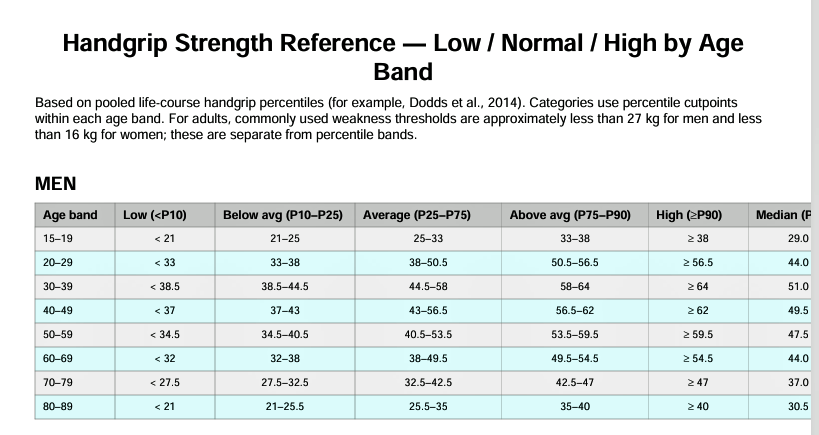
Reference ranges for male handgrip strength (not from this study).
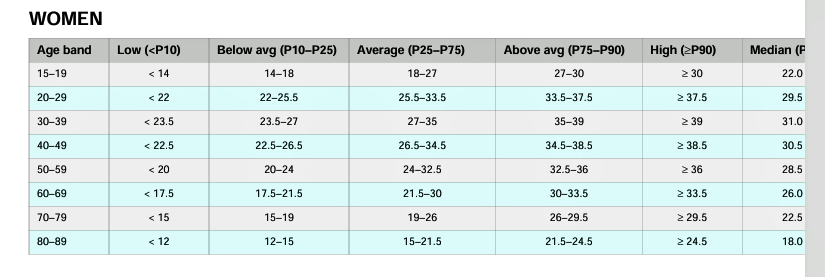
Reference ranges for handgrip strength for women (not from this study).
Because handgrip strength varies dramatically by gender (men have almost twice the handgrip strength of women), it’s odd that the authors did not break down the handgrip scores by gender and instead simply showed group averages.
The average age in the study was 45. The average hand grip strength for a male 40-49 years is 38-46 kg, and for a female is 20-29 kg.
The mean baseline handgrip strength in the ME/CFS patients was 16.5 kg. While we can’t say exactly how women or men fared, it was clear that the scores were very low. A 16.5 kg score would be considered “borderline low” for women, but in men, it would constitute a “severe reduction from normal”.
Because the women’s score must have been inflated substantially by the men, who typically have a handgrip strength almost twice that of women, the women’s actual score would surely have placed them in the frailty range.
“Frailty” is a clinical designation characterized by reduced physiological reserve and resilience, resulting in greater difficulty recovering from stressful events such as exertion, infection, and surgery. The Fried Frailty Phenotype is composed of five items, of which low handgrip strength is one. They include unintentional weight loss, exhaustion, weakness (low handgrip strength), slowness (gait speed), and low physical activity.
On the 2nd handgrip strength test, taken an hour later, the average decline was 16%.
Whoa! After Mestinon, people with ME/CFS actually got stronger.
What? Exercise Makes People with ME/CFS Stronger?
When the participants were given Mestinon, their maximum handgrip strength an hour after the first handgrip test, not only did not decline but actually increased from a median of 15.9 kg (before Mestinon) to 18.6 kg (after Mestinon), an increase of almost 13%.
An hour after taking Mestinon, the participants’ heart rates while standing had dropped as well.
Second Positive Mestinon Study
Mestinon is not doing bad at all for an old-time drug. This is the second short-term study to show that Mestinon increased energy production/strength. Systrom’s earlier study showed that Mestinon increased energy production during an invasive exercise test. Mestinon, then, has scored on two important factors in ME/CFS.
Possible Causes
The all-important question is what happened that allowed people with ME/CFS to get stronger after exercise! If we can pin that down, we can look for other treatments that can enhance the same pathways. Mestinon is a help, but is not, after all, likely to be the answer. Its biggest impact might come from showing us what to target in ME/CFS.
First, note that Mestinon increases handgrip strength in myasthenia gravis (MG) by increasing acetylcholine availability in muscle neurons. (Autoantibodies target the acetylcholine receptors in MG). The researchers, however, were unable to find any ACh autoantibodies in the ME/CFS patients.
Muscle Fiber Recruiter? – Mestinon, however, could still be improving muscle functioning in ME/CFS via the same means – by increasing acetylcholine levels. Increasing acetylcholine levels would allow more muscle fibers to be recruited during exertion.
Reduced Muscle Recruitment – A Key Problem in ME/CFS?
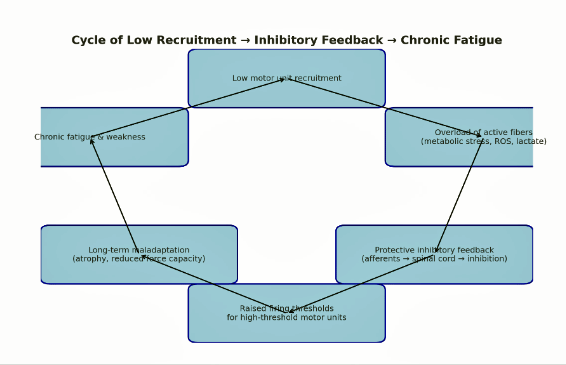
A scenario showing how low muscle recruitment could end up in chronic fatigue.
It turns out that an inability to recruit enough muscle fibers could produce a lot of havoc. Check out the many problems that could accrue – and how closely they would fit ME/CFS, long COVID, and other diseases – from not being able to recruit enough “motor units” (muscle fibers + neurons) during exertion.
(1) Overworked muscle fibers – Increased metabolic stress (e.g., lactate, ROS, Pi buildup) and microdamage occur in the overworked fibers that have been recruited. (We saw this in Wust’s work.)
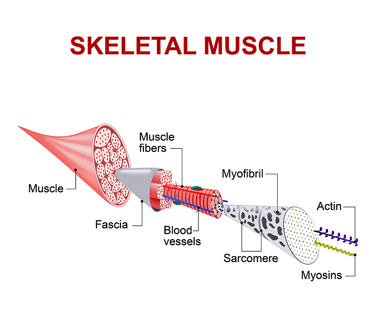
Reduced muscle fiber recruitment could result in everything from mitochondrial problems to orthostatic intolerance to reduced preload.
(2) Chronic overuse of a set of muscle fibers could result in mitochondrial stress, reduced glycogen reserves, and impaired muscle recovery, which is pretty much what we see in ME/CFS.
(3) Impaired muscle pump efficiency contributes to preload failure and orthostatic intolerance. The muscle pump refers to a “squeeze and lock” procedure that helps bring blood up to the heart when we stand. First, the muscles contract to drive blood upwards. When the muscle relaxes, the one-way valves in the veins close to keep the blood from falling back down.
This is sometimes referred to as the “second heart” because it effectively pumps blood upward. Reduced muscle recruitment, however, can weaken the muscle pump, producing reduced blood flows back to the heart and the preload failure that David Systrom has consistently found in ME/CFS and long COVID.
(4) Central Nervous System problems – Low levels of muscle recruitment and overly stressed muscles can cause the nervous system to increase inhibitory signals to the muscles in an attempt to save the muscles from more damage. That makes sense in the short term, but in the long term, it can lock in a low-muscle recruitment pattern that produces more fatigue and weakness.
Muscle recruitment can be impaired at the level of the central nervous system or at the muscle, and evidence for both exists in ME/CFS. While Schilling and Walitt both suggest the central nervous system is involved, Jammes and this study suggest that local muscle problems are involved.
Autonomic Nervous System Regulator and Blood Flow Enhancer? – Mestinon’s effects on the autonomic nervous system are fascinating. It enhances parasympathetic nervous system functioning, which is what we want in this “fight/flight” activated disease, and can reduce heart rates, increase heart rate variability, and even improve heart rate recovery after exercise. It can also improve gut motility (flow of food through the gut) which can be a big deal.(In some people, it can make gut problems worse, however).
The fact that Systrom found that Mestinon, taken before an exercise test, was able to improve cardiac output and preload during exercise, suggests that Mestinon improves blood flow. It turns out that when our systems are put under stress by standing or exercise, Mestinon increases norepinephrine levels (sympathetic nervous system activity). Systrom believes that the norepinephrine release tightens up the veins, reduces blood pooling, and the preload problem in ME/CFS; in short, it gets more blood to the muscles and brain, thus, in some people, it enhances their ability to exercise.
Mestinon’s success, like Sunosi’s, suggests that people with ME/CFS and POTS who experience blood pooling might benefit from a sympathetic nervous system enhancer. (Could SNS activity be enhanced in an attempt to tighten down the blood vessels?).
It would seem that Mestinon would not be helpful in people with full-blown SNS activation, i.e., people with hyperadrenergic POTS. Because Mestinon is a more potent parasympathetic nervous system activator than it is an SNS activator, it’s possible it could help rein in the SNS activation found in hyperadrenergic POTS. Obviously, starting very low and going very slow is key.
About 40% of POTS patients find the drug helpful.
Improved Calcium Handling? – Because Mestinon can also improve intracellular calcium, which Wirth and Scheibenbogen have proposed may play a crucial role, it could be producing its effects that way.
Mestinon – Nicotine Patch Combination a No No?
Alex reported that because both Mestinon and the nicotine patch pump up the same (cholinergic) system, albeit by different mechanisms, taking them together could pump up the cholinergic system too much. At worst, doing so could provoke a cholinergic crisis: muscle weakness, muscle twitching, sweating, salivation, increased bronchial secretions, low heart rate, etc.
Mestinon (pyridostigmine) is an acetylcholinesterase inhibitor: i.e., it prevents breakdown of acetylcholine, thereby increasing acetylcholine and increasing cholinergic tone at neuromuscular junctions and other cholinergic synapses.
Nicotine acts as an agonist (enhancer) at nicotinic acetylcholine receptors (especially in autonomic ganglia, neuromuscular junctions, brain, etc.) Thus, it increases acetylcholine uptake, thereby enhancing the activity of the cholinergic system.
There isn’t much data on these two drugs being used together. Interestingly, Drugs.com does not list nicotine as having a major interaction with Mestinon. Your results may vary depending on the dose, your system’s response, and your sensitivity. Alex reported, though, that Dr. Kacik in Germany, who works with ME/CFS and long COVID patients, advises against using them together.
Lifting ME/CFS UP? – The LIFT Trial
We know from anecdotal reports that Mestinon can be quite helpful. One long-term ME/CFS patient was able, for the first time in decades, to exercise fully after taking Mestinon. We also know that it doesn’t work for everyone.
Thanks to David Systrom and the Open Medicine Foundation, we should soon learn more about how effective Mestinon is, who it might help, and how it’s helping.
The Lift trial is a 160-person trial that assesses Mestinon and low-dose naltrexone (LDN) separately and in combination. The best thing about the trial, though, may be that it’s using metabolomics, proteomics, and immune assays to determine who responds and exactly how the drugs are helping. If it can help us learn what Mestinon is doing when it is effective, it will put us one step closer to understanding ME/CFS.
Jarred Younger’s Take





I went to the eye doctor a few months ago, and they gave me Anticholinergic Eye drops. Man did that mess my system up I couldn’t stand for a few days without getting super dizzy. Acetylcholine levels seem to be a major player with CFS. Good to see that there’s a study that tries to address this dysfunction. Thanks as always Cort, for keeping us informed.
I wonder what mg Dosis of Mestinon was used in the studies- could you tell us? Thanks a lot.
Hi Chris, I have glaucoma and the doctor had started me on a new combo of eye drops…powerful stuff that, in rare instances, can cause dizziness and fainting. On Monday last, I completely blacked out returning to my bed from the bathroom. I fell into the secretary I used for a bedside table and hurt my shoulder, knee, ear, finger and twisted my back (the worst). It was surreal and scary and maybe the eyedrops didn’t cause it, but this was the only new med I had added in a while. I am staying off the new drops for a while and sticking by the one that I know doesn’t bother me.
A main function of Mestinon is being a AcethylCholinEsterase inhibitor.
AcethylCholine, among other things, reduces macrophage activation due to LPS. LPS is mainly know as a prime TLR4 activator. Another potent TLR4 activator is glucuronic acid that is found to be rather elevated in ME/CFS plasma both at rest and 24h post exertion according to the big metabolomic study in https://pmc.ncbi.nlm.nih.gov/articles/PMC12408823/
For more info on LPS and AcethylCholine, see https://www.sciencedirect.com/science/article/pii/S2211383520305876:
Saying “ACh is known to inhibit the LPS-induced TNF-α release in macrophage2. In cultured macrophages, the suppression of LPS-induced the release of TNF-α reached to a maximum at 1 μmol/L of applied ACh, ∼60% of reduction”.
More ACh (AcethylCholine) Esterase inhibitors means less AcethylCholine Esterase. AcethylCholine Esterase is an enzyme that breaks down AcethylCholine. So: more AcethylCholine Esterase inhibitor leads to more ACh.
It also says “Together with hydrolysis of ACh, AChE plays a direct role in the regulation of inflammatory response. As such, AChE could serve as a novel target to treat age-related diseases by anti-inflammatory responses.”
AChE or AcethylCholine Esterase thus influences inflammation in more then one way. Note: do not read it says increasing or decreasing, concluding that requires puzzling pieces together.
From https://en.wikipedia.org/wiki/Acetylcholinesterase_inhibitor we have another interesting reversible AcethylCholine Esterase ihibitor: caffeine.
That may help explain why modest amounts of weak coffee seem to help a rather large subgroup of ME/CFS patients. It even helps me sleep. A slightly larger subgroup will be worse off. For them maybe the side effects of caffeine are bigger then the positives provided by helping tame parts of the immune system?
While the side effects of caffeine and Mestinon won’t completely overlap, it would be interesting to do a parallell study on side effects of caffeine versus Mestinon for ME/CFS people. Better to know if you are likely to do well with it before trying I’d say.
Nice innate immune connection! Hopefully, the Systrom study will help resolve what Mestinon is doing! Interesting about caffeine – which I pretty much rely on.
I started mestinon but felt like I was getting bronchitis or flu feeling and build up of secretions (I have asthma) . Has anyone had this and seen it reduce over time ?
Fascinating. Thank you. (And I apologize if this is a dumb question due to brain fog!): But can you clarify your last statement. How might one know if they are likely to benefit from Mestinon before trying. Would it be if they benefit from low dose caffeine? I certainly do.
I looked up what caffeine does. One thing its does is enhance sympathetic nervous system activity and by doing so tightens up the blood vessels and increases blood flows.
That would be IMO mainly the effect of caffeine also being an adenosine agonist. The acethylcholinesterase inhibitor part IMO would stear towards parasympathetic activity.
I benefit from WEAK cold coffee.
My Dr just gave me the green light to trial Mestinon . Let’s see what happens !
Good luck! Coffee certainly helps but I have to be measured with it or I will get worse. Cold brew coffee, by the way, is the least acid form of coffee if you have problems with acid reflux.
https://en.wikipedia.org/wiki/Yerba_mate
Is an alternative in between coffee and tea taste wise. It works slower, with a softer effect (less energy burst but less side effects for most people too). It is not acidic either.
I am now trying it out. It appears better then tea caffeine wise for me, but at times fails to have enough coffee effect so far. So for now I replace part of the coffee with this.
That is GREAT!!! Please keep us posted…??! I’ve just sent a letter to my neurologist to ask her if she would let me try it too. We have to find SOMETHING that works, surely? And surely giving things a go – we have nothing to lose…???
I’ve been studying things (my symptoms and information) for years and years (online etc – reading EVERYTHING I can!)….and I even told my partner and my family a few years ago that I believe/d that acetylcholine (and the adrenal glands) have something to do with chronic fatigue/POTS/OI etc. So we shall see from here on…
Good luck to everybody here! 🙂
It is not a dumb question.
It is IMO twofold:
* Caffeine has clear side effects. In order for us to gain from it, the upside has IMO to be quite big to outweigh the side effects. If patients get worse from modest caffeine intake, they either have extra big side effects or they have too few upsides. The latter would (possibly) include that the upside of the acetylcholinesterase inhibition (that caffeine and Mestinon share) isn’t big enough to benefit that patient.
* Both caffeine and Mestinon cause acetylcholinesterase inhibition. That may have uspides for ME/CFS patients, but also downsides. No drug or interaction in key bio processes is without side effects. If more inhibition was always better, the body would do it itself. If some of the side effects of coffee usage overlap with acetylcholinesterase inhibitor side effects, like nausea (which IMO isn’t a key caffeine side effect), it might be indicative other acetylcholinesterase inhibitors are more likely to fail too.
Regarding nausea, I had this when I started taking Mestinon. I went low dose and never on an empty stomach (plus took anti-nausea meds). Gradually the nausea went away. I can now take it on an empty stomach with no nausea at all.
How wonderful Melaniel!!! Thank you SO much for sharing your results with us, that is sooooo helpful!
So how do you feel now? Do you have more strength and stamina?
Yes, it helped me enormously
It appears to not only be macrophages (which are closely related to the brain’s microglia), but also mast cells:
https://pmc.ncbi.nlm.nih.gov/articles/PMC7691095/
“Several studies have demonstrated that the α7 nAChR-dependent anti-inflammatory pathway attenuates specific MC responses, which might explain the reported therapeutic effects of its agonists on diverse models of allergic diseases. Agonists of nicotinic receptors, including the α7-specific agonist, GTS-21, inhibited immunoglobulin E (IgE)-induced degranulation of mucosal-type murine bone marrow–derived MCs in a dose-dependent manner, which was prevented by α7 antagonists [10]. Tumor necrosis factor (TNF) production from lipopolysaccharide (LPS) treatment of MCs was suppressed by α7 nAChR agonists”
and
https://www.sciencedirect.com/science/article/abs/pii/B9780443141584000634
“In a recent study using rat peritoneal mast cells, both catechin and caffeine dose-dependently inhibited the process of exocytosis. At relatively lower concentrations, neither caffeine nor catechin alone stabilized the mast cells. However, low concentrations of catechin synergistically enhanced the mast cell-stabilizing property of caffeine.”
Important note: In me and Issie, drinking too much coffee has a risk of provoking MCAS. So it is complex. But coffee is more then caffeine alone and dose is important.
Now mast cells are even more guardian cells then macrophages, but both also function to allert / upregulate the strength of many other immune cell’s response. So the “cause” of ME/CFS may or may not be in these cells, but their response helps determing how amplified (much of) the response of (much of) the immune system is.
HI, Thanks for the info. I get extreme heart palpitations off any caffeine. I can only drink decaff. I took one caffeine tablet one time during a liver detox test, and had to call 911, hard to breath and very high bloodpressure (for me), as it is normally very low. Does it mean I can not try Mestinon? My doctor would not give me Mestinon now because of too low bloodpressure, saying it could lower it further. Is that right? Thankfull for answers.
Hi Bird,
The palpitations may be an effect from caffeine being (also) an adenopsine receptor agonist.
https://pmc.ncbi.nlm.nih.gov/articles/PMC7290927/
Can be related to bradycardia (abnormal low heart rate, unlikely with you) but also atrial fibrilation and flutter; see Table 2. The latter two sound more like your case.
So what happened with your caffeine event does not *necessarily* mean Mestinon will be problematic for you. It does however tell you that your cardiovascular system and heart are easy tipped over the edge and prudence is extra important. So follow good doctor adivce and seek a schooled medical specialist if needing more information?
Meant to write “seek a schooled medical specialist” since Mestinon also effects the cardiovascular system and with it the heart. That caffeine and Mestinon only partly overlap in their effects on the heart is no reason to try it. That they partly overlap is a reason to be cautious.
Either way, with any prescription medicin do follow doctors advice.
Thank you for your replay. This incident happened almost 20 years ago, but still my heart is triggered by slight amount ot caffeine, a little iodine (even though I have a defficiency) too much Levaxine and so on. Have very low BP as 80/50 to 90/60. The last years my resting pulse has been, to me, alarmingly low; 52-60. As I have been ill for over 20 years, and not in good shape. My GP thinks it’s just fine.. , don’t know anything about ME really. But upon standing the pulse most often rise 20 or more (some POTS, worse in the past). I have had a lot of palpitations in the past. And from time to time my pulse is not stable but is swinging up and down constantly with 10 beats, like 70 to 80 down to 70 again. I do have taken a gene test, which said I was prone to Afib. Cardiologist did not find anything wrong with my heart. Have had pericard fluid one time. Do you have any advise regarding maybe having easily Afib? No doctor thinks so..
The ME doctor I saw would not give me Mestinone for now, because of the low BP (under 90 syst).
Could you please tell me the coffee to water ratio you use to make weak coffee. Thanks.
I currently use about 20 grams of ground coffee per liter (use conversion tools for US units). I try less (still some side effects next to upsides) but taste declines too much. I use(d) about a liter of it a day. Now I try to replace some with yerba maté and a mix of yerba maté and green tea. I try to optimize the ratio positives for ME/CFS versus side effects while retaining some joy out of the cup.
Sipping small amounts of stronger coffee sort of works too. I however had a tendancy to drink too few water a day and sipping strong coffee made me drink even less. Plus digestability and MCAS of weaker coffee improves. Mild / light roasted coffee is softer to me for digestion / MCAS too.
Well this is quite encouraging, thanks for covering. However for those like myself who struggle with HPOTS, which involves an excess of catecholamines like norepinephrine, my question is this: Could Mestinon possibly worsen HPOTS? According to a previous HR blog, Mestinon increases norepinephrine levels and yet increases parasympathetic activity. I’ve been unable to resolve this paradox, but I would love to try Mestinon for my ME if I had reason to believe it would not worsen my HPOTS.
(And side note: the most effective thing so far for improving my HPOTS has been self-diagnosing and treating sleep apnea via CPAP, and what makes HPOTS re-emerge is when my PEM increases in intensity and frequency from failing to pace properly).
ChatGPT 5.0 believes, that while one must be careful, it’s possible that Mestinon could help with hyperadrenergic POTS. This is because Mestinon appears to impact the parasympathetic system more than the sympathetic nervous system. It suggests that Mestinon is not likely increase SNS activity (when its already elevated).
Of course, one would have to start very slow and see how it goes.
Interestingly, the SNS part of Mestinon does not kick in until the system is put under stress (standing, exercise).
Acethylcholine not only binds to nicotinic receptors, but also to muscarinic receptors. Those need to be balanced with beta-adregenic (epinephrine) receptors.
Example for the lungs:
https://www.atsjournals.org/doi/full/10.1513/pats.200504-038SR
“Acetylcholine released from the parasympathetic fibers activates the M3 muscarinic receptors located on the airway smooth muscle, causing bronchoconstriction. To counter this activity, M2 muscarinic receptors located on the parasympathetic nerves inhibit release of acetylcholine. β2-Adrenergic receptors are expressed on the airway smooth muscle where activation causes bronchodilation. Adrenergic receptors are also on the autonomic nerves where they can modulate neurotransmitter release. The crosstalk between these G-protein–coupled receptors and downstream pathways ensures normal airway function.”
=> So IMO it is a balancing act. Just forcing a single molecule up is like using only one high shoe to walk taller rather then two. Get it balanced and you already get side effects. Get it unbalanced and the ratio of good versus side effects gets even worse.
In plain English: in *some* cases increasing acethylcholine without increasing norepinephrine might work less good than increasing acetylcholine just as much and norepinephrine with a difficult to determine optimal bit. Coffee does both but maybe does upping norepinephrine a bit too good.
I have a feeling I’ve seen this question posed on the Reddit sub r/POTS. I don’t have hyperPOTS so didn’t bookmark it, but a bit of searching should turn it up. Alternatively, you could ask in r/POTS_vets.
Sleep apnea eh Geoff? This is VERY interesting! I was diagnosed with complex sleep apnea only just this year. I turn 52 in 2 days – and I/we suspect that I may have had sleep apnea (undiagnosed) for like 15 years!
Another thing that causes chronic fatigue…
And it seems to make HPOTS much much worse…
After trying midodrine , low dose naltrexone and vagus nerve ear stim with virtually no benefits ,my Dr has now given me the OK to trial Mestinon . Let’s see what happens !
Lisa, I’m sorry to hear about your lack of noticable improvements. I have now been on LDN for over 10 weeks with titration to 4.5 mg per day over three weeks and I also am not noticing any benefit. My next step is to try VNS. Just wondering what product you used for the vagus nerve ear stim including any info on how it was used (e.g., how often, what current setting, ramping up, etc.). Thanks and good luck with the Mestinon.
I used Intensity twin stim 3. I don’t remember the settings but I do remember I started low and slow and couldn’t even work my up at all due to bad nausea . I was part of a private FB group that was using LDN, vagus stim, nicotine and other stuff to see if we got any improvement . It’s called AVA Blue sky thinking . Some people saw improvements others did not
Lisa, thanks for the info.
I didn’t give NLD a try yet but I am able to report the same about vagus stim (Nurosym) with not any effect after 6 months. I began with nicotine patches two weeks ago and experienced a slight improvement in exertion tolerance. Then I overpaced (again).
LDN not NLD of course – sorry for potential confusion!
Hi again Lisa.
I too have been on LDN and using a VNS for more than 2 years – and have not seen an improvement in anything.
I truly hope the Mestinon works for you!
I am always concerned that with ME/CFS, anything that enhances my physicality in the short-term may result in increased PEM. Also wondering about the duration of the increased strength from the Mestinon. Any info on these I wonder?
That is the big question. We know that Systrom has used Mestinon to get people with these diseases to start to exercise again – so in the right person it can clearly help with PEM. (Check out the rather amazing recovery story mentioned in the blog. She’s probably an outlier but still impressive.) Hopefully, we’ll get some idea of how many people it helps and perhaps more importantly how it helps and in who it helps with the OMF study.
In my experience, it takes about a half hour to kick in and improves function for about three to four hours. Modest improvements over time. I prefer to dose modestly and often while ‘up and at ‘em’ as opposed to twice a day. Not a complete cure, but a wonder drug as far as I am concerned. Life-changing. In all seriousness, there are many reviews of the medication on drugs dot com.
That sounds promising. Glad to hear I have another option to try. Thanks Hannah.
My experience was that mestinon gave me dramatically increased energy without increasing PEM – but this initial huge boost only lasted about six weeks. I then settled back into a state where I had more energy than before taking it but less than that first boost. Same thing happened the first time I upped the dose but I didn’t get any noticeable difference when upping it again. I have ME but was prescribed it for POTS and my cardiologist said my experience was quite common.
I feel that too. In my opinion the research that goes into improving energy levels in ME patients goes in the wrong direction.
Maybe these ideas come from the oversimplified but false images that the problem in ME is a lack of energy come from spoon theory and the battery metaphor.
What’s correct from my personal experience, sharing with others, from the medical understanding of ME/CFS and better and better supported by the research: There is immune disfunction such that activity leads to an inflammation process (autoimmune? herpes reactication?) which leads among other things to mitochondrial disfunction which leads to “low energy”.
The problem that needs to be suppressed if you want to fight symptoms is the inflammation process and if you want to cure ME/CFS you have to fix the immune system.
But to have inflammation going on and just suppress its consequence – low energy – will lead nowhere.
I totally agree with you Lina!
I’ve been on Mestinon now for almost a year, but had to take a break because I didn’t know if it was causing blood pressure issues (it wasn’t the cause). I have to ramp up the dose VERY slowly, otherwise I get severe stomach upsets, so I go up a quarter pill about every month. I’m still working back up to a full dose of 180 mg (3 60 mg tabs daily).
However, I have noticed that it helps my muscle strength. I ride my horse, and before I started Mestinon I needed help getting my leg over when mounting or dismounting (I use a mounting platform, so not mounting from the ground). Now, even at a lower dose, I’m still able to swing my leg over with little dragging. I also don’t get as fatigued during a ride and have enough leg strength to apply leg pressure when needed.
I just wish it would help more with the fatigue, but even low doses seem to help with muscle strength and a little bit with stamina.
Thanks for sharing. Gut problems do seem to be one of the more common side effects. It’s always amazing to hear how someone who reacts strongly negatively to a drug can slowly work their way up to a full dose!
The link for Huperzine A doesn’t work. Where can I find more info on it being a possible alternative to Mestion?
Hi Hope.
It works more on the brain – than the rest of the body – ChatGPT told me anyway….
It would be so good if something natural (without any side-effects) could help us.
I must say I cannot understand the weak coffee story, my brain is very bad, but I drink coffee (quite strong) all day long. small sips, it is like an addiction. I have no idea what it may do, as I said, I don’t understand the theory, but I suppose it makes me feel better.
Why does it seem like there’s always too much of some form of excitatory element in just about every study? Case in point is this Japanese study recently published about another excitatory agent that could help reduce brain fog if suppressed. https://academic.oup.com/braincomms/article/7/5/fcaf337/8258475?utm_source=chatgpt.com
If we take a drug for every one of these, I’d be cleaning out the local pharmacy!
I’ve taken Mestinon for years, as did my mother. Both of us had symptoms resembling myasthenia gravis, but neither of us ever tested positive for the antibodies. But we both had abnormal EMG studies. I’ve had three of them, the last one done by Dr. Jaradeh at Stanford. He said my result was not typical for MG but wasn’t normal, either. My neurologist is one of his colleagues who’s been prescribing my Mestinon since the test.
I”d like to know how many of the ME/CFS patients who’ve tried Mestinon were given single fiber EMG tests to see if they actually fell into the seronegative MG category.
Hi Judi
Nice! Great question!!! (thumbs up).
I have been on Mestinon now for three years, and find when I have ‘flares’ of fatigue and weakness, it helps enormously with muscle strength. There is a definitive difference in the number of reps I can do at the gym with Mestinon. I know for each of us the mechanism for fatigue is different, but it is worth trying to assess whether it might help. The article is really interesting with grip strength and plan to get a machine to test it out.
Back before Dr. Systrom stopped seeing patients, he put me on generic Mestinon. I have serious stomach issues & felt Mestinon was making it worse, so I stopped after 4 months. I have a big unfinished bottle of it next to me. I honestly didn’t notice improvement, but now I wonder if I should try it again? It won’t be soon as I’m looking at a 3rd stomach surgery in a few months. Probably not worth the risk tbh.
I’m happy for those who benefit greatly from Mestinon. Just wish I’d been one of them. It’s such a deflating feeling when you try some breakthrough drug for ME/CFS and it doesn’t help. Makes one wonder what’s wrong with me that I don’t respond like some others do? Almost makes me feel worse emotionally than if I’d never tried it. But hope springs eternal lol
Hello Deanne,
I went through a lot of treatments for orthostatic intolerance, including pyridostigmine, and none of them worked, so I can empathise.
I ended up having a different kind of brain blood flow problem that I found out about from Cort’s articles here about Peter Novak’s research. I am now on a treatment that helps a little.
I hope you find something that does work.
Thank you for your kindness. I’m glad you made some progress albeit less than you’d like. It seems important to determine the specific subgroup one’s in so some treatment might be found to help. Still, we’re all in vast need of more direct treatments
Sarah….I’m almost 100% positive I have brain flow issues. What has helped you ?
Hello Carolyn,
I ended up having something pretty obscure. Initially we thought I had orthostatic intolerance, i.e. not enough blood getting to the head due to the autonomic nervous system not functioning as well as it should.
After a lot of trial and error, we discovered that I had a type of OCHOS – see my other post for explanation and links.
To start to investigate brain blood flow, have a look at the Bateman Horne Center’s info on orthostatic intolerance and try a NASA lean test if you are able.
Good luck!
Hi Sarah,
What kind of brain blood flow problem do you have – if you don’t mind me asking…?
Cheers!
Louise
It turned out to be that instead of blood not getting up to the head (as in orthostatic intolerance), in my case the blood gets up to the head but not enough can get in due to abnormal constrction of the cerebral blood vessels.
It’s a type of OCHOS, and you can read about it here:
https://www.brighamandwomensfaulkner.org/about-bwfh/news/expanded-autonomic-testing-helps-to-pinpoint-cases-of-orthostatic-intolerance
And here:
https://pubmed.ncbi.nlm.nih.gov/26909037/
If you do a NASA lean test or a tilt table test and feel unwell but your blood pressure and heart seem normal, OCHOS and HYCH are other possibilities, as they only show up in specialised testing.
OCHOS stands for orthostatic cerebral hypoperfusion syndrome.
HYCH stands for hypocapnic cerebral hypoperfusion.
I think your experience is common, Deanne. I know someone who with POTS who was wiped out by Mestinon. Even in POTS Mestinon only helps about 40% of patients.
Cort, would it be useful to add in that it is also known to be helpful for orthostatic hypotension? POTS tends to grab the headlines but there must be plenty of folk out there with OH as well.
It’s nice that Mestinon increases grip and body strength for 10 minutes.
But I’m looking for a therapy that will last for YEARS.
Have there been any clinical trials that indicate long term efficiency?
And if so, how can we convince our doctors to PRESCRIBE this drug?
We know Mestinon can help for years in some people. We just don’t know how many people and who they are. Hopefully the study underway will help out with that.
I believe there are studies on POTS patients showing positive effects over weeks or months, although it does not help everyone with POTS. It is also used to treat orthostatic hypotension.
A NASA lean test and seeing an autonomic specialist might be steps towards being able to try it.
Autonomic specialists do have long waiting lists, unfortunately.
I tried Mestinon for 6 months. It lowered my heart rate, but the gastrointestinal issues were too much for me to be able to tell if I actually felt better. A neurologist (not the prescribing doctor) was concerned about the long term side effects. I now take it if I have a demanding day and it keeps my HR at bay. I cannot tell if it helps with PEM.
The godfather of nicotine patches, Dr. Kacik, Germany, who did lots of research on improveing exertion tolerance of longCOVID and ME/CFS patients, states that nicotine patches must not be used along with taking Mestinon as the effects on the receptors and the nervous system are very similar.
Cort, can you confirm that and probably give some more information on benchmarking nicotine and Mestinon? Thanks so much.
Thanks Alex, I will update the blog.
Mestinon (pyridostigmine) is an acetylcholinesterase inhibitor: i.e. it prevents breakdown of acetylcholine, thereby increasing acetylcholine and increasing cholinergic tone at neuromuscular junctions and other cholinergic synapses.
Nicotine acts as an agonist (enhancer) at nicotinic acetylcholine receptors (especially in autonomic ganglia, neuromuscular junctions, brain, etc.) Thus it increases acetycholine uptake and thus enhances the activity of the cholinergic system.
So, because both drugs enhance cholinergic pathways, albeit by different mechanisms, taking them together could pump up the cholinergic system too much. At worst, it could provoke a cholinergic crisis: muscle weakness, muscle twitching, sweating, salivation, increased bronchial secretions, low heart rate, etc.
This is pretty theoretical at this point as there isn’t much data on these two drugs being used together. Interestingly, Drugs.com does not list nicotine as having a major interaction with Mestinon.
As with everything your results might vary depending on the doses, how your system works, and how sensitive you are. You might be able to tolerate the two drugs just fine -0 or might have problems with them. Since Dr. Kacik has worked with ME/CFS patients I would be quite wary of using them together.
Many thanks for your profound explanations, Cort! Ah yes, Dr. Leitzke, University of Marburg, certainly is the godfather of nicotine patches related to CFS but Dr. Kacik recommends not using Mestinon along with nicotine.
I took Mestinon for years and found it the most important med for my ME. I have added nicotine patches in the past year and it further increases my energy levels.
Rien à voir avec l’article mais je suis tellement enthousiasme de ma découverte au sujet de la prise de Safran. Depuis 2 mois maintenant que je prend du Safran, je me sens tellement mieux, moins fatiguée et je n’est plus du tout d’anxiété, c’est un grand changement.
Du coup, je me suis intéressée aux études faites sur le Safran, et j’ai découvert qu’il pourrait être très utile dans les commotions cérébrales réduisant l’inflammation, l’apoptose et le stress oxydatif, tout en modulant l’activation de la microglie. Le safran a montré une capacité à moduler diverses voies de signalisation et cytokines telles que NF-kB, NLRP3, Nrf2, HO-1, Bcl2 et Bax, ce qui entraînera une amélioration des signes et symptômes du TC et une amélioration de la qualité de vie.
Comme toujours, d’autres études sont nécessaires. le seul effet secondaire que j’ai, ce sont quelques démangeaisons, mais pour l’instant c’est supportable.
https://pubmed.ncbi.nlm.nih.gov/39928149/
Google translate: Nothing to do with the article, but I am so excited about my discovery regarding taking saffron. For 2 months now that I have been taking saffron, I feel so much better, less tired, and I no longer have any anxiety at all; it’s a big change.
So, I became interested in studies conducted on saffron, and I discovered that it could be very useful in concussions, reducing inflammation, apoptosis, and oxidative stress, while modulating microglial activation. Saffron has shown the ability to modulate various signaling pathways and cytokines such as NF-kB, NLRP3, Nrf2, HO-1, Bcl2, and Bax, which would lead to an improvement in the signs and symptoms of TBI and an improved quality of life.
As always, further studies are needed. The only side effect I have is some itching, but for now, it’s manageable.
Claudine, could you please tell us what type of saffron you have been taking and the dosage or amount?
Bonjour Sarah, c’est du safran Afghan en gummies et la dose recommandé est de 30 mg/jour, mais il m’est arrivée de prendre jusqu’à 60mg. Il contient aussi un peu de Vit B9, B12, B3,et B6. Le site s’appelle NAALI, mais je ne suis pas certaine qu’on le trouve en vente à l’internationnal. Il y a certainement d’autres très bons sites qui vendent du safran de qualité.
Désolé de ne pas traduire le texte, mais mon traducteur est hors service.
Merci, Claudine ! Ne vous inquiétez pas pour la traduction. Google vous aide.
Thank you , Cort.
I have experienced the prevention of PEM and improved exercise tolerance with Mestinon.
I have also experienced similar effects with Huperzine A, a supplement that also boosts acetylcholine levels.
However, both of them caused severe muscle cramps as a side effect, and I had to start with a low dose and allow my body to adjust.
This is unusual for me, as I have almost no sensitivity to medications or supplements.
They appear to overstimulate nicotinic acetylcholine receptors.
I should also add that I am the type of patients who goes well with hyperbaric oxygen therapy and has impaired peripheral and microcirculatory function.
Immediately after hyperbaric oxygen therapy, my body feels light and my exercise capacity improves dramatically. Sometimes, I even feel like I’ve been cured at that moment.
Circulatory problems are significant and correlate highly with my physical condition. Just looking at the veins on the back of my hand is enough to tell how I’m feeling at any given time.
During PEM, they constrict so much .
My skin temperature drops to a minimum of 26°C.
Therefore, to me, ME/CFS is not an invisible disease in a sense.
What I want to convey most is that I believe there is a connection between my own ME/CFS subtype and the effectiveness of Mestinon and Huperzine A, considering the mechanism of action and the pathology of ME/CFS.
The fact that I once had notable orthostatic hypotension may also be related.
I hope that the identification of ME/CFS subtypes will bring new order to the research and treatment roadmap.
I’m interested to try Huperzine A, just curious which dose did you started with and raised to?
I have been on Mestinon over a year now. I like it. It gives me some strength and gets me out of bed. I’ve been wondering if the fluctuating state of my autonomic nervous system could be causing me problems. I wonder if it makes me tired on good days but bad days it’s the reason I can get out of bed. Does concentrations of acetylcholine increase and decrease with severity of a crash? Is this in article ? Too tired to read.
I was prescribed Mestinon by Dr. Systrom and used it for about two years in conjunction with several other supplements – TUDCA, choline, L-carnitine. I generally feel better now that I’ve discontinued these supplements and medications. I will crash if I overdo it, but my baseline level of exercise has increased. I haven’t found any particular medication or supplement has had much of an impact on my condition. Good sleep hygiene has probably had the biggest impact on my somewhat improved condition.
I tried huperzine-a about a year ago, it has the same mechanism of action as mestinon. I also used a grip strength tester to assert my strength levels. It.didn’t help with feeling more energetic, but it did increase strength. On average about 15%.
Unfortunately once I ran out and was waiting on a new order to come in I had a crash that was way longer than normal. I repeated the test to confirm. (When crashing my grip strength decreases up to 50%.)
With me, the huperzine-a simply allowed me to push a bit harder and caused me to crash longer. It might be useful on days where I absolutely need some extra strength, but long term use is not likely a smart move for me.
I do think using a grip strength tester is a great choice for self evaluation though. It’s been more accurate than any smart watch with telling me how my body is doing.
[ I like Lina’s comment:
Maybe these ideas come from the oversimplified but false images that the problem in ME is a lack of energy come from spoon theory and the battery metaphor]
I was prescribed mestinon for POTS, but had a very distressing time with it. I was taking quarter of a tablet once in a day every two or three days, but even at such a low dose the adverse effects were debilitating. I stupidly complied with my consultant urging me to ‘push on through’, and within less than 6 months it took a wrecking ball to the health benefits I had pain-stakingly built up over the previous 5 years. I was back in bed 24/7, in pain and spiralling down. And I have not managed to regain that baseline several years later.
I can however tolerate nicotine patches. It has taken me around two years of tiny incremental doses with support for my immune system when I encountered ‘reactivation’. I am still learning about the way nicotine patching can help me. I see it as ‘resetting’ and don’t take it as a stimulant, using it in intermittent rounds, with long breaks.
An interesting article about Mestinon and its effect on strength and endurance in ME/CFS — I was particularly intrigued by how it can change markers of fatigue and muscle function. I have been following methods to help maintain fitness and health with chronic fatigue for a long time, and I want to share: training is important, but the key to success is the balance between exercise and recovery. Just recently, I read an article on IronBodied about how sensible training regimes and recovery approaches can work in tandem with supportive measures to keep the body in shape even when limitations are present.
I recently saw an article about the use of Mestinon in people with Myalgic encephalomyelitis/chronic fatigue syndrome (ME/CFS) – an interesting step, although with a limited number of participants so far. Health Rising
What particularly caught my attention was the connection between muscle strength (handgrip strength) and how much exercise affects you after rest. The dissertation shows that even small changes in training regimen and nutrition can make a difference. For example, after adjusting my training plan and changing my diet based on resources such as https://ironbodied.com/, I began to feel better physically – it’s not a miracle pill, but it’s a step forward. If you are struggling with fatigue and weakness with ME/CFS, it may be worth discussing not only medication with your doctor, but also a sensible training structure, diet, and daily routine. Science is advancing, and studies like this give us hope.
I have low blood flow to the brain caused by the blood vessels constricting abnormally, and when my blood brain flow is low I am physically weaker. So counteracting orthostatic intolerance (and returning brain blood flow towards normal levels) could can make your grip stronger.