




Geoff’s Narration
The GIST
Health Update – two weeks of mostly rest have been helpful 🙂 My concerning symptoms (cold sweats, nausea) are down substantially. Hopefully, a couple more weeks of rest will get me back to baseline.
Note: neuroplasticity is another hot-button issue! Please respond as objectively as possible. Comments like “they’re all frauds” will be removed. Why? For one, it’s not accurate. While many people without academic backgrounds have created neuroplasticity programs, licensed practitioners also use these techniques. The CATS model used in this trial, for instance, has been around for over 50 years and has been studied in animals, laboratory experiments, and humans.
I was surprised to see the Wyller group’s large (n=312) 2025 clinical trial, “Brief Outpatient Rehabilitation Program for Post–COVID-19 Condition,” pop up as I was searching for large, finished long-COVID trials.

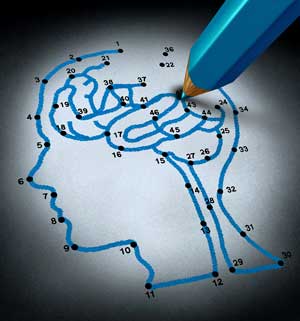
Neuroplasticity seeks to rewire the neural pathways in the brain.
I was even more surprised that it was one of only three (fluovoxamine, gut microbiome) of 15 trials to show a modestly positive result. Since I wanted to learn more about neuroplasticity, I looked into it. It was fascinating to work through the statistics (ChatGPT helped enormously) to better understand the results.
Health Rising is going to dig into neuroplasticity a bit more. Don’t worry – it’s still going to be almost entirely focused on scientific studies and clinical trials. My commitment, though, is also to bring forth any treatment possibilities, and neuroplasticity now occupies a large space in the ME/CFS/FM and long-COVID treatment world – too big a space not to try to objectively tangle with it (Just check out Raelan Agle’s YouTube channel.)
Besides, I don’t believe it’s “scientific” to ignore it. A scientific approach requires that all data points be incorporated. While few neuroplasticity studies have been done (unless you count CBT), neuroplasticity recovery stories on the web abound, and they shouldn’t be willy-nilly pushed under the rug (IMO). So we’re going to do a short series on neuroplasticity.
There seem to be two main camps regarding neuroplasticity interventions. One says it’s all BS, the other says it’s the only way to go. Neither makes sense to me, and my experience explains why.
My Experience

My experience with “neuroplasticity” has been mixed. Early results were great, later ones not so much. (s-Image-by-ElisaRiva-from-Pixabay-)
Indeed, my own experience with “neuroplasticity” is mixed. The EST training I did a couple of years after I got ill is still easily the most effective thing I’ve done for ME/CFS/FM. I went from lying in bed in pain to engaging in life again very quickly... It was amazing!
Not all was well, though. I still experienced a great deal of pain; after strenuous exercise, I would often experience severe payback; I generally felt wired and tired and at my limit. I was much improved but not back to myself at all.
Prior to ME/CFS, I was a healthy, athletic young man with a bright future. Post-ME/CFS, when I worked, I worked at the lower-end jobs (fast food, catering, cashiering) that I felt I could handle. As my peers were moving up the job ladder and establishing careers, I was not.
I was always good at school and eventually returned to college, got my BA and MS. After chemical sensitivities kicked in, I was effectively out of the job market altogether. There was a silver lining, though. I started Phoenix Rising in the early 2000s and then later, Health Rising.
I still participate in EST’s successor, Landmark Education, and I’ve done 3 neuroplasticity courses, but while I’ve found some helpful practices, the magic has never struck again. Since those early days, I’ve never been able to move the needle significantly on my health with neuroplasticity practices, supplements, diet, or drugs.
I have read quite a few startling neuroplasticity recovery stories, and I know of a highly skilled professional who completely returned to health using these techniques (and some biological adjuncts). I also know people who have tried multiple practices without effect.
So, I’m in the middle. I am not one to dismiss these practices, nor am I one to say they are god’s gift to ME/CFS/FM or long COVID.
This is going to be a fairly short and intermittent series. Over the next couple of months or so, I plan to do a larger blog discussing what kinds of neuroplastic recovery stories, common themes, a neuroplasticity poll, and a few blogs on some of the different practices used.
THE GIST
-

About 1/5th of the behavioral group noticeably improved their physical functioning score.
I was surprised to see the Wyller group’s large (n=312) neuroplasticity-like clinical trial pop up as I was searching for large, finished long-COVID trials.
- Only three of the 15 large or largish long-COVID clinical trials had at least a modest positive result – and it was one of them.
- Neuroplasticity is a pretty hot-button topic in these diseases, but recovery stories abound, and I’ve decided it must be broached. One of Health Rising’s core commitments, after all, is to explore as many treatment options as possible.
- This is one of a small series of blog posts that will attempt to objectively examine neuroplasticity. They will include a broader overview, a neuroplasticity poll, and a couple of blogs exploring some of the techniques used.
- This study used the CATS and sustained arousal models, which propose that an infection triggers an alarm response in the body that affects the immune system, the autonomic nervous system, and other systems.
- The alarm response should tamp down as the infection clears, but in some people it doesn’t. The model proposes that the alarm response is kept alive when the patient repeatedly tries to do something only to have his/her symptoms ramp up again.
- This causes “expectancies” to form, such as “when I go for even a short walk, I will get really tired”. The brain, sensing this pattern, sends automatic, unconscious messages in the form of symptoms and thoughts that attempt to deter the person from going for a walk again.
- This is simply how the brain functions. It’s a kind of shorthand it engages in. It deals with any situation we encounter by referring back to an earlier, similar situation. If one repeatedly experiences symptoms while walking, it will be determined that walking is not helpful.
- The CATS model attempts to remedy the situation by bringing into the open the symptoms experienced, how they are dealt with, and the decisions made.
- It then tries to flip the script by suggesting ways to better manage the symptoms so they don’t evoke alarm, by helping the person feel safe and able to slowly increase their activity.
- The study included 2-6 behavioral sessions that were spaced 2-8 weeks apart.
- The study’s main goal was the physical functioning score on the SF-36, which assesses how much a person believes they are physically inhibited by their illness. Symptom assessments were also done.
- Sixty-seven percent of patients receiving behavioral therapy improved the physical functioning score by at least 10 points. That was a good result, but 50% of the patients in the usual care arm also improved their physical functioning score by at least 10 points.
- A post-trial analysis found that for every 5 people treated with the behavioral intervention, one more person improved by more than 10 points compared with standard care alone. In other words, the behavioral intervention significantly increased the physical functioning score in about 1/5 of patients trying it.
- All in all, the behavioral treatment was considered to have produced a modest effect on how limited the participants felt they were, physically. It appears that a smaller group of people did quite well, and most people had mild to no benefits.
- That was the highlight of the study. The vitality scores indicated that the treatment had a small to modest effect on feelings of vitality/energy or fatigue. While some improvement was made, the behavioral group still experienced low vitality and high levels of fatigue.
- Post-exertional malaise fared a bit better, with the behavioral group experiencing small to moderate decreases in their experience of PEM.
- This led to a bit of a dilemma. By the end of the study, a subset of participants in the behavioral group believed they were less limited physically, but their vitality remained low, and they were still quite fatigued.
- Their belief that they could do more physically did not translate into substantially reduced fatigue or increased vitality.
- Hidden in that group was probably a small subset of patients whose PEM, fatigue, and vitality improved noticeably. Most of the other people probably experienced small gains, and some experienced no gains.
- In the end, the gains in the behavior group were quite modest and honestly what I would have expected from any chronic illness.
- The idea that the brain is inputting negative thoughts, feelings, and emotions that are not helpful, though, makes sense in any chronic illness. It does not contradict the idea that biological factors may also keep people with long COVID, ME/CFS, etc., in check. Both can, and probably are, happening at the same time.
- There is something for everyone in this study. People who embrace neuroplasticity can take some cheer from the fact that probably a relatively small subset of patients did appear to improve noticeably. The Wyller group wants to isolate that subset and I hope they can. Because these practices often are fairly cheap and some come with money-back guarantees, if you’re interested in this area, they may be worth a try – you might be in that group!
- People focused on biological explanations of these diseases can take cheer from the fact that the results from the behaviorally treated group as a whole were quite modest; i.e., nothing in this study says that CATS is a pathway to recovery for most people with long COVID.

Support Health Rising and Keep the Information Flowing!
Health Rising is not a 501 c (3) non-profit
The Wyller Group’s Big Clinical Trial
The Models Used
Note that the field of neuroplasticity is much too broad to be represented by a single study, but the models used (Cognitive Activation Theory of Stress (CATS), Sustained Arousal) in this study clearly have substantial overlap with practices used by neuroplasticity practitioners.

The CATS model proposes that if an activity repeatedly produces negative results, the brain will start to produce symptoms to stop the person from engaging in that activity again.
The Cognitive Activation Theory of Stress (CATS) model goes something like this: an infection triggers symptoms associated with “sickness behavior” (fatigue, flu-like symptoms). This is a normal response, which we should note is entirely driven by the brain. The brain triggers flu-like symptoms to make the ill person lie down, conserve energy, and stop passing the infection to others.
Over time, though, the symptoms should abate as the body clears the infection. When they don’t, the CATS model predicts that when the brain expects something to happen; aka – “I’m going to enjoy myself on a walk”, but something different happens (I feel fatigue, pain, etc.), it sends out an automatic/unconscious alarm that produces a flight/flight response, affects the hormones and immune system, and causes more pain; i.e. the brain produces both the symptoms and biological abnormalities found in these diseases.
It proposes that the brain has gotten locked into a threat response even when the original cue (the infection) is no longer present.
While your symptoms are real, as the theory goes, they’re the result of a maladaptive alarm response rather than ongoing tissue damage, and that your brain can be retrained to stop the automatic alarm response. This idea appears to pervade neuroplasticity practices.
The practitioners would ask the participants things like:
- What situations do you view as threatening?
- What do you expect will happen?
- How do you interpret the symptoms that resulted?
- What did you do in response to those symptoms?
- Whether your responses reinforced a sense of danger or lack of control.
For instance, if someone said, “When I feel this sensation, I automatically expect deterioration, and so I alter my behavior to avoid that,” the participant would be encouraged to consciously construct a different prediction like, “This sensation may not signal damage, and I may be able to perform this activity safely”, and then test it.
Notice that a key aspect of brain retraining – that an ongoing alarm response is present – fits quite nicely with some biological findings and hypotheses in ME/CFS/FM and long COVID.
The wired-but-tired symptoms, the increased pain sensitivity, the danger-response hypothesis, Jarred Younger’s touchy microglia, and findings indicating that the immune system and metabolic exhaustion are present, could result from an ongoing alarm response.
The Sustained Arousal Model – Wyller’s sustained arousal model applies the CATS model specifically to diseases like ME/CFS and long COVID. It proposes that an infection may initiate a real biological stress response, but that a self-reinforcing process keeps it going after the infection has been resolved, which is pretty much CBT 101.
The Key is Feeling Safe

Being able to feel safe is a key tenet of many neuroplasticity practices.
One of the main goals – to have a person feel safe – is a key tenet in neuroplasticity. In neuroplasticity videos, the idea of cultivating a sense of safety shows up again and again. The idea is that the safer you feel, the less the damaging alarm response kicks in. As the alarm response shuts off more and more, you can safely engage in more and more activities.
It doesn’t seem unreasonable to me that the brain – faced with this perplexing situation – would react with alarm. My understanding is that when the brain encounters a situation, it immediately maps onto it what happened in a similar situation from the past.
If I keep going for walks and feel terrible when I do, at some point the brain will raise the alarm and produce thoughts, feelings, and symptoms in an attempt to stop me from doing it.
The big question, of course, is how significant a role these automatic processes play in these diseases. The practitioners propose that “maladaptive expectations” and the sustained arousal they produce are the major perpetuating causes of long COVID or ME/CFS.
Others, of course, disagree.
The Study Results
The behavioral intervention was delivered 2-8 times, with 2-6 weeks between sessions. The participants were followed for 12 months. About 10% of people never started the program or dropped out, but the variability in the number of sessions attended was largely baked into the study. The median number of behavioral sessions was 4.
The authors did not assess whether people with more behavioral sessions did better than those with fewer.
The authors were happy with the results of the study and concluded:
“The findings of this trial suggest that brief outpatient rehabilitation based on a cognitive and behavioral approach is effective and safe for patients with PCC.”
In the first write-up of the trial, almost 1/5th of the participants would have been classified as “recovered” (aka the PACE trial) when they entered the trial. (How did the authors miss this?) They did, though, redo the analysis.
The Key Test – the SF-36 Physical Functioning Score

The physical functioning score on the SF-36 asks how much a person believes their physical functioning is inhibited. The authors proposed that altering that dynamic would allow the participants to participate more, be more vital, etc.
The primary goal of the study was to improve the physical functioning score on the SF-36. The physical functioning score does not measure strength, exercise capacity, steps, or similar measures. It asks how much a person believes their health limits their ability to perform ordinary physical activities.
This assessment made sense because the model’s main thrust was to help long-COVID patients believe they could do more, physically, without harm.
The average physical function score of the participants at baseline was 63/100. This indicated that they were not severely ill, and could take care of themselves and engage in some ordinary activities, but were substantially limited when it came to longer walks, walking up stairs, carrying heavy items, bending, moderate activity, or strenuous activity.
After the Intervention
Can You Believe? Physical Functioning Score Shows Some Improvement in Some People

About 1/5th of the behavioral group noticeably improved their physical functioning score.
Both the behavioral intervention and the usual care group improved their physical functioning score. Approximately 67% of the intervention and 46% of controls improved their physical functioning score by at least 10 points.
The behavioral intervention group improved by about 9.2 points more than the usual care group. The 9.2 increase did not meet the authors’ criteria for clinical significance (10-point increase).
The study has been criticized for not meeting that endpoint, but it almost met it. Whether it’s 9.2 or 10, the study came close.
A nine-point shift could indicate a number of things. Some people may have gone from feeling they were “limited a lot” to “limited a little” when climbing stairs, or walking longer distances, or some people may have gone from feeling “limited a little” to “not being limited” on routine activities.
The paper reported that about one third of the behavioral intervention group improved their physical functioning scores to the age- and sex-adjusted normal range. However, because 10% of that group was already in the normal range before the intervention started, removing them from the analysis indicates, if I have it right, that 1/4 of the behavioral participants improved to the normal range of the physical functioning score on the SF-36.
A post-trial analysis found that for every 5 people treated with the behavioral intervention, one more person improved by more than 10 points compared with standard care alone. In other words, the behavioral intervention significantly increased the physical functioning score in about 1/5 of patients trying it.
The Cohen’s D statistic (.42) indicated a great deal of variability existed. While the group overall improved, many people in the intervention group ended up with worse PEM scores than in the usual care group, and some people in the intervention group either stayed the same or got worse. It suggests that the treatment produced a modest effect.
Not So Vital
Vitality improved a bit but was still quite low.
Things were not so promising regarding vitality and fatigue. The vitality part of the SF-36 asks about feeling energetic, full of life, or worn out or tired.
At baseline both groups had very low energy (vitality), and experienced high fatigue and severe interferences with their ability to do work.
While the behavioral intervention group improved its vitality score from 22 to 37.6, the standard care group also increased its score from 22 to 29.9; i.e., the behavioral intervention group improved by 7.8.
This is considered a small to modest increase. It might cause a person to feel energetic “a little of the time” rather than “none of the time”; or they might feel tired “most of the time” rather than “all of the time”.
Overall, the behaviorally treated group still had very low vitality.
Cohen’s D (.31) indicated that some participants improved noticeably, many improved only a little, and some probably didn’t improve at all.
Contrast that to a Cohen’s D statistic of .5, which is considered a “clear, clinically meaningful average benefit, or a .8 finding, which indicates that most of the treated patients improved substantially, or a 1.0 finding, which indicates a dramatic treatment effect.
Still Quite Fatigued

The participants in the behavioral group reported that their fatigue improved a bit – but they were still quite fatigued.
Similarly, while the behavioral intervention did decrease the fatigue score from 25 to 17.6, the usual care group also decreased its fatigue score by almost as much (25-21.2). In other words, as a group, while they did improve a little, they were still quite fatigued.
Cohen’s D (.33) again indicated a small-to-modest treatment effect. It appears that some of the participants improved noticeably, many improved only a little, and some probably didn’t improve at all.
Post-Exertional Malaise (PEM)
The PEM score for both groups – the behavioral and the usual care group – declined significantly (66-39; 65-52). The behavioral group improved their PEM by about 12 points more than the usual care group. This was considered a “small to perhaps moderate effect”.
Cohen’s D (.42) was slightly higher but still within the “modest” range. Many of the treated participants still had worse PEM than many controls, and the PEM in some of the controls improved substantially. Similarly, some of the participants who received the behavioral treatment did not improve, or got worse.
The Dilemma

A belief they could do more physically did not translate into feeling of vitality or energy.
We end with a bit of a dilemma. By the end of the study, a significant subset of participants in the behavioral group believed they could do more physically and socially. While their sense of vitality and fatigue increased a little, they’d started from a very low level, and their vitality remained low, and they were still quite fatigued.
Their belief that they could do more physically did not translate into substantially reduced fatigue or increased vitality.
Hidden in that group was probably a small subset of patients whose PEM, fatigue, and vitality improved noticeably and whose progress was long-lived (at least a year).
In the end, we don’t know a crucial fact: were some people in the study exerting themselves more and experiencing substantially fewer symptoms? Assessing step counts or time spent upright could have shown that. Further biological data, such as autonomic nervous system, immune system, and exertion tests, would have told us whether the protocol had significantly altered their biology. These tests are rarely done in treatment trials, but they are beginning to be incorporated into them.
Summary
In the end, I don’t see what the fuss is about. The study findings were very much in line with past CBT studies; i.e., they were quite modest, and honestly they are what I would have expected from any study that attempted to tamp down the stress response. I’m convinced that the UK and Dutch governments stopped funding CBT/GET studies because, in the end, they just did not pan out – the results were too modest.
The idea, though, that the brain is inputting negative thoughts, feelings and emotions that are not helpful makes sense in any chronic illness. It does not contradict the idea that biological factors may also keep people with long COVID, ME/CFS, etc., in check. Both can be, and probably are, happening at the same time.

Most people probably had only mild gains at best, but some probably did quite well.
This is just one slice of the field of neuroplasticity. People who embrace neuroplasticity can take some cheer from the fact that a small subset of patients did appear to improve noticeably. The Wyller group wants to isolate that subset, and I hope they can.
Because these practices often are fairly cheap and some come with money-back guarantees, if you’re interested in this area, they may be worth a try – you might be in that group!
People focused on biological explanations of these diseases can take cheer from the fact that the results from the behaviorally treated group as a whole were quite modest; i.e., nothing in this study says that CATS is a pathway to recovery for most people with long COVID.
Coming up shortly: a long-COVID study finds a way to assess energy production in the brain, and Jarred Younger talks.





I think this is a perfect example of where subsets of pwLC and pwME need to be isolated. The overgeneralizing of diverse and divergent patient cohorts has been so harmful and confounding. It’s the result of these illnesses being systemically neglected for so long.
I used to get defensive when people would claim to recover or improve using neuroplasticity or brain retraining programs, but now I just take it as evidence that ‘they don’t have what I have’. Because I’m clearly in the group where PEM is induced by physical activity in a way that has absolutely nothing to do with how I feel about the activity I do. It’s the activity itself, in relation to my biological state (ie level of vulnerability to PEM at the time), which induces the PEM. Thoughts just don’t factor in.
For others with a different experience, I don’t deny their experience. I just know they have a fundamentally different condition, and it’s not disparaging to suggest that their condition may have a psychological component, or even be essentially psycho-somatic in nature, in some cases.
But we’ve all been mixed together by medicine and that serves none of us. It took me months to accurately diagnose myself with ME using the various diagnostic criteria. Whereas it took a 10 minute phone call, with an ‘ME specialist’ in Vancouver, who has never met me, to formally diagnose me with ME.
I’m with you Geoff.
PEM does not care about the source of your exertions or your desire to overcome it. If your battery charger has been damaged, there is no amount of psychological assistance that will make the PEM disappear.
I too have come to be a bit more sanguine about other people’s experiences being held up as examples I might explore- from Lightning Process to hypnotherapy – after getting defensive and angry that I might somehow solve this with a change of mindset. Being told that it’s psychosomatic is not remotely helpful, even if it may be for some others.
I’ve also become aware of how powerful that an emotional disturbance is in bringing on a crash after an exchange like this, and while it might appear contradictory to say that I don’t expect to improve with a change of mindset and then acknowledge the damage that the emotional component brings, they are different. I don’t feel I’m ever held back by intent but I can be pushed off my equilibrium by unhelpful advice.
I found the Open Medicine Foundation study particularly helpful in identifying my place in the spectrum of sufferers and now realise that chasing after all manner of irrelevant therapies has been a hindrance, not to mention confusing, and treating PEM with pacing is the only real help currently available to me.
I always look forward to Cort’s latest findings and am optimistic that the stars are starting to align for something solid to hang that optimism on.
I’m with Geoff on this too.
I have a hypothesis. (But before anyone misunderstands, I am not suggesting the Simon Wessely biopsychosocial hypothesis, as I believe it is fundamentally flawed)
His model argued that after the initial infection people with ME/CFS are essentially biologically recovered, but remain ill because of unhelpful beliefs, fear of activity, and deconditioning. If that were true, mind therapy should help many people recover. But that doesn’t appear to happen for the vast majority of people with ME/CFS.
My hypothesis differs fundamentally from the BPS model. Rather than applying to most people with ME/CFS, it may only apply to the rare subgroup who have already recovered from the biological disease process responsible for PEM without realising it, but continue to feel unwell. When they later undertake a neuroplasticity program, they notice they can gradually become more active without triggering PEM.
Technically, by the time they start the program they would no longer meet the Canadian Consensus Criteria (CCC) for ME/CFS because post-exertional malaise (PEM) is a mandatory diagnostic criterion. However, for those who still have PEM and therefore still meet the CCC, I don’t think there is convincing evidence that neuroplastic mind therapy can improve or cure active ME/CFS.
From the relatively few but vocal recovery stories I’ve read, I suspect this is exactly what’s happening. They can still feel very unwell after prolonged illness, continue avoiding activity, and deconditioning can add to how unwell they feel. This is the only stage that could reasonably be described as biopsychosocial.
The key point is simple: “Still feeling sick is not the same as still having ME/CFS with PEM.”
When one of these uncommon people eventually starts a mind therapy program, they become more active and discover they no longer crash after exertion. It is then easy to conclude the therapy cured them, when biological recovery may already have occurred and the therapy simply prompted them to recognise it.
This could also explain why dramatic recoveries from these programs appear to be so uncommon. They are not curing most people with ME/CFS. They may simply be identifying the small number who had already recovered from the PEM-producing disease process before starting the program.
I would also like to add, that after all these years, how hard is it to routinely include inexpensive wearable activity trackers in these studies?
One reason I remain sceptical is that, for decades, this field has repeatedly relied on subjective questionnaires while objective outcome measures have too often been absent, downgraded to secondary importance, or failed to corroborate the reported improvements. That has been a longstanding methodological criticism of psychological and behavioural ME/CFS research.
Daily step counts and actigraphy are hardly cutting-edge technology. Wearable monitoring has been used in sports science and clinical research for many years, so there is nothing novel or experimental about using it to objectively measure real-world physical activity.
So here’s my challenge to researchers running neuroplasticity trials. First, confirm that participants genuinely still have active PEM at the start of the study using the two-day CPET, where appropriate, as the best-established objective research tool for demonstrating exertion-induced impairment. In other words, demonstrate that your participants genuinely have active ME/CFS before testing whether neuroplasticity programs can treat it.
Then make objective wearable measures routine primary outcome measures alongside subjective questionnaires.
If neuroplasticity programs genuinely restore physical function, then let the objective wearable data demonstrate it. If they don’t, then the field needs to confront that reality. It’s time for objective evidence to become the rule, not the exception.
I’m so happy to see this little thread of comments. You are all right on target, in my opinion. The problem we’re continuing to have with this “neuroplasticity” stuff coming up over and over is that we still don’t have proper diagnostic markers, and many people think they have M.E. who either never had it or have, as B Rob suggests, already somehow recovered so that their continued illness is caused by ongoing fear of activity; whereas M.E. has nothing to do with your thoughts or feelings about your body, as anyone with years of experience with actual M.E. knows quite well. NOT anticipating harm from activity is what keeps us deteriorating, lol. It’s when we learn to expect it–and learn to pace for real–that we can stabilize and, in some cases, improve.
My central symptom is exertion-caused PEM (which is more properly known as PENE: post-extertional neuroimmune exacerbation) in the pattern recognized by the ICC: delayed by 12-72 hours following exertion. When I read Cort’s description of his illness journey, it sounds nothing like mine, but there are many other folks’ accounts I read that line up with my experience. I think we’re talking about apples and oranges, because the experience of M.E. is extremely specific and persistently disabling.
I look forward to a time when there is a true diagnostic marker, so we can stop having these demoralizing and stigmatizing debates about psychosomatic claptrap. It may not be claptrap for some unwell people. But it’s claptrap for M.E., just as it would be for M.S. or lupus or ALS. (And saying it’s claptrap doesn’t mean that every person on this earth can’t benefit from things like meditation and breath work and CBT, or that there may exist some people with unfounded fear of exertion. It’s claptrap as a “curative” path for serious disease.)
Very interesting comment Agatha, Thank you for that!
One thing I’d like to mention, not aimed at you personally, more using your comment as a chance to address a broader misunderstanding I think we as a community need to start correcting.
You said you look forward to the day we have a true diagnostic marker. I agree wholeheartedly. Although I don’t think we need to wait for that day before pushing back against the current narrative. We already have enough evidence the disease is biological. We just need to know the evidence and be ready to use it.
We already have more than enough objective biological evidence to demonstrate that ME/CFS is a genuine biological disease. What we don’t yet have is a disease specific diagnostic biomarker sufficiently validated for routine clinical use. Those are two very different things, and I think too many people unintentionally blur the distinction.
For years the media, much of the medical community, the psychological school of thought, and anti-ME/CFS commentators have repeated the phrase, “There is no biomarker for ME/CFS.” Unfortunately, that message has become so widespread that even many ME/CFS advocates now repeat it. I even used to think it.
The problem is that it’s an oversimplified and misleading statement. Without explanation, it becomes misinformation.
People immediately hear “no biomarker” and think, “There are no biological abnormalities, so perhaps the illness is psychological.”
ME/CFS already has numerous measurable biological abnormalities. The issue is not that there are no biomarkers. The issue is that many people believe we have to wait for one that’s disease specific before we can say the disease is real. I don’t believe that’s the case. Having one would be great, but we don’t need to wait for it. We already have enough evidence to act now, and to challenge anyone who says “there’s no biomarker” to imply there’s no disease pathology.
Examples include abnormalities in NK cell function, proteomics, metabolomics, cerebral blood flow, TRPM3 function, red blood cell deformability, cytokine signalling, GPCR autoantibodies, and more recently, skeletal muscle changes that cannot be explained by deconditioning alone.
Some of the most promising candidate disease specific biomarkers include Professor Warren Tate’s PKR biomarker, his DNA methylation and proteomics research, and Dr David Systrom’s invasive cardiopulmonary exercise test (iCPET).
This misunderstanding needs to be corrected, and we all need to help spread the word.
Whenever we hear someone in the media, medical community, or elsewhere say there is no biomarker for ME/CFS, we should politely explain the distinction and point them towards the evidence.
Otherwise, the misconception continues to spread, reinforcing the false impression that ME/CFS lacks objective biological evidence, which perpetuates the outdated psychological narrative surrounding the disease.
______________
(To Cort, if you are reading, could you do a blog on this issue please, or have you already done one? As would be good to equip the ME/CFS community with the evidence against those in positions of power who intentionally exploit the ‘no biomarker = no disease’ argument.)
______________
Examples referred to above: (please feel free to add more)
Objective biological abnormalities and non disease specific biomarkers
1. Reduced NK cell function– one of the most replicated immune abnormalities, but also seen in some other chronic illnesses.
2. Proteomic abnormalities … altered blood protein signatures involving immune, metabolic and vascular pathways.
3. Metabolomic abnormalities – changes in amino acids, lipids and energy metabolism.
4. Reduced cerebral blood flow. particularly on standing or tilt testing; also occurs in other conditions such as POTS.
5. TRPM3 dysfunction – impaired TRPM3 ion channel function in NK cells.
6. Red blood cell deformability and microcirculatory abnormalities – reported by Ron Davis and others.
7. Abnormal cytokine profiles – altered immune signalling, although the specific cytokines vary between studies.
8. Autoantibodies to GPCRs (β₂-adrenergic and muscarinic receptors) – reported in subsets of patients but also found in other autoimmune disorders.
9. Skeletal muscle fibre changes. July 2026 Nature Communications study (Charlton et al.) found ME/CFS and Long COVID patients have distinct muscle fibre changes (including increased glycolytic fibres, and in ME/CFS, type I fibre atrophy) that differ from those caused by bed-rest-induced deconditioning.
Promising candidate disease specific biomarkers
• Professor Warren Tate’s PKR biomarker, which his team has proposed as a potential diagnostic test, pending further validation by independent researchers.
• Professor Warren Tate’s DNA methylation and proteomics research, which have identified distinct molecular signatures in ME/CFS and continue to advance the search for future diagnostic biomarkers.
• Dr David Systrom’s invasive cardiopulmonary exercise test (iCPET), which objectively demonstrates characteristic physiological abnormalities seen in many people with ME/CFS.
Correction to my comment above: the part should read ‘before we can say the disease is biological,’ not ‘real.’ Didn’t mean to imply anything about mental illness not being real, (sorry in advance to those who may interpret it that way)
:)I think you are right – lots of possibilities -not enough research to nail them down definitively.
The problem is, as you so well note, that this is a huge issue and I’m not up doing a major blog on that. I will, however, keep eyes peeled for any biomarker findings.
The Open Medicine Foundation BioQuest biomarker study is very exciting in that regard. I look for great things from that study 🙂
https://www.healthrising.org/blog/2026/02/28/omf-bioquest-study-chronic-fatigue-me-cfs/
Yes! Thank you for this clarification and for your list. I should amend what I wrote to say that we don’t have a consistent approach to diagnosis, which muddies the water for all of us when people with different illnesses are grouped into one basket for research or even for discussion purposes.
It is sounding to me, from Cort’s response, that he is calling these findings “possibilities” rather than firm research findings, and that he awaits a single definite “biomarker” before he turns his back on the psychosomatic approach once and for all.
I wonder how many people are aware that most illnesses are diagnosed through patterns of findings (plus symptom reports) like this rather than a single clear diagnostic marker. Here are some examples: ALS, PLS, MS, RA, Lupus, Polymyalgia Rheumatica, Parkinson’s (until 2023), “Parkinsonism” (a horrific array of diseases typically worse than Parkinsons but hard to distinguish from it), Sjogren’s Syndrome, Migraine, Interstitial Lung Disease, and I’m sure the list goes on and on.
All of these conditions are diagnosed through patterns of findings. Because they have been accepted and researched diseases for longer than M.E., and because there are specialists trained to treat them, and because there are in some cases useful (and profitable) treatments, there are arrays of tests done, which, along with symptom reports, produce fairly reliable diagnosis. Not a one of the list above (except Parkinson’s as of 3 years ago) has a “biomarker” in the sense that Cort seems to want.
Just to clarify, Agatha
“We don’t have a consistent approach to diagnosis, which muddies the water for all of us when people with different illnesses are grouped into one basket for research or even for discussion purposes.”
I agree, and this is why I believe that diseases like ME/CFS, which are so heterogeneous, really need biomarkers that identify the different subsets.
“It is sounding to me, from Cort’s response, that he is calling these findings “possibilities” rather than firm research findings, and that he awaits a single definite “biomarker” before he turns his back on the psychosomatic approach once and for all.”
This is not quite accurate. The sole reason I am exploring neuroplasticity (not psychosomatism but neuroplasticity) is because of all the recovery stories. That’s the only reason.
I would hope that biomarkers would be able at some point be able to differentiate people who benefit from these practices from those who don’t but I imagine that is a very long way off.
I can’t help but wonder if all the people in the US who believe they have ME/CFS were able to go to the best specialists, like Klimas and Bateman, would most of them actually get our diagnosis? I doubt it.
I think a whole lot of people have been told they have ME or ME/CFS who have other fatiguing conditions. I think many doctors just use it as a throwaway diagnosis equivalent to “I don’t know what’s wrong with you, but try not to worry about it.”
I think the criteria used in many studies are too broad. ME/CFS is a clearly defined illness, and PEM or PENE is an extremely distinctive hallmark symptom, and there are a number of biomarkers that can be used to clarify the diagnosis.
What I’m saying is that I don’t think ME/CFS is very heterogenous. I think that the population of people who are told they have it is heterogenous. We have biomarkers and a very striking hallmark symptom and some sets of strict criteria that could clarify the boundaries of the population who suffer from one highly disabling disease. Research would tremendously benefit from this, as would patient experience.
As you note, I don’t remember a single study of ANY kind using activity trackers – so we can’t blame the neuroplasticity studies for that – nobody has been using them. (I think some trials are now).
I have no doubt, by the way, that these people were very inhibited – their SF-36 scores showed very low vitality, high fatigue, and low SF-36 scores.
I also don’t doubt that people who really improve using these techniques will show increased activity – I’ve read too many people who went back to exerting themselves, biking, hiking, doing normal activities – to not believe that.
My question is, how many people is this happening to? Hence the upcoming poll.
Yet even that kind of evidence won’t mean anything if the patient cohort is diverse. There are many people with fatigue who don’t have M.E. Most people with disabling fatigue don’t have M.E.
Let me try and ‘ease’ the discussion wether it’s sience or snake oil. When I read
“The practitioners would ask the participants things like:
What situations do you view as threatening?
What do you expect will happen?
How do you interpret the symptoms that resulted?
What did you do in response to those symptoms?
Whether your responses reinforced a sense of danger or lack of control.”
Then I see a simple thing I practice for years: learning to anticipate difficult situations where you risk ending up in a deep energy shortage and trying to prevent wasting brain energy. In that sense, it looks very similar to ‘brain pacing’, the equivalent of the ‘common’ activity pacing.
This concept of ‘brain pacing’ goes well beyond the often proposed do not do too much or too dificult mental activity for too long. It adds two aspects:
1) When our body crashes, the brain *needs* to go into high alarm phase. Many autonomous body functions start to colapse. Think about POTS kicking in badly (pushing heart rate very high), risk of feinting and injuring oneself when falling (or be ran over on street), blood flows being altered such as decreased blood flow to the brain… Those things are showing up in multiple studies. Many patients have extra largely autonomous symtpoms, like hard to stop hyperventilation, vision blanking out (I experienced that more then once before), loss of limb control as either loss of strength or shaking…
All those things in combination with a very slow brain when crashing can and frequently will create dangerous situations, like losing control when riding a vehicle, tumbling down stairs or simply injuring the head when falling into furniture at home.
=> That *does* require the brain (and limbs and senses) to go into an alarm phase and stress hormones to be pushed out by the bucket, *because* stress hormones like (nor-)adrenaline do exactly that: try and get the body to safety by thinking and acting a lot faster then what could be done in that situation without the added stress hormones (fight) or freezing up in the hope to stabilize the situation and try and cause no further self-harm (stand still on the sidewalk rather then walking into objects and traffic).
By running over the 5 above CATS questions many times in your head, you prepare for a significant number of common situations that can happen / have happened in the past and pose real risks when in an acute crash. It helps that many of us live a rather limited life, so we need to prepare for less different scenarios. By running these scenarios *and how to deal with them in a sort of if-then-else flowchart* many times, we learn (at times that we have optimal amounts of energy and brain capacity) what to do in the heat of an emergency when it happens.
As near anybody knows, activities that are automated well are sooooo much easier on the brain. Think of driving the same road you take near every day versus a totally new road. The first, healthy people can do while planning their day. The latter requires their full attention and focus. The same counts tripple for us.
=> So, during a crash (when the brain is also short of capacity), the brain can run through a large number of ‘standard’ options to check for danger and adjust accordingly. It can (conciously) solve much of the ‘what to do now emergencies’ without requiring such a flood of stress hormones. That not only leaves more brain capacity left for managing and balancing the various autonomous adaptations it needs to make. It also allows to do those autonomous adaptations in a far less variable environment. The ‘unknowns’ like varying amounts of each stress hormone and amounts of each waste product (ROS, excessive lactate…) from the need to think (conciously) excessively hard are now varying a lot less. That in turn leaves the autonomous brain in a situation that is much more known and defined. E.g. the autonomous brain has the opporunity to learn and react more optimal since it recognizes much more similar crash situations happening each time.
That brings us to
2) After the brain experiences a crash many times it can A) handle crash emergencies better and B) better learn the patient to adapt to try and avoid ending up in a situation it is highly uncertain how the brain has to deal with it, then the chronic amount of stress hormones can drop some too. Why? The brain can better learn and trust that it has sufficient time and energy to deal with the next emergency even when starting from a lesser ‘always allert / always in fight and flight mode’.
1) Reduces both the extra deep neuron exhausting (from having to think as quickly as possibly how to get in a safe situation) when already in deep energy depletion. In other words it makes for quit a less deep depletion of the brain. That is a positive. And it allows to reduce the need for peaks in stress hormones with their side effects. And it allows for the autonomous brain to go quicker back to a balanced state managing the different autonomous needs when in the first stage of crashing (preparing better for following PEM resolution by starting from a better starting state)
2) Reduces the chronic need for increased levels of stress hormones (that in part permanetly postpone recovery as recovery isn’t an emergency thing) and their side effects.
So, I say there is no need for seeing neuroplasticity as ‘patient has too strong and unhelpfull stress response and faulty expectations’. No, in this model the stress response is exactly what it needs to be *when untrained in how to handle the many different and real dangers*. The solution here is not to think the patient does ‘overreact / overstress’ and need to learn to react / stress less. The solution is to learn to better handle and automate his emergency danger response, much like children in Japan learn to deal with earthquakes. And it’s not that the patient is unskilled in this compared to the healthy controls. The latter just don’t need that level of preparedness as their danger level is way lower, just like children in Denmark don’t need to learn to deal with earthquakes.
In this vision, learning to be better prepared and adjusting in order to have better opportunity to deal with such situations or even avoid them is not a side effect of the 5 point list. It’s the target. When knowing the target, it should be easier to get there then when it just happens as a side effect of the procedure. AND it points to point B) being an important part: adjust and choose wisely. E.g. still remember you aren’t fully recovered with any single early win. Pace pace pace instead of ‘eating up’ any single gain you make and pay the price later in return.
That’s just my vision,
take it with care for what it might be worth ;-).
Well said, I agree! I learned the brain takes as much energy as the body to run. You can stay in bed all day and do work on a laptop reading/writng/ studying new things and have just as bad PEM the next day as being on your feet for the same length of time (or less).
Really looking forward to the Jarred Younger piece, given his ongoing focus on the brain.
I honestly think this might even be below his notice. Another psychosomatic trial with only subjective outcome measures. They’ve been toying with such ideas for decades with nothing concrete to show for it in the UK.
I agree. I don’t even understand what the purpose of these studies is. It has been demonstrated North, South, East and West that it does not bring real results. So, why? why? why? are we still spending time, money and energy on this?
It is just mind-boggling…
Agree 100%. Pure nonsense. And it’s not only a waste of time, money, and energy, it keeps fueling the prejudices we patients confront all the time. It’s poisonous.
Maybe good to know that neuroplasticity doesn’t mean that new brain cells are being created or that brain damage is being repaired. That said, the brain can form new connections and adapt in case of brain damage. In my case, there is definitely a disrupted functioning of the brain. No damage has been found so far. So the theory that neuroplasticity can cure ME is based on subjectivity. In this case, filling out questionnaires. I always find it striking how high the numbers of patients participating in this kind of research are. It’s known that ME researchers have a hard time finding many patients for somatic research. For me, this is a sign that there is an overrepresentation of a ‘different kind of patient.’ This type of research is very heterogeneous and not random. That all said, I do find research into the fight-or-flight system very interesting from a physical point of view.
The medical consensus is clear: neuroplasticity programs are not a cure for ME/CFS, and major health organizations like the CDC and NICE recognize ME/CFS as a complex biological disease involving immune, metabolic, and vascular abnormalities—not simply a “rewired” nervous system
As for my own personal experience, I have tried three of these programs with no success over the past decade .., at most I got a little relief from some anxiety.
Amen.
The medical consensus is not clear- how could it be clear when they’re have been like two studies on this? Good for you for trying, though. A neuroplasticity poll is coming up.
“Good for you for trying” is a highly problematic response, Cort.
Those of us who have experienced extreme deterioration from trying various programs that assume this is either psychosomatic or “functional” or mainly an ANS dysfunction would NEVER EVER encourage others to try such things.
I lost a decade of my life to this kind of nonsense (ages 45-55 largely in bed).
After I decided to fully and truly and with great discipline honor what my body was teaching me, and pace religiously, I gradually went from bedbound to housebound to able to get out and about quite a bit.
And then, two years ago (age 65), I went at it again, with a PT who treats “functional” illnesses. I crashed horribly a couple of months in, and returned to bedbound. It has taken me over a year to get even close to the functional level I had before that misadventure.
I am freaked out that you are on a path here of advising people who have M.E. (and most likely have a different illness than you do) to engage with this dangerous misconception of their disease.
I’m sorry that you experienced that, Agatha, and I don’t know why that happened to you. As I noted, I’ve tried three of these programs, and none of them asked me to ignore or push through my symptoms.
Instead, they suggested that I practice, and then if – and only if – some energy opens up, that I make use of it.
There’s no pushing involved. Maybe you did something different.
My suggestion that people try these programs is because they are readily available, not too expensive for many of us, and comes out of maybe hundreds of recovery stories on the internet. As with EVERY treatment, the theme is to go low and go slow.
You are still not listening to people with true M.E., Cort. I suspect that you think there’s no such thing as a distinct illness of M.E. that is not the same as “CFS.” Fortunately for the M.E. patient community, there are doctors and researchers who know differently.
I did not say that any program asked me to “push through my symptoms.” My symptoms, though difficult to live with, are not the essential problem. My problem is that I have an exertion intolerance that worsens if I continue activity, whether or not any “energy opens up.” It’s dangerous to suggest that anyone “self-soothe” in such a way that they feel as if their setback is just a mirage so that they can be more active. This will bite most people with M.E. in the backside.
“You are still not listening to people with true M.E., Cort. I suspect that you think there’s no such thing as a distinct illness of M.E. that is not the same as “CFS.”
I think there will be several distinct subsets before all is said and done. Right now, I don’t think we can differentiate them but thats where the field is headed and I look forward very much to learning what they are (and which one I fit in :).
This trial did exactly what you’d think it would: it improved some of the highly subjective measures.
Which makes sense given that intervention basically suggests you just need to feel better to be better! That’s a strong incentive positive as well as negative by implying it’s also your fault if you don’t. And some of the mindfulness stuff is always nice.
But then the physical scores, which also have weren’t objectively measured, didn’t catch up.
So you create something akin to a delusion that sadly doesn’t impact physical health much.
That’s what any critic would’ve expected. You’re better off with some supportive psychotherapy should you need it and a bit of yoga should you be able imo.
In such a loosely defined cohort with no stratification and only subjective outcome measures… it really just looks like noise to me. I think that money would better invested elsewhere
Loosely defined cohorts, no stratification, and subjective outcome measures pretty much defines the clinical trial space in ME/CFS and long COVID!
This is true, that the clinical trial space is full of loosely defined cohorts. However, there are exceptions, at least for M.E., where the ICC criteria are used and patient cohorts are clearly defined. These are the only studies for those of us with M.E. to pay attention to, since other studies are full of people who don’t have our disease and so don’t have actual PEM or PENE (though they may experience a ton of fatigue or other symptoms).
The trial shows the usual pattern. There are modest subjective positives, which is exactly what you expect in an unblinded behavioral study using self‑report. And as we know from other studies, objective outcomes tend to come in roughly 15 percent lower than subjective ones. Once you correct for that gap, the most likely scenario is that objective results would be flat or negative and the subjective ones bias.
Tuller already noted that the primary outcome missed the clinical significance threshold. The authors still framed the intervention as effective, but that claim collapses once you look at the between‑group difference and the expected subjective inflation.
https://virology.ws/2025/01/30/trial-by-error-norwegian-long-covid-rehab-trial-misrepresents-clinically-insignificant-findings-as-effective/
So this trial ends up in the same place as other mind body programs and brain retraining studies. Modest subjective shifts, no clinically meaningful effect, and objectively almost certainly disappointing.
https://docs.google.com/document/d/1tWx9Ph0M2knYxx7vhMJ7PPtl83FJ02an2C3RiJ_2VDQ/edit?usp=drivesdk
The reasons people may improve or recover may be manifold. Claiming that it’s due to brain retraining is unfounded. See more here:
https://drive.google.com/file/d/14X6KuH_YUqVNJHmYFNyw3JL13tfx5BRq/view?usp=drivesdk
https://drive.google.com/file/d/1kQQQEXzkenmJf9oYH0yo5g5WQkOFm9Yq/view?usp=drivesdk
Interesting, Anil! For what it’s worth I asked (because I am no statistician) ChatGPT about your first assertions. It didn’t quite agree but it did suggest this formulation.
“The trial found modest improvements in participants’ reported functioning and symptoms, but its unblinded design, unmatched attention and exclusive reliance on self-report create a substantial risk that expectancy and reporting effects inflated those differences.
Because objective activity, work participation and physical-capacity outcomes were not measured, we cannot determine whether the reported gains were accompanied by meaningful changes in real-world or physiological functioning.”
Hi Cort,
This large meta-epidemiological analysis (Savović et al. 2012) shows that lack of blinding does systematically exaggerate beneficial effects on subjective outcomes, by roughly 15–22% on average. An unblinded self-report trial is exactly the setting where this bias is strongest.
https://drive.google.com/file/d/1jPe_yuBvTzxENBqGxESk69PlOVrzCYb6/view?usp=drivesdk
I agree with the rest of your comment that without objective measures we can’t know whether any real functional improvement occurred. Looking at the broader evidence on behavioural and mind-body/brain-retraining interventions over decades, lasting, clinically significant objective gains have not been demonstrated. There’s little reason to expect this trial suddenly to be the exception.
lol dude. Seriously using ChatGPT as a source? I asked it last week how much a one month subscription was and it didn’t even get that right. When I challenged it it’s dude the usual a) admit fault and b) promise to do better. Same thing it always says and then goes on making the same fundamental errors. It literally gave the wrong amount and currency for the one-month subscription it recommended to me.
You really need to re-examine whatever it is that drives you toward valuing ChatGPT’s output. It is not in any way a reliable source and you’re hurting your credibility here with your ongoing references to it.
Absolutely using ChatGPT. I don’t know why it’s having so much trouble with currency. I suggest you give it something else to work on.
I’ve used AI engines to fix various problems with my car, help build a solar system, fix a refrigerator, assess wildfire virulence and track wind patterns – the list goes on and on.
Most of the Fortune 500 companies are using AI engines and they plan to use them more.
There’s a reason that billions and billions of dollars are being invested in them….
It couldn’t tell me how a subscription to ChatGPT costs – just let that sink in. It told me I could generate more images if I paid for a subscription and it got the price wrong. That’s insane and it’s just the tip of the iceberg.
Yeah it’s good for some things like pattern recognition, graphics updating, solving maths equations. The number of errors with information type queries is too high for it to be taken seriously. And YouTube would be as good or a better source for DIY – find one channel that is good at what it does and it will be better than any AI that is just guessing. Plus, whose work do you think is being plagiarised by AI? All the human hours of toil just gobbled up and regurgitated for corporate profit.
And I’d suggest you check some of the highly reputable tech news sources such as Gamers Nexus on YouTube if you want to try and understand why so much money is being pumped into AI. It’s to make more money while the hype is still high.
Well done Cort!! That’s the best study results and explanation I’ve ever heard. If it works for you great. If it doesn’t, that’s OK, because it doesn’t help a lot of people. The 1 out of 5 helped should be enough data to support those it helps while letting everyone else know chances are good it won’t help. Continuing on, looking for a cure!
1 in 5 weren’t helped, 1 in 5 SAID they were helped in a questionnaire in a trial that was unblinded where substantial amount of data was missing and tests were uncorrected for multiple comparisons.
That is no evidence of anyone being helped. It’s far, far more likely those are statistical artifact of a study done badly.
I know it initially sounds exciting, however sadly it was Just another ‘subjective’ study, (the patient’s own reporting of the way they feel). There was no objective reporting. No proof they walked extra steps. No proof they were able to do more work, Especially over a long period of time. These studies often avoid follow-ups months later.
Wearable monitoring has been used in sports science and clinical research for many years, yet this research field along with psychology research on ME/CFS and LC often fails to use this simple method of objective monitoring. Why?
I know why, because the monitored objective outcomes won’t match the subjective patient reports.
If researchers in this field want their work to be taken seriously, then they need to step up to the plate, and demonstrate these claims with robust objective outcome measures. Until then these subjective results have little value (apart from the funding they the researchers themselves receive)
I definitely wasn’t saying it was good news for us! I was saying it was a great report by Cort explaining how it’s unlikely to help very many people. Personally, I think it’s borderline a scam but there are times when people can get “stuck” in bad places psychologically and need help re-framing and resetting their way of thinking. The vast majority of us, who aren’t hypochondriacs, are unlikely to think, “if I walk more than 30 min I’m going to feel terrible tomorrow. That’s because we know on any particular day it could be 15 min that does us in or 45 min might be fine. It’s not an expensive program to try and if it helps great! If you don’t have the money their are plenty of sites online that offer mental health tips and suggestions that do the same thing for free. See what works for you personally. If repeating a mantra works for you great! Find one that means something to you and do it. If it doesn’t work, it’s not a problem with you but the process. 🙂 And as far as the quality of studies? Yup, psychology is notoriously bad. Like you said, if they work with the physiology partners, they would get much published and if you don’t get published no one takes you seriously. I can say things have improved dramatically in the last 10 years, in tick born diseases. Chronic symptoms aren’t considered “psychological” anymore so there is hope for ME/CFS and Long Covid too!
Yes good points (sorry for my misinterpretation).
I agree I think we’ll see change and yes I think more people are starting to roll their eyes at these non-objective psychological neuroplastic mind therapy studies void of objective measurements and outcomes.
We see right through them
Will you be covering Unlearn Your Pain and the research and protocols of Dr Howard Schubiner? His book and his tools are turning around my symptoms, and they also require more commitment to the process than the few sessions in this study. He seems rigorous and scientific, and is getting good results where neuroplastic conditions are ruled in, and patients are open to his multi-pronged methods.
I sure hope Cort covers Dr. Schubiner. I took Rebecca Tolin’s course 2 years ago, based largely on his and Dr. Sarno’s work, and it gave me my life back after 30 years of ME/CFS.
Congratulations and thanks for sharing 🙂
I’ll check him out – thanks 🙂
Just curious if you’ve read, “The Divided Mind” by John E Sarno MD? He was probably the previous researcher into these methods although I not familiar with DR Shubiner. Sarno’s book explains how the brain deals with pain and how to stop it. There is no “unlearning”. It’s just a quick thought process and it does work for pain. I’ll be interested in seeing Cort’s review of this book. Glad it helped you!
I was diagnosed with CFS in 2004 (although I first became ill in 2003). After reading ‘Unlearn Your Pain’, I started watching Raelan Agle’s YT channel. I can honestly say it’s been improving my PEM. I’ve been able to decrease my PEM from 2+ weeks to about 3-5 days.
Congrats and thanks for sharing.
With all due respect Cort, but the way you are discussing this sloppy piece of a study isn’t critical enough
Just read what was their outcome measure in your own words:
“The study’s main goal was the physical functioning score on the SF-36, which assesses how much a person believes(!) they are physically inhibited by their illness. Symptom assessments were also done.”
So, here we have a study where the intervention was telling people they have to feel save and that they should believe that they will be well and capable of doing things.
Then their outcome measure is how much they believe they could do.
So basically you ask people first what they believe they can do, than telling them for weeks that they have to believe they are safe and can do more and than asking them about their beliefs again.
This isn’t serious science at all and all researchers who are part of this should be deeply embarrassed if they have any standards.
And I was worried I was being too tough!
Their hypothesis is not logically impossible. Even if we allow that brain could somehow learn that some activities cause PEM, that would only apply to common activities that brain had time to “train” on during the initial disease.
However, people who experience PEM experience it with absolutely every activity, even those activities that they’re doing for the first time in their lives. Even those activities that activate regions of the brain that were never used, or muscles that were hardly ever used, or sensory input that is completely new, etc.
On top of that, all of us have crashed many times from activities we weren’t even aware we were doing. How many times did we comb the past few days of our memories desperately trying to remember what it was we did that crashed us?
Cort, I am disappointed you don’t recognize yet another “subjects will say they feel a bit better if you tell them that they will feel better, but no objective measures will inprove” research.
Correction: “Their hypothesis is not logically POSSIBLE.”
Cort, I am disappointed you don’t recognize yet another “subjects will say they feel a bit better if you tell them that they will feel better, but no objective measures will inprove” research.
I did point out that the study really needed objective measures. The investigators used, if I remember it correctly, the Socratic methods to unpeel their experiences, then add in alternative explanations for what’s going on, and then asking them to test them to see if they work.
I didn’t think of it as just “believing”. It was more like trying something out and seeing if works.
I’m sorry but “study needed objective measures” isn’t even close to being enough for something like this.
When a treatment is cognitive reframing then self‑report becomes part of the intervention itself. If you teach people to reinterpret exertion as safe, to pay less attention to symptoms, and to view discomfort as non‑dangerous, their questionnaire answers shift even without real improvement.
The issue isn’t that Socratic methods are invalid. It’s that the trial’s measurement strategy was to detect changes in belief, but not changes in health. That’s why the lack of objective measures isn’t a flaw but the core reason the results are totally meaningless.
I don’t have an issue with their hypothesis, I have an issue that they didn’t prove it, and that they, and you to at least some extent, claim that the trial was a success. We don’t need another fight like with the PACE Trial. We don’t need another deeply flawed and incorrect research being weaponized against us. You are giving them legitimacy their trial design and results don’t deserve, and that can be very dangerous going forward.
The safety assessment was limited. Adverse events are captured through self‑report, even though the intervention encourages reduced symptom monitoring and ignoring of discomfort. The trial is not designed to detect harms that matter most to people with exertion‑triggered symptom flares, yet the authors conclude the intervention is safe.
All of that, the trial’s design, measurement choices, theoretical assumptions, and analytic decisions create something highly vulnerable to bias, overinterpretation, and false reassurances. The evidence is insufficient to support strong claims of effectiveness or safety for a condition defined by exertion intolerance.
That is quite a good summary of the studies methodologic strength or better said the lack of it.
“In the first write-up of the trial, almost 1/5th of the participants would have been classified as “recovered” (aka the PACE trial) when they entered the trial.”
At least they didn’t try and hide that fact behind utterly weird and wrong statistics nor by locking the data behind legal hurdles and fighting to the teeth to keep it from being analyzed independently (aka PACE). Still, when the evaluation criteria are that poor it raises a lot of questions about the whole methodology.
Unlike during the PACE trial, there currently do exist studies that have strong and different sets of fairly reliable biological markers. They still are expensive and non commercial so they still require collaboration with those study groups that achieve 95%+ separations between ME/CFS patients and controls. For a trial showing too much overlap with the PACE abomination, anything less then such markers should be considered insignificant.
It’s amazing to me what heat this subject produces. Even a very modest positive result – which I believe would have been likely – drives people nuts.
Why are so worried about this? It’s a very modest result!
When this topic occurs, the critics come out of the woodwork, analyzing every aspect of the methodology in excruciating detail. ‘
I suspect that if you did the same with virtually any other clinical trial, the result would be similar. The clinical trials in the ME/CFS space are inherently limited and they almost always rely on subjective assessments – and they get a pass.
Interesting!
Cort, after all the these decades of you writing about ME/CFS I am honestly baffled you can ask why are people worried. The reaction isn’t about “heat” or people being irrationally upset. It’s about history and real consequences.
Each time a study with major methodological flaws claims that cognitive‑behavioral reframing improves exertion‑intolerance conditions, it has repeatedly led to:
1. harmful clinical guidelines and/or patients being pressured into programs that worsened symptoms
2. misallocation of research funding, because policymakers assume the condition is primarily psychological and therefore “solvable” with low‑cost behavioral interventions
3. reduced biomedical funding, since subjective‑only trials create the illusion that the illness is already treatable
4. insurance and disability issues, where subjective improvements are used to argue sufferers should return to work despite unchanged physical condition
This isn’t hypothetical, this has already happened, for decades, you’ve been here for it.
So when a new trial repeats the same (unblinded design, subjective outcomes, cognitive‑behavioral framing, exclusion of severe patients, no objective measures, analytic flexibility), people aren’t “coming out of the woodwork.” They’re responding to a pattern that has severely harmed them and continues to shape policy, funding, and clinical practice.
ME/CFS is still the worst funded major chronic disease. YOU wrote about this.
So yes, ME/CFS trials are often limited, but limited is not the same as methodologically compromised. Many ME/CFS studies do use objective outcomes (CPET, actigraphy, cytokine panels, metabolomics, tilt‑table testing, immunological markers). Many have rigorous case definitions, blinded assessors, and biologically grounded hypotheses. What they don’t have is adequate funding. And that is exactly why flawed behavioral trials can distort the field so easily.
That’s why your ad‑hominem comment about critics being “nuts” or “overreacting” isn’t appropriate. When a severely underfunded disease repeatedly gets studies that overclaim based on subjective outcomes, it directly affects the lives, care, and future of the people living with it.
The stakes are high because the consequences to their health and lives is real, not because the critics are irrational.
“Cort, after all the these decades of you writing about ME/CFS I am honestly baffled you can ask why are people worried. The reaction isn’t about “heat” or people being irrationally upset. It’s about history and real consequences.”
It’s because the results were quite modest and we’re not in the midst of CBT-GET craze which received tens of millions of dollars. Those trials were almost entirely funded by the UK and the Netherlands I could not find a single ME/CFS CBT or GET like trial currently funded by the UK.
I don’t believe it’s the kind of result that’s going to push major funding into this area. We’ve been through the modest result thing in spades with CBT/GET. It’s the kind of result that I would think would prevent that from happening.
“Many ME/CFS studies do use objective outcomes (CPET, actigraphy, cytokine panels, metabolomics, tilt‑table testing, immunological markers). Many have rigorous case definitions, blinded assessors, and biologically grounded hypotheses.”
Yes, studies do but clinical trials rarely use those measures. Most rely on subjective assessments.
Oh, if results are only modest then it’s ok to champion a deeply flawed and harmful trial?
Come to think of it, WHY are you championing so strongly this deeply flawed trial?
Interesting!
Does saying the results are modest constitute championing something?
I can only guess that you believe that these kinds of trials should not be covered at all. I can understand that. They bring up some really nasty times.
I thought, though, that trying to objectively look at this trial would be helpful. I hope you recognize that my conclusions were a lot less positive than the authors (???)
I pointed out that the physical functioning score was based on a person’s belief that their vitality and fatigue were still low, and that the study couldn’t tell us if they were actually functioning more.
When I think of championing, I think of someone focusing on the positives and ignoring the negatives.
“Does saying the results are modest constitute championing something?”
Yes, when results were not modest at all, but clinically insignificant.
“I can only guess that you believe that these kinds of trials should not be covered at all. I can understand that. They bring up some really nasty times.”
Will you please stop guessing at my opinions and mental state, what kind of sad excuse for a discussion is that?
If they ever design a proper trial, with objective outcomes, and reach clinical significance, I’ll be the first to throw myself into it. I want to get better. But they are so far from that I may as well hope Apollo cures me.
I am actually very much in favor of covering these kinds of trials, and exposing all their methodological flaws and dismantling authors’ unwarranted conclusions.
You failed to do that. You defended the undefensible, you said 9.2 is almost 10, instead of just honestly saying the trial completely failed to meet the statistical significance and that the authors failed to mention that in all the prominent places that people who don’t have the time or the energy actually read.
“When I think of championing, I think of someone focusing on the positives and ignoring the negatives.”
Indeed, that’s what I think of too.
You keep repeating you were objective about this trial but being objective is not twisting facts into a pretzel trying to portray some semblance of a good trial or authors being transparent about its flaws. Taking the middle road every time is not being objective. Sometimes a trial really is just bad and useless all the way through. And when that is the truth then saying that openly is what’s being objective is.
Thank you, Tally! I am getting really worried that this newsletter and website is not a good place for people with M.E. If Cort doesn’t understand our disease or our history (I strongly suspect he doesn’t have M.E. and never has) then this website is only going to contribute to the disinformation we deal with every day of our lives.
I have long valued Cort’s aggregation and summaries of the actual research on our illness and other similarly neglected illnesses, but if he’s going to muddy the waters with this kind of nonsense, we are in deep trouble here.
You are really something Agatha!
“I strongly suspect he doesn’t have M.E. and never has”.
Just so you know, I’ve traveled across the country in an attempt to get better. I had to go through medical bankruptcy because I spent all my money (and more obviously) trying to get better.
I’ve been diagnosed with ME/CFS by some of the top ME/CFS experts in the US including Dr. Paul Cheney, Dr. Nancy Klimas, Dr.Illene Ruhoy, and Theresa Dowell and several other doctors whose name I cannot remember. I’ve also participated in three ME/CFS studies, one of which showed I had impaired energy production during exercise.
I hope that clears that up…and I hope you stick with Health Rising!
Again, my apologies for questioning your diagnosis, Cort. As I said in another comment just now in another thread, some of your descriptions of your illness sounded unlike M.E. to me, but you have clarified that now with a striking description of your PEM on that thread.
Yes, I will stick with Health Rising. For many years, this has been the one place I turn to for research-based information on my illness.
Still, I beg you to please defend us from the creeping poison of psychologizing of this illness. At first, I thought Long Covid would help us further out of the mess of misunderstandings, but now the old rejected nonsense about M.E. is being spread around about Long Covid, and it’s reanimating the misconceptions of this devastating disease.
I think it would be a really cool experiment if you joined Raelan Agle’s group!! Maybe she would even give you a free pass so that you could report on it, and see if you get any results or not or what your thoughts are on it.
(comment deleted – no basis)
I’ve purchased and read her book (which urges a vegan diet) and listened to many of her interviews in which the majority of people claim to have PARTIALLY recovered from MECFS recommending everything from strict carnivore to Mediterranean diet.
Recently a family member sent me Raelan’s YouTube page because he heard “a lot of people were finding success with this.” The information there is neither consistent nor scientifically reproducible.
Well-meaning people pushing this stuff actually contribute to the erasure and isolation many disabled by MECFS routinely experience.
It also contributes to blaming the victim, as if to say, “if you just do the right things then you’ll no longer be homebound” which feels akin to saying “you no longer have an excuse for not doing the right things. It’s your choice to remain sick!”
And busy healthcare professionals who never learned the first thing about myalgic encephalomyelitis during their 12 years of schooling and practicum
get exposed to this media then continue their infuriating gaslighting and misdiagnosis, oftentimes leading to medical PTSD.
No wonder the leading cause of death from MECFS is Suicide! (i’m not suicidal though I am fed up with people conflating a biological illness with something they say is “all in our heads.”)
And I’m grateful for Cort’s dedication and efforts allowing for our potential education and wide ranging discussions. However, his ability to “travel the country” in an effort to improve, tells me we do not have the same disease manifestation. If I could travel the country, then I would visit family and friends for the first time since getting sick in 2020, and no longer miss out on weddings, funerals, graduations, reunions, volunteer opportunities and everything else that adds meaning to our lives. And I would gently return to my outdoor hobbies and valuable career… And all else good that has been taken away by this horrible disease that people naïvely or willfully afor profit (Ala Raelan) pretend is still of a psychological basis.
Are anger and grief not appropriate emotions here?
“It’s your choice to remain sick!” – I’ve never heard anyone saying that in neuroplasticity community!
I have had ME/CFS for 45 years Dee – so yes, I have been able to travel across the US at various times. There have been times, particularly early on, I couldn’t have done that.
You know there are different severities of heart disease, diabetes, multiple sclerosis and probably ever chronic disease. Why should ME/CFS be any different?
Ron Davis who has studied the severely ill intensely came to the conclusion that the severely ill are not different – they’re just worse off.
Severity really doesn’t have much to do with whether you have a disease. As I noted, during my time with ME/CFS I’ve been diagnosed by some of the top ME/CFS experts in the country.
I wouldn’t conclude on the basis of my being able to travel that we’re necessarily so different. We could have the same disease and you could just have a worse form of it. – just as I had a worse form of it when I first got it.
Pease note that I’m trying to bring the first objective viewpoint to this subject, and it will include a poll – and will include how many people I can tell from various websites who got better and were cured – just as your friend did, and honestly, I suspect I will come to the same conclusion that he did – that most people get don’t recover but may get somewhat better.
I promise you I will do as thorough a job as I can. Let’s just see how this plays out.
I’m glad my comment moved you, Cort; it’s a pity that movement was a knee-jerk reaction to sensor and delete. (this then begs the question: why reply to a comment no one else can see? Seems a little imbalanced, undemocratic, but this is your house so the rules are yours and yours alone.
Not sure why my testimony triggered defensiveness, when sincerely, I meant no offense! And don’t see how anything I wrote is more offensive than other of the uncensored comments above.
I did and do *thank you* for all your efforts! You have been a proverbial “voice in the wilderness”, a reason for hope, and this is invaluable! Thank You!
Having read nearly all of the comments in this thread, it’s clear I’m not alone in feeling frustrated, exasperated to see so-called “Brain retraining” propped up yet again. Especially when we know hard-working, scientifically minded researchers around the globe are looking elsewhere, working hard to crack this difficult nut. For many of they and we there’s no doubt the meaningful help and life-restoring solutions we need are NOT in Raelan’s often-contradictory anecdotes, the Lightning Process or any similar such programs.
Maybe I caught you on an off day. You’re allowed to be just as you are. And I trust you to listen a little deeper, to read between the lines.
Here’s hoping and praying we all feel well again snd soon! I for one do have hope in total remission or a cure so I can get back to the wonderful life described in my original comment.
Take good care, and thanks again for considering everyone’s experiences and perspectives with a measure of detachment.
This reader/subscriber would like to see more coverage of the cellular and immune mechanics at play discussed in future posts, and less about the still-unproven “fix your brain = fix your illness” garbage. We Know it’s not that.
God bless and Mahalo for your service.
Thanks so much, Dee :).
I think things just got built up – particularly around questions regarding my health – and I got a bit touchy.
With regard to part of a comment that was removed – I probably should have left that part in and replied to it in a comment. It was something to the effect of that Raelen Agle is a danger to people with severe ME/CFS, if I remember correctly.
The thing is, I’ve seen stories of people with very severe ME/CFS recovering completely. In one of his comments, Neev has had a similar experience.
“It is clear that some people who have had even severe mecfs for a very long time have been able to recover while doing some of these neuroplasticity brain retraining techniques.”
I imagine that it’s not common, but it does seem to have happened. It’s a mystery for sure. Here I am much better off, and I can’t get the needle to move – not yet. In fact, it’s remarkable how impervious my milder form of ME/CFS has been to treatments.
The science is what gets me going and it will always be the major emphasis on this blog. Every once in a while we do do a neuroplasticity piece and now we’re doing a little series but the overall emphasis of the blog will not change. I think in the end the science will provide the most answers.
Like you I still believe a total remission is possible. May it be so for both of us and everyone 🙂
Cort’,
Thanks so much for your newsletter. I apologize for the way I came across in my comment(s) last Monday.
You are a hero to do so much research and provide it freely for all!
And I don’t have any idea what you’ve been through; though I do know the topic of chronic and debilitating illness is so important to you that you’ve given your life to the study of it!
I bow to you.
I’m sorry my venting of heavy emotions around all I’ve missed out on may have been perceived as being coupled with some kind of “illness gatekeeping.”
Thank you for forgiving me.
Fortunately, today I was able to get out on the E bike. The fresh air, natural light, expansive views, and simply going fast on a bicycle all are good for various parts of me, and thus, despite it requiring a bit of exertion to stay balanced, turn and brake I find it both uplifting and ‘healing’. And then had to laugh at this change in my brain that makes me feel better may be an example of the very thing I’ve been railing against! Ha! Sometimes the place we fear (or refuse) to look carefully at may hold answers.
And if you’ll entertain my writings just a bit longer, years ago, I read a definition of the Internet as being a place where people who consume content go to bitch about the free content they consume.
Shit, guilty as charged! 😆
Once again, Thanks for all you do, Cort. You and your work are important in this world. Soon I will make a point to donate to you in support of our shared causes. A rising tide lifts all boats, and We are all in this together.
Aloha.
Dan
Ahh! That is so nice, Dee! I really appreciate that, and I’m glad you were able to get out on the bike and enjoy the fresh air. No worries at all – this is a really hot-button subject – and that’s no surprise. The idea that something like brain retraining could help people with as physically debilitating illnesses as ME/CFS and long COVID is well, kind of bizarre!
Thanks so much 🙂
I don’t think that Raelan is a grifter. She did genuinely get better from MECFS and I think that she really believes that brain retraining is how she did it. And I believe she has a big heart and wants other people to get better too.
Politely agree to disagree.
Without diagnostics all Raelan has is *a story* about six months of (subjectively) “severe” fatigue… And that was with the ability to “drive for hours” seeking medical care – which sounds nothing like the way myalgic encephalomyelitis has presented in my life for more than 6.5 years.
Raelan unknowingly, or perhaps somewhat wittingly (because of significant YouTube profits and book sales) does great harm by speaking out of her element, deliberately ignoring the unfolding science while also conveniently looking away from severe cases, and doing so while promoting methods that have been proven harmful!
Both under-informed medical personnel and lay people alike are _worse off_ for consuming her dubious, inconsistent, and often contradictory content.
But by all means, pursue whatever works for you!
I just want everyone to be well enough to live their best lives, and in my opinion by slapping a happy face smile on a turd she is not helping, and in some ways is working counter to the best interests of some of the most vulnerable people in society.
I think that the problem with the neuroplasticity cam is that they are totally unaware of everything that’s going on in the biomedical space. But conversely I think that the biomedical camp is not aware of the facts of the neuroplasticity camp. For example, Raelan Age was sick for 10 years actually, and was totally unable to work for a few of those years, and was quite ill with dozens of symptoms. Also, her mother was completely debilitated by the disease and died young. So I don’t think it’s okay to discount her illness and suffering.
It is definitely true that she does not follow the biomedical research and so is in many things that are completely counterfactual, but it is also true that she is interviewing so many people who are having full recoveries. People who were diagnosed by MECFS specialists and people who are completely debilitated by the disease. So the biomedical community needs to not discount that.
We don’t have to accept her hypothesis for why these people are getting better to accept that our eyes don’t lie. Some of these very sick people have completely gotten their life back.
And I for one am curious about that. What is going on? Is there something here? Could this information potentially help the rest of us or even a subgroup?
Also, the methods that they are using are not the same as the previous harmful things that have been disproven. They’re actually using what is very mainstream neuroscience for chronic pain treatment and mapping that model on to treating mecfs.
But the bottom end of our community doesn’t take the time to understand what exactly it is they’re doing and they mischaracterize it as GET or PACE trial stuff and never bother to try to get it right.
So I think we would all really benefit from both sides trying to accurately understand what the other side is actually claiming.
Now having said that, I do think that the neuroplasticity community is saying a whole lot of totally crazy s***, but I’m also not willing to throw the baby out with the bathwater.
Sorry, I had a bunch of autocorrect typos. I was not saying the bottom end, I was saying the biomedical camp.
Well said. Thank you.
I’m *fighting* daily just to keep living with an invisible, incapacitating illness that hasn’t received the academic and pharmacological attention it deserves, so instead of fighting I’m now choosing fewer of these optional battles. Rather than argue with what I believe is “b.s.” I’ll place my focus and energy on what I support: biomedical research. No other disabling illness (e.g. cancer, ALS, M.S. diabetes, etc.) has people championing “brain retraining” as the cure or solution – and you already know I don’t think Raelan’s discourse genuinely helps move the conversation forward (AND such messages can and do work against the best interest of many desperately helpless sick people).
So here’s Good News most of us can get behind! The Open Medicine Foundation, closing in on a bio marker that would validate our incapacitation.
https://www.omf.ngo/bioquest-large-scale-biomarker-project/
Take care everybody!
I used to be a science journalist before I got sick 15 years ago, so I take the biomedical research very seriously.
The International Association for the Study of Pain added a third category of pain in 2017 after many decades of research. It was called nociplastic pain, and refers to pain that is generated by the brain and nervous system in the absence of tissue or nerve damage.
Pain is classified by mechanism.
*Nociceptive pain arises from tissue damage. *Neuropathic pain arises from damage to the nervous system itself. *Nociplastic pain is the third category.
There actually are many serious and debilitating conditions that are treated with neuroplastic approaches in mainstream medicine, including the following:
– Chronic primary low back pain
– Fibromyalgia (the prototype case)
– Irritable bowel syndrome
– Temporomandibular disorders
– Chronic tension-type headache; migraine (partially)
– Complex regional pain syndrome
– Interstitial cystitis / bladder pain syndrome
– Chronic pelvic pain, including endometriosis-associated pain persisting after lesion treatment
– Vulvodynia
– Chronic whiplash-associated disorder
– Non-cardiac chest pain
– Functional dyspepsia
– Persistent postural-perceptual dizziness
– Functional neurological disorder (adjacent — same treatment logic, not strictly a pain condition)
– Chronic post-surgical pain that outlasts healing
I literally magically and totally cured debilitating low back pain and sciatica that I had had for nearly 20 years using these methods, so I am aware how incredibly powerful they can be.
There is absolutely no evidence that this mechanism maps onto MECFS or long COVID, but it hasn’t been studied yet, so we can’t say that they definitively do not apply in any way to any patients or any subsets.
So being scientifically minded, I would be very curious for someone to study it.
And actually I have been using some adjacent methods that have turned out to be a really great treatment option. I am able to make symptoms go away in the moment often and I am able to also avoid crashes sometimes and lessen PEM episodes, so it’s definitely not something we should be totally discounting.
All unblinded trials with only subjective outcomes produce a mildly positive result based on the inherent bias involved in knowing you are getting a treatment that is expected to work. It is a placebo response.
David Tuller has written about this extensively when everyone was going on about DNRS and the Gupta Programme. It gets a similar result in studies to CBT because it has the same fundamental scientific flaws as CBT and related studies.
No one who is serious about science takes brain retraining seriously because it simply doesn’t work. And is snake oil.
Every time this has come up over the last 9 years I have referred people to this piece in the British Academy https://www.thebritishacademy.ac.uk/publishing/review/30/neural-plasticity-dont-fall-for-hype/
People will naturally credit whatever they happen to be doing at the time for any improvement they have. When it could be remission (as ME is a relapsing remitting disease for many). Could be better sleep, improved diet, less stress and natural cyclical healing but they will credit whatever big thing they were trying.
Also people who are desperate will try anything and push through (until they can’t anymore) to get the recovery they crave. People can and will lie to themselves because they want something to be true so badly.
It is entirely irresponsible to present this pseudoscience as a potential cure for ME or so called Long Covid. It is just the same as the Gupta programme or Ear Seeds or the lighting process- it’s about conning very sick people into convincing themselves they are better or improving. Yes brains make new connections all the time but not in the way that is claimed by the proponents.
Just because something “has been around for 50 years” doesn’t mean it’s credible. This one should have been buried a long time ago, it’s disappointing and frustrating to see it rear its head again.
“No one who is serious about science takes brain retraining seriously because it simply doesn’t work. And is snake oil.”
I have to disagree! Three long-time ME/CFS patients, one of whom was bedbound, reported on this blog that they either fully or partially recovered using these practices. In order to agree with you I have to throw out probably hundreds of reported recovery stories on the internet. One memorable one was from a longtime advocate for ME/CFS who ended up recovering and was back doing extensive hikes.
Can you really con a person into being able to climb mountains or go on bike rides or exercise in the gym again. I don’t think so. I’ve tried to convince myself I can exercise for decades and it hasn’t worked yet.
I’ve been in touch with a couple of people who were out of work before they did one of these programs, and who recovered. Of course, I also know of people who worked very hard at them and didn’t.
One of the reasons for the neuroplasticity poll is to try to get some handle on how often this is occurring. Personally, I doubt it’s happening that commonly but that it is happening I don’t have any doubt.
Cort I will be looking forward to your poll. I said all the same things that I’ve read in the comments here when I first began hearing about mind-body, nervous system dysregulation as many here are saying…i literally said to my husband they must not have the same illness as I have. My illness is not psychological in nature my body is not working. My body dictates what I can and cannot do.
NO ONE WOULD LIVE THIS LIFE OF SUFFERING BY CHOICE!
I am a registered nurse and I believed heavily in science!
I became severely ill after a virus in November 2010. I desperately searched for answers. In March 2011 I was diagnosed at Mayo in AZ with POTS via a tilt table test. I was off work for 4 months at that time and then pushed myself to go back to work on a very part time basis. Four hours a day, 3 days a week with a day off in between and off on the weekends.
For 10 months I spent every hour I wasn’t working trying to recover enough for my next shift. At the end of 10 months I became bed-bound and severe. A year later it was obvious to me I would not be able to return to work.
I knew I needed to apply for disability. Through research I found Workwell Foundation. I lived 10 hours away and my husband rented an RV to get me there. I underwent their 2 day CPET-Cardio Pulmonary Exercise Test. My result showed severe limitations and abnormalities. My body switched into anaerobic state when my heart rate reached 92 bpm. I had POTS. My HR was above 92 just by sitting up in bed. I felt this helped explain my severe PEM.
I cried when they went over my results with me because for 2+ years I had known there was something very wrong with my body. I had seen so many different doctors and specialists looking for answers but other the tilt table test all other mainstream tests were normal.
Everyone here can understand what I am saying and how it feels to be gaslit for so long and finally have an answer or maybe even a cause as to why I was so ill and unable to live my life.
I applied for disability but knew I would probably need to be under the care of a ME Specialist in order to be approved.
After 6 month my husband took me to see Dr. David Kaufman another 10 hour RV trip. I already knew from my own research that I had ME/CFS and Dr. K. confirmed this.
I was under the care of Dr. K. for 8 years. I felt fortunate to finally be under the care of a doctor that had an understanding of how debilitating this illness is. We left no stone unturned at a cost of around $15,000.
Over the years I had every test that he felt might lead to possible treatments. We trialed a multitude of medications, supplements and other types of treatments. I was sensitive to many things that we tried.
During that time I was also diagnosed with SFN, Sjogren, Viral Reactive Arthritis, inverse cortisol curve, severe insomnia with abnormal sleep study, a year long shingles outbreak and the list goes on…
I always say that in the years under his care there were 2 medications that moved the needle for me. One was high dose longterm antivirals prescribed for my shingles outbreaks. I was on them for 8 years. That medicine got me out of bed. It allowed me to be out of bed several hours a day but I was still very ill and home bound.
The 2nd medication was one for my POTS-I was already on Propranolol, 6-8 saltsticks and 3 liters of water daily. He always had me do a poor man’s tilt table test prior to my video appointments with home and he felt that some of my severe symptoms could be a result of uncontrolled POTS symptoms. He prescribed Florinef and that medication helped me almost immediately. It allowed me to get out of the house 2-3 times a week for short periods of time. I was still very limited, experienced severe fatigue and PEM very frequently.
I stopped seeing Dr. Kaufman because I could no longer afford the costs and was not getting any better.
After 14 years of illness I came across Raelan Agle’s YouTube Channel and began to actually watch some recovery stories. They didn’t make logical sense to me but I thought what do I have to lose??? One thing that did make sense scientifically to me was the fact that our brain and nervous system controls and/or as an impact on every organ system in our bodies and I knew from my testing that my POTS was an autonomic nervous system dysfunction.
I began to work on recovery through a mind-body, nervous system dysregulation approach. My recovery was no linear and there were many, what left like setbacks, but after 14 months of daily showing up for myself in this way I am fully recovered. I have been able to live a life that I had lost all hope of living again! I have been recovered for a little over 2 years and I’m still working on building my body. With that said I walk 2-3 miles a few times a week, lift weights 2 times a week a week and have found an addiction in playing pickleball. I would have never believed it could happen. There were times in my 14 years of illness that I thought seriously about quitting. I am so very grateful that I didn’t choose that option.
By the way this so call study on neuroplasticity is both close to what went into my healing and recovery. Also not longer have POTS and was able to slowly tapper off of the antivirals, florinef, propranolol and saltsticks.
Please look a little deeper into this. My heart hurts for anyone with the horrific illness and if there is a possible way to recovery from it I would not feel good to not share. So this is my story.
I’m asking that people here try to respect my personal experience!
Thanks for sharing your story so completely, and congratulations – that was a long journey. Good luck on continuing to get better.
In one of the Unraveled episodes, Dr. Kaufman stated that he’d seen some amazing neuroplasticity recoveries. I wonder why he doesn’t recommend giving it a shot. Maybe he does now. A lot of doctors do include it in their practices.
I’m very sorry that you’re having to defend your mecfs diagnosis, Cort. That is really not okay. I have long appreciated the work that you do here, and I also really appreciate that you are covering this particular topic even though people clearly get very upset about it.
It is clear that some people who have had even severe mecfs for a very long time have been able to recover while doing some of these neuroplasticity brain retraining techniques. And as someone with two research degrees and a very scientific mind, I see something like that and I really want to understand what’s going on from a scientific perspective.
We all have eyes and we can see that some of these people have actually fully recovered from having been very ill. But why are they recovering? Are they recovering for the reasons that they think they are? Is it something else they’re doing? Is there a common mechanism across all these practices that is causing them to get better? Is it random spontaneous recovery? Is it certain subtypes? Is there a hypothesis correct?
Observation is the first step in science. And I can’t ignore what my eyes can see. There are just far too many people drastically increasing their functioning to just ignore it. There is something here! But what is it? That’s what we need to find out.
I would encourage you to keep going in this direction and be incredibly rigorous in your critiques of the research that comes out on this topic. Because you have a lot of power to bring to light whatever is going on here. And something is definitely going on.
I will also say that all of the research on neuroplasticity from a pain perspective is actually very well established. The major International organizations on pain added a third category of pain in 2017 called nociplastic pain which is pain that is generated in the brain and not from tissue or nerve damage. And a lot of chronic pain they found falls under this category, and this pain can be treated using mind body practices and pain Neuroscience education, and basically a lot of the things that the mecfs brain retraining people have adopted for their programs.
But the problem is they are speaking with great confidence as though all of the science behind this process for pain can just map directly onto mecfs. And they also have just sort of hijacked all of the past pop psychology stuff on the body keeps the score type framework, and then put that all in one package and act like it is totally 100% proven by science. So obviously that’s ridiculous and also offensive to mecfs patients.
But that doesn’t change the fact that people are getting better, and we really need to know why.
What a nice summary, Neev! Thanks so much. We are quite aligned on this subject.
That’s basically how I see it.
I agree as well. There are some amazing stories and there’s a lot of hype as well.
My commitment is to be as rigorous and thorough as possible – thanks for the support!
My mother-in-law had a stroke which prevented speech and swallowing. Through brain retraining, she regained both functions and lived another five years.
Brain retraining is the central focus of stroke rehabilitation, driven by a natural process called neuroplasticity. Through repeated practice and targeted exercises, healthy parts of the brain form new neural connections to take over functions lost from damaged tissue.
We have no idea what brain retraining could accomplish in other conditions. The brain is not some balloon floating above our body, it is an integral part of us just like the heart, liver or kidney. It is not fair to categorize brain work as some mystical “woo-woo” treatment when there is so much we don’t know.
Betty, I completely agree!
Hi,
Early and intensive intervention is key.
In addition, some strokes are not receptive to rehabilitation, and the older the patient the less likely substantial improvement will take place.
Most meeps are messed around for years, and regenerating new neural pathways would be too late. In addition, moderate to severe ME is so energy sapping, regular, intensive practice would be out of the question.
That’s brain REWIRING, not brain RETRAININB. Brain retraining is not used in stroke patients since stroke is measurable and visible and not a victim to being blamed on thought patterns and wrong perspectives.
Neuroplasticity is amazing, and damaged cells in the brain after a stroke can be bypassed by forming new pathways in the healthy part of the brain.
That is in absolutely no way related to brain retraining which posits that “disease begins and perpetuates itself through the brain and nervous system becoming sensitized to certain triggers,” and that it can be helped by someone convincing a stroke patient they are not actually having problems with walking, speech, or swallowing, their brains are only REMEMBERING incorrectly having those problems.
Physical damage is visible in stroke, there is no brain damage in ME/CFS, which is a blessing and a curse.
What if this is related to the idea that there are subsets within ME and LC and what works for one person doesn’t work for another? I think that some people seem to spontaneously improve and may think that whatever they were doing at the time is responsible for their improvements. I have had LC/ME for six years now, and after year one I returned to near normal. Unfortunately it only lasted for a few months and then I got even worse. I have tried all the most likely medications, from LDN to microdosed tirzepatide, and many others, and so far none have worked for me. I tried one of the neuroplasticity programs about 2 years in and it did nothing for me.
“What if this is related to the idea that there are subsets within ME and LC and what works for one person doesn’t work for another?”
That was my thinking!
That may be in the study to some sense as both the usual care and the behavioral groups improved. Because the behavioral group improved more overall so some extent it was deemed helpful.
We’re kind of similar. Except for the EST experience nothing including drugs/neuroplasticity practices have moved the needle for me either.
So the theory is that if I love to go on walks and cheerfully set out on a walk but something bad happens while I am doing that … and if I keep wanting to go on walks every day but something bad happens every time … my brain is going to start telling me not to go on a walk or to walk a different direction or to get my pleasure in some other way.
And the goal of the neuroplasticity training is to believe otherwise and go on walks anyway.
Which of course could make sense, provided the bad thing that happens isn’t too dangerous.
And if it’s not too dangerous, then it naturally makes sense that a person would feel empowered by succeeding at facing the bad thing head on.
This is why I have noticed that many people who say that brain retraining helped them also said they were the kind of person that worried a lot. They were mentally framing their illness as bad enough that the they shouldn’t do y and z when those things really wouldn’t have had serious detrimental effects.
And I have also noticed that it’s often the people that have a deep gut sense that brain retraining will help them who find it most helpful. (And that could be explained in a couple of ways. 1. Positive attitude succeeds. 2. Inner knowing of the brain and body that this is actually what it needs, like when we drink water because we feel thirsty.)
I do wonder how many people who joined this trial felt like it was what they needed, therefore they joined?
“This is why I have noticed that many people who say that brain retraining helped them also said they were the kind of person that worried a lot. They were mentally framing their illness as bad enough that the they shouldn’t do y and z when those things really wouldn’t have had serious detrimental effects.”
Reading it that way, maybe these were the people who effectively paced better for a long time by holding back on what they did even if they could reduce their safety margin a bit? And therefore the long period of extra pacing itself put them in a better position to gradually recover without them realizing? It would hold double so for not too long time patients, as they are still inside or close to the recovery window of 6 months up to a year and during that period they paced better then plenty other new patients. It’s almost an ironic way to read some of these results this way…
Oh! I had not thought of that. But it could definitely make sense. And then perhaps the people who find brain retraining helpful, but after some time relapse, might have learned they could keep pushing through — until eventually they crash months or years down the road.
For myself, I had always pushed past my body’s warning signs, and I automatically reframed my disease as “all in my head and not to be listened to.” Thankfully, I declined very slowly until it took me so long to walk down a hall or across the house, and my body would dizzily veer towards walls and I would have to keep catching myself.
Still I kept trying to do the bits I could, but my body began losing functionality really fast until I was bedfast. It took 2 years of extreme resting, and today I can sit up to my over the bed computer. Just started last week, a little bit each day when I can. But for me, it’s all about pacing and actually listening to my body instead of telling it it’s wrong.
I’m so glad you are getting better! I truly believe that if everyone paced themselves, using a watch/device 100% of the time, we would probably see a huge reduction in people with disabling ME/CFS. It’s hard to do when you start feeling better or life gets in the way but it definitely helped me, along with other things specific to my genetics. It’s probably a lifelong syndrome for most of us, as even now I can start feeling run down if I do too much, since I’ve been in remission. Just a question. Have you tried taking amino acids to see if it helps your muscles get stronger? It helped me have more energy when pacing. At that point I was burning protein for energy instead of carbs. Don’t know if it was a problem digesting protein or just needing more but it did help. I used Solgar brand as it has all of them. Keep up the pacing! 🙂
I haven’t tried amino acids recently. My digestive system is still pretty fragile. But Thank you for the tip! Maybe once I’m strong enough, I’ll try it. And maybe eventually I’ll be able to get out of this bed!
So glad you have found things that helped along the way.
“This is why I have noticed that many people who say that brain retraining helped them also said they were the kind of person that worried a lot. They were mentally framing their illness as bad enough that the they shouldn’t do y and z when those things really wouldn’t have had serious detrimental effects. ”
This is my theory of this!
To me the concept of neuroplasticity for the treatment or support of, what we all know to be a complex pathological condition sits way to close the old Sir Simon and his Mad Men trope “CBT will sort them out”. I wonder if in fact this is all just CBT by another name….
I for one would like the LC/ME research world to move emphatically away from spending anymore money on psycho-social research and invest all their resources looking for the underlying pathologies (note plural)
It’s an offshoot of CBT for sure. I think these programs are evolving, though.
I wouldn’t worry about too much more money being invested in psycho-social research. You’d have to have a lot of federal funding to do that and I don’t think the UK or the Netherlands or anyone else is going put a lot of money into it. I was surprised to see this one, actually. You may see a study now and then but I think it’s pretty much run its course. I don’t know that this study will help.
Glad I’m not the only one who thinks CBT is a joke. I sat through that program with the VA and spent the whole time thinking, this is all common sense. It’s the perfect program for middle/high school students.
Good on ya Cort for looking at this objectively. I was bed-bound and am now active and skiing and climbing mountains again. But I still have to manage my nervous system and sometimes I still get temporarily knocked back and have to rest. After trying every medication, supplement, and treatment regime I’ve ever seen discussed, I went deep into understanding the nervous system and brain. It’s been fascinating and has completely changed how I understand my body, my sensory experience of the world, and my health.
Anyone who doesn’t think the brain could be creating every single ME/CFS symptom simply doesn’t understand how the brain and body work. We’re going to have scientific explanations for all of this at some point. Until then, I encourage people to keep an open mind.
Congratulations Aaron, if there’s anything more specifically you want to say about how you went about this, I’m all ears. 🙂
Cort,
Dr. Howard Shubiner’s new book was just released and has all the latest scientific studies, a real explanation of how we can heal through neuroplasticity and his many years of experience treating patients through these methods.
The name of his book is Unlearn You Pain. If anyone one truly wants to know more about the recoveries that are happening this would be a great book to read.
Here is a link… In this interview, Christie Uipi, LCSW, sits down with world-renowned mindbody physician Dr. Howard Schubiner to explore the limitations of the traditional medical model in treating conditions like POTS, Ehlers-Danlos syndrome, chronic Lyme disease, Epstein-Barr virus (EBV), mast cell activation syndrome (MCAS), ME/CFS, and Long COVID. Together, they discuss how a mindbody approach can bring clarity to these often confusing conditions – and offer a hopeful path forward for those seeking relief.
https://podcasts.apple.com/us/podcast/like-mind-like-body/id1265323809?i=1000704936411
Here’s another link you might find interesting.
https://www.gold.ac.uk/news/2026/recovery-is-possible/?fbclid=IwZnRzaATZ2BtwZG9mBWV4dG4DYWVtAjExAHNydGMGYXBwX2lkCjY2Mjg1NjgzNzkAAR7Lhd9f_xrLeGqx4Etp5Lm-B2PS_9CtU4HN-HOjNwTdv7qVOD9iSqpcc7aioA_aem_L7Su4_CgTE_kI4G2cxPzHA
Study seems like an illustration of a baby in the bath water.
What is “EST” training and is there valid evidence of its effectiveness for mitigating symptoms of ME/CFS, and if so, where it is available and what is the cost?
Thanks.
The EST training and its successor Landmark Education are several day courses that are committed to opening up the possibilities for living. They’re not focused on illnesses or health but I have heard several people experienced dramatic health improvements. I remember I could believe how much energy there was in the room in the first event I attended. I think my immersion in their assisting or volunteer program which kept me in that “space” was probably quite helpful.
Okay, thanks.
Instances of benefits from specific approaches to improve subjective well being are understandably enticing, but frought with problems when platformed, including exploiting the suffering.
Scientific research remains our best bet.
… sure, humanistic or spiritual approaches may improve one’s life, holistically, which may improve biological elements, but over time tend to regress to one’s equilibrium
Deep Brain Reorienting is a empirically validated approach for treating intense threat, including sudden physical illness — which “haunts” the individual, such as broken sleep. The treatment applies exposure to similar difficult sensations, so that theses bodily experiences are no longer dreaded/avoided. Developed by Dr. Frank Corrigan, UK. https://deepbrainreorienting.com/
Cort, it’s so interesting that you initially responded to neuroplasticity but not after that. I had a similar experience with following ketogenic diet, and I also put myself in remission by taking a Pacific Island holiday. But the second time I did both they didn’t work. Such a strange disease.
It is very complex. Patrick Ussher did a full recovery from ME/CFS using neuroplasticity then got sick again and it didn’t work the second time.
I wonder if part if it was that, after the EST training, I knew something very dramatic had happened, and I was utterly determined to jump on it. I had been really sick for several years, and I was not going to let this go – so I jumped into assisting at the nearest center, and I put myself into that exciting environment as much as possible.
https://www.healthrising.org/blog/2020/02/28/est-landmark-education-fibromyalgia-chronic-fatigue-syndrome/
In retrospect I think it was crucial that I put myself in that space again and again and again.
When I read something like this, I just start to think that we are talking about different diseases. My early experience with M.E. doesn’t fit the model of how the condition is set in motion AT ALL. Although I had an infection just before my M.E. started in late June of 2004, it was mild and was not tiring me out or wearing me down at all. In fact, I thought it was over.
One day, at 5 pm, sitting at my kitchen table, I felt a sudden heavy curtain of extreme fatigue, brain fog, and “wired/tired” feeling descend on me, an extremely unfamiliar and worrisome feeling, like the start of a very bad but very strange flu. It lifted overnight and I felt fine in the morning, but the curtain fell again at 2 pm that next afternoon and never lifted again, until I learned (over years) that extreme rest and pacing could bring me back to some feeling of normalcy.
With sufficient rest, I would begin to have feelings of relative “normalcy” and think I was “getting better,” but cumulative activity over a couple of days would throw me all the way back to zero, and in fact my condition continued to decline (into a state where I couldn’t sit up in bed for more than 10 minutes, couldn’t bath myself, etc) until I learned to be religious and systematic and disciplined and unforgiving with my pacing and with my immediate response to symptoms. It took me ages to figure out that activity was making me worse, because of the DELAYED neuroimmune reaction built into M.E.
Although, over 20 years, I’ve gone from fully bed-bound to housebound to moderate, BECAUSE I LEARNED TO REST AND PACE STRICTLY, any excessive exertion still produces (DELAYED) symptoms (24 hours or more later) and cumulative excessive exertion (whenever I’ve tried to “exercise” in a planned–though very limited–way) hits me within a couple of weeks.
I don’t think the “PEM” criterion used in this study was adequate. People can mean such different things by that. They can just mean that they start feeling bad during exertion and then are worn out and symptomatic afterwards. That’s not what PEM or PENE (post-exertional neuroimmune exacerbation) means. I suspect that the people in the study who got worse “PEM” from the program were people who actually have real PEM/PENE as defined by real M.E. researchers, and the rest have some other condition.
PENE is a bear, and it always involves delayed symptoms. I don’t notice symptoms during exertion (unless I’m already in setback). A day or two after I overshoot my limits, I develop a bunch of very unpleasant symptoms: profound exhaustion, heavy limbs, extreme brain fog, pain, a jittery feeling throughout my body, nausea, vertigo, and a weirdly grouchy mood. As long as I respond immediately (back into bed for a few days, even if I have to miss a doctor’s appointment or important family event), it passes gradually over the course of a few days (or, at worst a few weeks), and I can get back to my normal (limited) activities.
This is how a ton of us experience PENE. Cort, you once said that your PEM is not cumulative and it starts during exertion. I don’t think you and I have the same illness.
This is not a body stuck in an illness mode. This is a body that cannot tolerate exertion and responds to it with serious symptoms that aren’t even very much like the symptoms I’ve ever had with flu or colds. Who is “wired and tired” and jittery with the flu? How does insomnia fit with that model?
Again, I don’t think I have the same disease that you are talking about. However, I have had many many conversations with people who do share my physical experience, and it aligns very closely with the International Consensus Criteria (ICC) for M.E. Researchers on long Covid (or M.E.) who are not sufficiently familiar with these criteria need to get better informed, or they will keep doing shabby work like this.
Thanks Agatha. Your determined pacing efforts seem to be validated in your climb out of the worst of the disease, and reinforce my sense of the power of that approach.
It has taken me too long to realise that PEM recovery is not anywhere near as predictable as my early attempts at pacing allowed. I’m relatively new to this by many other’s experience, at a mere two and a half years, but share your disdain for the snake oil mentalists who appear to want to explain to me my experience.
I can be fairly active for a few hours of the day and wear a Fitbit to keep track of my heart rate, trying to ensure that I don’t over exert. 105 bpm is my limit, past which I have a compulsory stop. I find that the riskiest prospect to induce PEM is to ignore that limit. The Fitbit records the days cardio load calculated relative to time/ heart rate/steps, and I thought I could anticipate the degree of rest needed if I attributed the effects of that effort and then allowed roughly 48 hours to see how it panned out. So I thought that if I was always conscious of the previous two days cumulative exertions then I’d budget for the coming day or two.
Clearly it’s not only energy expenditure that has an impact. Sleep, illness, emotional disturbance etc all take their toll. The point I’m discovering is that two days may account for the bulk of the PEM-inducing effects but my attribution of effort and the other baggage is not anywhere near as reliable as I’d imagined. I have tried to adapt my understanding to something more like a week of energy accounting but the issue I have with that is that the further you get from the most obvious source of PEM, the harder it is to plan for the sensible challenges of pacing constructively.
Do you, as an expert pacer, have any thoughts on where I might find the best material to explore the nuances of pacing? In the absence of medical therapies and helpful professionals, I know it’s up to us as individuals to find our own way through this myriad of confusing symptoms, but feel like I’m on as solid ground as I can find if I treat pacing seriously. Thanks
This is the kind of discussion that I’d love to see more of! Thanks for sharing your experience. I’ll respond as best I can. I love that you worked out this 48-hour plan, and I can see why you came up with that kind of window, because I think it’s a great starting point and would work out well most of the time.
I can also understand why it doesn’t always work. There are so many energy demands on our bodies, and so many contingencies. Our heart rates and steps don’t reflect, for example, intense brain work. I’ve been fortunate in having a fairly liberal envelope for mental exertion compared to my window for physical exertion, but I have also crashed from mental exertion alone, when I’ve gotten really absorbed in a mental project (example: working for a couple of days putting together a long power point for a presentation by multiple presenters (while lying on my back, as I generally do when working on my laptop). None of the metrics are going to reflect that kind of mental activity.
Each of my limitations (getting chilled outdoors in cold weather; the motion of the car in long car rides; the wind and sun on a beach (even if I just lie in a beach chair); simply carrying a too-heavy object for a short distance) I have had to learn by hard experience…quite the opposite of the theory presented here about our expectations triggering our illness, lol. And of course because the PEM is delayed, it can sometimes be difficult to link the crash to the trigger, although we learn these things one by one over the years, and so we get better at avoiding crashes.
Keeping your heart rate below the limit you’ve established is certainly a helpful move. Keep in mind, though, that we have “chronotropic incompetence,” which means that we can have, paradoxically, a blunted heart-rate response to exertion, which means we can overexert physically without it showing up in our heart-rate records.
Like you, at this point I am at a point when I can be fairly active for a few hours a day. I will tell you what my main approach to pacing is. My main focus is on my calendar and my planning. I look at the days ahead, the week ahead, and I am very serious about thinking about my priorities and obligations. If today is Saturday and I want to go to a friend’s wedding next Saturday, I look at my week with an eye to how I can make sure that works out. First off, clothing and other preparation has to be worked out right away, this weekend, ideally. The coming Friday is blocked off as a pure rest day…at home, mainly lying down. The days between now and Friday, I will stick to my basic commitments and not add anything out of the ordinary…no deciding to reorganize a closet, no saying yes to an outing with a friend, however tempting. For that Saturday, I make sure that my absolute only obligations are to shower, dress, and attend the event. And the Sunday after is again a day in bed. If I do all this, I will probably be able to enjoy the event and avoid a crash. Avoiding crashes is considered one of the only ways to possibly improve exertion tolerance.
I went through a period, with a physical therapist, of learning to use metrics to manage my illness. But with a few exceptions, it was not especially helpful. I found, for example, that heart rate variability (HRV), much touted by athletes, was a very poor guide for me. In fact, my highest (high=good with HRV) reading was during a quite serious crash, a crash brought on by overexertion in the PT treatment. And heart rate itself was not as reliable or helpful as I had hoped. Keeping track of my steps, on the other hand, is useful, because I can look back over the last few days and see that I’ve been doing more walking than usual, and use that information to make plans for the next few days.
Please respond, and let me know more about your pacing, and also let me know if you have other questions for me. I wish there were a dedicated place for this kind of conversation among people with different severities of this illness. We can learn so much from each other.
That’s a fantastic start to your idea of a forum for sharing pacing experiences. Thank you for a very prompt, thorough and informative reply.
I didn’t mention in the previous post how much the cognitive aspect could be draining or how travelling is a notch above other things in terms of perceived vs actual effects. But yes they are indeed.
Fascinating about the chronotropic incompetence. I have tested it in the past to see how much delay there can be, when I know for certain that the message for the heart to kick in clearly hasn’t got through. Often less than a minute, but that can be enough to disturb the beast. No need to prod it unnecessarily but the amateur scientist in me has to experiment. This once led to a breakthrough for me in discovering an almost miraculous absence of symptoms for a few days, like I was instantly fit, and though I was careful not to take it for granted, it was still briefly exciting.
My approach generally is to tackle effort with the intention of “feathering the accelerator “. You mentioned moving heavy objects, one of the bigger risks. If I work my way into the task gently enough, I can achieve surprisingly good results. If I do the bull at a gate impression, it will end badly. My biggest crash was on a treadmill in attempt for a physiotherapist to understand my capacity for exertion. Being of a slightly competitive nature I obliged and spent the next two months on the couch. Lesson.
I try to anticipate what the calendar will bring as you describe but it’s probably something that I need to work on. Often I’m just responding to things and I think of that as being buffeted rather than in sufficient control. Saying no to things is something that I have adjusted to even though it means no longer participating in lots of the things I love doing. But I am keen to reduce the level of buffet, and subsequent lingering damage, and that, sadly requires more noes than is natural for me.
I find the wee Fitbit -or Google health as it now is, and something I was initially reluctant to use on account of biometric data and dodgy tech companies stewardship- extremely useful in tracking the metrics pertinent to pacing, it’s just that we each have specific needs as to what to pay attention to. I’m intrigued that the HRV was less useful for you, but it would be very helpful if there were some data to present an understanding of what is important to monitor for PEM, and potentially why.
Maybe worth approaching Google Health to see if they can help, he offered up naively.
Thanks again Agatha
“but share your disdain for the snake oil mentalists who appear to want to explain to me my experience.”
Again, this uses the Socratic method, OK? They’re providing a different slant on things and saying try this and see if it works. They’re not saying that you have to believe anything… If you’re open to a different interpretation – fine! If not, fine, too! 🙂
“They’re not saying that you have to believe anything… “
I think PACE might tell a different story.
The difference between asking and telling is the point of significance, and my observations are that while there may be some very capable askers there are waay too many hubristic tellers who can sway the narrative and ignore the experience.
Hi Donald,
What made pacing more effective for me is to have better learned to recognize the early warning signals. For me those are:
* Increasing speed of thoughts while exerting (the brain uses a sort of ‘spring loaded’ neuron firing that increases firing speed when energy starts to deplete; while this seems counter-intuitive, it has something to do with intercellular glutamate that is both a waste product of neuronal activity and a NMDA receptor agonist speeding up thinking) => this is a critical pitfall as this sudden fasten thinking gives the wrong impression of having increased energy rather then being a sign of starting brain overexhaustion)
* Increased pain body wide
* Increased breathing speeds
* Speech slurring
* First muscle weakness noticed typically when standing up
Good luck with it, hopes you find your early warning symptoms.
Thanks for the pointer on the sneaky counterintuitive sign.
My vision shrinking is probably the strongest warning for me but more generally find that staring vaguely, gormlessly into space is also a pretty good sign to stop.
“Cort, you once said that your PEM is not cumulative and it starts during exertion”
I don’t what I said or if it was misinterpreted but my PEM is constant. It’s there when I wake up (it’s particularly there when I wake up!) and it never really lifts. I am constantly confronted with fatigue, a dragged-out feeling, never feel vital (except during hits of caffeine, actually (lol)< and am constantly bothered by painful and irritating body sensations. Pacing - which I've been terrible at - does help but it only goes so far. As soon as I start exerting myself the feeling of health quickly disappears.
Cort, I’m sorry for your experience. It sounds really difficult. But I’m left wondering about two things:
Is it possible that because you can’t pace (which is an extremely disciplined task and takes months and years and forever to work….it never ever lets up), you actually have a very mild case of M.E. that you are not allowing to improve? (If you were moderate or severe, not pacing well would have you bed-bound and maybe on a feeding tube.)
Or, second, my real suspicion is that this is not M.E. It doesn’t really sound like M.E. No one I know with M.E. says that their “PEM is constant.” I mean, some of our symptoms are constant, but PEM is a very very distinctive and huge experience that comes in a delayed pattern and last for days or weeks (or sometimes longer). Actually, the horrible symptoms of PEM don’t last for all of those days or weeks, if we rest throughout. And by “rest” I mean full time in bed with little stimulation. But our incapacity for exertion is worse during this prolonged period of PEM.
Here’s the pattern I experience (and I’ve heard this from many other M.E. patients). I will describe my current reality, not my experience for the 5-7 years that I was severe and usually completely bed-bound by my exertion intolerance (not by constant symptoms, but by the extreme symptoms that would happen–in a delayed pattern–when I was even a tiny bit more active than lying in bed 24/7).
Here goes: My normal bodily experience is of low energy, some minor brain fog, and some pain (mainly in my arms for some reason), and a heart rate that is overreactive (136 while brushing teeth?), plus the predictable aches, pains, and weakness of my 67 years and 20+ years of sendentariness due to this illness. I’ve gotten used to this bodily experience, and it’s not so fun, but it’s okay.
That’s the status quo. Here’s the other (central) part of it: let’s say I go to a social event and end up standing up for longer than works well for me. Because I have low blood volume, I eventually start having trouble finishing sentences but also might feel a bit more hyper, because adrenaline is kicking in to prop me up. Okay, if I notice all this (I don’t always realize it…sometimes family members point it out to me), I realize that I have to leave and go home and lie down (to try to prevent PEM). But on the way home, the car breaks down (I’m setting up a classic situation where there will be real PEM the next day). And it’s cold out, so I’m getting a bit chilled. I realize I need to be super cautious with this situation, so I call for an Uber and decide to deal with the car or have someone else help me with it tomorrow. I go home and go to bed.
Now that I have years and years and years of experience with this f**ker of an illness, I know to take the next day super easy. I get up feeling sort of okay, but I cancel any plans, and I spend the day on the couch or in bed. Halfway through the day, the PEM kicks in. A curtain of extreme exhaustion, heavy limbs, grouchiness, bodywide pain, and a jittery energy that won’t allow true rest sets in. This bad feeling (extremely bad) will last for a couple of days (and won’t allow me to sleep). Although the symptoms will lift in a couple of days, my tolerance for exertion will be more compromised than usual for several days, and if I try to disobey that bodily fact, I will be driven back down into a more prolonged PEM state. This can in fact take a person from moderate to severe and can make you permanently bed-bound. You can’t sweet-talk your body out of that.
Managing this illness requires knowing your limits and planning your life intensely and with great discipline. Avoiding setbacks like the one I described allows you to have a fairly predictable and tolerable existence (at least if you are “moderate”…I can’t call my years stuck in bed “tolerable”…it was unbearable and heartbreaking, especially because I had young children). It’s virtually impossible to avoid all setbacks, but the better you do, the easier life will be. For me, learning strict pacing and religiously avoiding setbacks allowed me to extremely gradually (over the course of many years) rise from my bed like Lazarus and rejoin some semblance of life. But it only happened because this illness first broke my heart and taught me that I could NEVER EVER again mess with “thinking” my way out of it or getting hopeful if I was feeling a bit better or trust “how I’m feeling today” to be a guide to my activity levels. All of those things were keeping me very very unwell.
This is why someone like me feels very angry when you tout this kind of BS study that has nothing to do with my illness. You are contributing to the miasma of disinformation about M.E. that I struggle with in medical and social encounters more or less every day of my life.
Have you ever asked yourself if you actually have the illness that those of us who are angry here are living with? Have you experienced a one-to-two-day-delayed neuroimmune crash like the ones M.E. patients experience following undue exertion (“due” exertion can be minuscule, of course, so “undue” is all relative).
I am not for one second doubting that you are sick with something. I do not doubt your suffering. Although you seem to like these cognitive approaches, it sounds like they are not getting at the root of your illness, whatever it is. I wish you well, but I’m worried about this website if you are going down the psychosomatic rabbit hole.
Yes, I do have a “mild” case of ME/CFS as cases go. It’s not mild to me, though. It has changed my life utterly for the past 40 years, which is why I’ve spent the last 20 years ploughing though the literature.
I have to use my words carefully with you, Agatha! When I described my PEM as constant, I meant that my ME/CFS was constant. It never really relents; i.e. I never return to the normal functioning I had prior to ME/cFS, no matter how much rest I get.
I do not have the luxury of complete rest, however. I still have to work and maintain an income and mental work can be very challenging energy wise. I have to cook, clean, shop, etc.
I consider that being stuck in a constant state of PEM; i.e. my body is always overstretched – always in some state of exhaustion. When I push it harder, just as with you, my symptoms increase and they change as well.
Over the next day or so, I will often get a hot burning feeling across my body; I will be in increased pain, I will have trouble speaking and forming sentences; I will not be able to read scientific papers; I will sometimes get dizzy, I will feel irritable; I will feel like I just have to lie down, and my sleep usually worsens.
Why would you think it would be otherwise? I’ve seen multiple ME/CFS doctors over time, and I’ve been diagnosed by Dr. Cheney, Dr. Klimas, Theresa Dowell, and Dr. Ruhoy. I’ve also participated in several ME/CFS studies.
Okay, that is clarifying. Now your description fits my understanding of PEM. I was confused by some of your earlier statement. No surprise there, this illness is extremely hard to describe.
When you say, though, the “luxury” of complete rest, I think you are discounting the experiences of people with severe disease or those of us (like me) who were severe and bed-bound and are moderate only because we pace intensely and don’t have jobs because we can’t possibly have jobs. When I was bed-bound, there was no “choice” about it, and certainly no “luxury.” It was a living nightmare. I couldn’t lift my arms to wash my hair. For months. Some people are on feeding tubes.
And now, it’s only by drastically limiting activity that I keep that Sword of Damocles of total disability from falling back down on my head. Over half of people with M.E. cannot work at all. It’s not a choice. It’s not luxury. We would say you have the luxury of being able to care for yourself and earn a living.
However, it also sounds like you are walking a dangerous road of pushing yourself all the time. My first two months of M.E. were like this, trying to continue my life (two small children, household, part-time work), always feeling horrific, and in a near-constant state of PEM. Until I collapsed entirely and couldn’t stand, and couldn’t walk more than a few steps for months. And ended up spending almost all of the next 5 years fully bed-bound, not for luxury but for total incapacity. It was a living death. It was terrifying. It has permanently marked my children’s lives.
The doctors who treat folks with M.E. agree that deep rest and strict pacing and avoiding PEM as entirely as possible are the single path that often leads to improved exertion tolerance. I was fortunate that I had a spouse with stable work when I got sick, and I also had a sister who helped my family a lot. My illness seriously damaged our family finances and have left me now, 22 years later, with a pinched retirement (I figure I won’t live to a ripe old age, though, which helps, lol).
Cort, I apologize for questioning your M.E. diagnosis. Some things you had said didn’t sound like PEM to me. Thank your for clarifying that. Also, of course, as you know, I don’t like the psychosomatic conceptions, which I am certain, from my own experience and all the good research that’s be done, and the avowal of specialists, and the consensus of the National Academy of Medicine, etc, is a fruitless path and one that damages the resources and credence given to our patient community.
I truly wish there were a way that you could find the financial resources to take a year or two of rest and reset your way of life so that you could minimize your experiences of PEM and perhaps have less suffering. This is a brutal disease.
Thanks so much. Ironically, Gupta said he thought I could recover if I took 6 months or so off, and Dan Neuffer said in order to benefit, I had to take time off. I failed both programs but a lot of people are in my position, and have to keep working.
I am certainly resting a LOT more. 🙂
Good luck to all of us!
This information reminds me of some of what I’m currently reading in The Pain Reprocessing Therapy Workbook. The book mentions studies in which headache-prone people are connected to electrodes and told that a shock will induce a headache. However, no actual shock is given, yet the mere expectation of headache causes the brain to produce one. For those of us who are HSPs (highly sensitive people), that mind/body connection is strong. The authors of the book are both practicing therapists who work with patients in pain. I’ve only just begun the workbook but, as a former counselor myself, I have found the awareness of my brain’s involvement in my migraines to be step one in accepting and coping with health issues.
Pain reprocessing therapy is used by some of these practitioners and its one of the practices I intend to write on at some point. Good luck!
Cort, I appreciate all your excellent reporting and look forward to your eventual blog on pain reprocessing therapy. I feel like the best way to work with CFS/ME is to be open to all research, regardless of whether it feels relevant, because we each have different underlying causes and complex systems. We just extract what we can use. Double blind studies are good but even anecdotal evidence sparks hope.
As for the complexities of each CFS case, mine began 40 years ago with severe mono/hepatitis. But, mental energy overrode physical so I did okay, and daily running gave me energy.
Then, during 8 years of caregiving and a shingles vaccine at 65, I had full-on CFS with PEM. Running failed me.
Every allergy season is an added assault to my immune system, making the fatigue and PEM worse, but I can’t discount dealing with the year and a half of grief following the 8 years of intense 24/7 caregiving.
Unrelenting stress leaves no time for the parasympathetic system to kick in. Add to that the question of whether Florida mosquito bites and other insect bites might be ramping up the immune system. On top of that, I see more and more reactions to foods, and increased reactivity to mosquito bites and wasp stings to the point of needing an EPI pen.
So, these are multiple factors, and while I have great control over diet and daily exercise, stress is a force to be reckoned with. The mind is a part of the body and too deeply connected to ignore. So yes, the physiological and biochemical are real predispositions, but keeping an open mind to the research brings hope. So again, thanks for reporting it all and for sharing your own experiences and those of others.
And by the way…I see you’re using a different system for donations. I hope you received mine recently
and that the new system is working. (These days it’s easy to think everything has been infiltrated by naughty AI.)
Having read Cort’s article and the comments it seems to me that:
– this trial like many others using psychological/behavioural treatments is very flawed
– BUT there is no doubt that a few people make surprising improvements, even recovery occasionally, using methods that work with the mind/brain.
I’m grateful to Cort for taking the time to look at the neuroplasticity subject, with a detailed view of the research that I’m unable to do (too tired these days/don’t understand enough about statistics etc). It’s a hot topic amongst some of my ME friends.
I once took part in a treatment trial in the UK which was similar to the PACE trial, preceding it by a couple of years. I don’t believe the outcome was ever published. At the time I suspected that was probably because it didn’t produce the hoped for results, which is not exactly scientific.
I went for about 6 or 7 sessions with physiotherapist. He used a combination of CBT type interventions, plus exercising using cardiac monitoring. I liked him and and I wanted to be a ‘good patient’, but it made almost no difference apart from the relief of seeing someone who wanted to help and treated me with respect.
The outcome measures were completely subjective. Even at the time, I could see that was deeply flawed. The study was supposedly blinded, but the person who went through my questionnaire with me admitted that she knew who had treated me and which group I was in. I’ve always found those questionnaires ridiculous. They rarely ask the right questions and depend on so many unknown factors (like wanting the treatment to help).
The problem is that even slightly ‘positive’ outcomes of flawed trials, plus those occasional recovery stories, can lead to a highly simplified view: that somehow we are thinking ourselves into illness and deconditioning, and can be persuaded and ‘trained’ to be well.
It seems to be very hard for us humans to understand this invisible condition. In the UK the PACE trial reinforced this prejudice, which led to worse medical and social support for many (probably most) people with ME/CFS in this country.
Maybe there are many subsets. Maybe we are simply all different, have different DNA, different nervous systems and different environmental factors contributing to chronic illness.
But I do believe that the human brain and nervous system are amazing, complex, and largely still not understood, and not separate from the body! And therefore, for some of us at least, the path towards wellness is probably a mind-body one.
I have had experiences when I’ve felt almost well again, if only for a very short period of time, for instance once after a meditation retreat. Unfortunately, I’ve not been able to reproduce this regularly.
Cort’s experience with EST makes sense to me, as does the fact that in the long term it didn’t lead to full recovery. I’ve tried a variation of the Lightning Process, and it very definitely didn’t help me. Nowadays I’m happier with self help, using practices I’ve learned over many years supplemented with a lot of reading.
I look forward to the neuroplasticity poll.
There is a lot of doubt that some people made improvement because no objective measure showed it. They were told to ignore their symptoms and then asked if they feel less symptoms. That’s the trial, basically, with a lot of other methodological flaws sprinkled on top.
I agree Tally that it’s doubtful that anyone made lasting improvements in this trial or any other similar ones.
The so-called modest improvements claimed in this trial should NOT be used as evidence of the causes or treatment of ME/CFS.
I get why this topic causes a lot of heat because similar theories and treatments have resulted in a huge amount of harm and misery for many of us, and have reinforced historical prejudices.
I think that whatever society might say about accepting that this is a real condition, deep down many people believe that if we just tried a bit harder, or were a bit more positive, or worried less, we could do more, and that is tough for us to deal with. It is simply not true.
For me it’s worth trying anything that might help, as medicine in the UK has not, but I don’t want to give myself over again to anyone who thinks they have the answer.
I have a huge amount of caution these days about who is suggesting those practices, what’s in it for them. and how much humility they have when faced with a person who is dealing daily with something as difficult as we do.
I’m on a do-it-yourself project nowadays.
Please respond to what’s in the blog and in the study, Tally.
Yes, there were no objective measures – I pointed that out, but no one was told to “ignore” their symptoms. Quite the opposite, actually. They were actually asked to examine their symptoms in a different way.
I understand that these kinds of practices are upsetting, but please be fair.
Please don’t pretend my response is off-topic, Cort.
From the research: “The therapists also questioned patients’ perceived benefit of symptom surveillance and explained why conscious awareness of the relationship between activities and symptoms may perpetuate the latter.” In plain-speak, that’s telling sufferers to ignore their symptoms.
I am shockingly fair, considering how unfair the authors have been by misrepresenting their findings, and how unfair you are for not calling them out on it.
For example, the 10-point treshold is supposed to be between the two groups, not between baseline and end point. Yet despite not reaching this threshold they claim the trial is effective in conclusion and several other prominent places. Is that fair? Are you fair when you say 9.2 is almost 10, when that treshold exists for a mathematical reason? Are you being fair when you failed to mention that the authors said they found graded exercise therapy to be safe jn people with PEM (they didn’t, their safety measures were severely lacking)?
And please keep the topic of discussion focused on my protests to trial’s study methodology and obfuscation of results, instead of trying to psychologize me and dismiss my objective criticism by claiming in this thread I am “upset,” “going nuts,” and “worried.”
That’s an attempt to discredit my very objective criticism of the methodology and their unwarranted conclusions.
And THAT is not fair.
Okay, you teach patients to interpret their symptoms in a rosier light, then ask them down the road if they feel better – and bingo, some will feel a little better indeed, at least in some respeect – certaily not suprising given the fact that many patients do trust doctors, is it?
If anything I would have expected a larger effect size in vodoo trials like this.
And as to the theory of patients deceiving themselves into disease perpetuation – personally, I think that this is another story of physicians trying to put the blame on patients, in a more sophisticated way than in the times of the hysteria model.
And finally let me offer the German word I have for all this : Verarschung (ChatGPT will help you translate).
So true.
What has always intrigued me is this: if some people are apparently capable of deceiving themselves full-time for decades on end into disease perpetuation, then some other people (on the other side of the spectrum) should equally be capable of tricking themselves full-time for decades on end into full-health perpetuation despite old age, winter bugs, occasional food poisonings, falls, poor food quality, pollution, etc? Right? But then, where are those people? Why don’t we hear about these super-humans (vs the untermensch that we apparently are)?
This is exactly the point. This discussion has underpinning that we should be aware of. Medicine, as society in general, has always had certain factions which elevate willpower to an argument which ultimately justifies their worldview: the strong are superior and naturally entitled, therefore the „weak“ are in a bind to explain their failure… The latter then are lazy, they are not active enough, they easily get trapped in feeble thoughts – thoughts like: their ailments were beyond the reach of their will…
So really, we should be very critical of theories that are based on pure assumptions of “what may be going on the heads of patients” – too easily can they be misused.
“And as to the theory of patients deceiving themselves into disease perpetuation” – this is not what the blog said! The CATS model refers to unconscious and automatic processes. There is no conscious deceiving, no willful descent into disease. (Why would anybody willfully produce ME/CFS. I sure wouldn’t!)
Yet, as the self has concious and unconcious parts it still comes down to self-deception if a patient gets stuck on disease-perpetuation (unconscious) thoughts.
See the problem is: The CATS model is a hypothesis not grounded in evidence, it is a claim. Interventions based on it cannot be put to test because blinding is impossible and bias is all over the place. Instead of discussing these limitations you elevate this study to the rank of let´s say the flovoxamine trial. This is a different league altogether. You should just be more critical – otherwise you open the doors to all kind of psychosomatic BS (which all works, if you believe the assumptions and close your eyes against the limitations of the studies).
It was assessed against usual care but I agree that there’s a problem with blinding – which is impossible in these kinds of studies – but is necessarily a part of these and other kinds of studies. Maybe I should have brought that out more.
I don’t know if its possible produce a behavioral study that is truly blinded?
As I pointed out in the blog – something most people seem to have missed – this study doesn’t tell us anything about whether the practice actually increased functionality or improved the biology. It was missing a critical element.
My interest in this doesn’t come from the studies, though. It comes from the recovery stories I have seen, and the couple of people whom I know have recovered – fully – some of them after years with ME/CFS. Three people commenting on this blog either recovered significantly or completely using these techniques.
If my goal is to present all possibilities for recovery – and it is – then this subject must be covered. We have a group of people who say brain rewiring is BS, and another group that say its God’s gift to these diseases. I’m trying to be as objective as possible, so thank you for your critique.
Honestly, I don’t like doing it! I’m much more comfortable covering the science. I kind of wish all this neuroplasticity stuff wasn’t happening! Things would be a lot easier. I don’t get a bunch of pushback with those.
Except for the EST training which is another ball of wax, it hasn’t even worked for me. So I have to cover something that didn’t work for me and is going to piss a lot of people off. Oh well!
I’ve had this for over 40 years, though, and if something might help some people I’m going to cover it. I have this horrifying thought that some people might have gotten well if I’d only covered X or Y but failed to do so. (I came across one recovery story where the person learned about Dan Neuffer’s program from Health Rising and recovered.
I know that this is going to bother some people. 🙂 Thankfully, for me, it’s going to be a limited series!
That´s a fair argument, Cort. You also covered the BCG hypothesis – although that´s just a claim 😉
But here I would go by what we have learned from other trials using non-blindable interventions. I mean if you have one leg of a study with a certain intervention delivered by professionals which has an envelope of “hope” that it may work – after all it has a name and medical authorities that stand behind it (yes, patient believe in those eben in 2026) – and another leg of usual care then you would just go into the literature – which clearly shows that the expectation/placebo effect is far greater in a professionally packaged specific intervention based on specific programs and theories. Thus informed you´d be less impressed by the results of this study. You´d certainly not elevate this to “one of the three evidence based therapies” – because: this is all within the realm of expected outcomes.
How to deal with recoveries? I am not sure – you need to report them! But tread lightly on that ground – as you´ve done before – here you went a little overboard, in my opinion. Still I am a fan of your work, forever! Best, Herbert
Thanks 🙂
In terms of mind-body treatments, some types of disturbance of sleep (that don’t improve with CBT) are caused by (at least partially) by trauma, and that trauma may reactive to physical threats from sudden physical symptoms. The work by Dr. Frank Corrigan – Deep Brain Reorienting (DBR) — gets at this, though a type of “gradual exposure” (to threatening physical experiences).
My husband had ALS/MND programme about 4 months ago. he no longer requires a feeding tube, sleeps soundly, works out frequently, and is now very active. It doesn’t make the ALS go away but it did give him better quality of life. we got the treatment from limitless naturalwellness. co m
ALS! Well, that’s remarkable. Congrats, and I acknowledge you and your husband for exploring every option. Thanks for sharing that.
I applaud your courage Cort at bringing up topics that produce such hard pushback. My own ME began in 1969 with a sudden crash but of course wasn’t diagnosed until years later. During my journey I have seen many approaches come and go and it is very clear one size did not fit all – I do think there are many subsets and I know people who recovered following the brain training route and others like myself who did not. One thing I find interesting is that seems it is only those looking for nothing but a biological explanation that seem to go on such a strong attack including the accusation that if mind/ body techniques work then it wasn’t ME in the first place. Anyhow just to say I do appreciate your fortitude Cort in tackling a subject that you know in advance will be attacked. Especially as that must take energy to deal with as some of the comments made to you were both offensive and very personal . I don’t have that kind of courage so I would appreciate it if no one in the group now attacks me!
🙂 Posts like this do often lead to some restless nights! On the other hand, if I didn’t do them I would be as Landmark Education says “out integrity” and that has its costs too. Thanks for your support.
Cort, my apologies in advance if this seems tangential to your point and this discussion. It may be. And yet — it also seems to fit into the “neuroplasticity” bucket, which my own recent experience is suggesting may be an important and totally unexplored territory for ME patients…for entirely different reasons.
(A bit of my own history: I was diagnosed with ME in 2005 by Dr. Bruce Carruthers, the author of both the CCC and ICC definitions of ME. I went into about 80% remission in 2010, which held beautifully until I got COVID in 2023. It sent me straight back down to moderate-severe ME. Three years on, I’m still there. But I’ve also had that remission experience, which buoys my faith that if I did it once, I can do it again.)
I’ve recently come across the work of Dr. Spencer Zimmerman, an NP and chiro working out of Tampa, FL. Zimmerman comes at this after decades of treating people with brain damage — TBIs, concussions, and strokes. He’s been applying some of the well-established brain re-training therapies used in those fields to people with ME/POTS/LC/EDS, with apparently encouraging results.
His thesis is that the ocular and vestibular systems are tightly tied into the same areas of the brain stem that are damaged by COVID, and show up as compromised in ME. The vagus nerve also terminates here, since this is where the entire autonomic nervous system is headquartered. Given that all of these maladies feature dysautonomia as a major factor — and people with brain damage typically find that their dystautonomia improves with ocular and vestibular brain therapies — he’s wondering if the same trick might work on us.
Inspired by this, I’ve recently started a course of ocular motor therapy. Five weeks in, I’m incredibly impressed by the very evident cognitive and perceptual changes it’s bringing about. The eyes use about 15% of our total energy expenditure, so when they’re not focusing or interpreting properly, it’s a serious spoon-burner. Since I started this in June, my memory, mental organization, and conceptual thinking — which were completely blown to crap by COVID — are suddenly returning to pre-COVID levels. (It’s not a comfortable process, and I’m having a lot of down days recovering from the weekly sessions — but the trajectory is exciting.)
When this three-month course is over, I’m going to move on to vestibular therapy, which similarly re-calibrates the auditory and proprioceptive functions in the brain so they function more smoothly and accurately.
The idea is that if we can re-train the brain using therapies that have been proven on people with other forms of brain damage, we may be able to restore energy and function to the brain stem (where all this terminates) — and, perhaps, improve the health of the brain stem and thus the overall dystautonomia picture. The striking mental gains I’ve made in five weeks suggest that there’s something really interesting going on here that’s worth pursuing.
All of this fits under the rubric of “neuroplasticity” — but it doesn’t involve psychological or psychiatric interventions at all. It’s just good old brain therapy that any occupational therapist working with brain trauma probably already has a handle on.
I’m just bringing this up to throw another angle into this conversation. We’ve got good reason to be wary of researchers wanting to throw psychology-based treatments our way, claiming that they’re somehow re-wiring our brains. But there actually are known ways of getting at the brain wiring that are a lot more credible and proven — and may be a lot more direct in their ability to untangle some of our known neurological issues.
Oh my. This is concerning on many levels. So, the researchers considered a patient believing that they could do more to be a success of the treatment?? For ME?? Isn’t that only setting them up for a worsening of their illness to follow? How is this a success?!? In my 30+ years experience with ME, the more activity I believed I could do, directly resulted in an increase in the severity of the resulting PEM. It is not safe to teach ME patients that they can do more simply by believing they can. Their body will prove them wrong time and time again. This treatment sets them up for future frustration, failure, and depression when they realize this is not an illness you can think your way out of. Believe me, we have tried. And 12 months? That is way too short of a timeline on such a long term illness.
Neuroplasticity is just CBT wrapped up in a different package. Sure CBT may work for some people but perhaps bc they have anxiety or are new to their dx and filled with fear, denial, or other emotions. It may help with those psychological things, but not the course of ME itself. ME doesnt care what we feel about it. It runs its course regardless.
My first 10 years with this illness were overshadowed by a devastating pain in the left side of my face called Trigeminal Neuralgia (TN). In hindsight, the ME symptoms were there, but i was unaware as the TN ruled my body without diagnosis for 6 years. It then took another 6 years of treatments and alternayive therapies to find a way to somewhat manage the severe pain and that’s when the underlying ME became obvious. So, all that time, I had mild ME, many ongoing symptoms from it, but i never had thoughts or feelings about it that could have contributed to “staying sick” or not recovering when the acute illness ended, bc I did not even know i had it. Yet, the ME progressively got worse.
Im a very grounded person. I have practiced mindfulness for decades. I do not feel emotional about my illness. I am confident that CBT/ neuroplasticity is not the magic cure that some claim it to be. At least not in the case of real ME. And now Im concerned that this treatment is causing future harm, as their treatment goals are not good for those who really have ME.
So the belief question is an important one, and I think things have gotten a little tangled up here. It was only with your comment that I realized what had happened. I too have tried many times to believe that I could do more, only to run right into a wall.
The process was described as the Socratic method, which more involves questioning than believing if I have it right. They had them look at their symptoms and their responses to them and see if interpreting them in a different way helped.
The belief issue onlyreally comes up in the synmptom assessments. The physical functioning scale of the SF-36 asks how much a person believes their physical functioning is inhibited by their illness.
So, my understanding is that there’s no believing you can do better in this process (if I have it right).
In Norway, we did a patient survey where we asked open-ended questions: “What do you thing has contributed positively/negatively to your course of illness”? There were 5822 respondents in total, and a roughly 4000 of them left free-text answers.
Pacing was by far the most beneficial factor, and activity that triggered PEM was by far the most negative.
Lightning Process has been much in the news in Norway, and many patients have tried it. (I have reliable numbers, but probably several thousand). What was very strange was how few respondents mentioned LP as either negativ or positive. Around 45 persons (out of 3500 answers about positive factors) said they had become completely healthy through LP, about the same number of respondents said that they found some of the techniques useful, but that they still were ill. Around 90 respondents (out of 4000 answers about negative factors) said they had become very ill through ignoring symptoms and telling themselves they were healthy, which is the essence of LP.
Note that we did not ask how many had tried a given therapy, so we do not know how this relates to the total number who had tried LP.
I interpret this that most people who try LP has absolutely no effect, and probably give up after a while. A very few recover, and some push themselves far to hard, believing in the process, and deteriorate.
Another interpretation is that we have not reached those who recovered with the survey. However, another Norwegian Study found that ahrdly any patients with a ICD 10 G93.3 diagnosis return to work – and if a large number of patients had recovered, they should have showed up there – and they don’t.
Very nice! Thanks for adding that in!
Interesting. Want to learn more.
Can gMG be related? It has PEM due to acetylcholine blockage at nerve to muscle junction? Fatigue is variable and made worse by degree of physical and emotional stressors.