




Geoff’s Narration
The GIST
This is the first of a series of blogs on ongoing projects in ME/CFS, long COVID, etc.

With another lifeline unlikely, RECOVER had better come through with what it has.
We’re back focused on the “Treating Long COVID” portion of the NIH’s RECOVER project for long COVID. Why cover RECOVER? Because with about $1.8 billion to its name, it’s easily got the biggest budget in long-COVID land. It spent about $170 million on its first round of clinical trials and then got a $500 million boost from the Biden administration.
With the Trump administration not exactly engaged in medical research funding, we can’t expect any more lifelines. RECOVER had better deliver on what it has.

It’s been a year since the last RECOVER TLC (Treating Long COVID) Workshop occurred and a lot has changed. Two major long-COVID and ME/CFS supporters (NIH Director Bertagnolli/NIAID Director Marrazzo) are gone, replaced by NIH Director Jay Bhattacharya and acting NIAID Director Jeffrey Taubenberger. Neither has a record with long COVID or ME/CFS.
It was good to simply see NIH Director Jay Bhattacharya show up at the beginning of the two-day RECOVER TLC symposium in September.
He knew that given all the upheavals of the last 9 months, the billions of dollars of NIH funding paused or cut, the closure of the Long COVID office, and the order (quickly rescinded) to terminate all RECOVER long-COVID grants, he was probably speaking to a rather skeptical audience.
We’ll see how RECOVER and long COVID does at the new NIH, but at least at this point, Bhattacharya knocked it out of the park, stating that the NIH was committed to understanding and finding treatments for long COVID and related diseases including ME/CFS and Lyme disease.
The Gist
-

As the word spread more and more doctors on the listserve began using GLP-1 agonists
The RECOVER Initiative’s first round of long COVID clinical trials landed with a thud. Now, a year after the first “Treating Long COVID” Workshop, they’re back with another round.
- Progress has clearly been made. RECOVER’s next round of long COVID clinical trials are more proactive and creative. They include four treatments.
- The Low Dose Naltrexone (LDN) trial begged the question of whether long COVID needs an LDN trial when the drug is so well known and when other LDN trials are underway. On the other hand, the RECOVER LDN trial is designed to be “pivotal”; i.e., it will be large enough that RECOVER hopes it will start the process toward FDA approval of the compounded drug.
- “RECOVER’s” Baricitiinib trial turned out to be an add-on to Wes Ely’s already active $12 million trial funded in 2024. By incorporating the trial into its clinical network, RECOVER will help the trial be completed faster. With many resources being poured into this trial, many people are convinced that Baricitinib, which was first approved for COVID-19, has a good chance of success. Let’s hope they’re right. Even with the help, though, we probably won’t get any results until sometime in 2027.
- GLP-1 Agonists – RECOVER knocked it out of the park by choosing to listen to doctors and patients and supporting a drug that has not been studied in long COVID. Dr. Kaufman noted that a survey of doctors in a large complex, chronic illness listserv found that 60% of 350 responses saw their patients improve their fatigue, pain, and other symptoms using very low doses of these drugs. Kaufman reported that in his experience, improvements in fatigue were unusual. The protocols for the trial are being produced now. This mechanistic trial aims to elucidate the physiological effects of the treatment.
- Stellate Ganglia Blockade (SGB) – Stellate ganglia blockade was another inspired choice. Both small studies and anecdotal reports suggest that this unusual treatment, which involves injecting an anesthetic into the neurons making up the stellate ganglion in the neck, may be quite helpful in some people. The block temporarily reduces sympathetic nervous activity in the upper chest, neck, and head, potentially allowing the system to reset itself. A powerful video showed how dramatic the effects can be in some people. The SGB trial is another mechanistic trial that will dig deep into what physiological effects the blockade is having.
- Money Issues? – RECOVER had stated that it expected to fund two “pivotal” trials and four mechanistic trials, but as of September, it ended up funding one pivotal trial, two mechanistic trials, and helped out on a large trial that was already underway.
- Given the great need for treatment trials, the few trials underway suggest RECOVER may have run through most of its $1.8 billion in funding. The Biden administration extended a $500 million lifeline to RECOVER in 2024, but that’s not likely to happen, again, given the Trump administration’s apparent antipathy to NIH funding.
- This may be it, then, for RECOVER’s clinical trials and underscores how unfortunate it was that RECOVER poured over $120 million into its first batch of underwhelming trials. Finding that Ivabradine, IVIG, modafinil, Sunosi, tDSC, and other therapies are helpful will help primary care doctors provide better treatments for their long COVID patients, but it will have come at a high cost. The results of most of those trials will be available by the end of 2026.

Support Health Rising and Keep the Information Flowing!
Health Rising is not a 501 c (3) non-profit
RECOVER’s New Clinical Trials
With long-COVID patients grasping for effective treatments, the RECOVER Initiative’s eagerly anticipated first round of clinical trials landed with a thud. Not even the patients were happy. RECOVER spent approximately $170 million on 13 treatments, but the conservative nature of the trials and the lack of interest in using the trials to understand long-COVID pathophysiology drew criticism.
Let’s be clear, though, that if RECOVER determines that Ivabradine, IVIG, modafinil, Sunosi, tDSC and other therapies are helpful, that will help primary care doctors provide better treatments for their long-COVID patients.
Still, when it came time for the RECOVER TLC symposium last year, it was clear things had to change, and the symposium suggested that they were about to change radically.
RECOVER TLC-2
Did things change radically? No, but they did change, and the next swath of clinical trials – just four of them, is a clear step up.
Things are still moving slowly – none of the new trials have started. Indeed, about a year later, it appears that by September, most of them had just been chosen. Then, again, RECOVER did not make its task easy, when it asked the public for suggestions. The public responded – with 572 possible treatments – all of which needed to be assessed.
RECOVER focused on agents that already had some clinical support. People from academia, patients with lived experience, industry, and government collectively scored the 136 submissions that made it through the first filter.

The treatment side of RECOVER bemoaned how little we know about the mechanisms causing long COVID. The research side of RECOVER has largely ignored that aspect of long COVID.
It was ironic to hear RECOVER presenters bemoaning the fact that they couldn’t take the normal approach to treatments because we don’t know the molecular pathways, given that RECOVER has spent the vast majority of its almost $2 billion on observational studies, which will never shed any light on them. Even its treatment trials were structured to ensure they didn’t shed any light on the molecular pathways or mechanisms underlying long COVID.
Five years into the illness, with no clear mechanisms in place, RECOVER turned to the community, including clinicians and patients, for ideas. Some people, understandably arguing that we pretty much know that no really effective treatment exists, wanted RECOVER to swing out and focus on novel drugs. Others argued that we need to document whatever is working (however poorly) in long COVID.
The Four Drugs
A disappointing small slate of drugs was chosen for the next series of trials. These four drugs/treatments, though, get a rare chance in this space – a chance at a large, well-organized, rigorous clinical trial.
While one can quibble about the choices, RECOVER mostly rose to the occasion by choosing a well-known drug (LDN) which needs more documentation, an immunomodulatory drug (Baricitinib) (which was already being studied), an exciting new entrant (GLP-1 agonists) into the long-COVID/ME/CFS space, and the big surprise of the bunch – a treatment approach (stellate ganglion blockade) with real promise but which desperately needs more rigorous testing.
Particularly with the last two, kudos to RECOVER for keeping up with the long-COVID clinical space and choosing two treatments without a lot of hard clinical evidence, but which appear to be quite promising.
Needed or Not Needed? The Low Dose Naltrexone (LDN) Trial
LDN barely missed the cutoff in the first trials. I didn’t watch the presentation because LDN is such a well-known drug. The big question facing this trial is how much do we really need a long-COVID LDN trial? What treatment do we know less about that LDN knocked out?

Good or bad choice – you decide.
The same question should have been asked about Paxlovid. With multiple Paxlovid trials underway, was it really necessary for RECOVER to put on its own, almost 1,000-person, very expensive trial? (The answer, after the fact, was clearly no.)
A small, long-COVID LDN trial has been completed, and at least three more LC trials involving approximately 250 patients are currently underway. RECOVER’s LDN trial will surely be large and rigorously done, and will undoubtedly help the field, and if successful, promote LDN to many primary care doctors. Those are all good things.
This will likely be a large “pivotal” trial that will tell us the goods, one way or another, on LDN’s effectiveness in long COVID. It’s a conservative, if understandable, choice from RECOVER. In a bit of good news, an NIAID spokesperson said, “RECOVER-TLC will seek to develop a ‘regulatory-grade LDN study product’ that may be a candidate for approval alongside the trial.” If RECOVER can move LDN to FDA approval, this trial will have been worth it.
The Add-On – The Baricitinib Trial
“We’re going to get across the finish line faster,” Wes Ely

RECOVER will add clinical sites and embed the Baricitinib trial in its database, thereby quickening and strengthening the study.
Baricitinib is another interesting choice. It’s a great candidate, it was approved for use in COVID-19, has a good safety profile, could tamp down neuroinflammation … that’s all good stuff, but Ely’s REVERSE-LC $12 million trial was funded by the National Institute of Aging in 2024. With this “RECOVER trial”, RECOVER has simply joined the fun.
RECOVER is enabling the trial to use its clinical sites and expand more rapidly. It’s also embedding the trial into its larger dataset.
This is all to the good, but labeling this as a RECOVER trial is a bit misleading. Still, this is a great trial that may be unique in the amount of resources devoted to it in the long-COVID field.
An intense and “high-touch” study, the patients are followed monthly for six months (CPET, cognitive testing) and have a 12-month follow-up. A major focus on understanding downstream effects will occur. Besides a heavy emphasis on cardiopulmonary exercise testing (good for RECOVER!), the trial will feature autonomic functioning assessments, plasma and blood analyses, and a subset of patients will get an expanded workup, including lumbar punctures, cerebrospinal fluid analyses, and brain MRIs. Thus far, the long-COVID patients have been eager to engage in the more invasive procedures.
The University of California at San Francisco, Emory University, the University of Minnesota, and Vanderbilt University are all recruiting, and 11 more sites (from RECOVER) will be announced. Patient advocacy paid off when RECOVER agreed to include a cohort of long-COVID patients who became infected before the development of standard diagnostic tests.
If I had long COVID, this would be the trial I would want to get into.
Enrolment into the 550-person trial is expected to be complete not this year, or next year, but in 2027 (!!!). They expect “topline results” to be available shortly after complete enrolment, so we should have an update in about a year and a half. (This is how things often go, in NIH land: study gets funded in 2024; enrolment complete in 2027; full paper in 2028?)
Find out more
One can understand why RECOVER would want to assist this mammoth study but with so many other treatments that need consideration, it was another conservative choice. There’s clearly a lot of interest in this treatment. Let’s hope that RECOVER and others have guessed right.
Side Note: the Charles Vallee Story
“What frustrated us with Charlie is that there just didn’t seem to be any place to go,” his father, Rodolphe “Skip” Vallee.
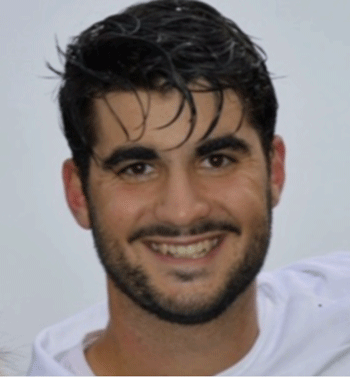 The Charles M Vallee Biorepository, which will house all the plasma, serum, PBMC, and CSF specimens, was created in honor of Charlie Vallee, whose story should be known.
An extraordinary individual and high achiever, Charles Vallee was on an upward path when he ran into long COVID. One could have envisioned him reaching high posts in the military or State Department. His story demonstrates how quickly even the best of us have been laid low by long COVID.
Charles Vallee began his academic career with a degree in International Affairs and four years of Arabic studies. Internships in Israel, at General Keane’s Institute for the Study of War, and the Washington-based Center for Strategic and International Studies in the Transnational Threats Group, followed.
Next, he joined the Defense Intelligence Agency as an intelligence officer attached to the Special Operations Command, and was awarded the Civilian Employee Of The Year award. From there, he transferred to Department of Defense’s Defense Intelligence Agency.
In 2022, at the age of 28, he came down with a severe case of long COVID. He experienced tremor, involuntary and uncontrollable shaking of the extremities, persistent and debilitating headaches, inability to sleep, and relentless and unforgiving brain fog that rendered even basic household tasks difficult. Social interactions became awkward, and reading and recall—the bread and butter of his job—became nearly impossible.
He received a medical leave, but the disease took its toll, and with no hope in sight, three months later, he took his life. Charles’s story demonstrates how easily these diseases can quickly take even the best and brightest of us down.
It also shows how far reaching it can be. Charles Vallee had done defense work in Jordan; he was tasked to go to Iraq when he got sick. Reading about Charlie, I would venture to say that depression had not been an issue for him until long COVID. These diseases can affect us in so many ways…
- Read more about Charles Vallee here.
Going for the Gusto: the GLP-1 Agonists
Dr. Kaufman led off the talk on GLP-1 agonists. A couple of months ago, Dr. Kaufman (and Dr. Ruhoy) said they’d be back with more data on how their patients were doing on GLP-1 agonists – and here we are.
First, Dr. Kaufman underscored the need. Of the approximately 150 long-COVID patients he’s seen, 70% are home or bedbound. Lives have been completely overturned. He emphasized that many people in the prime of their lives – all of whom meet the criteria for ME/CFS – have had their lives overturned.
Kaufman noted that he works with a group of about 800 practitioners on a listserv who bounce ideas and results off of each other.
Twice he noted that although they can make patients better, they are still incredibly ill. They can help with mast cell issues and POTS, but they still have trouble moving the needle of fatigue and pain.
Upon receiving an email from the listserv group about a patient who had transitioned to a GLP-agonist for weight loss and subsequently experienced no anaphylaxis episodes, with rapid improvement in generalized pain and inflammatory symptoms (including neurological and cognitive issues), he was intrigued.
That email started a tsunami of discussion and a great deal of trial and error with these drugs. A recent survey of the group found that of about 350 patients given microdoses, 60-90% of patients responded with decreased fatigue, brain fog, pain, and MCAS symptoms. The improvements usually show up in 1-4 weeks.

As the word, spread more and more doctors on the listserv began using GLP-1 agonists.
Over time, the group has found that Tirzepatide (Mounjaro; Zepbound) gives the best effects. Dosing begins at 1/10th to 1/5th of the usual starting dose and then is titrated up in 0.25 mg increments. Even at .25 mg, some patients report benefits. The maximum dose is 1.25mg-2.5 mg (Kaufman stops at a lower dose primarily because he doesn’t want patients to lose weight.) With Kaufman now often recommending it early to patients, Mounjaro is clearly becoming a cornerstone of his practice.
At the low doses, the drug has been remarkably well tolerated.
Since the drugs are only available in higher doses, the patient draws the dose out of a vial and injects it using an insulin syringe. Kaufman said that being able to help with systemic symptoms like fatigue and pain constitutes a huge change compared to, say, improving blood pressure with midodrine.
NIH has not decided on a drug, dosing, etc., but all the experts have been assembled and they are beginning to work on the protocols.
Conclusion – the news on GLP-1 agonists continues to be good, and RECOVER knocked it out of the park with this choice. Despite having only case and anecdotal reports, RECOVER showed flexibility and proactiveness we haven’t seen before as it responded to a rapidly emerging finding that may make a real difference. This will likely be a smaller, mechanistic trial that probes more deeply into the physiological effects GLP-1 agonists are having.
The Surprise – the Stellate Ganglion Blockade Makes the Cut
RECOVER scores again with a surprise choice – stellate ganglion blockade. Dr. Bombardieri, Clinical Associate Professor in Stanford, noted that downregulation of the parasympathetic nervous system (PNS – “rest and digest”) and upregulation of the sympathetic nervous system (fight or flight) SNS exists in long COVID. By temporarily blocking sympathetic nervous system outflows, it may be possible to restore normal SNS activity; i.e., given a chance to reset, the system may be able to proceed normally.
The procedure is very simple: block sympathetic nervous outflows by injecting an anesthetic into the stellate ganglion in the neck which regulates sympathetic tone and blood flows in the head, neck, and trunk region.
The stellate ganglion arises when the first thoracic and inferior cervical ganglia fuse together – which occurs in about 80% of the population. Injecting local anesthetic near the stellate ganglion can tamp down that activity of the entire cervical sympathetic chain that regulates the top third or so of the body.
There’s nothing new about it: it’s been used in various ways for over 70 years. A 2014 study (n=166) found that monthly SGB injections for 3 months provided clinically meaningful results in military personnel with PTSD for at least 6 months.
Interestingly, SGB appears to be able to improve sleep by reducing inflammation, increasing melatonin levels, and increasing blood flows. In animals, it improved cognition by inhibiting the TLR4/NF-κB pathway, which some believe may play a key role in ME/CFS. SGB also suppressed the stress and inflammation response, and helped recalibrate nerve-immune system dysfunction in people with traumatic brain injury.
Liu and Duricka proposed that SARS-CoV-2 infection may result in “remodeling of the neuroimmune interface including the stellate ganglion”. Indeed, they write that the satellite glial cells which envelop sympathetic ganglia, “together comprise a functional neuroimmune unit.”. Like Dr. Bombardieri, they propose that SGB may “re-establish homeostasis between the autonomic nervous system and the immune system,” i.e., reset the interaction between the ANS and immune system. (The ANS is an important immune system regulator.)
The development of ultrasound allows the blockades to be produced safely and effectively. The practitioner can clearly visualize the arteries, veins, etc., and can watch the needle as it goes in and injects the anesthetic. The blockades can be done on the right or left sympathetic nerve ganglion. The “minimally invasive” procedure is very safe, but Dr. Bombardieri emphasized that the anesthesia needs to reach a specific spot and should be done by a practitioner with “specialized training”. She called it a “minimally invasive” procedure.
While the procedure is safe, it temporarily produces something called Horner’s syndrome (drooping eyelids, reduced pupils, and reduced sweating) on the side where the injection is done. (Horner’s syndrome is an indication that the procedure worked).
Dr. Bombardieri believes the block does what it does by improving blood perfusion to the brain (vasodilation) and by reducing neuroinflammation. (It would be great to have this done while using the Lumia device to assess blood flows to the brain.)
Her 2022 overview paper found 16 small SGB studies involving 224 patients. Only one was placebo-controlled. Consistent relief of fatigue and brain fog was found. SGB had variable benefits with depression, and consistent improvement was seen in autonomic symptoms, including exercise.
Dr. Luke Liu, cofounder of Neuroversion, was the first to bring attention to the possibility that SGB may help with long COVID in early 2022. Liu reported that he’s performed more than 18,000 stellate blocks.
He started using SGB in long COVID in 2021. After he and Deborah Duricka at Neuroversion saw home run after home run, they published their 2022 case report. In 2024, they published a retrospective case analysis of 33 LC (long-COVID) patients which found that most patients reported symptom improvement within 24 hours, which was sustained for at least a month in about a third of patients.
The 2025 Solve M.E.-Funded SBG Study – Did it Make the Difference?

Solve M.E.’s small but more rigorous study came at a good time. Did it tip the RECOVER team to move forward SGB?
In a recently published Solve M.E.-funded prospective study, Duricka and Liu found that bilateral SGBs (done on both sides of the neck), done for three weeks in long-COVID patients with ME/CFS, produced improvements in PEM, unrefreshing sleep, cognitive Impairment, and orthostatic intolerance. Plus, the SF-36 measures of vitality, physical function, and social function improved significantly. It was particularly good to see improvements in the physical functioning score, as that suggested that the ME/CFS long-COVID patients were doing more.
In fact, by the second follow-up, all the participants rated their physical functioning as “normal”. Seven of the nine individuals no longer met the IOM diagnostic criteria for ME/CFS at long-term follow-up 2 months later. A NASA lean test indicated that POTS had resolved in 3/4 participants. Sleep fragmentation and sleep apnea did not improve but unrefreshing sleep did.
I imagine that this small study went a long way to convincing RECOVER to launch the SGB trial.
Back to Dr. Liu’s Presentation
Dr. Liu showed a video of a young girl so debilitated that, before the procedure, she was flat on her back and had trouble forming words. Ten minutes later, she sat up, looking like a normal young girl. After a right side blockade, her right side was normal, while on the left side she felt a little sluggish.
The next day, a left side stellate ganglion block resulted in both sides moving normally. This person, who had a really good outcome, was still perfectly fine for at least three months. A video showed her ice skating with her dog.
Kyle Kitsmiller – Next, Kyle Kitsmiller, the husband of a woman who was bedbound for 2 1/2 years, talked. He reported the only improvement in her health came after getting the stellate ganglion block.
Within about 20 minutes of getting a right-sided block, she said her depression and anxiety were gone. Her mast cell problems diminished, and she was able to dramatically expand her diet, from about 7 items to being able to eat a Thanksgiving dinner. Her husband called it a remarkable experience.
In the Q&A period, a doctor reported that his patients were not getting such consistent results. Noting that SGB is getting more and more popular, Dr. Bombardieri emphasized that skilled/trained practitioners are a must. Interestingly, she also reported that blocks can be applied in other areas of the body, affecting the gut, legs, and other areas.
Discussions of study design, patient outcomes, duration, etc., are underway. This will likely be a smaller, more mechanistic trial that probes more deeply into the physiological effects SGBs are having.
Conclusion
SGB was an inspired choice by RECOVER. Perhaps no treatment is in more need of being studied in an organized and rigorous fashion, and that’s what RECOVER will bring to it.
Just Four Trials? Is Funding an Issue?

Just four clinical trials for a population that needs so many? Is RECOVER in a money squeeze?
The fact that RECOVER TLC is only adding four clinical trials, one of which allows another trial to use its clinical network, suggests that, despite the $500 million infusion from the Biden administration, the treatment arm of the RECOVER Initiative is running out of funds.
Joesph Breen said RECOVER-TLC originally planned for “at least two large pivotal trials and then at least four [smaller] mechanistic studies”.
The fact that it could only produce one pivotal trial (LDN) and two mechanistic studies (GLP-1, SGB) (as well as supporting the Baricitinib trial) suggests that the biggest problem facing RECOVER TLC right now may be a lack of money. It’s leaving a lot of possible treatments on the table.
David Putrino, the director of the Cohen Center for Recovery from Complex Chronic Illnesses at Mount Sinai (CoRE) wrote, “In my opinion, there are a lot of promising targets that have not been explored yet, and we need to be casting a wide net with available resources and gathering as much data as possible, not duplicating efforts.”
Plasmapheresis, the nicotine patch, methylene blue, combination antivirals, many immunomodulators, the list of possibilities go on and on and on. RECOVER has mostly chosen well, but it’s also thrown all its (possibly rapidly disappearing) eggs into one small basket.
Perhaps because it emptied its coffers on the first round of underwhelming treatment trials, RECOVER’s reach is declining just as it shifted to a better course. (Don’t you hate when that happens?) At some point, we need RECOVER to give a return on investment (ROI) on the immense amount of funding (for these diseases) that it’s received. My guess is that it won’t be good.
RECOVER TLC – 1: Ongoing Clinical Trials Update
Over 100 clinical sites tested the interventions from the first round of RECOVER trials. Blood was stored for use in later mechanistic studies (if they occur).
- Cognitive neuro (n=328) – brain training, goal management, tDCS, paper due soon
- Vital (n=964) – Paxlovid.
- RECOVER Autonomic (n=381) – people with severe POTS got IVIG; people with moderate POTS – Ivabradine; in follow-up phase: due in 2026.
- RECOVER Sleep (n=@1,000) – Sunosi, melatonin, modafinil, Light therapy; enrollment due to complete in Dec 2025; expect a paper by the end of 2026.
- RECOVER Energize (n=600) – structured pacing for those with PEM, personalized cardiac rehab for others; ending up Dec 2025.
All results are expected by end of 2026.
Support Health Rising and Keep the Information Flowing!
Health Rising is not a 501 c (3) non-profit




”Dr. Bombardieri, Clinical Associate Professor in Stanford, noted that downregulation of the parasympathetic nervous system (PNS – “rest and digest”) and upregulation of the sympathetic nervous system (fight or flight) SNS exists in long COVID. By temporarily blocking sympathetic nervous system outflows, it may be possible to restore normal SNS activity; i.e., given a chance to reset, the system may be able to proceed normally.”
Wow this is interesting Cort!!!
Yes, that is interesting, indeed. In some people it seems to work….
I was diagnosed with chronic encephalopathy and immune deficiency in 1984. My treatment was a mast-cell stabilizer which was a form of heparin. The diagnosis later morphed into ME/CFS and I was treated for about 20 years by Dr. Paul Cheney who along with his partner first identified the ME/CFS outbreak in Incline Village. Dr. Cheney’s treatments restored a level of functioning that let me live a fairly normal life if I paced.
In the beginning I had crushing fatigue but I also was reactive to meds, chemicals, air born allergens and foods. I got repeated infections and reactions to antibiotics to treat them. The worst was a leg infection from a tiny cut that turned into cellulitis, horrible and extremely painful. It took the doctors six months to figure out the bacteria causing it (e-coli) and treat it with the right antibiotic.
I also had a horrible reaction to a round of Cipro for a UTI.
Maybe I don’t have what the other people on this list have. But, I would never use baritcinib ,which is an immune suppressant, with my history of serious infections.
In addition to ME/CFS, I also have Long Covid which started with a fungal infection around the mouth followed by irregular heart beat (so much so that my Galaxy watch called 911), high blood pressure and problems with balance and walking. The latest in this hit parade of symptoms was totally blacking out followed by a fall that injured many parts of my body.’
Until the researchers spend more time focused on what is causing this, funds for various treatment options is a waste at best and possibly dangerous at worst.
I agree that, except for the limited funding given to outside researchers, that RECOVER – by focusing so much money on the limited assessments done on its huge observational cohort – has missed the boat on understanding the cause of Long COVID, and therefore being able to target treatments for it.
On the other hand, the reports regarding LDN, SGB, and GLP agonists effectiveness are all good. None of the practitioners in the ME/CFS listserv are have trouble with side effects at the low doses used.
So, while some people may react poorly, RECOVER’s decision to move forward testing these options makes sense to me given that it appears that most people will either react positively or not at all.
As I noted, though, it’s very unfortunate that RECOVER, except for that outside funding, appears to have mostly ignored cause. I’m just so flabbergasted by that.
I think it is quite clear by now that one group of Long Covid patients had a Covid infection that jumped to the brain.
I believe that it is known that several or even many respiratory and maybe more viruses do not typically infect the brain but can in rare cases. Since we had a pandemic with almost everyone catching the virus several times the fact that viruses sometimes jump to the brain became more apparent.
Could this explain your symptoms?
Thank you for sharing your fascinating story, and for emphasizing the dangers that immune suppression might have on many people! I’m not sure how common it is in our population (folks with ME/CFS) to have the severity of immune deficiency that you described, but I think a lesser degree of immune deficiency is a very common piece of the clinical picture.
We continue to learn more and more about the underlying pathophysiology of how this is happening, but it’s been well established that many of us live with a weird combination of immune over-activation, immune fatigue, and reduced immune function.
As my own illness has evolved over the last 30 ish years, recurrent chronic infections (mostly viral) have become increasingly problematic. They directly correlate to symptom flare-ups and crashes, and they also seem to overwhelm my immune system, allowing secondary infections to flare as well.
I’m super interested in all of the promising immune modulators, but I am terrified of what would happen if I took anything that suppressed overall immune function! Given all of the interest in antiviral treatments, I have to assume that a large subset of people with ME/CFS have similar issues and risks.
I also am experiencing mast cell related symptoms worsening over time and would have loved to see more of a focus on identifying that piece of the pathophysiology puzzle as well! I’m tired of having doctors look at me like I’m crazy when I ask for help with it. I’ve hit the limits of what I can do for it on my own and it just keeps getting worse.
Thanks again for sharing! It’s amazing that you were able to receive such excellent medical care, especially in the 80’s!
I really hope the NIH can find a way to placebo control the SGB study. I had the treatment myself and had no benefit, and it was much more invasive than I expected.
They’re going to try!
The most interesting part of the LDN trial is the inclusion of kids/teens–the dosing structure could use a refresh to make it ultra low dose naltrexone!
Hopefully, including peds will be an interesting part of more trials going further!
Yes, I missed that. Good for them 🙂
Cort,
Not too long ago, you reported on a possible second generation LDN being developed (?)… I think by Jared Younger? I believe the primary goal was that it would cross the blood-brain barrier (and maybe also have less side effects)?
Did you also suggest that it might be less prohibitive of the use of emergency pain medications? I’m hoping I’m remembering correctly.
I’m curious if the RECOVER LDN trial, if successful, might also open the door for this emergent second gen version to be accessible to the public faster?
I know the answer would be speculative, but I respect your opinion.
Thanks!
Dextronaltrexone – I believe Jarred found funding for that trial but I’m not sure. I hope so.
https://www.healthrising.org/blog/2018/10/24/younger-low-dose-naltrexone-dextro-naltrexone-microglial-inhibitors/
He also wants to study something called nalfamene which may be more effective. I wrote about it in February and completely forgot about it (par for the course :))
https://www.healthrising.org/blog/2025/02/21/younger-nalmafine-ldn-rapamycin/
“Low-dose nalmefene, it turns out, does something similar to LDN but more effectively. LDN’s effectiveness is hampered by the inability to take it in large doses – but not so with low-dose nalmafine. Nalmefene lasts longer in the body (8-10 hour half-life—so you need less), has a higher bioavailability (40-50%—so again you need less), does not affect the liver (LDN can), binds to more opioid receptors more effectively, and maybe 4xs better at blocking those nastyTLR4 receptors that turn on the microglia. Since Younger believes the microglial cells in these diseases have become spectacularly hypersensitive blocking the TLR4 receptors that turn those cells on could be a huge boon.”
I was surprised by your saying that baricitinib “has a good safety profile.” I chose not to pursue a baricitinib trial due to the rare, but extremely severe, immunosuppressant consequences such as malignancies, and CV events etc. Can you please discuss further your understanding on the safety of the drug? Thank you.
I simply reported what the presenters said. Thanks for adding that part, though. I assume these kinds of complications come with any immunosuppressant drugs. I asked ChatBPT about this. It reported that
“The absolute rates of immunosuppressant effects (usually infections) are modest — e.g. 0.5 to 1 event per 100 patient-years for malignancy or VTE is relatively low”. They are “on the order of fractions of a percent per year” and most occur in patients with additional risk factors (older age, smoking, obesity, hypertension, prior CV disease).
This is apparently true of all JAK inhibitors.
Deciding whether to turn on or turn off the immune system has been a gnarly question. This study is big enough, though, to tell us how much of a risk this drug is.
This list of trials is so incredibly disappointing, there are already trials for LDN, same goes for Baricitinib and for those who respond relief from SGB is always temporary. For GLP-1 drugs I see almost no positive experiences and can’t see how it could be useful to the most severe patients.
So as always from RECOVER a really uninspired list, only aiming for mild people, without any ambition, all ready to waste every last drop of money and ressources left.
Together with completely failing at delivering research who points to the core and causes of the disease, for example immunology, muscle/tissue samples etc, they are making sure RECOVER ends without ANY meaningful contributions to the field of post infectious diseases.
Dr. Kaufman stated that 60% of 350 people trying GLP-1 reported significant improvements in fatigue and pain. Yes, there are LDN trials underway and everyone will have decide whether this one is warranted. The idea that RECOVER could identify a specific LDN compound that opens the way for FDA approval, though, is really intriguing to me.
I honestly don’t have a problem with temporary improvements if they last a significant amount of time. If RECOVER can determine what’s happening to the SNS, immune system, and particularly blood flows to the brain when SGB injections work – that could be very helpful.
As you note, and as I agree, except for the outside funded studies, RECOVER has unfortunately, missed the boat on cause. I just can’t imagine how that happened…
There were lots of possibilities… Are there any in particular you would have chosen?
Is that a rigorous trial Kaufman is referring to?
Or anecdotal observations?
It’s a survey of physicians on the listserv
Not convinced by this. Or many of his previous claims.
Interesting, semaglutide (GLP1-agonist) does activate AMPK and attenuates mTorc:
https://www.sciencedirect.com/science/article/abs/pii/S2210740122000651
Both activation of AMPK and attenuation of mTorc(1) increase mitophagy. Too few mitophagy is one of the hypothesises of why rapamycin seems to work on a subgroup of patients. So it isn’t surprising semaglutide also has been found to improve mitochondria quality control *in specific research settings / there is no single drug that is benficial in all circumstances*:
https://www.nature.com/articles/s41401-024-01448-9
Tirzepatide also regulates mitophagy:
https://www.sciencedirect.com/science/article/abs/pii/S1567576925014341
I still chose to stay far away from these drugs as they interfere with a lot of pathways, but there may be an ancient well known partial replacement. As a Chinese proverb says: chew your food until it gets liquid and chew your water until it gets solid (or something like it).
Chewing more increases GLP-1 release:
https://pmc.ncbi.nlm.nih.gov/articles/PMC4546692/
“The blood GLP-1 level of the test group at 30 min was 49.6 ± 20.3 pmol/l, significantly higher than that of the control group (38.9 ± 20.9 pmol/l; p = 0.031).”
Note that the test subjects chewed more then most of us will be able to do.
It’s effects won’t be as dramatic as taking medication, but so long one does not overexert it’s cheap, easy to dose and relatively safe.
Words of caution on GLP-1 from Jarred Younger, who I think is very trustworthy:
https://m.youtube.com/watch?v=mSnHkxmRBPA&t=10s&pp=2AEKkAIBygUWamFycmVkIHlvdW5nZXIgb3plbXBpYw%3D%3D
Nice addition. Thanks Matthias.
By what *scarce* information I found so far these medications produce an effect on GLP1-receptors that is roughly 5 to 10 times as big as without them. I have not been able to quickly find information confirming or denying that. But if so, I call that “to crowbar” these receptors into one position and completely override the regulatory mechanism. I believe we have these regulatory mechanisms for a good reason and am not a fan of “to crowbar” any natural function in order to gain some improvement.
Also, half-life time of (the main) natural GLP1 agonists is in the order of minutes, half-life time of these drugs is long enough to last a week or longer in between injections for some of these drugs. Again, totally different ballpark.
So that is why I prefer natures safe en proven technique of chewing and eating slowly. It has a modest effect on GLP1 receptors, glucose levels and food intake. The effect is much smaller then what you get with these drugs, but so are the possible side effects.
*Researching* significantly lower doses is a good starting point. But at current “normal” doses or proposed lower doses, there are too many unknowns. Assuming taking a tenth of the dose is safe and start self medication is still optimistic without waiting for these study to produce results.
I haven’t watched that yet but Jarred is not doing a trial and I assume he doesn’t have first-hand experience with this drug (???)
I was diagnosed with long Covid last year and was housebound for almost 8 months. I had severe problems with eating and sleeping. I lost more than 20 kilos and as well as the myriad of symptoms was even more uncomfortable lying on my bones. Mirtazapine pulled me out of it. My sleep improved dramatically as well as my appetite and within a few weeks was back functioning again. I still have fibromyalgia but am better now than before long Covid. In six months I gained back 25 kilos and went off the mirtazapine as it was making me too hungry. My sleep has deteriorated a bit but I am still functioning well.
Good to hear! It looks like you are the right person for this drug. Studies have generally shown modest but positive effects in these diseases. 🙂
Low Dose Naltrexone may help chronic pain in a small way but in my experience with it, it doesn’t treat any symptoms of long-covid. I wonder why the good researchers at NIH aren’t looking to specifically reduce inflammation of the blood vessels that lower the efficacy of valves in the lower extremities to return blood back to the brain? (I may write Dr. Bhattacharya myself.) This 12% loss of blood flow causes the familiar symptom of brain fog that many patients report. I had a severe case of dysautonomia (aka long-covid) that I developed after a common flu in 1994. I began taking 12mg of IVM in the Spring of 2022 and from then on I’ve rarely noticed any of my symptoms of dysautonomia. It appeared that ivermectin reduced my vascular inflammation to the point I was able to regain my life. I think it’s worth a trial to see if it helps others.
This is all very exciting – I’m really glad these treatments are helping patients, who deserve to have the opportunity to get better.
Unfortunately, though there is a trigger for each of us, our prior environmental exposures, biochemical status, and genetics lead to complex illness, that is unlikely to be solved by a single bullet.
For many, damage is done by the triggering event, and a cascade of other things happens (nutrient or mitochondrial depletion, reactivation of infections, toxic load hitting the breaking point, etc )
Therefore, patients need a personalized path to wellness, to unwind all of this and repair their bodies.
“Therefore, patients need a personalized path to wellness, to unwind all of this and repair their bodies.” Truer words were probably never spoken. The more treatment possibilities the more likely everyone will be able to find their path.
For me, the most plausible explanation of ME/CFS, by some distance, is neuroinflammation.
Given this, I think antiinflammatory drugs, which can cross the blood brain barrier, have the most potential of any drug.
That is why I hold out the most hope for the bezisterim trial, of any current trial for ME/CFS or long covid.
I am also interested in drugs that impact on the dopamine system (people may recall a key finding of Nath’s study being lower dopamine). Dopamine decreases inflammation in the brain. Inflammation decreases dopamine. We need to decrease inflammation and increase dopamine! This is why nicotine helps quite a few people. It increases dopamine, decreases inflammation and passes through the BBB.
The key problem is in the brain and this is where the solutions will be found.
I agree 🙂 The brain……
The command centre. Problems there lead to so many other problems
Thanks for these thoughts! Are you referring to the large nicotine patches that have been promoted on the internet in recent years?
Can you please recommend a reliable source of info on these effects of nicotine and methods of use?
Thanks!
I had results with nicotine long before the recent hype.
My suggestion is google ‘nicotine dopamine’ and ‘nicotine inflammation’
Cort- I just read in a Solve M.E. email about a blood based assay test called EpiSwitch CFS test which holds promise for diagnosing people with CFS and also points to a subset of people with IL-2 signaling problems and therefore can receive treatment options such as Copaxone, rituximab, ramamycin, Topacitinib and Vitamin D. It assesses how cromosonal DNA is positioned in human cells.
University of East Anglia Medical School, UK. Dr. Dmitri Pchejetski
Interesting stuff – thanks!
Modofinil definitely helped my brain fog.
Me too.
My daughter and I tried it. Both of us have generally good drug tolerance, but we felt really spaced out on modafinil. Gave up after two days
It would be interesting to have them directly compare the SGB to vagus nerve stimulation, given that the presumed mechanism is so similar. Same intention: calm the SNS, induce the PNS. That’s if I’ve understood correctly.
It’s never recommended to be used the way I do, but when I started using my vagus nerve stimulation gadget three times a day for an hour each time, people noticed.
One researcher I know asked me to sit back down and get up again, then asked, “What treatment are you doing that’s different?”
Another commented on change in my gait.
For me, the biggest influence was on sensitivity to the environment and my gut, both of which make intuitive sense.
But others noticed my smoother movements – maybe due to better muscle tone???
And I could be upright for far longer without syncope.
I’d very much appreciate being able to look up the type of device that you’re using, if you feel comfortable sharing?
Thanks!!
Hi Spider, I use a Nurosym, the newer version of the Parasym.
Cort, have you seen this? https://thesicktimes.org/2025/10/10/vyvgart-brought-us-back-to-life-but-the-long-covid-trial-was-canceled-we-are-calling-on-the-nih-and-hhs-to-study-the-drug/
I suffered a huge relapse recently, after being well enough for long enough that I was planning my re-insertion into the workforce. i have an appointment with my family doctor next week to beg him to try *something* to deal with the LC. I sent him 4 pages of possibilities, and a lot of the info came from here. thank you
Thanks Vic, Wow – we reported on this trial I believe in 2023. It looks like the patients were doing well. I wonder what happened?
The POTS Contingent
Efficacy and Safety Study of Efgartigimod in Adults With Post-COVID-19 POTS
Efgartigimod (better known as Vyvgart) is used to treat myasthenia gravis – a disease people with ME/CFS have some acquaintance with via Mestinon (pyridostigmine bromide) which is also used to treat that disease. It’s also used in lupus, Sjogren’s Syndrome and … COVID-19-caused postural orthostatic tachycardia syndrome (POTS), which is common in ME/CFS as well. That’s the group this small 42-person Illinois study is targeting. It began in September of last year and is expected to wrap up in November of this year.
Who gets ME/CFS and why?
There is a scientific discipline called “The Developmental Origins of Adult Disease”. Put simply, this means that what happens during conception and pregnancy may set the stage for health problems you will develop later in life.
Our organization has run the National Birth Defect Registry since 1990. The data (10,000 cases )we collect gives us a window to pre-conceptual and prenatal exposures that can identify a pattern of similar conditions associated with the same exposures.
In every body system category, we have an “Other space” where parents can fill in conditions not printed on the registry questionnaire.
This is how we discovered that 546 children in the registry have ME/CFS. 431 of their parents served in Vietnam; 17 in the Gulf and 109 and 254 of the mothers and fathers smoked. Chemical exposures of other kinds like the use of pesticides and living in an agricultural area are also very high.
Every time you light up a cigarette, 7000 chemicals are released.
I would like to know the preconceptual and pregnancy exposure histories of those of us who later develop ME/CFS. Are we the canaries in the coal mines? More vulnerable to new viruses like Covid or whatever is causing ME/CFS.
Cort, you say GLP-1 drugs improved fatigue “significantly” for 60 – 90% of patients. Do you know by how much their fatigue improved?
No – I don’t think Dr. Kaufman stated it but you could go back to the first part of the video and see.
One fascinating query we can make for any diagnostic category is to run a list of the most commonly related conditions.
This is what we get when we run the query for the most frequently reported conditions associated with our 500+ cases of ME/CFS.
Joint Pain 341
Muscle Pain/Weakness 322
Frequent Headaches 321
Depression 304
Allergies 266
Mood Swings 249
Heat/Cold Sensitivity 227
Chronic Stomach Problems 225
Sleep Disorder 224
Anxiety Disorder 224
Anger 205
Frequent Upper Respiratory Infections 199
Frequent Ear Infections 186
Math 184
Memory Problems 179
Light Sensitivity 178
Menstrual Problems 175
Drug Reaction 173
Reflux/GERD 161
Arthritis 161
Hay Fever (Allergic Rhinitis) 153
Asthma 150
Food Sensitivity 140
Spelling/Writing 137
Ovarian Cyst 136
Acne-Like Rash 135
Attention Deficit Without Hyperactivity 132
Scoliosis 130
Frequent Urinary Tract Infections 130
Unexplained Fevers 129
Obsessive/Compulsive 127
Abnormal Teeth 125
Motor Skills Delay 117
Distractibility 116
Eczema 114
Dyslexia/Reading 113
Comprehension 112
Speech 111
Hair Loss 110
Anemia 110
Hives 107
Language Processing 106
Vision Defect 105
Jaundice At Birth 104
Chronic Tinnitus (Ringing In Ears) 102
Astigmatism 98
Attention Deficit With Hyperactivity 97
Autoimmune Disorder 93
Colic As Baby 92
Heart Murmur 92
Hi Betty,
Very interesting. I check half out of 50.
Hi everyone
I have a moderate to mild ME/CFS and I have lately developed an uterus myoma. That’s a benign tumor of the uterus that is quite common. It deosn’t make any problems. However, my belly feels a bit bulky and I am therefore investigating theapeutic solutions.
I am interested in a procedure that’s called myoma embolisation which consists of clogging the arteries that nurture the tumor with plastic particles. It’s a minimally invasive procedure that is executed by sliding a tube through the artery to the tumor starting from the groin.
Since I am aware that there is vessel damage in ME/CFS I find it difficult to decide whether this would put me at a greater risk of a failure of the procedure. Ideally, for this procedure the vessels are young and helthy to provide enough space and flexibility and thus to avoid injury to the vessels.
A same procedure is available for men with enlarged prostate.
Has anyone here with ME/CFS had that procedure and could provide me more information.
I already had a meeting with a radiologist. I have already decided not to work with him because he simply denied that there were any serious risks in this procedure. I think that he had problems to wrap his mind around my situation where even a mild infection can trigger a severe ME/CFS episode. He took ME/CFS seriously but I think that he had no idea what it actually is.
Hi Lina, Thanks for your comment. My original diagnosis in 1984 was chronic encephalopathy (a brain infection) and immune deficiency. This was long before I got Covid in 2023. Perhaps the Covid infection made the original virus (whatever that was) active again. I don’t know. But my symptoms since Covid have been more life-threatening than ME/CFS.
I’ve been an NIH RECOVER lab rat for the past 4 years, starting with the observational study (4 years) and then the Paxlovid study last summer. RECOVER has always been a disappointing program, but I have participated to add my data to the pile in order for LC to be better understood. Earlier this year I did the Mt Sinai repurposed HIV med study but was removed 2 months in after I got reinfected with Covid (despite rigorous masking around coworkers who don’t mask). Since 2022, I have taken LDN, had a heart ablation caused by Covid, taken Midodrine for POTS, etc. I’ve tried many things over the years and most of them have not worked and if so, nominally. I can’t even count how many times I’ve done racks of blood work, nasal swabs, sent my poop via Fed Ex to bio banks, done sit/stand tests, pulmonary tests, etc, etc, etc. RECOVER has demanded a lot from patients with not a lot to show for all the time and money spent. Also you show up to RECOVER appointments and people aren’t masked! It has been frustrating to say the least.
Stellate ganglion blocks were suggested to me by my case manager at a Long Covid clinic in 2023 as a weird thing to explore. I researched it extensively and was convinced that I should try it based on my more neuro LC profile. I have had the procedure done 6 times and plan on having another set of them next month. SGBs have made the most impact and brought me the most relief compared to anything else I have done (besides the ablation for extreme SVT runs that began within the first week of my initial infection). I went from a regular 7-8 in pain down to a 4-5 within the first two rounds (done in the same month). The third round a year later brought me down to a 1-3, but I do still have flares that lay me up for days. SGBs helped so much with the worst parts of my dysautonomia, though I still take the Midodrine. SGBs seem to last about 7/8 months for me before my pain starts ramping up, I get stiffer, and generally all my symptoms get worse. I would love to have them twice a year, but can’t afford that since I am now intermittently disabled and broke due to that.
My understanding is that you get them until you don’t need them anymore. It has never been explained to me as a one and done. I do not have the language to explain how it feels to get SGBs only that you really do feel kind of halfway “turned off” (and the doctor explains it as a RESET), but as I slowly come out of it through the next 24 hours, everything comes back online in a more calm way. Not a cure, but again, SGBs are the only thing I have done that really helped me. They have given me hope that I have needed to keep trucking along with a baseline that I can manage more easily despite everything else going on. I am single, do not have support, not disabled enough to qualify for disability, and so anything that helps keep me able to function better and work when I can, is huge for me.
I submitted SGBs to the NIH portal for treatments and have strongly suggested to others that it was worth exploring, especially if you are dealing with neuro LC. I was happy to get a letter from them saying that they had examined what I had submitted and that it was advancing as a trial. You submit these things and wonder if anyone is actually looking at it, so that felt validating.
For me, the biggest thing would be for SGBs to be approved as a tool for managing LC so that insurance would cover it more—or make them free besides the copay. Same with LDN. That is where these studies could be helpful but it’s not enough at the end of the day. (Insurance should cover all of this anyway, but that is a whole other rant.) None of these treatments deal with the underlying post viral dysfunction and I feel like PolyBio and other privately funded research are the ones that are really doing the deep dive and cutting edge work. They can work faster and pivot more quickly than the gov. I look and see what they are trialing, not RECOVER!
Anyway, I share all this to say that I’ve been in the RECOVER program, feel very familiar with all the frustrations, but still agreed to be in the follow up group since I just finished the 4 years. I don’t have a lot of hope that they will crack the code (if that is even possible) but I have given permission for all my biological samples and data to be shared and used by other researchers. It is my hope that those researchers find more effective medications and treatments. I know that RECOVER has people behind it that do care, they just seemingly started out pretty badly (like no post viral researchers in the beginning? Come on!) and despite attempts to make the program better, they function within a glacial government process/pace. I hope that whatever comes out of all of this helps everyone dealing with post viral conditions and am waiting patiently, while also knowing that it will probably be some time (if ever). In the meantime, I will continue researching and trying new things (low dose Rapamycin or GLP-1 is next), getting SGBs until they don’t work for me anymore, and hope that RECOVER keeps moving forward despite the current anti-science/anti-medicine administration.
P.S. Cort, thank you for all your research and work publishing these articles. I read everything you send out and am forever appreciative of your time and dedication.
Whoa – thanks so much Caroline for sharing your experience with RECOVER and stellate ganglion blocks. I hope they RECOVER a deep dive into what’s happening with SGBs so they can use that to look for more treatments that can help rebalance things. That might be the silver lining in this study.
One can only wonder at what Polybio would have done with over $1 billion dollars! I’m glad though that you’ve persevered and given them all those samples. They may turn out to be a VERY valuable part of RECOVER.
Good luck with your health and your finances! 🙂
For start they should have done much more immunological research and trying to find subgroups, because all LC trials without will fail. Then they should have talked to people doing reasearch in ME for years to ask for inspiration, because many of them have great ideas for metabolic and immunological studies.
Kaufman can talk about 60% all he wants, if you look at testaments online hardly anyone profits from these meds, furthermore “improvements in fatigue and pain” is as unspecific as it gets, doesn’t say that anyone made improvements in day to day funtioning. Lastly with 30% of Americans being obese anyway I don’t see the effects of these GLP1 meds having anything to do with LC, but with general relief and better health for people who are obese and prediabetic and have access to these meds anyway.
Honestly, I’ll take Kaufman (and Ruhoy’s) assessment of this drug over anecdotal comments on the web. They and the doctors they’re interacting with are clearly excited about the potential of this drug. To me, whatever you’re reading on the web, that’s good enough to warrant further study of this drug. I wouldn’t write it off just yet!
Of course, this was not a study – it was a survey – we can’t expect study results from an informal survey.
Unless Kaufman and Ruhoy are only treating obese ME/CFS and long COVID patients with this drug – which they aren’t – the obesity part doesn’t have anything to do with this. For one thing, as the blog states, they’re giving patients doses that are too small to cause weight loss. In fact, Kaufman says one reason he’s keeping the upper dosages low is that he doesn’t want to cause weight loss.
I agree. The claims are very vague.
There’s lots of desperate people out there. It worries me that desperate people will pay money for treatments that, while having some potential theoretical benefit, have no clear evidence of efficacy.
IF a large listerv of ME/CFS treating doctors says it’s helping 60% of patients with fatigue and pain, of course, people will try it and why not? I’m going to.The doses are low enough that side effects don’t appear to be much of a concern. Honestly, I’m not going to wait 2 or 3 years for a study to try something that the evidence suggests should help quickly. I’ve tried many other things on less evidence than that.
Fair enough. We all want effective treatments, like ‘yesterday’.
But I think a bit of skepticism is also justified.
Kaufman made quite big claims about oxaloacetate but their latest study showed pretty limited efficacy.
I don’t know the man, but at the very least he has a commercial interest.
Appreciate your efforts. Do you think you could write a piece on your own experience with GLP-1 medication, once you have tried it?
Younger certainly acknowledged that GLP-1 meds can inhibit neuroinflammation. But he was concerned with safety. The big question for me is – low doses of these drugs might limit or avoid side effects, but at those doses can they be efficacious in terms of neuroinflammation?
Did any of the above studies looked thoroughly at subgroups of ME/CFS or Long Covid?
For me it’s absolutely wild to spend that much money before actually knowing which patients to include in which trial.
Maybe I am biased. As a european physician, I really appreciate the approach from the germans much more. They are now at the point where they do studies which only include patients with specific profiles (e.g. adrenergic or muscarinergic autoantibodies).
I for my part have a completely different ME/CFS or Long Covid as alot of others I know.
They should have looked at the cause, made subgroups and then spent the money for trials imho. But what do I know, not a scientist.
Well, I’m not a scientist either, but for what it’s worth, I agree with you 🙂
What do you think of precision life?
I think that is exactly what they are trying to do?
Hi, not sure what precisionLife is, but it’s not necessary to do something fancy.
It’s a simple “where do I invest what amount of money” question.
They should have asked the europeans first, invested in causality resesrch first and theb pushed clinical trials for subset pf patients (e.g. only ME Patients with XY Immunprofile, or only ME Patiente wit XY hypovolemia etc.)
This “let’s put all ME Patients in one group and pick an existing treatment for trial” will never give proper results.
They should only use LDN in Patients with signs of Neuroinflammation. Mestinon only in Patients with preload failure and immune drugs in patients with abnormal immune profiles.
This way we would get significant results, which helps all of us.
https://precisionlife.com/news-and-events/first-ever-long-covid-reproduction
They are a Company that specializes in precision medicine that also looks into ME and long covid.
It means they first do a genetic Analysis and then decide which drug you get.
This is how they intent to trial repurposed drugs for Lobg Covid in subsets of patients..
I have to disagree here. It’s not necessary to do genetics.
Best examples are the germans and norwegians. They found a biomarker with the Beta2adrenergic Receptor Autoantibodies.
First they tested it in mice, when it produced the same syndrome, they started clinical trials. Now they are more and more investing into B Cell depletion, Immunoadsorption etc.
Thats for roughly 30% of ME/CFS Patients.
The same can be done for the subset who primarily has neuroinflammation.
Thats whats kind of annoying. If they would have spent the money for those 2 subgroups, probably 2/3 of ME Patients would be covered and would have hopefully a treatment available.
Anyhow, let’s hope on the future it will be invested more wise.
I thought all this long covid was about getting rid of the spike protien from the body
It was said that the spike proteins produced after vaccination would quickly disappear from the body and remain only in the arm muscle. This is not true. Research shows that the spikes circulate in the blood for up to 300 days and can be found in many different organs. This leads to long-lasting inflammatory reactions from the immune system. Excessive DNA contamination has also been found in the vaccines. This is worrying.
Is there a long Covid clinic in NJ? My wife need’s help. Who could prescribe Plaxovid and or GLP1 micro dosing to alive her suffering? Thanks
Beautiful article, thank you! Charlie was my partner and you outlined his impressive career and struggle with Long COVID very nicely. He was incredibly brilliant and was absolutely floored by the disease.
For anyone who is looking to learn more about the Charles M. Vallee foundation can find it here https://charlesmvalleefoundation.org/
I’m so sorry what you had to go through. His story demonstrates in spades these diseases can wreak havoc on the best of us.