




Right on the heels of a long-COVID study suggesting that an autoimmune subset is present, a fibromyalgia (FM) study pops up suggesting the same thing.
Goebels started things off in FM in 2021, showing the same kind of passive transfer we just saw in long COVID, to turn healthy mice into fibromyalgia-like mice. (Goebels has found this pattern in several chronic pain disorders. Interestingly, the responses were similar to what we saw with long COVID – a big focus on increased pain hypersensitivity – and a decrease in small nerve fiber density.)
Goebels was able to go further, though, and show that the IgG antibodies from the FM patients were attaching themselves to the dorsal root ganglia (DRG) in mice, and even found evidence in post-mortem studies in the DRG in humans.
The focus on the dorsal root ganglia has been mentioned in Health Rising many times. These ganglia (bunches of neurons) that sit just outside the dorsal (upper) roots of the spinal cord transmit sensory signals generated in the body to the spinal cord. Given their central role in transmitting pain, temperature and other signals to the central nervous system, it’s no surprise that dorsal root ganglion dysfunction has been shown to be present in many chronic pain conditions, including fibromyalgia (FM).
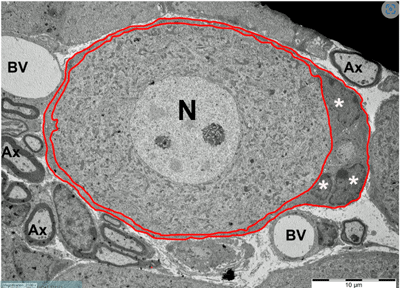
Satellite glial cells (red) surrounding a neuron. (Image by Hanani 2024 Cell, Wikimedia Commons)

First, a fibromyalgia study found that severe FM patients exhibited increased IgG binding to specific cells called satellite glial cells (SGC) found clustered around the dorsal root ganglia.
Next, a study using magnetic resonance spectroscopy (MRS) and functional MRIs (fMRIs) confirmed that increased anti-SGC antibodies were associated with increased pain in FM, and correlated with altered metabolite levels in two regions of the brain long associated with chronic pain – the right anterior cingulate cortex (rACC) and thalamus.
In a surprise, the study did not find evidence that the brains of FM patients with higher anti-SGC IgG antibody levels responded differently to a pressure pain test. The authors proposed that other, as yet unidentified antibodies in FM, played a role in the increased pain sensitivity seen. It also suggested that the anti-SGC antibodies were tweaking the dorsal root ganglia in the periphery, not the brain itself.
All that set the stage for a deeper dive into autoimmunity. The Swedish study, “Searching for blood biomarkers and treatment targets in Women with fibromyalgia – Protein interaction patterns and anti-satellite glia cell IgG antibodies as promising candidates“, constituted the first large proteomic study (384 proteins/serum; 133 participants) done in FM.
The Gist
- Right on the heels of a long-COVID study suggesting that an autoimmune subset is present, a fibromyalgia (FM) study pops up suggesting the same thing.
- Goebels started things off in FM in 2021, showing that the same kind of passive transfer we just saw in long COVID, to turn healthy mice into fibromyalgia-like mice.
- Goebels was able to go further, though, and show that the IgG antibodies from the FM patients were attaching themselves to the dorsal root ganglia (DRG) in mice, and even found evidence in post-mortem studies in humans.
- These ganglia (bunches of neurons) that sit just outside the dorsal (upper) roots of the spinal cord transmit sensory signals generated in the body to the spinal cord.
- First, a fibromyalgia study found that severe FM patients exhibited increased IgG binding to satellite glial cells (SGCs), which are clustered around the dorsal root ganglia.
- Next, a study using magnetic resonance spectroscopy (MRS) and functional MRIs (fMRIs) confirmed that increased anti-SGC antibodies were associated with increased pain in FM.
- The new Swedish study constituted the first large proteomic study (384 proteins/serum; 133 participants) done in FM.
- What did it highlight? Not the nervous system or the brain, but the immune system and energy production.
- The humoral immune response and immune regulation – two systems involved in autoimmunity – were highlighted.
- Comparing the findings to those in two nociceptive diseases (osteoarthritis and degenerative disc disease) the study found that fibromyalgia was a completely different animal.
- Small fiber neuropathy has been all the rage in the FM field, but a recent study, “Aβ low threshold mechanoreceptors contribute to sensory abnormalities in fibromyalgia“, suggests that we shouldn’t stop there.
- The study focused on sensory symptoms such as sensitivity to cold (cold hands, anyone?), which is associated with sensitivity to touch and tingling sensations that are too rarely addressed in this disease.
- These are symptoms associated with large-diameter nerves found in the skin, as opposed to the small nerve fibers that have been studied so much in FM.
- Another passive transfer study showed that injecting antibodies (IgG) from people with FM into mice made the mice hypersensitive to touch and cold. Digging deeper, they implicated large-diameter neurons in the dorsal root ganglia in the cold hypersensitivity, sensitivity to touch, and tingling sensations that many people with FM experience.
- These findings suggested that the most severely ill FM patients have an autoimmune disease.
- Daniel Clauw – a rheumatologist who knows autoimmune diseases – has argued that FM looks nothing like other autoimmune diseases, and doesn’t respond to immunosuppressants, or even to autoimmune drugs.
- Passive transfer studies, though, are a classic way to define autoimmunity, and at least two of them have been successfully carried out in FM. Plus, the fact that researchers have been able to pluck out specific autoantibodies (the anti-SGC antibodies) and show that they are binding to a specific target (dorsal root ganglia) AND are correlated with symptom severity suggests that the field is well on its way to proving that an autoimmune process is present in a subset of FM patients.
- Still, the field needs to do more – much more – to nail down autoimmunity in FM.
- It wants independent validation from other research groups; it wants researchers to show that removing autoantibodies (via plasmapheresis, B-cell depletion, IVIG, others) results in improvement; it wants researchers to identify the specific protein the antibodies are targeting; it wants large, multi-center studies, etc.
- In the end, for the autoimmune findings to make their way down to doctors and hence to patients, the FM field needs a widely accepted, clinically available, standardized, antibody test that neatly splits “autoimmune FM patients from “non-autoimmune FM”.
- That’s a lot, but it’s all possible and indeed even logical given the results found thus far.
Results
“Our data support the involvement of the immune system in FM” the authors
We’ve always thought of FM as a neurological disease – and it is – but this study suggested that at least some of it is driven by the immune system.
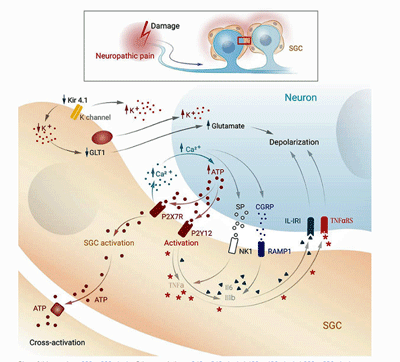
How satellite glial cells interact with neurons. (Image by Andreeva-Murashova-Burzak-Dyachuk-V-Wikimedia Commons)
Once again, increased levels of anti-SGC antibodies were associated with a variety of pain measures, as well as the fibromyalgia impact score and depression. (Note, though, they were not associated with a host of other symptoms, including anxiety, pain catastrophizing, fatigue, disturbed sleep, tender points, pressure pain thresholds, conditioned pain modulation, age, pain/FM duration, or BMI; i.e., they are not the total answer.)
A STRING interaction analysis that uncovered a cluster of seven immune-associated proteins (CD40, CD40L, CCL20, CCL22, LAMP3, CD83, IL1RL2) highlighted the role the immune system, long neglected in FM, plays in the disease.
Furthermore, the cluster suggested that the humoral immune response, that is, the later immune response involving the T and B cells, played a significant role in FM. The humoral immune response is the most closely associated with autoimmunity. Higher levels of CD40, in particular, were associated with increased FM symptom impact.
Indeed, the two main proteins highlighted (CD40, CD40L), with their connections to T and B-cells and IgG antibodies, have been linked to many inflammatory and autoimmune diseases. One protein, CD40, appears to be especially relevant in nociplastic and neuropathic pain conditions.
Plucking out the high anti-SGC group resulted in two clusters showing up. One that was almost totally associated with immune regulation appeared to fit nicely with an autoimmune process. The other – a cluster focused on metabolism/energy homeostasis – made sense given what we know about ME/CFS and long COVID.
Immune regulation showed up in spades again when the researchers looked at proteins that had become downregulated in fibromyalgia.
A Different Kind of Pain
Comparing the findings to those in two nociceptive diseases (osteoarthritis and DDD), (i.e. diseases associated with tissue damage), the study found little overlap.
At the molecular level, fibromyalgia – a nociplastic pain disorder – seemed like a disease apart. Not just a little apart but dramatically apart. A large cluster of inflammatory proteins that were down-regulated in DDD (degenerative disc disease?), were upregulated in FM.
Plus, none of the down-regulated proteins in FM, which were involved in tissue development, maintenance, and regeneration, were altered in osteoarthritis or DDD. As noted above, nociceptive diseases are associated with damage to the tissues, not the nerves. Fibromyalgia didn’t look like a nociceptive disease at all, and this made sense as it’s never been associated with tissue damage.

Three types of chronic pain – three different ways to produce it.
Within FM, patients with high levels of the anti-SGC IgG were a subset unto themselves. Immune cell regulation – a key issue in autoimmunity – came to the fore again when a large cluster of immunoregulatory proteins were downregulated in FM patients with high anti-SGC IgG levels.
It soon became clear, though, that these particular autoantibodies aren’t telling the entire story, as they were associated with pain intensity, not pain sensitivity. That suggested that these particular antibodies are not affecting the descending pain-inhibition circuits in FM, fatigue, or sleep. Instead, they appear to affect background levels of ongoing pain.
FM, probably the quintessential nociplastic disease, is characterized by increased levels of pain, plus problems with cognition (fibrofog), fatigue, sleep, sensory stimuli, etc. Neuropathic pain conditions are characterized by damage to the nerves, which produces symptoms like numbness, allodynia (extreme sensitivity to touch), and increased pain sensitivity. It’s not uncommon for nociplastic and neuropathic symptoms to exist together in the same disease, and indeed they do in FM.
The authors proposed that FM, degenerative disc disease, and osteoarthritis exemplify three different disease types:
Fibromyalgia is characterized by low-grade immune system activation; degenerative disc disease by structural tissue injury, which produces peripheral inflammation that often dies down over time; and osteoarthritis by ongoing inflammation that produces damaged joints.
The immune activation in FM isn’t particularly high, but maybe it doesn’t need to be if it’s producing autoantibodies that attack sensory centers, such as the dorsal root ganglia. Martinez-Lavin recently put these satellite glial cells right at the heart of FM cwhen he reported that “DRG SGCs are able to transform different emotional, physical, infectious and/or autoimmune stressors into biochemical signals that can activate primary pain sensing neurons.”
Note, though, that while pain intensity and other pain measures were associated with increased anti-SGC autoantibodies, and FM patients with higher levels of these autoantibodies have more severe symptoms, they may not play a role in all aspects of FM (fatigue, sleep, pain sensitivity).
Since passive transfer studies using antibodies from FM patients replicate FM, other autoantibodies may be at play. In other words, the plot thickens. 🙂
Large Fiber NeuropathyToo?
Small fiber neuropathy has been all the rage in the FM field, but a recent study, “Aβ low threshold mechanoreceptors contribute to sensory abnormalities in fibromyalgia“, suggests that we shouldn’t stop there. The study focused on sensory symptoms such as sensitivity to cold (cold hands, anyone?), which is associated with sensitivity to touch, and tingling sensations that are too rarely addressed in this disease.
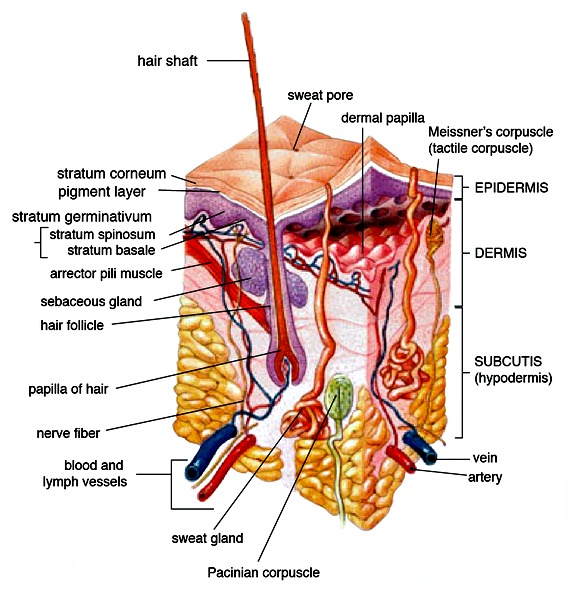
FM IgG also affects large nerve fibers in the skin – producing cold sensitization and sensitivity to touch.
These are not uncommon symptoms. Twenty-four percent of patients in this study described high intensity ‘pain on light touch’ and ‘cold freezing pain’ (ouch!) in the past week, and more than a third of them experienced ‘tingling’ and ‘numbness’. Nine of ten male FM patients (90%) and 57 of 69 female patients (82%) reported that temperature affected their symptoms.
These are symptoms associated with large-diameter nerves found in the skin, as opposed to the small nerve fibers that have been studied so much in FM.
Another passive transfer study showed that injecting antibodies (IgG) from people with FM into mice caused the mice to become hypersensitive to touch, as well as to cold. Digging deeper, they implicated large diameter neurons in the dorsal root ganglia in the cold hypersensitivity, sensitivity to touch, and tingling sensations that many people with FM experience.
Because the small nerve fibers were not activated by cold, it was clear that these sensory problems are due to activation of the larger nerve fibers.
The authors proposed conducting therapeutic plasma exchange trials to assess treatment efficacy and provide large amounts of IgG for future studies.
An Autoimmune Disease or Not?

The autoimmune hypothesis of FM is off to a good start. More needs to be done to convince the medical field that an autoimmune FM subset exists.
Daniel Clauw – a rheumatologist who knows autoimmune diseases – has argued that FM looks nothing like other autoimmune diseases, and doesn’t respond to immunosuppressants, or even to autoimmune drugs.
Passive transfer studies, though, are a classic way to define autoimmunity and at least two of them have been carried out in FM. Plus, the fact that researchers have been able to pluck out specific autoantibodies (the anti-SGC antibodies) and show that they are binding to a specific target (dorsal root ganglia) AND are correlated with symptom severity suggests that the field is well on its way to proving that an autoimmune process is present in a subset of FM patients.
So why do questions still exist about whether at least a subset of FM patients have an autoimmune disease? In large part, because the medical field wants more – quite a bit more, actually. It may look like it wants a lot, but these are simply the next logical steps, and given the findings thus far, they should follow as a matter of course.
Because, thus far, the passive transfer studies (just two) have come from one extended group, the medical field wants independent validation from other research groups. These studies need to have screened FM patients to ensure they don’t have other autoimmune diseases. (On a plus note, Goebels has shown IgG antibodies produce chronic pain in different ways in rheumatoid arthritis, complex regional pain syndrome, and FM.) It would also like antibody-free FM serum to be tested in a passive transfer model.
Most importantly, it wants researchers to show that removing the autoantibodies (via plasmapheresis, B-cell depletions, IVIG, others) results in improvement.

Among other things medical field wants independent validation and exactly where in the SGCs the antibodies are targeting.
It would also like to know what antigen (piece of protein) those autoantibodies are attacking. (We know they’re attacking the satellite glial cells (SGC) found around the dorsal root ganglia, but we don’t know exactly what on the SGCs they’re attacking.) Also, researchers believe that the FM antibodies may be targeting several different antigens, including some that have yet to be uncovered.
While the evidence suggests that the antibodies are causing increased pain, etc., the medical field would also like direct evidence that they’re activating the satellite glial cells and altering dorsal root ganglia functioning.
In the end, for the autoimmune findings to make their way down to doctors and hence to patients, the FM field needs a widely accepted, clinically available, standardized antibody test that neatly splits “autoimmune FM patients from “non-autoimmune FM”.
Please Support Health Rising and Keep the Information Flowing
HEALTH RISING IS NOT A 501 (c) 3 NON-PROFIT





Andreas Goebel, M.D., Ph.D. (pain immunologist), University of Liverpool, UK.
So grateful for this report Cort. And for you. Thank you.
Thanks!
Wow, that all sounds so useful. Shame that it’s taken so long to validate Fibro as a serious disease. Probably too late for me to benefit as I’m in my late 60s but after decades of being dismissed & belittled, I’m glad that there’s a breakthrough that shows up the seriousness of Fibro,.
Thank you for an excellent explanation. Fingers crossed that this research finds a treatment that improves sufferers’ lot.
If they are able to identify a subset that responds to say IVIG or another immune drug – it might not matter how long you’ve been ill (???)
What FM really needs are big studies and more research teams. These are the kinds of findings, I would think, that might spark that. Let’s hope!
Thanks again for the encouraging words. I remember that an antibody was found during my rheumatology testing but was never followed up on. It might well have meant something after all.
I’ve had Fibro for at least 30 years & have never really received any treatment from the NHS except pointless pain clinic sessions & Prozac.
I’m very pleased to see this research breakthrough happened in the UK. Maybe I can be reffered to the Walton clinic, it looks impressive & with a very international staff.🤞
Good luck!
Hi Cort,
I’ve been exploring the possible connection between root ganglion involvement and Tarlov cysts since I was first diagnosed in 2007—not only in the sacrum but more broadly.
I’m particularly interested in whether a meningeal or Tarlov cyst positioned directly on a dorsal root ganglion could be a root cause of fibromyalgia, heightened pain sensitivity, or even immune system dysfunction. https://stock.adobe.com/search?k=%22dorsal+root+ganglion%22&asset_id=1710366765
One question I keep returning to is: What happens if these fluid-filled cysts rupture? While we know that rupture may potentially lead to a cerebrospinal fluid (CSF) leak—causing positional headaches due to intracranial hypotension—it’s still unclear whether cyst rupture or hemorrhage is a recognized complication. What is known is that Tarlov cysts can cause significant headaches, often requiring patients to lie down. However, there’s no conclusive evidence yet on whether inflammation is involved.
A longstanding question I’ve raised with Dr. Feigenbaum is whether the fluid within Tarlov cysts could contain viruses or bacteria that might trigger immune-related neuroinflammation. Could this be part of the broader puzzle?
I truly wish spinal cysts were more thoroughly investigated.
Dr. Feigenbaum: https://www.youtube.com/watch?v=jaWLZqP__n8
Hadn’t thought of that but considering where the DRG’s are….I recently saw a picture of where they are on the spine. I was shocked at how close they are.
In most cases, MRI examinations end at L5, leaving the sacrum and coccyx inadequately visualized or entirely overlooked.
It’s no surprise to me that FM is turning out to be an autoimmune condition. In reaction to my first (AstraZeneca) vaccination (in the UK) against Covid in April 2021, I was bedbound for four days with extreme fatigue, alternating sweats and chills, and extreme weakness: it took enormous effort to reach the bathroom a dozen steps away from my bed. The kitchen was just too far away, so I drank water from the bathroom tap.
This was so much like an FM flareup — it was an FM flareup? — that I supposed there must be fairly strong immune system involvement in FM.
There wasn’t long to wait for confirmation of this supposition: when less than six months later I read (via HealthRising) the passive transfer study re IgG from FM patients to
mice, published by the Karolinska Institute in ?June 2021 (I read it a few months later).
And re the “genetic architecture” of FM and its association with other diseases (reported in last issue of HealthRising), I’ve had every one of them except rheumatoid arthritis (which my mother’s sister had).
So this research provides not just very welcome confirmation of things we might already have suspected, but great defence against public ignorance nurtured by ignorant medics that FM is “all in the mind”.
A certain Professor Sir Something who, as a psychiatrist, was foremost in pushing this damaging idea, deserves to be stripped of academic credentials and knighthood: and (my preference) given a jail sentence for reflection on medical malpractice and cruelty to patients.
And maybe I will send links to these studies to a former friend whose mother has FM. I haven’t much kept in touch with him since he had the gall to inform me he “didn’t believe FM existed” — I felt too angry, with FM having blighted my life for 20+ years.
But his dismissive ignorance was nurtured by medical dusmissive ignorance… there were others to blame more than him. Still our 40 years friendship cooled to occasiinal exchange of Christmas and birthday cards.
This medical ignorance has been so damaging to FM sufferers via public attitudes too: thank god it’s ending.
PS (Sorry I should have refreshed my memory before posting the above) the name of the “most hated doctor in Britain” is Professor Sir Simon Wessely: with a refutation of his “somatisation” views on ME stated here by an ME researcher:
http://www.margaretwilliams.me/1999/denigration-by-design-update.pdf
Wessely’s ignorance and arrogance are evident from the first few pages of Margaret Williams’s 246 page refutation (pdf above) of his damaging “somatisation” theory re FMS/CFS/ME.
And sorry I have not sooner thanked you immensely, Cort, for your heroically sustained effort in informing (and supporting) us all, by explaining and publishing current research on FMS/CFS/ME and now “Long Covid” too, via HealthRising, which I am very pleased to support.
Let’s hope that the recent genetic discoveries about FMS and CFS/ME/LC and associated neurological processes, will lead quickly to some effective treatments.
The idea that FM is not a real disease is simply incredible given all the findings….The Karolinska and the other Swedish group have really been plugging away at this. Let’s hope they continue to get good funding.
Is it true that fibromyalgia doesn’t respond to immunosuppressants? I thought there was a similar scattering of reports of people with fibromyalgia being helped by steroids (usually discovered by chance) as there are among people with ME/CFS and LC.
That was Clauw’s experience and it makes sense if the inflammation in fibromyalgia is not systemic but is targeted at the nerves which this study and others suggest. Broad scale immunosuppressants might not help in that case (?) but treatments that remove the antibodies that are attacking the nerves might.
I would be shocked if we didn’t see some treatment trials that tried to do that.
Even if trials go well, chances of getting any of the suggested, expensive treatments covered by Big Insurance or Medicare are slim, and it would take years as there is no fibromyalgia lobby in Congress.
Thank you, thank you!! I’ve worked through the pain, fatigue (etc etc) and exercise intolerance and suffered over 40 years of eye-rolling from people, especially medical providers, when I mentioned my FM diagnosis and symptoms to the extent of hiding the diagnosis and telling some people I had the flu when I needed to decline an activity or call in to work.
Validation is such a relief it brings tears!
Glad to hear. You should know that there is a lot of evidence indicating that FM is a real disease! Check out 10 ways to prove that fibromyalgia is a real and serious disease.
https://www.healthrising.org/blog/2020/04/12/ten-ways-to-prove-that-fibromyalgia-is-a-real-and-serious-disease/
I’ve never read an article that sounds so familiar to what I’ve been through the last 8 years. I would need quite a few pages to describe from start to finish of how this all evolved. My pain with FM was over the top and I had given up with the hope that it would ever resolve until my rheumatologist ordered an immune panel. Everything was low but my IGg was below the threshold. Next stop was the immunologist with further tests and I was diagnosed with hypogammaglobulenemia. Less then three months after starting IVIG treatments, the pain had greatly diminished. I still have other issues but am so thankful that the pain is gone.
I had to comment after reading this article, and especially the comment from Tana Linge. I was diagnosed with FM in 2004 after having symptoms since childhood. I had often asked about FM and told the usual “all in your head.” I will be forever grateful to my rheumatologist who noticed that every cold or sinus issue turned into long term infections requiring months and multiple antibiotics to clear as well as relentless fatigue and brain fog. In 2014 he recommended immune testing which revealed hypogammaglobunemia (at age 50). I am just a few points above the number needed to treat with gamma globulin. However, it was a revelation to have an immunologist test my levels every 6 months and show that yeah, it is NOT all in my head! I am so glad to see continued research and your excellent blogs and articles. Thank you. I hope there is someday a treatment for this awful disorder.
I hope you get your numbers! Several ME/CFS and long COVID studies have shown that a subset of patients have an IgG subclass deficiency.