




Geoff’s Narration
The GIST
“You know you have to think big.” Nicholas Boyd-Gibbons; co-founder of Amatica
This is part of a series of exciting projects underway in ME/CFS, long COVID, and similar diseases. They are popping up all over the place.
Amatica is aiming big!
Big plans are what really excite me now. The small studies have been and are very helpful. They keep opening up new possibilities and helping to validate past ones. ME/CFS would be a blank slate without the creative work being done in the small studies – so thanks so much for the researchers and the foundations that keep opening up new avenues for study.
The next step for the ME/CFS and long-COVID fields, though, is to step up to the big time and take on bold projects that have the scope to match these big diseases. DecodeME is one project that has. The Open Medicine Foundation’s Bioquest study is another (blog coming up). Big plans are what this new group – Amatica – started by two people with long COVID-triggered ME/CFS – is about.

THE GIST
-

Amatica is attempting to provide something that’s missing – large enough studies to uncover subsets and drive treatment success.
This is part of a series of exciting projects underway in ME/CFS, long COVID, and similar diseases.
- Amatica is (presently) a small organization founded by two long-COVID/ME/CFS patients that is aiming big indeed.
- Amatica is building a study that matches the “bigness”; i.e., the heterogeneity of diseases like ME/CFS, long COVID, fibromyalgia, and others. It asserts that until we have studies that match these diseases, we’ll never get to the bottom of them.
- For one, these diseases are probably larded with subsets. How many? Ten, twenty, a hundred? Nobody knows, and no one has done the kind of large study that could find out.
- Take myself, and the two founders of Amatica, Nick and Jack. It quickly became clear that while we each share problems with functionality, some of our major symptoms were different, we had different kinds of post-exertional malaise, and different disease courses.
- How to capture that kind of heterogeneity? A hundred samples won’t do it. Neither will a few hundred. A thousand might – and that’s what Amatica is aiming for. It’s aiming for thousands of samples.
- So far, Amatica, which opened its doors in January 2025, already has 300 samples – enough to produce the largest gene expression study ever done. It’s using a huge questionnaire and gene expression and proteomic samples to uncover the biological pathways, subsets, and ultimately the appropriate treatments for everyone who contributes their samples.
- Amatica is truly patient-supported. While the staff is not being paid, paying for the tests themselves – which are not inexpensive – is up to the patients. The 20,000 sample gene expression test costs £785 or about $1,050 US or almost $1500 Canadian. They also have a 31-marker proteomic test (£1,125). If you can only do one test – do the gene expression test – it’s the foundation of what they do. Other tests are coming.
- What do you get if you join? You will find out which of your biological pathways have gone bonkers and which subgroups you belong to. Advanced AI will be used to look for signals that can predict which treatments you will respond well to and which you should avoid or be very careful about.
- As Amatica’s database grows and becomes more powerful, you will get more precise insights into your health – which biological pathways are off, what subgroup(s) you belong to, what treatments might/might not work for you, etc.
- Note there are no yearly subscription fees. Amatica promises that once you join the program, you will get the insights it provides for the rest of your life.
- Finally, by providing your samples, you are directly contributing to our understanding of ME/CFS, long COVID, and other diseases. Amatica is trying to do something special: uncover precise subsets and predict which treatments will or will not work for each individual. Will they be able to do that? Time will tell.
- Amatica helps out with blood draws and, unlike most studies, they estimate that about 40% of the people in their database are home or bedbound. The gene expression test requires only a small amount of blood. They work with couriers to whisk your blood to them. Anyone anywhere in the world can join.
- New tests and collaborations are coming.
- Check out Amatica here, order the gene expression test here, order the protein test here.

Amatica
Amatica (Amata – replenishment/regeneration, ica – from holistica) – is the brainchild of two long-COVID/ME/CFS patients, both of which (I can see Ron Davis smiling) have engineering backgrounds. Nick has a long history in bioengineering (genome and stem cell engineering) while Jack was an aerospace engineer who was working on the lunar rover when he became ill. (Now he’s onto systems biology – a perfect place (systems) for an engineer.)
The team is rounded off with a software engineer with an emphasis in biotech (Tim), a marketing expert (Alex), and a finance lead (Kit). Plus, Amatica is collaborating with a top genomics lab and consulting with data scientists.
A Talk with Amatica’s Founders
Providing What’s Missing

Amatica is attempting to provide something that’s missing – large enough studies to uncover subsets and drive treatment success.
You don’t start a project like Amatica to do more of the same. You start a novel project like Amatica to fulfill something the field is missing. One thing that’s been missing in the ME/CFS and long-COVID spaces are projects that are large and deep enough to capture the totality of these crazily heterogeneous diseases.
ME/CFS, long COVID, fibromyalgia, Lyme Disease, POTS, etc. are “big” diseases not just because they affect tens of millions of people across the globe but because of what they are, biologically. They appear to affect virtually every system of the body, produce hundreds of symptoms, and affect many people differently.
Crazily Heterogeneous Diseases
Take the two founders of Amatica – Nick, Jack – plus myself. We are all functionally impaired, but some of our most troubling symptoms were different (Jack – visual symptoms, me – chemical sensitivities), our kinds of post-exertional malaise were different, and our time courses were different.
Nick, for instance, had a crash that lasted a year, while my crashes are much shorter. Jack experiences muscle weakness after exertion, while I experience muscle pain. Nick can work cognitively for hours and hours, but physical exertion quickly exhausts him. I can work cognitively, but my Oura ring tells me (and I agree) that cognitive work is the most stressful thing I do. Let’s not even mention my weird response to helpful treatments, which produces an entirely new raft of symptoms.

How to deal with a complex disease? Do studies that are a match for it.
That’s just three people. Throw my partner in there, and we have yet another very different kind of ME/CFS (spinal/gut/orthostatic issues, and a higher intolerance of treatments). Four people – four distinct types of ME/CFS. (Ironically, Amatica’s first round of gene expression testing indicated that the two founders of Amatica, Nick and Jack, were the most biologically different patients of the group.)
Capturing that kind of heterogeneity is crucial. It’s become clear over the past couple of years that uncovering the subsets in these diseases is going to be the key to uncovering the treatments for everyone.
But how to capture big diseases like ME/CFS or long COVID in their totality? The answer is pretty simple – you have to go big, and for Amatica, that means not a hundred, or two, or even five hundred samples, but more like a thousand, or two thousand. Talk about going for the gusto. They may end up producing one of the biggest studies ever done in these diseases.
The goals: identify subgroups (there may be hundreds), uncover biological pathways, and provide a biological guide to treatments.
Deep Phenotyping
“Phenotype” – from the Greek phainein; to show or shine
Deep phenotyping involves a comprehensive analysis of an individual’s or a group’s observable traits (the “phenotype”). Those characteristics involve everything from symptoms to biological findings…
Big Questionnaire = More Insights
In Amatica’s case, it starts off with giving patients the biggest, baddest, most comprehensive questionnaire (350 questions) we’ve ever seen. I haven’t done Amatica’s questionnaire, but I’ve done some pretty hefty questionnaires that were put together by my ME/CFS experts, and every time, I’ve come away asking myself, why didn’t they ask this question? How could they miss this one?
Yes, these questionnaires can be mind-numbingly difficult to get through but cracking the nut of complex diseases like ME/CFS, long COVID, fibromyalgia, etc. requires knowing everything. That one weird symptom you have might be the key to which subset you’re in.
Plus, you can stop and start whenever you want. (I think it would probably be best not to rush through the questionnaire but to take a week or so to go through slowly and give it the best answers.)
Gene Expression
Then there’s the gene expression test that assesses which genes are activated and how activated they are. Since our genes produce the proteins that do the work of the cell, assessing which genes are activated (or turned off) provides a nice clue to understanding what’s going on in your body.
This isn’t a targeted gene expression test either. It’s going to use a whole blood sample to assess the activity of all 20,000 genes in your body. Plus, there’s a 31-panel protein assessment that can be done.
In the end, it all gets integrated using artificial intelligence, machine-learning, etc., programs.
A Special Goal
Amatica has a very special goal – to use gene expression and protein tests (and ultimately others) to identify: a) which treatments help which people; and b) which treatments are wrong for which people. Jack is a prime example of what happens when the wrong patient meets the wrong treatment.

Treatments are hit and miss – sometimes with very negative consequences.
They want to go big enough to capture the smallest subsets in these diseases. They want to get at the five percent of patients who seem a bit different. If you’ve ever felt like you don’t quite fit – if you have a bizarre symptom – Amatica, in particular, is coming for you. We are kind of the symptom kings. Check out the many bizarre and sometimes horrifying symptoms a Health Rising poll picked up.
Jack is a prime example. We’ve heard stories of people who’ve been helped by immunoadsorption. It appears to be pretty safe for ME/CFS, but after immunoadsorption, Jack went from 3-4,000 steps a day to about 500 and has stayed there. Note that immunoadsorption doesn’t add anything – it simply removes immune factors thought to be pathological. Apparently, in Jack’s case, it removed factors that he needed – and has been unable to replenish since then.
Jack noted that for every person who responds positively to a drug, 9 or 10 people might have no response, while one may be shattered by it. Trying new things is a gamble with one’s health that most of us simply accept. That’s why we start slow, go low, and then (hopefully) back down quickly enough so that bad things don’t take hold.
I rarely respond poorly but also rarely respond positively: after 40 plus years with this disease, I can count the things that have helped on the fingers of one hand. Plus, everything that REALLY helps ends up crashing me in a weird way.
Here’s the thing. Amatica states, “There is a large amount of research showing RNA sequencing (gene expression) has the capability to identify treatment response predictions in diseases such as cancer, epilepsy, arthritis, lupus, etc and we strongly believe it will be the same for ME/CFS & Long COVID.”
ME/CFS has had plenty of gene expression studies, but I can’t think of any offhand which directly resulted in treatment possibilities. (One did result in a sharp-eyed doctor (Dr. Kaufman) targeting oxaloacetate as a possible treatment, but Kaufman came up with that on his own.)
I asked why hasn’t the gene expression work resulted in a treatment bonanza for ME/CFS or long COVID. The answer was heterogeneity. Because other diseases are less heterogeneous than ME/CFS and long COVID, they don’t need huge datasets to offer answers. ME/CFS and long COVID do.
Plus, no study has done the deep phenotyping work that Amatica is doing.
Already a Success
You might think it’s crazy for two long-COVID patients to be, as they put it on the website, “tackling the world’s most complex diseases”, but Amatica is already a success.
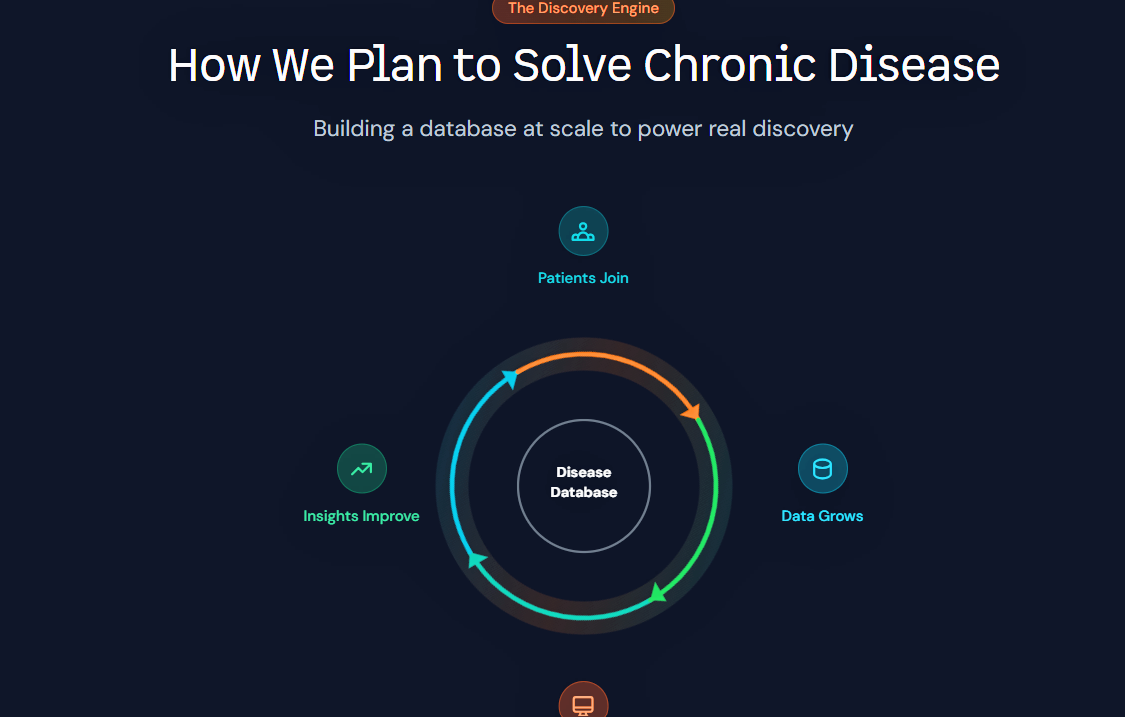
Amatica’s foundation – its deep database.
It’s not yet the success Nicholas and Jack intend it to be, but it’s already pretty big. Amatica was incorporated in March 2023, and publicly launched in January 2025. By July, it had 50 patients and 60 controls. Seven months later, it has 300 patients. That probably makes it, at a third of its goal, already the biggest gene expression database ever assembled. Nicholas estimates they need at least 1,000 patients to get at the five percenters.
Several hundred ME/CFS and/or long-COVID samples are currently being assessed. Amatica expects to have the results back next month. Those results will then inform everyone who was in the first group. Once that is done, Amatica will be assessing batches of 20; that is, as soon as 20 people provide their samples, they will get assessed. If I understood them correctly, they’ll do their next big analysis of the samples when they reach 500.
Because all samples are being biobanked, they can come back to them and study them. ME/CFS and long COVID are just the beginning. Amatica also welcomes people with fibromyalgia, chronic lyme disease, POTS, MCAS, EDS, etc.
Explicating Post-exertional Malaise (PEM) – PEM is the key signature of ME/CFS and long COVID, but it’s also been the toughest nut to study effectively. They have a funding pledge to do a specific post-exertional malaise study, where they’ll assess patients before and after exercise. They also have long-form answers from about 80 or 100 patients on their subjective experience of PEM they’re also mining for patterns. The subject is so complex that they believe they’ll need hundreds or even thousands of experiences to tease out all the patterns. To get to the 5ers – the 5% of ME/CFS with a unique pattern of PEM – they expect they’ll need 2,000 responses.
Collaborations – they’re collaborating with a company that has found a way to measure blood volume and endothelial permeability. Say they find that blood volume changes are associated with specific gene expression patterns, they will go to the group of patients with those patterns and suggest they might want to take this test, or do this treatment.
Clinician Portal – clinicians can join via a contact form now. When the full clinician portal is up, they will be able to order tests for their patients and use the results to inform their treatment protocols.
A Patient-Supported Test
“The deal is we will give you the best, deepest insights we can for you individually, and then your data helps all of us grow together and help everybody else.” Nicholas
Amatica is truly patient-supported. While the staff is not being paid, paying for the tests themselves – which are not inexpensive – is up to the patients. The 20,000 sample gene expression test costs £785 or about $1,050 US or almost $1,500 Canadian. They also have a 31-marker proteomic test (£1,125). If you can only do one test – do the gene expression test – it’s the foundation of what they do. Other tests are coming.
Note that Amatica helps out with blood draws and, unlike most studies, they estimate that about 40% of the people in their database are home or bedbound. The gene expression test requires only a small amount of blood. They work with couriers to whisk your blood to them. Anyone anywhere in the world can join.
- Move the science forward – fill out the questionnaire – If you can’t afford the tests, you can still help move the science forward by completing the questionnaire.
Check out what Amatica promises…
- Complete Gene Expression results explained.
- 1,500 Biological Pathways assessed – you will find out which of your biological pathways have gone bonkers and which subgroups you belong to.
- Treatment Response – Advanced AI will be used to look for signals that can predict which treatments you will respond well to and which you should avoid or be very careful about.
- Ongoing Evolution – to my mind, this is the best part. As the database grows and becomes more powerful, you should continue to get new and more precise insights into your health – which biological pathways are off, what subgroup(s) you belong to, what treatments might/might not work for you, etc. Plus, there are no yearly subscription fees. Amatica promises that once you join the program, you will get the insights it provides for the rest of your life.
- Contribution – Finally, by providing your samples, you are directly contributing to our understanding of ME/CFS, long COVID, and other diseases. Amatica is trying to do something special: uncover precise subsets and predict which treatments will or will not work for each individual. Will they be able to do that? Time will tell.
- Check out Amatica here.
- Order the gene expression test here.
- Order the protein test here.
- Subscribe to their newsletter here.
The Future
Amatica is not standing still.
- Before and After Treatment Responses – Amatica is already gathering lots of information on patients’ subjective responses to treatment, but they hope to go further and take gene expression tests before and after a treatment – say a JAK/STAT inhibitor – to determine which people with which gene expression profiles are likely to be helped or not helped by the drug. They are doing this with some patients who are taking IVIG.
- More tests – Antibody, multi-omics, and other tests are coming.
- Going Full-time? – Amatica has been all volunteer since its founding in 2023. Going full-time would allow it to scale up much faster. Nicholas said they have been approached by investors…
Health Rising does not benefit financially in any way from Amatica’s products
- Coming up – the Open Medicine Foundation’s Bioquest project




Every time i read something positive like this i get a little moment of hope.
One nice thing about this group – both Nick and Jack have long COVID/ME/CFS – they want to solve this as much as you and I do. 🙂
One thing: long covid is NOT ME/CFS!
According to Dr. Lucinda Bateman (and other ME experts), “a substantial subset of of (LC) patients go on to meet the established definition for ME…” (this is from the Bateman Horne Center’s Clinical Care Guide”).
I don’t think it matters whether long COVID is ME/CFS or not.. For me, the two diseases are so close and so heterogeneous it’s pretty clear there will be substantial overlaps but what really matters is building a study big enough that it can pluck out the subsets, uncover appropriate treatments. etc. for both these diseases. Big studies like this are crucial for understanding how much overlap there is.
Gulf war illness is also very close sister
It is true that ME is a heterogeneous disease that’s why it will be difficult to find a set of genes that will make distinctions between subgroups only if very well described in terms of criteria. I don’t know if this research meets that requirement. That patients have to pay for their own test smells of commercial gain. which doesn’t mean that it has to be negative. Anyway, we’ll wait and see.
I disagree. ME is a syndrome. I also think that there might be possibly two different diseases slumped together in the CCC criteria.
For example my epsiodes are flu-like. I am sure I don’t have the same illness than patients without flu-like lead symptom.
But the Long Covid concept does not refer to a specific syndrome. It’s only a small group who meet the ME/CFS criteria. The other patients have problems that don’t have to do anything with ME/CFS at all.
Luckily, the leading ME/CFS researchers everwhere understand these differences. So, it doesn’t matter so much that an important blogger like you, Cort, doesn’t get it : )
In Germany (including Scheibenbogen) the understanding is that ME/CFS is also “the most severe form of Long Covid”. I.e. developing ME/CFS is one possible complication after Covid, with there being other forms that LongCovid can take such as organ damage.
How much longer can they carry on treating them as separate groups. I’ve had ME for decades. I got Covid for the first time last September. My immune system went crazy and I’m still recovering. Do I have ME or Long Covid now? Or both?
Last year I listened to a Covid/Long Covid researcher (immunologist) saying each time Long Covids get Covid again they get worse. Some of those Long Covids must be getting other viruses too, ie the ones that triggered ME before Covid came along. Are other viruses making Long Covids worse too? Do they change their biochemistry in a different way? Do they have ME as well as Long Covid? There must be an overlap as time goes on.
I don’t know if you’re vaccinated more than 2 times, many vaacinated people have problems with handling the corona virus.
Hi Court
Been with you for years and this is the day I waited for. Any chance of getting a coupon code?
Have you or anyone you know personally taken the test? If yes, what did you get out of it?
That question will be better answered after the results from the big sample batch are processed over the next month or so.
I have the raw data from a 23andMe test from a few years ago, that I did for a Nancy Klimas research program. Would that be useful, or is a gene-expression test fa completely different thing?
Very interesting, this project, as are a few other patients led.
I was going to ask the same thing as Bettine.
I have one too from Lifestyle Genomics, would it be helpful?
That was assessing the different variants of the gene you were born with. We all carry different genetic variants. Amatica is assessing which genes are being expressed (or not) – right now. It does this my studying messenger RNA (instead of DNA). Our genes get expressed in response to what’s happening in our body and proteins – which do the work of the cell – are the end result of that expression – which is why its nice to see Amatica looking at both.
I guessed as much, I believe you talked about epigenetics. Is that the word for what you described?
interesting, I look forward to hearing more about their work. I recently received results from the MELO study. Somewhere over 300 of us with Long COVID or ME had our dna / genes ( Truthfully, I’m confused about the science) analyzed for patterns. In what ways is this different? thank you!
Glad you’re in there! Genetics is a tough subject! If I have it right the MELO study is assessing DNA – the genetic structure we are borne with. Amatica is studying the expression of those genes – which ones are active and which ones are not. It would be great to combine the two 🙂
Did I miss it, or if not where do we go to fill out the questionnaire?
I can’t see it on this newsletter, I followed the link to the Amatica website but can’t find it there either.
Thanks for trying. Hopefully Cort will let us know.
In Cort’s interview video it says that the questionnaire is not publicly available yet. I daresay Cort will let us know when it is available.
I hope they will chime in on this – I couldn’t find how to do the questionnaire without ordering the test.
I imagine they do not need questionnaires completed unless they have samples to measure the symptoms against???
Nick in the video definitely said if people can’t afford the tests it will be great if they can answer the questionnare and that the questionnaire will become available publicly, in the future I assume.Im just repeating all this as it’s quite a long video interview and some may not have the energy to watch it. Finished me off for the day ha ha .Thanks Cort it’s all encouraging.x
Thanks for the info
and yeah hopefully they will let us know
Hi, Jack from Amatica here.
We will be releasing the questionnaire to everyone in the very near future. We are just finalising a few steps to make sure it runs smoothly for all participants. We will announce publicly when it is available, share any initial insights we can at that stage, and also let Cort know.
Thank you for your interest, and we look forward to having you join.
Thanks Jack….good to know. And, thanks for all you’re working on with this whole project.
Thanks Jack! We are very excited about this project. Please send all updates to Cort so he can keep us informed 🙂
Do you have to have an official diagnosis of ME/CFS? I have not been able to get into a doctor who knows enough about it to actually receive a diagnosis, but I have all of the symptoms needed to make a diagnosis. Also, what exactly will the two tests tell me? Will they be able to give me a specific treatment to try that works well with my genes?
You can give yourself the ME/CFS diagnosis if you have done enough tests that prove you don’t have something else that causes your symptoms i guess. Because the final diagnosis you will get by answering questions. If you have done plenty of blood tests and maybe and MRI scan that didn’t have any results then you have ME/CFS.
Sorry, i dont know the answer to the other questions.
I think that down the road they definitely will, probably with some advice available once all the initial tests and questionnaires are processed.
Hi Jessica, Jack here from Amatica.
You do not need a formal diagnosis to take part.
We stratify participants based on symptoms and then map those symptom profiles to diagnostic criteria internally. In our view, symptoms are often more informative than diagnoses in these conditions. Diagnoses such as fibromyalgia, MCAS, ME/CFS, and Long COVID can be influenced by clinician preference or by which symptom is emphasised first. For example, pain first often leads to fibromyalgia, while fatigue first more often leads to ME/CFS.
Regarding what the tests provide: you receive information on your most altered genes, the molecular cluster you fit into based on our dataset, and interpretations of how this may relate to existing research. You will also receive results across multiple biological systems, such as immune function, mitochondrial health, and vascular pathways, alongside explanations of what those markers may indicate.
The results are informational only and do not guide direct treatment. We are happy to discuss results with clinicians if they wish, but any decisions about clinical use are between you and your clinician.
As our dataset grows, our goal is to identify biomarkers that correlate with treatment response. This could eventually look like identifying that patients in one subgroup have a higher probability of responding to a specific treatment, while another subgroup may have a higher risk of worsening. That type of information would again be shared with clinicians for them to decide whether it is useful in care.
If you have any other questions, I am very happy to answer them. I am also happy to reply here if that is easiest.
This is SO exciting! Cort, please keep us posted on their progress and results! Thank you for bringing this to our awareness.
Thanks, I hope it brings helpful info! Just doing a big, statistical survey of symptoms and diagnoses seems very helpful.
We have millions of diagnosed patients, why can’t we gather many thousands for the statistics? Subsets as you describe. Comorbities. Systems affected (neuro, immune, GI, cardiovascular, endocrine, musculoskeletal, etc). Amount/location of brain damage. Average duration and symptoms of stages (onset/somewhat disabled/unable to work/severe/very severe). Causes of death.
The UK has recently done some immense studies, so should we.
I just dug into my savings to get the RNA expression test, so I’ll keep you all posted. Looking forward to a nice meaty detailed week long questionnaire about my weird symptoms.
Aurora, that’s awesome! When you get your results you might see if Cort could interview you for this newsletter, so we can all learn from your experience. Thanks for being a pioneer 🙂
I’ve just ordered the RNA test as well. After having been in a couple of clinical trials that set me back to the start of my long COVID this seems to be where I should have started to begin with – had I known about it.
Hey cort! I didn’t see a link here or on their site for the questionnaire. Is that only available if you do testing? This all seems so promising.
I really hope Amatica also asks for the patient status in which they take samples! For example, baseline, push or crash status. I think gene expression could be very different between those states.
Hi JR, Jack here from Amatica.
Yes, we do collect status information at the time of the blood draw. We ask about fasting status, any medications taken beforehand, whether the patient was experiencing PEM at the time of the draw, and whether the blood draw itself triggered PEM. We also collect a brief description of severity and which symptoms flared.
In addition, we record the time of day the blood draw was performed and the time the patient woke up. We plan to continue expanding this to include additional relevant contextual information in the near future.
As I do not tire to say: gene expression is different during PEM and normal days. So bulk data will have a lot of noise (we had the same problem with cytokine studies, which were/are a mess of contradictory results).
Thanks for the insightful article!
Cort, is this concern something you can relay to the researchers? That they can put measures in place for reporting: that patients report whether blood is drawn during PEM and such? Sorry for my bad English today.
Hi Herb, Jack here from Amatica.
We agree completely and we do collect status information at the time of the blood draw. We ask about fasting status, any medications taken beforehand, whether the patient was experiencing PEM at the time of the draw, and whether the blood draw itself triggered PEM. We also collect a brief description of severity and which symptoms flared.
In addition, we record the time of day the blood draw was performed and the time the patient woke up. We plan to continue expanding this to include additional relevant contextual information in the near future.
This is wonderful, glad to hear!!! Thanks for letting me know, best wishes, Herbert
I recently did submitted the test and will be in this January cohort. They do a series of questionnaires, including whether you were in PEM during the blood draw.
Interestingly, Jack Hadfield (Research Lead of Amatica) mentioned having elevated liver enzymes for 4 years now and he wonders why this is so.
https://x.com/JackHadfield14/status/1902762205063385340
I have this also, without drinking alcohol. Maybe reactivation EBV? How is your Albumine? It could be play a major cause for a subgroup ME and EBV.
Elevated liver enzymes and high albumin .àlso any peptíde harm me.
Any treatment work for you .
Just signed up for the test. They did email a URL to a short questionnaire. Mostly just basic stuff but it also asks if I’m experiencing PEM (at the time of blood draw) and what the symptoms are. My guess is they’re going to gather samples of PEM and non-PEM so they can compare. Not sure if being in PEM during the blood draw is an advantage or not…
If that refers to the ALT/AST ratio often used to diagnose liver health, it might be explained by things like (body wide) increased mitochondrial dysfunction caused by oxidative stress (also associated with systemic conditions including ischemic-reperfusion injury, inflammatory responses, and increased oxidative stress and sepsis like states (immune system weak, dysfunctional and hammered)).
See https://www.nature.com/articles/s41598-025-03027-2
“While ALT primarily indicates liver dysfunction, AST may also reflect mitochondrial dysfunction caused by oxidative stress in other organs, albeit to a lesser extent15. The AST/ALT ratio is calculated by dividing serum AST by ALT levels, both enzymes crucial for amino acid metabolism that are released into the bloodstream during hepatocyte damage16,17,18. Although elevated AST/ALT ratios correlate with severe liver fibrosis and decreased hepatic function19, they are also associated with systemic conditions including ischemic-reperfusion injury, inflammatory responses, and increased oxidative stress20,21.”
“Higher AST/ALT ratios have been linked to worse outcomes across multiple conditions, including diabetes, congestive heart failure (CHF), hypertension, acute myocardial infarction (AMI), sepsis, and cancer”
what is the discount code for the gene expression test?
I sent samples for both tests, 31 marker and RNA. My 31 marker results are back and I am waiting on RNA. It breaks the myth that all tests come back normal, it’s a matter of selecting the right tests. The questions around blood collection include things like PEM status at the time of the blood draw. It’s really comprehensive and obvious what the patient perspective can add. This renegade research video has more information and some preliminary findings from the 31 marker panel. https://www.youtube.com/watch?v=cfjOUDointI
This sounds very interesting and promising and definitely something that I would consider joining. One question I haven’t seen raised in the comments is what will be done with the knowledge gained for the study. Will it be public domain so that other researchers will have access to the results? Are there plans for publishing peer reviewed studies using the data collected? Are other researchers or drug companies interested in the results?
Is this line of questioning addressed somewhere or can someone from Amatica address it?
Thank you for asking that question Ian. I too, am interested in that & also knowing more about the privacy of personal info that I assume will be collected in the questionnaire, especially when I see the word ‘investors’. It certainly sounds promising…
I feel like I just watched a presentation on Shark Tank where /young, attractive entrepreneurs are trying to sell their big idea to the “sharks”. The difference is these guys want you, the struggling, desperate patient to pay for their endeavor.
If these guys actually had ME/CFS or Long Covid, I am sorry. But, if you go to their website, they look pretty hale and hearty.
And no, ME/CFS and Long Covid are NOT the same. I have had ME/CFS since the early 80’s and seen top experts since I had really bad immune tests that no one could deny. Yes, I have tried dozens, maybe hundreds of treatments and a few worked remarkably well, but ME/CFS does not go away. Much like an autoimmune disease, this illness is just waiting to rear it’s ugly head. (Maybe if you get Covid.)
In August 2023, I caught Covid at a national veterans’ conference where I was a speaker so I couldn’t mask up. I took Paxlovid and the illness seemed to have resolved in two weeks. Then a month later, I developed a fungal rash around my mouth and my heart went haywire…rapid irregular heart beat, high blood pressure…scary. Thanks to a very cautious and knowledgeable cardiologist, this seemed to have resolved. Fast forward to May, we went to visit our daughter in Maui and I got Covid again (a different strain). Following that, I developed severe balance and walking problems (They call it Covid gait.) Oh, and the hearing in my left ear was greatly diminished.
In October, I passed out, hit my head and developed severe vertigo (which has been resolved with PT). I am still going to PT trying to restore my ability to walk so I don’t have to be in a wheelchair. But, each PT session wipes me out the next day.
My guess is that these guys know next to nothing about ME/CFS and/or Long Covid. I have lived it and seen some of the top doctors over the past 40 plus years.
And, Cort, if you are going to do a video, keep it succinct, use better lighting and audio equipment and keep you hands away from your face. (I was in advertising for 20 years.)
By the way, a few years ago, I did pay for “23 and me” because I was interested in the status of my methylation genes. This company has now gone out of business and who knows where all the genetic data they collected has gone.
First Betty, i want to say i am sorry that corona hit you so hard pfff. I hope you get much more better. About what you’re saying: i am totally agree! Take care!
I did not watch the video, I read Cort’s blog. Video is too though on my brain. I do understands Betty Mekdeci’s concern very well however.
Regardless of these peoples intentions:
A) it has potential to be helpfull (but by my guesstimate likely only at a massively larger sample number and with some pretty advanced and expensive data analysis techniques).
B) the data they’ll hold if enough people submit blood samples plus personal data and questionaires will be a true goldmine for some ‘data vultures’ (some of the worst companies on the planet that try and exploit any data they can get their hands on to the last penny).
When / if the data pile grows to be very valuable, the newfound company might be tempted by dollar signs. If they resist that temptation they still need to be very good at IT security (very hard to do with a small team), avoid going banktrupt (where datasets would be an asset for auction regardless of prior privacy protections) and avoid being bought up (or form a close joint venture without ironclad protections) by a bigger company who might be tempted to ‘monetize’ the data anyhow. The problem is they might need the resources of a bigger company to get anything usefull done. Catch 22.
=> I’ll reword it in a more friendly way then when I did it last time. Regardless the intentions of those who organize this, it’ll be very hard to keep your data out of the hands of ‘data vultures’. If you or your loved ones (who statistically share much of your genetic and even some epigenetic weaknesses more then random people) depend on free market health insurance (or need life insurance for a loan for buying a house), it may be wise to keep that in mind. You or them may at some time lose access to it due to weaponized data. Each one has to chose on his own on this one.
Many people with ME/CFS look healthy. I’ve had it for 20 years and everyone tells me, “But you look so healthy!” as if that negates how crappy I feel 24 hours a day.
Betty, I’m very surprised you commented on how the researchers “look”, having had this illness for 40 years yourself – many of us look fine, in fact if I recall correctly, someone even wrote a book about it called “But You Don’t LOOK Sick!” That made me chuckle as it sounded so familiar. I am more upset that a study like this has not already been funded or at least partially funded by the US govt who has screwed over us CFS/ME and other chronic illness patients for decades. Heck, make it a global initiative. We should be getting far more than a thousand or a few thousand participants. I also have to wonder if a group of patients who don’t have enough financial difficulties to prevent them from buying the test, might skew the results a bit compared to the poor SOBs who are struggling financially – an added stress burden. I’m sorry you’ve been sick for so long and continue to experience more and more difficult symptoms . My experience is similar. I thought CFS/ME was bad but then after these new viruses were unleashed (starting around late 2017) I long for the good old days of just having constant exhaustion and flus as the main symptoms.
At last. Go for it and God bless your efforts. And keep you from crashing from overwork as well.
I would like to see a prospectus on Amatica. Where are the funds coming from to fund this team which is rounded off with a software engineer with an emphasis in biotech (Tim), a marketing expert (Alex), and a finance lead (Kit)? Plus, Amatica is collaborating with a top genomics lab and consulting with data scientists.
If these are two patients working for free for the good of mankind and they have a legitimate concept, I can tell them where to look for money. The John Templeton Foundation has a billion dollars and a section that is interested in genetics. The wife of a member of their board of directors had Covid. (I don’t know her current status.)
They are not, however, going to fund an entrepreneurial enterprise. I would suggest these guys apply for non-profit status where their activities have to meet certain standards and their 990 is open to the public.
As a housebound person with ME/CFS, in Michigan with no ME specialists, I’ve been wondering how I would ever find out what subgroup I’m in. This sounds like the answer 🙂 I’m going to have to reach into limited savings, so I hope it’s worth it. It seems like it is.
Is there a declaration of your conflicts of interest with this business venture. Any ethical journalist would do that.
Got – so here it is – Health Rising doesn’t benefit financially in any way from Amatica.
Let me preface by saying I really hope I’m wrong and fully respect what Amatica is attempting to accomplish.
Here is the problem. These test results are only a snapshot in time. As stated at the end of the article, they hope to re-run the test again AFTER treatment is completed to see what if any changes the genes reflect.
I learned of this problem firsthand by taking part in basically the same testing, which also claimed to be able to pinpoint those who fall under what the call “special populations”.
I paid $695 to have the test run. My results showed which genes were abnormally turned on and off for each category (i.e. coagulation, infection, inflammation, apoptosis, histamine, etc.).
Then, after completing treatment, re-test again for another $695.
We continued this process of seeing which genes were still inappropriately turned on/off and address them.
For example, I was so pleased to see my re-test show my genes corrected for histamine (MCAS) and PTSD, but they were still turned on for infection (granzymes/defensins) and bio/endotoxins, to name a few.
I continued more treatment with tweaks and retested again (another $695), and was pleased to see my infection genes were finally turned off and bio/endotoxin expression improved!
Low and behold, my symptoms never actually improved. So while it was a great mental boost to see little dots on paper, it never moved the needle or made me better.
Again, this type of test is like a snapshot in time.
So what I learned is no matter how many times I retested I was simply getting whatever genetic expression state I was in without any direct correlation to treatment. Sometimes I would do no treatment at all and my genes would come back more normalized than before, and other times the opposite.
There is no real way to get anywhere from this method is what I learned and at a pretty handsome cost—which was increased to $1,725 per test!
So… if you’re interested in seeing what genes are abnormally turned on/off for absolutely no reason on any given day and want to then pay these people again for a repeat test to see what genes randomly turn on/off again, over and over for no reason, then I’d say it’s worth the money.
Again, I respect what Amatica is doing and their mission to help. However, there is no denying if I were to pay them to run 10 tests, each of them would come back slightly different and would therefore not be a reliable driver for use in selecting treatments.
Even if they were successful in figuring out how to correct/treat which genes are abnormally turned on/off and prove that by retesting, the genes will still continue to turn on/off all over again after a short period of time.
Below is the link to the genetic test I’m referring to so you can see it’s based on the same concept.
https://www.progenedx.com/about-genie
Also, I forget the exact number, but they claimed to have thousands of samples as the basis for their testing.
Hi Shea, I am very interested in doing the Amatica test, but I saw your post and decided to write to Amatica and ask about these issues. Nick (Boyd-Gibbons) replied as follows:
Hi George,
This is a great question. There are indeed a lot of fluctuations in gene expressions due to many different factors.
We are able to combat this in several ways:
Data scale: Having data from a lot of people allows us to identify which genes are genuinely associated with different disease phenotypes (or even different disease states like PEM). That means if we see a gene or set of related genes altered in most patients with a specific manifestation or profile, then we can increase our confidence that that may reflect real underlying biology.
Pathway analysis: We look at many different genes that all belong to the same pathways. This increases confidence that alterations to any individual member of that pathway are real if we also see changes to other associated genes. We design a lot of our analysis like this, grouping genes into systems, and within those systems into related subsystems and functions, then we look for coherent or logical patterns within those subsystems.
High-signal disease states: In ME/CFS we expect that many pathways will be stuck in “extreme” states (or any static pathological state). If a pathway is stuck in a specific state then it may not fluctuate like other genes do. A practical way of thinking about this is that if a pathway or gene expression level is driving or contributing to driving a core ME/CFS disease state, then many such genes or pathways may not fluctuate simply because the disease is always “on”. Of course, the disease is extremely unstable, so no doubt many systems will reflect that instability, but equally, systems driving the overall pathology may be stuck in specific states that do not fluctuate
And the caveat is that we don’t know the answers yet, but the above reasons are some examples of how we will be able to build confidence in what we see.
If we see that one gene of interest has a lot of variation even within patients with very similar disease manifestations or other biological system states, then we will naturally not pick that gene out to focus on.
The key thing with our work is that we are totally theory agnostic. We only follow the data.
If you do decide to get our test and contribute your data we will be honoured to have you join.
Thank you,
Nick
Hi Nick,
Many thanks for the very comprehensive reply!
There’s still one thing I’m not really clear about. In order to ascertain whether a given gene is switched on or off permanently/long term within a given person, is it necessary to do the test multiple times? (this is something that Gemini AI brought up).
Also, would it be ok if posted these questions and answers on Cort’s website as I think it would be very interesting for other readers.
Once again many thanks for getting back to me!
Best regards
George
Hi George,
Longitudinal data (testing multiple times) is the best way to increase confidence in a gene being on or off or high or low. Although for a very unstable disease like ME/CFS, good labelling about the status of the patient at the time of sample collection is also important. For example, if a patient is in PEM vs not, that is very important context. We are aiming to gather as much longitudinal data as possible to increase confidence in the signals
Please feel free to share your questions and our answers. We appreciate your interest! As a long term career RNA nerd part of our goal with this project is to help everyone understand RNA better
Thanks,
Nick
Hopefully, Amatica will respond, but a quick look suggest the tests are very different. Shoemaker has chosen about 180 genes to test while Amatica is doing an unbiased assessment of 20,000 genes. Plus, Amatica is pooling the results of hundreds and hopefully at some point thousands of samples to uncover biological pathways and subsets.
As to assessing the gene expression Before and after treatments, They’re not doing that yet, but I assume they would use the same unbiased whole gene approach,
I respectfully disagree and think the tests are very much the same. Shoemaker chose / narrowed down to 180 genes after sampling thousands of patients in the same way Amatica is looking to narrow down to specific genes and pathways. Shoemaker ran results across a database of thousands of patients to extract what they considered to be the defining 180 genes. So this is what tells me this is no different, but the same. I’m simply expressing my opinion here but do not see any evidence to the contrary as of yet.
THanks Shea. I asked Microsoft CoPilot how many people Shoemaker did his initial sampling. It said there is no precise answer to that but that the strongest evidence comes from James Ryan, PhD (the scientist who built the panel) It reported that Ryan has stated in multiple venues that:
They performed whole‑transcriptome sequencing on “dozens” of patients and controls. Plus Shoemaker’s CIRS cohorts in the 2010–2018 period typically included: 20–40 patients in treatment‑effect studies and 10–20 controls
We’ll probably never know but don’t know if Shoemaker, particularly back then, had the funding to do transcriptomic analyses of large numbers of people.
Hi George, Quite an intelligent individual you are! Not many people take the time to follow up and inquire before dolling money out of their pocket on a promising test mainly because it “sounds scientific”. Then go one step beyond to post the response you received from your inquiry to Amatica. So BRAVO!
Not that my opinion counts for anything, but if you want my response summarized into one brief sentence, it would be…
Nick’s reply acknowledges uncertainty but does not refute my lived falsification, leaving my conclusion intact.
I provided a counterexample. Nick provided a future research program–which I fully support but not at the dollar amount they’re charging.
Nick replied to you with 4 conceptual mitigations, but here’s the KEY POINT…None of them demonstrate that the test can reliably guide treatment decisions for an individual patient.
Nick’s response did not actually rebut my core critique, he reframed the problem rather than resolve it.
Amatica’s approach may be valuable for population-level discovery and hypothesis generation. However, based on my own extensive longitudinal testing with a nearly identical transcriptomic platform, I have seen no evidence that serial gene expression snapshots — even when pathway-level normalization occurs — reliably predict or produce clinical improvement at the individual level. Until intervention-linked outcomes are demonstrated, I remain skeptical of its utility as a treatment-guiding tool rather than a research instrument.
I FULLY support research and, as someone who did it myself with this other lab, I commend anyone who is willing to pay this kind of money in the name of potential useful future research data.
Hi again Shea,
Sorry, my post may have been slightly unclear – I didn’t actually ask Nick about the point you made about treatment, but about the point you made about the ‘random’ variation/fluctuation of gene expression that occurs over time and hence between tests, which I think he addressed fairly comprehensively (and now that I’ve had time to read through the other posts, I see that this point has been addressed by the other co-founder, Jack Hadfield, who mentioned recording collection time, fasting status etc, as these may affect gene expression – I wonder if the Progenex test asked for and took into account these factors).
The point you made about treatment is, of course, fundamental and I will bring it up (I initially just wanted to focus on the issue of fluctuation). My hope is that because Amatica’s research is devoted to Long Covid/ME/CFS (as opposed to Progenex’s which relates to CIRS) and their test does, as I understand it, look at vastly more genes than Progenex’s (see below), treatment advice will have a stronger basis.
On the Progenex site, it states that: “GENIE is a gene expression assay composed of 188 genes that is performed on a single blood specimen. The development of the GENIE assay began with complete transcriptome sequencing of CIRS patients using RNA Seq. Out of an array of 20,000 protein coding and 30,000 non-protein coding genes, 1900 genes were found to be differentially expressed in CIRS patients compared to controls….”
So the test for each client only covers 188 genes.
However, Amatica’s test for each client analyses 20,000 genes – there is no mention on their website that I can see of narrowing this number down:
“A single whole-blood RNA sequencing analysis captures the expression levels of up to 20,000 genes simultaneously, providing insight into roughly 1,500 pathways.”
“Your 20,000 gene expression results, alongside ~350 data points from our questionnaire power our research to explore patient subgroups and investigate biological mechanisms.”
I’m very much of a beginner in this field, so if I’ve missed or misunderstood something, I apologize.
(Btw what did Progenex have to say about their proposed treatments failing to help?)
I completely understand your scepticism about such RNA sequencing tests following the very expensive failure of the Progenex tests (to lead to effective alleviation of your me/cfs symptoms), and I accept that the Amatica test may not immediately lead to effective treatment, but I hope that in the long run it will, and it will also help to build a more complete picture of me/cfs.
(I’m also very impressed by the two founders of Amatica – Nick Boyd-Gibbins and Jack Hadfield. I’ve listened to part of their interview with Cort and read through sections of their website (I haven’t yet had time/energy to study all the material thoroughly). They’ve both been through long Covid/ME/CFS, and recount similar experiences to most of us (treatments not working/making them worse, being accused of hypochondria etc) and I feel they understand us and are highly motivated, and, of course, have the skills to do this sort of research – even if, after much hard work, they eventually decide that this methodology isn’t leading to effective treatment, I think they’ll move on to something else and keep trying. And also other researchers will be able to look at their results, and decide whether this path is worth pursuing).
I am not excited at all about this research. If you want to know which subgroups exist in ME/CFS, then you can simply study and group according to the symptoms people have.
I was in an in person self-help group for folks with ME/CFS and Long Covid. The Long Covid patients who do not meet ME/CFS diagnostic criteria have problems that have nothing to do with ME/CFS when we look at pathomechanism.
Some patients possibly had Covid brain inflammation. They look similar in the first time after infection because brain damage causes severe fatigue when the brain heals but then their recovery takes a very different course and of course they don’t relapse with PEM.
If you have basic knowledge of ME/CFS and the Long Covid concept you understand that this project is useless. There aren’t any genetic studies needed to separate all these groups clearly.
I don’t agree with you at all on this. There is a difference between the first phase of Long Covid, where it’s usually still a virus lingering in the body which causes covid like symptoms and the huge group who actually developed ME/CFS from it over time. Just like a huge group developed ME/CFS from other viruses.
Those people, which again are a HUGE group, all develop PEM.
And it’s not needed to do genetic studies to separate these groups we have in ME/CFS? If you want progress in the ME/CFS field then its highly needed!
By now we know for sure that ME/CFS is not 1 illness. To make subgroups is exactly where we can start finding medications what works for who and who is in that group. By looking at genetics we can document it and see who fits in what group. It’s not that easy to just look at symptoms alone.
I looked and now understand that the questionnaire is not live yet. It’s hard to see how the project is helpful if Amatica has the samples, and a big payment, without the questionaire. I have suffered for over four years with Long Covid and am interested in participating and helping. Perhaps it’s best to wait for more development and peer review. Thanks,
It’s apparently here soon.. ”Very near future”. Not sure when though.
https://youtu.be/0hhXLb4nVII?si=mUZat6cseXi4HBlj
The litteral smoking mercury vapor
Machine gun
I found this synopsis of research snippets by the prominent leaders in ME/CFS research in the early 1990’s.
https://www.investinme.org/Article422-2%20Grey%20Information%20about%20ME-CFS.shtml
It is well worth reading since I am not aware of any new research of importance that has happened since this and that is about 35 years.
And I don’t expect this proposed project to find the cause or a cure either.
Gosh that’s a bit depressing. Much research in the past 2-3 years doesn’t really seemed to have moved the dial much at all, compared to 1991. Immune this, immune that, blah blah blah
I have a question on the subgrouping: Will they group by what caused or triggered each persons disease? Infection, stress, accidents, abrubt onset or slow onset etc. ? Do you know?
Me gustaría hacer la encuesta.
Gracias
Las pruebas no puedo pagarlas.
Where is the link to the questionnaire?
I was impressed by your description and signed up for the study. I wasn’t sure the logistics would work, as I am an American living in rural south west France. I’ve just completed the blood draw and wanted to say that Amatica has great customer service.
Has anyone tried to contact Amatica through their website and not received a response? I used their online form twice (they never answered the first inquiry) and have not heard back at all after several weeks. I explained in the second email that having my questions answered would go along way towards providing confidence in my potentially spending thousands of dollars for their tests, but still no answer. Not feeling confident about their credibility now after being initially impressed with their interview with Cort.
I just heard back from Amatica and they sincerely apologized for the delay due to a busy workload. They answered all my questions in a thorough and friendly manner and provided helpful information. I feel more comfortable about their company now and am seriously considering ordering their insightful tests.
Is there a link to the questionnaire? I seem to have missed it.
I couldn’t find pathway to the questionnaire on their website either……