




Geoff’s Narrations
The GIST
The Catalyst
 If anyone has been a catalyst in ME/CFS and long COVID, it’s been Yale immunologist Akiko Iwasaki PhD. She and her team came out with one of the first really major COVID studies in 2023, and since then, she’s been driving the field forward.
Over the past couple of years, she’s received the Keio Medical Science Prize in 2025, Forbes 50 over 50 Innovation 2024, TIME 100 Most Influential People 2024, TIME 100 HEALTH Most Influential People Affecting Global Health 2024, and the Else Kröner Fresenius Prize for Medical Research 2023 (!).
My favorite thing about Dr. Iwasaki, though, has been her constant advocacy for more research, not just into long COVID but into ME/CFS and other post-infectious diseases. Iwasaki first came up on many ME/CFS patients’ radars in 2022 when she was the keynote speaker for the IACFS/ME conference.

In 2023, she received $3 million to study ME/CFS, long COVID, and post-treatment Lyme disease in tandem. Noting the decades of distress caused by puny funding, she stated, “The wind is shifting. The pandemic has opened the world’s eyes to the fact that many chronic illnesses have been largely ignored, dismissed, and ridiculed. Long COVID has taught the world that these diseases are real, there.”
‘My favorite quote from her has been: ‘We need to get beyond the spike protein” i.e. we need to stop focusing so much on the specific virus-body impacts of the coronavirus and looking more at the multisystemic effects that are taking place in all of these post infectious diseases. That was a bold statement in a field that has mostly been focused of understanding viral persistence.
THE GIST

Solve M.E.’s Catalyst award will allow Dr. Iwasaki to bring her autoantibody work to ME/CFS
-
- Yale immunologist Akiko Iwasaki PhD is right in the thick of things regarding long COVID and ME/CFS. The winner of many awards and a strong advocate for ME/CFS as well as long COVID, Iwasaki recently appeared on a Solve ME/CFS webinar (see the blog), and received the first “Catalyst Award” for her work on functional autoantibodies.
- The Catalyst award provides funding to deepen work that’s shown it’s on the right track with ME/CFS.
- By binding to receptors on the cell surface, functional autoantibodies alter cell function. While it’s not necessarily in a pathological way, they often produce pathological results.
- These autoantibodies often appear quickly after an infection but then usually subside. In long COVID, however, many of them appear to remain. They’re not necessarily the result of an infection. Numerous other factors, including stress, trauma, toxins, and drugs, can trigger a burst of autoantibody production.
- Dr. Iwasaki and de Sa’s recent preprint, “A causal link between autoantibodies and neurological symptoms in long COVID,” emphasized the role that neuroimmune interactions may play in long COVID-19. It found, for instance, that the antibodies seen in long-COVID patients reacted almost entirely with central nervous system proteins and tissues.
- This follows a striking recent trend of studies that point not at the muscles, cardiovascular system, or immune system in the periphery (the body), but directly and almost wholly at the brain.
- When these researchers gave purified IgG from long-COVID patients to mice, the mice, as we’ve seen in ME/CFS, fibromyalgia, and long-COVID studies, recapitulated many of the symptoms in long COVID.
- Interestingly, antibodies from long-COVID patients with high rates of pain tended to produce high rates of pain in the mice.
- The increased reactivity to common autoantigens seen – proteins often implicated in autoimmune diseases – provided another link to autoimmunity.
- The antibodies also showed high reactivity against the pons tissues in the brain. While other kinds of brain tissues were not assessed, the pons finding was fascinating. For one, it’s part of the brainstem. For another, it’s located in the locus coeruleus – the seat of norepinephrine production in the brain. Because the locus coeruleus was recently implicated in ME/CFS, it’s possible that these autoantibodies could impair norepinephrine production.
- It’s all speculation at this point. While this study did show that long-COVID autoantibodies were making their way into the brains of the mice, it’s not clear that they’re attacking the pons, and if they are, if they’re actually damaging it.
- It’s worth noting, though, that problems with arousal, vigilance, attention, brain fog, the wired-and-tired symptom, sleep, and pain could all stem from damage to this part of the brain.
- The same mice that were in pain also demonstrated small nerve fiber neuropathy – a reduction in the small nerve fibers in their skin – that’s been seen in fibromyalgia, ME/CFS, and long COVID.
- They concluded that their data “illustrate(s) the pivotal role of autoantibodies as a key driver of neurological disorders in LC”.
- Next, they will attempt to identify the autoantibodies that increase pain sensitivity and will extend the IgG-to-mouse transfer study to ME/CFS, Lyme Disease, POTS, etc.
- When asked if the findings indicate that long COVID is an autoimmune disease, Dr. Iwasaki replied that at least with regard to a subset of long-COVID patients, the mouse transfer findings constitute “a causal finding”.
- Once they can target specific subsets, they hope to test autoantibody therapies (IVIG, FcRn inhibitors, BC 007, plasmapheresis, and anti-CD20 monoclonal antibodies) which Dr. Iwasaki said are having “incredible results” in autoimmune diseases in long COVID, ME/CFS, and other diseases.
- Specifically, subsetting long-COVID (or ME/CFS) patients that might benefit from these powerful immune drugs would constitute a giant leap forward for the long-COVID field.
- Thus far, the IVIG clinical trials in long COVID and ME/CFS have been small and have had mixed results. Two large, rigorously done trials are underway in long COVID. The results, which should appear over the next year, should tell us much about IVIG effectiveness in long COVID.
- They still won’t, however, achieve what Dr. Iwasaki is attempting to do: study IVIG-responsive subsets by targeting patients with autoantibody-driven neurological symptoms. Being able to biologically identify patient subsets who are likely to respond to specific drugs is the cat’s meow in these complex diseases.
- The good news for people with ME/CFS is that SOLVE M.E.’s new Catalyst award will enable Dr Iwasaki to replicate her work in ME/CFS and pave the way for similar trials. It’s a great way to start off this new grant award. 🙂
Support Health Rising and Keep the Information Flowing!
Health Rising is not a 501 c (3) non-profit
Dr. Iwasaki presented her work on functional autoantibodies at a Solve M.E. webinar.
The Catalyst Award

Solve M.E.’s new Catalyst Award seeks to take already successful projects to the next level.
Solve M.E. didn’t give Iwasaki their inaugural Catalyst award for all she’s done for the ME/CFS and long-COVID fields (although she deserves one); it gave her the award for her current work on autoantibodies in long COVID.
Solve M.E.’s Catalyst Awards help fund research projects that have made progress and are on the right track, and could use a boost to deepen and expand their findings. As we’ll see, Dr. Iwasaki’s functional autoantibody work fits that description like a glove.
The Functional Autoantibody Study
Functional autoantibodies are strange creatures indeed. Unlike autoantibodies, which bind to a target and mark it for destruction by immune complexes and cells, functional autoantibodies bind to a receptor on a cell and block it from activating, or enhance its functioning, or change how it signals the cell; i.e., they change how a cell functions. They’re not automatically harmful, but in practice, they often are.
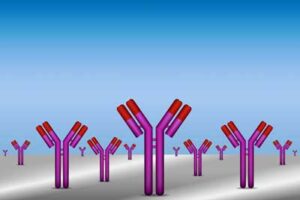
By latching onto receptors on cells, autoantibodies change their functioning.
Iwasaki noted in her Solve M.E. talk that a (the?) critical need for this field is to be able to subset patients according to the particular biological drivers of their diseases, and then target them in treatment trials. We’ll see by the end of the blog that that’s exactly what she hopes to do with her autoantibody work.
She’s not alone. PrecisionLife’s entire focus has been to create a streamlined pathway in these diseases that biologically defines patient subsets and finds treatments that can help.
Iwasaki’s 2023 paper found high levels of autoantibodies in long-COVID patients. In 2024, things really got going on the autoantibody front, though, with her and de Sa’s recent preprint, “A causal link between autoantibodies and neurological symptoms in long COVID“.
Central Nervous System Emphasis Pt. I – Protein Reactivities
The Huprot human protein array system enables researchers to determine whether antibodies bind to an extremely large number of proteins (22,000). Once again, the nervous system stood out in spades.

Once again, the brain showed up big time.
In what Dr. Iwasaki called “a very robust response”, the antibodies from the long-COVID patients targeted central nervous system tissues (and left the immune, cardiovascular, muscle, etc. tissues alone). This suggests that, if autoantibodies play a major role in long COVID, they do so by attacking the central nervous system.
Notably, though, a wide range of autoantibodies were found in the long-COVID group – demonstrating, as expected, that even at the autoantibody level, the disease is quite heterogeneous.
Pt. II – Brain Tissues
Next, they collected antibody (IgG) samples from long-COVID patients and exposed them to various mouse and human tissues. The only tissues that the long-COVID autoantibodies attached to or interacted with were found in the central nervous system.
The IgG antibodies reacted with human pons tissues and the sciatic nerve, meninges, and cerebellum in mouse tissues. Not everyone exhibited them, but a significant subset did, and the IgG from some people also reacted to mouse spinal cord, thalamus and hypothalamus, hindbrain, cerebral nuclei, cerebral cortex, and hippocampus tissues.
The wide range of reactivities may provide a possible explanation for the wide range of neurological symptoms observed in long COVID (and similar diseases). A person with autoantibodies that react to the hypothalamus might have different symptoms than a person whose antibodies react to the cerebral cortex.
An Interesting Finding
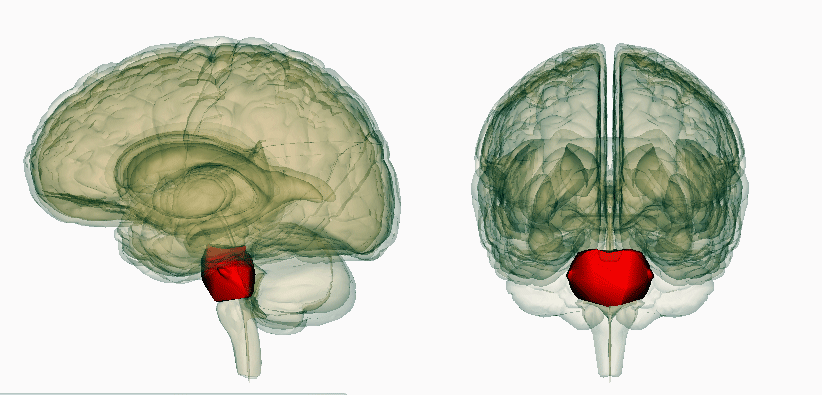
The locus coeruleus sits in the pons, which is part of the brainstem.
Because the authors only exposed the antibodies to the pons tissues, we don’t know if they might be cross-reacting with other kinds of brain tissues or other tissues. But what an interesting part of the brain the pons is.
The locus coeruleus, which we’ve heard so much about lately, sits in the pons, which is part of that other major brain organ of great interest – the brainstem.
We don’t know where in the pons these autoantibodies might be attacking, if indeed they are attacking it. They could be attacking the nerves associated with the locus coeruleus, nuclei that affect sensory/balance/autonomic nervous system functioning, and/or the glial cells and blood vessels associated with it.
Damage to locus coeruleus neurons, if it occurs, could conceivably inhibit mitochondrial function, introduce more “noise” into the system, and produce sensory problems that ramp up the stress machinery. Problems with arousal, vigilance, attention, brain fog, the wired and tired symptom, sleep, and pain could all emanate from damage to this part of the brain.
In other words, the pons autoantibody finding could help explain why the low NE levels may be present. This is the latest of several studies that have put the emphasis firmly on the nervous system.
Note that we don’t know whether long-COVID autoantibodies are actually reaching the pons, or, if so, whether they’re damaging it. Those findings await us. We simply know that if they can reach the pons, the potential for damage is there.
They were able to show, though, that a small percentage of the long-COVID IgG antibodies were making their way into the brains of the mice. Because the blood-brain barrier (BBB) should be stopping them, that suggests something in the IgG antibodies may be damaging it. That’s potentially a key finding as it provides a way for infection-associated autoantibodies to affect the brain.
This was one of several recent studies that not only highlighted but also focused solely on the role the brain may be playing in these diseases.
Autoimmune Emphasis
The IgG autoantibodies from long-COVID patients also showed increased reactivity to common autoantigens. Because these proteins commonly come under assault in autoimmune diseases, this finding constitutes another possible link to autoimmunity in at least a subset of long-COVID patients.
ANOTHER Positive Passive Transfer Mice Study
Then, using “passive transfer,” they took purified IgG antibodies from the long-COVID patients and transferred them into mice. Once again, we saw mice with IgG antibodies from long-COVID patients (but not those with IgG antibodies from healthy controls) develop the characteristics of long COVID. They experienced chronic pain, pain sensitivity, weakness, and dysautonomia, a trend towards reduced handgrip strength, loss of balance, and small fiber neuropathy.
Interestingly, IgG antibodies from long-COVID patients with chronic pain tended to increase pain sensitivity in the mice. Eighty-five percent of the mice given IgG from long-COVID patients with pain (burning pain and/or pins and needles sensations) ended up displaying increased heat sensitivity.

After receiving antibodies from long-COVID patients, mice began looking very long-COVID-like.
The same mice that were in pain also demonstrated small nerve fiber neuropathy – a reduction in the small nerve fibers in their skin – which could have accounted for those pain symptoms (pins and needles, burning pain). (Increased levels of small fiber neuropathy have been found in fibromyalgia, ME/CFS, and long COVID.)
In a new finding, they suggested that the small nerve fiber neuropathy might be associated with the tinnitus that so many people with these diseases exhibit. An elevated marker of neuronal damage buttressed the small nerve fiber finding.
They concluded that their data “illustrate(s) the pivotal role of autoantibodies as a key driver of neurological disorders in LC”.
Next, they will attempt to identify the exact autoantibodies that increase pain sensitivity and will extend the IgG-to-mouse transfer study to ME/CFS, Lyme Disease, POTS, etc.
Once they can target specific subsets, they hope to test autoantibody therapies (IVIG, FcRn inhibitors, BC 007, plasmapheresis and anti-CD20 monoclonal antibodies) which Dr. Iwasaki said are having “incredible results” in autoimmune diseases in long COVID, ME/CFS, and other diseases.
Specifically, subsetting long-COVID (or ME/CFS) patients that might benefit from these powerful immune drugs would constitute a giant leap forward for the long-COVID field. That has been done only rarely, and then on a very small scale.
As the PrecisionLife blog noted, being able to target patients by isolating their biological drivers, then using biomarkers that can assess those drivers in clinical trials, and targeting those patients with those drives (which they call “super-responders”) is a potential game-changer, not just for patients but for pharmaceutical companies that continue to neglect these diseases (and the enormous potential they represent).
IVIG
Thus far, IVIG results in long COVID have come from small, retrospective, or uncontrolled (non-placebo-controlled) trials. In other words, the results are preliminary.
In a small, uncontrolled, open-label trial, six long-COVID patients were reported to receive “significant to remarkable” benefits in fatigue, brain fog, pulmonary, and cardiologic symptoms. In a retrospective RECOVER Initiative study, all nine long-COVID patients with small fiber neuropathy demonstrated “significant improvement” in their neuropathic symptoms.
A small study (n=7) using plasmapheresis plus IVIG in long-COVID patients with ME/CFS with high levels of adrenergic autoantibodies had decidedly mixed results. Three of the seven were so debilitated by the first round of plasmapheresis that they left the study. Although the rest experienced gradual improvements, no significant changes in symptom scores were observed. The adrenergic antibody situation in ME/CFS remains confusing, with both positive and negative results.

IVIG long-COVID results have been sketchy. Over the next year or so, we will know much more.
Our understanding of the effect of long COVID and IVIG are about to dramatically change. We are awaiting the results of two rigorously produced, larger (one very large) long-COVID trials. (Note, though, that both of the studies are filtering their patients by symptoms – not by the biological markers Akiko Iwasaki hopes to uncover.)
The 380-person RECOVER Initiative long-COVID autonomic trial underway is the big one. It’s an interesting adjunct to the small fiber neuropathy study, as RECOVER believes that damage to autonomic nerves may be causing dizziness, increased heart rate, and fatigue. Besides symptoms, this study will assess viral, autonomic function, immune, inflammatory, and endothelial biomarkers. It’s an excellent study that should tell us much. Results should be available by the end of 2026. Since blood samples are being stored, if Iwasaki finds an autoantibody signature, she should be able to use it to assess its effectiveness in ferreting out IVIG-responsive patients.
Avindra Nath is conducting a smaller (n=45) placebo-controlled, triple-blinded long-COVID IVIG trial in patients with neurological symptoms. Each person is receiving IVIG for five days and they are being followed for up to four months. The study, which began in 2022, is expected to wind up next month.
Catalyzing Research
Catalyst: “a person or thing that provokes or speeds significant change or action” Merriam Webster Dictionary
Solve M.E.’s Catalyst award will allow Dr. Iwasaki to bring her autoantibody work to ME/CFS.
Solve M.E.’s $100,000 Catalyst award will help Iwasaki reach a point where she can apply the same process to people with ME/CFS.
She will be identifying autoantibody targets (the proteins the autoantibodies are targeting in ME/CFS), the tissues they may be attacking, and will be doing a mouse passive transfer trial (giving antibodies from ME/CFS patients to mice). Similar results to those found in long COVID would further cement the relationship between the two, help researchers “get beyond the spike”, and focus more on understanding the post-infectious aspect.
Question Period
Finally….An Autoimmune Subset?
“That’s a causal relationship.” Akiko Iwasaki
In the question section, Solve M.E. President Emily Taylor asked a great (and it seems perennial) question. If Dr. Iwasaki finds the same results in ME/CFS, would she conclude that it’s an autoimmune disease?
Noting that these antibody findings applied to a subset of LC patients, she stated that if you take IgG antibodies from ME/CFS patients, inject them into mice, and they end up looking like long-COVID or ME/CFS patients, to her, “that’s a causal relationship.”
Once that happens, the next critical step would be coming up with a panel to determine who has the particular pathological autoantibodies that are causing symptoms, and they were exploring how to do that.
What about ME/CFS patients who didn’t have an infectious onset? Not to worry – you’re potentially in this group, too. Dr. Iwasaki stated that these autoreactive antibodies can be triggered in many ways.



Very interesting, and relatively hopeful.
Thanks Cort
I note that Nath’s NIH study emphasised the brain heavily, but also theorised that antigens are the causal element
I feel absolutely insane – it seems like almost every IVIg trial is designed to fail due to improper dosing or with a placebo that may provide benefits and mask the true success. I don’t subscribe to conspiracy theories, but this is wild. At least two past trials surrounding POTS, Dysautonomia, and/or Long COVID are so blatantly wrong. Comparing their methodology to standard practice for IVIg use shows massive flaws. One used albumen as a placebo, which may have better blood volume enhancement than saline and diminish the IVIg benefit. Another used too small of a dose, and the trial time was ridiculously short.
In this trial, they are using saline, which is known to help symptoms in some POTS patients. Adding to this, they administer 0.4g/kg/day for 5 days – so it would be equivalent to a loading dose of 2g/kg/month (which IS high dose), but am I correct that there is only one dosing cycle? In diseases like this, IVIg takes significant time to yield any benefits. There are journal articles illustrating this, as well as standard practice for autoimmune diseases. It could be 6 months to a year of dosing between 1-2g/kg/month).
Myself and friends of mine are all living proof of what IVIg dosing and duration are needed to control autoimmune dysautonomia. We are administered chronic IVIg over many years to maintain benefit. Dosing the correct amount, and withdrawing it, can be cruel. The severe pain and symptoms come rushing back quickly, and without the tolerance that one once had from enduring it for years on end. I have had more than one treatment interruption.
I wouldn’t wish such abuse on anyone, aside perhaps, Social Security Administrative Law Judges or Federal Judges that gaslight people about the severity of their disabilities.
I wonder if the IVIG trials are designed to fail because the cost of this treatment is so high. Health insurance and Medicare wouldn’t want to start covering this kind of expense for the 20 million people estimated to have Long Covid.
Follow the money train..$$$
CHOOO CHOOO
It’s obvious to me that me/cfs was ignored for decades because the total amount of people suffering was so small….no money to be made.
Now we have millions so the profit to be made is clearly obvious.
There will never be a cure…only treatments that maximize profits in the form of drugs designed to only treat.
Open your eyes peoples.Almost every disease known, treated by the ” experts” are never cured…only treated.
I recently read that in ,I think 1950s there were only 200 ish diseases…fast forward to today, i believe the number of diseases are
26,000. I might be off a bit but its an eye opener as to what’s going on. Heck, they even have a name for a disease if you are affraid of being on an elevator.
I’ll check my source again since I can’t seem to find how to edit a post on here.
Cort, how do I edit a post?
Unless it shows an edit button I think you’ll have to send me an email stating what you want changed and which comment it applies to.
I’ll see if I can get comments to show edit buttons. My comments do – and its very helpful when I get too heated. 🙂
Your just heated from your last blog.
Pop some magic shrooms…it’ll straighten you right out Cort
COURTESY HEADS-UP:
Hi Cort and readers,
I want you to be aware of a fast-approaching free online presentation of functional medicine experts:
https://gordonmedicalforum.com/structure-inflammation-nervous-system-2025-registration/?utm_source=Klaviyo&utm_medium=email&_kx=pS1_9JGDF5xXL8pVxkcd1X1yjw_216CG0QgJqC9CodM.WHWpmc
and you can quickly register.
Among other things they will address the nervous system, the vagus nerve, Mast Cell Activation Syndrome as they all pertain to inflammation and help practitioners in treatment of chronic disease.
To quote their intro:
“Why do so many people with chronic illness stay stuck for years, even when they’re working with brilliant doctors?
Because chronic conditions are never simple and multiple factors work together to create dysfunction.
The upcoming Structure, Inflammation, & Nervous System Forum is an opportunity to explore structure, inflammation, and the nervous system as the trifecta that most practitioners treat in isolation rather than together.”
You’re right, Roonie, there are very few diseases that can be cured with treatment. Personally, I only know of one, and that’s the extremely expensive treatment for hepatitis C. For the rest, big pharma isn’t interested in curing patients, only in treating them. Let’s look at the progress made in medication for multiple sclerosis. Frankly, it’s not great. Admittedly, treatments are able to prevent the plaques from developing and avoid flare-ups, but fatigue, pain and general health do not really improve.
All this to say that after 22 years of ME/CFS, I am more interested in non-pharmaceutical products such as BM, CDS, turpentine essential oil, Afghan saffron (I have had very good results with saffron for anxiety)…
Tu as raison Roonie, il y a très peu de maladie guérissable avec un traitement. Personnellement , je n’en connais qu’une, c’est le traitement hors de prix contre l’hépatite C. Pour le reste, big pharma ne tient pas à guérir les malades, mais seulement à les soigner. Regardons les progrès médicamenteux dans la sclérose en plaque. Franchement, c’est pas terrible. Certes, les traitements arrivent à empêcher les plaques d’évoluer et évitent les poussées, mais la fatigue , la douleur et l’état général ne s’améliore pas vraiment.
Tout cela pour dire que après 22 années d’EM/SFC, je m’intéresse plutôt aux produits non pharma comme le BM, le CDS, l HE de térébenthine, le Safran Afghan, (j’ai de très bon résultats avec le safran sur l’anxiété)…
Betty, totally agree about the cost.
These are independent researchers. You have to ask what they would get out of it. I can’t but believe that Avindra Nath would want to put a lot of time and trouble into a clinical trial if he didn’t think it would work. For one thing, it makes him look bad if it fails!
The same thing applies to RECOVER. They are really under the gun to move the needle on long COVID. Their reputations are really on the line.
You know a lot more about IVIG than me, that’s for sure. What dosing regimen works for you?
I’m currently receiving 1.35 g/kg/month. I get 25 g every week (to tamp down side effects vs a few days in the same week) after hydration (750 mL saline) PRIOR to the IVIg. (Most brands should not be run concurrently with saline, but D5W is acceptable and often used as a timer to bump rates).
Somewhere between 1-2 g/kg/month is high dose for immune modulation. Anything less will not have proper effects. Immune deficient patients get much less.
Many patients take 3-12 months to see substantial improvements. The immediate study appears to only be one month of dosing and four of monitoring if I read it right. Even if somehow 4 months IVIg – this is very short to determine efficacy.
I can add to Immune Globulins IVIG they work very fast for small fiber neuropathy pain, but it took about half a year for me to feel a slight difference in general fatigue because receiving them is exhausting (infusions, take long, very thick liquid, needs additional liquids otherwise headache, two days treatment duration because maximum dosage must be desperated so it won’t be too much for the body at once…)
After 1,5 years of continuous treatment I can say: they help against small fiber pain, it’s gone as long as the treatment is being kept.
They have absolutely reduced the issues with me getting sick on top of long COVID and me/cfs.
But I’m also still ill and I’m still developing more issues slowly every half year.
They do nothing for mast cell activation (as a matter of fact, it could trigger reactions badly).
During the 1,5years I’ve also gone from having ruleaux effects to displaying micro cloths, so now I’m on blood thinners partly and those seem to help.
I hope to slowly find more treatments (especially conquering deficits in hormones and other things which really additionally beat me ul) so I can slowly see to get things back in balance and actually be able to enjoy the health I should have because of ivig.
Because no small fiber pain is worth it.
Even the mysterious antibodies that I now display…
Syphillys, lime and so on, I’ve had (and still have to)to run around to double and triple confirm they are antibodies I got from the infusions…
So if you start IVIg, do yourself a favour and test antibodies for everything otherwise it will be not funny later when weird blood results show up without acute infections
YES!!! So I’m not the only one that has experienced this. My pain level dropped during my first infusion, though it did take time to come down to the maximal steady-state improvement from chronic dosing. Also, many activities, foods, behaviors were still able to perturb this, and it makes sense, because at least some of my pain is Fibromyalgia pain (which the science shows is mast cell driven) and some MCAS or Mastocytosis bone pain.
The other improvements come slowly while the nerves can heal in the absence of inflammation. The autonomic dysfunction improves, fatigue becomes less bad. Some studies show improvement in gastroparesis from IVIg.
Like you, my mast cell issues (including some pain, GI, food reactions, etc.) became the most troubling remaining symptoms. I started Xolair a few years back, which helps some, but IgE isn’t driving everything. I see two immunologists (one manages the IVIg. The is chasing leads about potential mastocytosis given my chronically elevated Tryptase and negative HaT testing).
I could see IVIg potentially be at odds with micro clots, so that is good that it is being addressed. I’ve seen data that it can cause IL-13 to be elevated during treatment with high doses. I’ve wondered if I may be able to stop the IVIg eventually if another therapy replaces what it is doing, and if so, if MCAS may improve.
I’ve been told that once you’re loaded up with IVIg that most or all antibody testing becomes utterly inaccurate. I had to come off my IVIg at one point to test more antibodies, and it was one of the most excruciating things I’ve done (the worst was when I got Medicare and it was a billing nightmare to work out the access over two months. I began to wish that I’d just die from the re-emergent pain. Once it is gone, you don’t just go back to the stoic existence where it had been persistent for years on end.)
I’m trying to gain access to GLP-1 medication given its wide effect on inflammation and immunity. My IVIg Dr said while he couldn’t have the clinic write the authorization, he would recommend I try it immediately if a prescriber more familiar with those drugs like a PCP is willing to handle the Rx. Both Drs want me on Rhapsido (Remibrutinib) ASAP but since it was only approved about two months ago, I am uncertain when it will show up on either insurance. A good friend of mine has gotten approved on a commercial plan – and just started a week ago, so I’m waiting for testimonials.
Thank you for all your hard work, Cort. I’ve been reading your blog since I got sick in 2020, and you give me hope.
Glad to hear, Angela. It gives me hope as well 🙂
My son had first IVIG treatment last week. Gammaked 130 gm over 2 days, monthly, prescribed for 12 months.
Difficult to get approved but it was!. Still a sizable co-pay and should NOT be!!
Official diagnosis Encephalomyelitis (brain inflammation on Spect scan, Low Sub Class 3 IGG, super high IGM for mycoplasma, strep, EBV etc, not cured by numerous antibiotics, tic borne illness, anxiety, severe fatigue etc. Inflamed gastrointestinal system and esophagus.
Tons of “specialist” visits and expensive tests (some blood work can be done by mainstream GP’s).
Fingers crossed we will see improvement.
Congratulations! As an IVIg patient with great success, I wish your son the best! It is a well understood, effective treatment at the present time. There are some exciting things in the pipeline for the future as well.
I really wish she’d do these studies for fibromyalgia since we already have seen similar IgG results in mice, I’d love to see more understanding of the autoAbs there and if only present in a subset of patients too
It is interesting – they’ve translocated FM serum (with aAbs) to both mice and rabbits, and this also induced symptoms.
The most recent FM study, which Cort posted at the end of July, it appears that IgG may induce IL-6, which leads to mast cell hyperactivity, which causes Histamine and Tryptase production, and enhances mast cell survival in low oxygen conditions (which may increase their overall numbers – something we know happens in Mastocytosis).
Add to that, GLP-1 stabilizes mast cell activation – and I have theories about whether many if not all patients in these inflammatory syndromes are deficient in their gut barrier integrity via depletion of the keystone bacterium Akkermansia, as it stimulates production of a thicker gut mucosal layer AND stimulates endogenous GLP-1 production to boot.
The lower or missing GLP-1 could induce or worsen mast cell activation as well, which may be how and why some people are reporting miraculous levels of symptom control solely from GLP-1 medications.
I’m normally not one to wish bad on people, but I think a study on lived experiences, empathy, and the effect of injection of Fibromyalgia autoantibodies on Social Security Administrative Law Judges and doctors would be fascinating. Bet at least some of them would stop saying FM patients are exaggerating their symptoms and would also stop gaslighting those with severe pain.
Dr. Alain Moreau has subset typed ME/CFS and LongCovid using Moreau’s Cuff to provoke PEM, and taken objective measurements using Hexoskin and MicroRNAs.
I think if Dr. Iwasaki used Moreau subset typing of ME/CFS and LongCovid patients with PEM provocation and MicroRNAs, then purified the IgG from patients from each subset type, then did the transfer to mice. Then tested each subset group of mice/patients for Immunotypes, autoantibodies, antibodies et cetera…we would get further along?
But that’s just my patient perspective.
Interesting the point that the AABS can be triggered for many reasons.
I did the Cell Trend lab in Germany and was positive for five AABS. My trigger for ME/CFS was non-infectious.
A lot of the times I hear researchers assume the AABS must be connected to initial viral trigger, or reactivation of latent virus, but I think it quite likely that the physiological stress of the illness itself can keep the AAB production going and going and going……
My theory is that the body produces the AABS, and chronic immune activation keeps them in play to cause symptoms. Some people can have autoantibodies against self, yet be healthy. Many stressors can induce the immune dysfunction – pregnancy, trauma, immune trigger, chronic stress, surgery.
Cort, thank you so much for all you do. I think that the intensity of responses that your posts (especially the last one) sometimes elicit is a testament to the degree to which many of us rely on this blog! I deeply appreciate that you dedicate so much precious energy to this, and that you are able to produce such high quality work. On top of it all, you create short and audio versions (which I relied on when my vision was too blurry to read) to include as many community members as possible. My deepest gratitude for all this.
Thanks, Emma! 🙂
Very much agree Emma. Thanks for all your hard work Cort!
Thanks!
While watching the video a few months ago, I found myself holding my breath when Dr. Iwasaki explained that syndromes very similar to Long COVID and ME/CFS can arise after infections with a wide range of pathogens—including Ebola, dengue, polio, and SARS. I couldn’t help wishing that researchers would take note of this and investigate beyond the symptoms alone. Two years ago, I even contacted Dr. Iwasaki myself to ask whether polio or post-polio syndrome might offer clues relevant to ME/CFS.
It was for this reason that I reached out to Professor Martin Grobusch, one of the leading figures in modern tropical and infectious disease medicine, a field he has helped shape through relentless engagement across continents. I have not yet received a response from Professor Grobusch, but I plan to reach out again.
Thank you Cort, for your extensive journalistic work.
Such an interesting post!
It may be important in this context to keep in mind that blood brain barrier function can fluctuate in ME/CFS (e.g. post exercise, where barrier functions in general may be overwhelmed). This could mean that functional autoantibodies may function differently during PEM as the inflammatory milieu of tissues changes and/or aabs may find acess to certain brain regions (the LC for example is heavily integrated with the circumventircular organs which are devoid of a BBB to start with).
I think that neural autoantibodies might be causing PEM. and POTS as a part of their functional blocking of neural recepter. Nerve signalling control muscle function, Heart function, etc..
Everything seem logical concerning symptoms, if autoantibodies are functional.
Remember – no autoantibodies measurable in the serum , does not definitively mean no autoantibodies present. If the affinity og existing autoantibodies are very high, the large majority will be cell bound, and no in free circulation, and if not in free circulation, there will be almost nothing found in the serum.
Another way to look for existing autoantibodies would be to look into the neural tissue and monitor antibody binding there at the target place, in stead of in the cirkulation.
Not only infection can induce autoantibodies , stress and surgery traume can also
ME/CFS patient can therefore have autoantibodies bound to the target tissue, and just extremely low level in the circulation.
Hi Cort, in 2018 you published a Health Rising blog on the use of IVIG in ME/CFS.
This is a direct quote. “IVIG is usually given every couple of weeks, often needs to be given continuously (is not a cure) and is incredibly expensive (can cost $100K a year).”
I am not criticizing the efforts of independent researchers, but with all that has been published on this, the government should fund large studies if they really want to offer this a cure to the many, many sick patients.
They will not ever do this for the reasons I mentioned before, Medicare and health insurance companies don’t want to pay for a lifetime of care at $100,000 a year.
“Dr. Klimas believes that Stephen Straus’s 1997 editorial, “Intravenous Immunoglobulin Treatment for the Chronic Fatigue Syndrome”, published in the American Journal of Medicine, effectively put an end to IVIG clinical trials in ME/CFS.”
Re: AI Reposting from Nov 16: I understand that people afraid of AI but there is very little difference from reading through any other source(s) on the Internet, FOR SCIENCE BASED INFO. Many comments on Nov 16th were from people who have “heard stories” or used AI for NON SCIENCE purposes. THAT is a whole different ballgame. Totally different, where AI is giving you the answer it thinks you want not answering a specific fact based question.
I personally have gotten wrong answers from AI on political or other non-science based questions. I’ve have had a couple of “teaching” moments on AI, me teaching it. Science questions on AI you look at the source of the info just like you do when looking up any science topic online. If you don’t trust the source you ask AI for another source.
Should the average person without a medical background be looking at AI for science answers? Yes, IF they know how to do research and NO if they don’t.
Cort knows how to do research and I trust he is checking answers if something sounds “off” or like he did, you run the first AI answer through a second AI and see if they agree.
Many of us have no issues in him using AI. He ID’d it as AI and if you don’t want to read it or trust it that’s OK. But DO NOT distrust Cort because he’s using AI (it’s a lot faster) especially if you aren’t donating to Health Rising! He’s doing all of us a huge service. Keep up the great work Cort!
PS. More Hopeful news today. Thanks!
Great article and great that you’re picking up the AI criticisms, thanks Cort!
Brain won’t work if calcium ion channelsare closed, Heart won’t work if calcium ion channels closed, muscles won’t work if calcium ion channels closed, viruses and stress close them, ldn opens them. And good stress management.
Dr. Byron Hyde said for years that ME/CFS was a brainstem injury caused by enterovirus; based primarily on the fact that he studied many historical outbreaks where viral onset was identified. Sounds like he was at least partly right. What if autoimmunity isn’t actually a thing? Meaning, what if the blood-brain barrier had become permeable, allowing virus or other invader to enter the brain, causing a chain reaction of immune activity that only looks like autoimmunity, because the cells ended up carrying remnants of the virus (embedded garbage particles that continually trigger the immune system into attack mode because the body doesn’t eliminate the cells); kind of like Dr. Bruce Patterson’s hypothesis where monocytes end up carrying viral debris after the body has “successfully” mounted a defense and eliminated live, replicating virus.
”Dr. Byron Hyde said for years that ME/CFS was a brainstem injury…”
I agree. But it also can be due to high fever, i think.
Common sense tells me that the human body runs on very low electrical current.
Common sense also tells me that mercury from vaccines and dental amalgamans is a conductor of electricity
Common sense tells me the bodys nervous systems are run by very low current that the body has naturally produced….throw in some mercury….see what happens to the nervous system
FACT…the Amish don’t get vaccinated
They have ZERO cases of autism
If that isn’t one of the largest study cohorts
I remember reading a research paper about 30 years ago when they were testing rats by injecting them with a dye. Then they (stressed) the animals making them swim in a maze further than normal. Thus the dye seeped through the BBB. It sounded like a perfect storm to me.
Yes – seems like this BBB permeability (situational, periodic or chronic) must be a key factor. And the various triggers of BBB permeability might explain why some people are able to recover, to various extents, with diverse approaches.
And people…if you change and adapt to a keto life style I
GUARANTEE you will gain improvement…even if it takes 6 months to a year.
Remember that the only findings found by Ron Davis was metabolic
Nothing else showed up on testing.
There is a fellow here in my city that received a diognosis of m.s.
He completely changed his diet and has been symptom free for many years. He has started his own worldwide following called
mshope where he shares his information.
My sister in law with ms refuses to change her ways. Her diet consists of highly processed foods and a continuous supply of “things go better with ?” Hidden all over the apartment . She continues her downward plummet by basically burdening the entire family…very close to bedridden now.
I try telling her about this ms hope fellow but she violently defends her lifestyle by stating…
” its all I have left to live for”
could the power of diet or in this case,addiction/lack of diet be this powerful
So many people neglect the profound impact of the microbiome on immunity and inflammation. When used alone or coupled WITH medical interventions, it can modulate the body at large.
What is (or is not) in the gut can make you addicted to certain foods, no question. I’ve been doing a deep dive and using targeted food and supplement treatments for a year, and it has amplified the positive effects of my existing treatments, as well as improved symptoms I have had for decades. Bringing rise to bacteria that generate anti-inflammatory and autophagy inducing compounds.
There are important bacterial changes in some of these diseases, and that can impact the immune system. We know in MS that EBV is implicated, and likely due to some changes in immunity. So many of these diseases are triggered by infection because infectious agents modulate the microbiome to bypass the body’s immune defenses, and can lead to changes if not outright dysbiosis. This new, persistent state creates the immune activation and/or exhaustion that perpetuates the disease state.
While I agree that keto can be very beneficial and I’d encourage everyone to try it, it doesn’t help everyone.
Did nothing for me. Not saying it couldn’t help your family member, but it’s not a panacea
I just happened to read this article from U Penn Medicine. Penn scientists created a chewing gum from Lablab beans, a bean that grows in Africa, that apparently reduces influenza and herpes simplex virus transmission. I wonder if this simple product could have any application for people that suffer from post-infectious diseases. They mention Covid 19 in their summary. They are in the early stages of investigating the efficacy of this gum. https://penntoday.upenn.edu/news/penn-dental-antiviral-chewing-gum-reduce-influenza-and-herpes-simplex-virus-transmission
I had an appointment with my family doctor today. I updated her on how I’m doing with my aciclovir self-medicating to manage my ME/CFS flares.
It’s a learning by doing process.
The first three days on 4x800mg (I weigh 65 kg) the flu-like feeling is immediately suppressed and I feel so good that I have to be very strict in order not to overstrain my organism. I try to do it by reminding myself that I feel well because I am on a very powerful drug and not because I am actually well.
After three days the headache, the dizziness, and a feeling of becoming a bit weird in my mind alters the experience. It fuels a strong desire to come off the drug as fast as possible.
I then stay for another one or two days on 2×400 to not have a too rough of a landing – which has caused more dizziness in the past. And I take my time to prepare for the first days off the drug where I am back in charge to manage my energy on my own and stay well below my flare threshold.
The first days off the drug are the most difficult to manage because aciclovir suppresses the viral reactivation (HHV-6b?) fully. I therefore have been disconnected from directly experiencing my baseline and where my green/organge/red zones of energy lie. So the first days off the drug I mainly rest and test my undrugged organism with very little activity.
After five days or so and if I have managed to not provoke another flare I gradually add more activities but I do it very careful and controlled. I plan each day fully through in the morning making myself aware of the most challenging situations ahead. Very much like a pilot who is planning a difficult approach.
I am extremely grateful that I have found out about aciclovir and that it works so well for me. I am now going starting to do HHV-6b PCR in saliva regularly with the help of my specialist and my familiy doctor. We want to find out whether the virus loads correlate with the flares and the symptom severity. Just as Jacqueline Cliff and her team at Brunel have found out a couple of years ago.
Currently we are looking for a clinical infectiologist who would be interested to accompany our little project. I am really curious and excited about the project and what we’re going to find out.
Since acicloivr suppresses my flares fully I am not really into finding out more about autoimmunity. But I think that Akiko Iwasaki is a great researcher and advocate for ME/CFS. It’s really cool we have her.
Thanks for the blog, Cort. Appreciated as always. I’ve shared this blog, others and the site itself widely: social media groups, on my own Facebook/Meta page, and will start blog sharing to the Ballad Healthcare LongCovid clinic in Kingsport, TN here shortly.
I have a vested interest in seeing Dr. Iwasakis and Putrino succeed as they were touchstones for me during the early days of LongVax/LongCovid as LISTEN Study Leaders, along with Harlan Krumholz and others. I can attest to their integrity, kindness, invested interest in their patients and professionalism.
Although better (most days), I’m still only at about 60% of baseline functional and this discovery gives me hope. I very much agree that “we need to get beyond the spike protein”. My LongV/C experience is almost exactly that of neuro-Lyme 2004-2009. No COVID way back then!
Side note: Dr. Iwasaki suffers from alpha gal syndrome. This may explain, at least in part, her interest in chronic disease due to infectious origin…https://www.today.com/health/woman-alpha-gal-syndrome-lives-tick-meat-allergy-t227085
Wow! She has alpha gal syndrome! To me that syndrome shows just how bizarre things can get. It mimics the symptoms of ME/CFS, FM and long COVID very will. We did a blog on it earlier. It does suggest one reason why she thinks we need to get beyond the spike. Thanks!
https://www.healthrising.org/blog/2023/08/04/alpha-gal-syndrome-chronic-fatigue-syndrome-fibromyalgia-mcas/
I was thinking about the ChatGPT issue after reading that blog post and the comments and I wondered if maybe part of the strong feelings were because people value so much your uniquely human posts. I know for me, I can read the research and ask ChatGPT questions but what I like so much about your blog posts is hearing your voice and your thoughts and opinions. There is really nowhere else we can find that and it is really special having your take on things, Cort. And comforting. Just a thought and can’t really speak for others but that’s what came up for me.
Thanks so much! That’s not going to change!
Regarding who is in the autoimmune subset. I would think non infectious onset would be more common because we often have other autoimmune conditions that can trigger me/cfs.
Interestingly, the immunosuppressants I take for myasthenia gravis, an autoimmune disease, are the only treatments which give me any improvement of my me/cfs.
Thanks as always for your work Cort,
Very interesting, Burke. What meds are you taking for MG? Do you have MG, too? My 12yo daughter has crashes of ME/CFS so bad that she can hardly speak, hardly open her eyes and it reminded me of seeing MG patients in a flare.
I have MG and take Imuran for it. Imuran greatly reduced the intensity of my PEM. Later I started Ultomiris infusions which have made me much stronger (but still nowhere near normal).
MG and ME/CFS have so much overlap it’s hard to tell which disease causes each symptom 🙄
I didn’t read this and its entirety. I read that some dropped out of the study, even after seeing improvement. I live with this illness, and have for 14 plus years. If the medical community truly wants to help, start by advocating for help, and assist those patients in home. Mobile assistance, making it available, and covered by insurance. The worst of us are often bed-bound, or homebound. Not all illnesses are a one size fits all. This being a very difficult, and hard to understand illness in and of itself. With very little understanding from anyone.
The autoantibody IgG fraction transfer studies from ME/CFS and/or Long Covid patients to mice are indeed an excellent proof of concept for the role of autoantibodies related to neural tissue receptor dysfunctions.
An even stronger experimental proof could be done with autoantigen specific autoantibody depleted serum to show if such depleted antigen specific autoantibody serum in transfer studied would leave the mice functional normal.
Also purified specific autoantibody transfer animal experiments with eluted purified specific autoantigen autoantibodies eluted from autoantigen specific column with immobilized beta2-adrenergic to M2/M3 Muscarinic recepter protein or peptides. The two autoantigens in purified format are already used in the ELISA assay testing for these autoantibodies
Even with multiple autoantibodies present the single autoantibodies could be transfer tested single or in combination , to elucidate more precisely their functional role in vivo.
Finally anti-idiotypic antibodies could be created either as monoclonal or polyclonal inhibitory or blocking anti-Id antibodies.
This kind of idiotypic network regulatory intervention studied have been done in other autoimmune diseases like T1D , including be myself autoimmune diseases, like T1D, Sjögren syndrome etc.
I just met Keyla Sa at the Berlin ME/CFS Research Foundation conference here on May 7-8, and I have also send her some examples from my own research on animal models type-1 diabetes done about ten years ago.
IVIG could contain anti-idiotypic specific blocking or inhibitory antibodies, and these could be the active factor in IVIG or better SCIG immunotherapy. Personally, I would avoid B-cell depletion methods and Immunoabsorption methods, which do not target the bone-marrow stem cells, and daily from 10.1000 million new B-cell are recruited and well be educated further the antibody producing plasma cell making exactly the some tolerance error autoantibodies.
One possible way to modulate on tolerance genetic like errors and autoantibody production, could be through so-called epigenetic immunomodulation e.g. by BCG trained immunity therapy.
I believe that ME/CFS is a innate immunity type autoimmune disease, with missing normal function NK-cells, perhaps also with dysregulation in the so-called NKT-Type II cell – which are regulatory important both in innate and adaptive immunity regulation.
Remember that only three % of all living organisms have two immune systems, the innate and the adaptive,, and since the DECODE project sees no link to HLA expression in ME/CFS, then a genetically linked genetic factor might be purely coupled to the innate immune system.
The autoantibody repertoire in ME/CFS point in direction of a neural receptor autoimmunity perhaps initiated by a viral innate immunity disorder or exhaustion. If we can repair or normalized the innate immunity disorder in ME/CFS, we could perhaps cure or at least prevent ME/CFS.
These are some of my speculations as an experienced immunologist.
The autoimmune-subset idea keeps looking more important, especially now that newer autoantibody work is pointing in the same direction. I think the patient-facing challenge is translating this without overclaiming it. A practical recovery resource should help people sort immune, vascular, neurologic, and activity-pattern signals while staying honest that no single detox or treatment framework explains everyone.