




Geoff’s Narrations
The GIST
The Blog
Plenary speakers provide critical information that the conference organizers believe everyone needs to hear. This presentation from the 2025 IACFS/ME conference certainly fit that bill.
The Catechaholic

David Goldstein is a highly published “scientist emeritus” in the NIH’s autonomic nervous system division. He gave the plenary lecture at the 2025 IACFS/ME conference.
David Goldstein, MD, PhD, is not your ordinary researcher. An NIH National Institute of Neurological Disorders and Stroke (NINDS) researcher, the winner of several awards, and co-author of more than 600 research articles as well as several books (“Adrenaline and the Inner World: An Introduction to Scientific Integrative Medicine,” “Dysautonomias: A Handbook for Patients”, “Stress, Catecholamines, and Cardiovascular Disease”, “The Autonomic Nervous System in Health and Disease”, “Principles of Autonomic Medicine”, and “The Dysautonomia Project“), the man has clearly gotten around.

Officially retired from the NIH (he’s listed as a “scientist emeritus”), he’s still actively involved in research and working in a non-salary or limited-salary capacity. Clearly, a highly productive individual, Goldstein is spending his “retirement years” doing what he’s always done – research. Now he and his post-doc, Lilian Aregawi, are working on ME/CFS.
Acknowledging that he’s not an expert in ME/CFS, Goldstein stated he is an expert in catecholamines – the hormones/neurotransmitters the brain produces – and called himself a “catecholaholic”. He’s been studying catecholamine systems for 50 years.
THE GIST
-

In this scenario, the sympathetic nervous system is not dominating, it’s struggling.
David Goldstein, MD, PhD, an NIH National Institute of Neurological Disorders and Stroke (NINDS) researcher and co-author of more than 600 papers and several books, gave the plenary lecture at the 2025 IACFS/ME conference.
- Calling himself a “catechaholic”, Goldstein focused on the role that brain neurotransmitters called catecholamines (dopamine, norepinephrine, and epinephrine) play in ME/CFS and long COVID.
- These brain chemicals are involved in the stress or fight/flight response, the autonomic nervous system, movement, mood, pleasure, reward, memory, and more.
- Lilian Aregawi, a post-doc, assessed catecholamine pathway strength by measuring catecholamine levels in the cerebrospinal fluid of ME/CFS, long COVID, and Parkinson’s patients.
- She found greatly reduced levels of norepinephrine products in ME/CFS and reduced levels in long COVID.
- Among these three catecholamines, only norepinephrine requires ATP production; the study suggested that low ATP production may be present.
- That was a bit of a shock as norepinephrine is the main neurotransmitter of the sympathetic nervous system (SNS); i.e., the fight-or-flight system we’ve believed is overactivated. This finding, though, suggested the fight/flight system is actually flailing about.
- This is because low NE vesicle levels require more signal to reach them in order for the neuron to respond and emit NE, the LC neurons in ME/CFS and long COVID appear to demonstrate what’s called “impaired drive”. Instead of being a true adrenergic hyperactivity disorder, these diseases appear to have what’s called a “pre-synaptic vesicle energy problem“.
- The SNS is activated, all right – but it’s also quickly pooping out – a common theme in these diseases. The brain is trying very hard to produce more norepinephrine (high LC firing rate) but is failing because the vesicles are too low in dopamine.
- That constant compensatory effort results in high levels of sympathetic noise but low levels of sympathetic gain.
- In this scenario, the SNS is not dominating – it’s struggling. Recognizing that SNS is trying to get things going, the parasympathetic nervous system is not broken – it’s lying low.
- This pattern of high LC neuron firing but low production could produce classic ME/CFS/long-COVID symptoms that leave one overstimulated, overwhelmed, and anxious, wired and tired, and particularly low in energy in the morning.
- Most of the norepinephrine produced in the brain is produced in the locus coeruleus (LC). Heavily involved in the stress response, the LC is connected to many parts of the brain, including the limbic system and the prefrontal cortex, and plays a role in many issues in post-infectious diseases like ME/CFS and long COVID, such as arousal, the sleep-wake cycle, attention, memory, and neuroplasticity.
- The brain’s “immune sentinel”, the LC, coeruleus, is hit early and hard during an infection. Because the brain needs lots of norepinephrine to produce a fever, activate the immune cells and, in general, to produce “sickness behavior”, the LC gets pushed into overdrive.
- Flushed with mitochondrial cells that produce many free radicals during energy production, the LC is considered a “metabolically fragile” organ. Plenty of study evidence has implicated the LC in ME/CFS.
- Because a chronically stimulated locus coeruleus stops the glymphatic system from detoxifying the brain during sleep, unrefreshing sleep and a toxin-laden brain could result.
- Microglial and/or mast cell activation is all that’s needed to produce a state of chronic, self-reinforcing illness.
- Given the poor brain cleansing and toxin buildup, it only makes sense that intracranial hypertension – high cerebral spinal fluid pressure – could result.
- Hyperadrenergic POTS (HPOTS), which is characterized by high blood NE levels, would seem at first glance not to fit this scenario but it may fit it perfectly. In HPOTS, NE levels in the vesicles are still low, but the neurons – in an attempt to compensate – are firing so rapidly that NE spills out of the nerve synapses and into the blood.
- The paradox. There is a paradox here. Low NE vesicle levels should make the neurons inert because they require more signal to become activated. When the brain senses more NE is needed, though, it punches the gas, working the neurons harder and harder. Instead of precisely delivering NE, they try to pump it out all the time. They’re like a panicked machine gunner who sprays the bushes every time a twig gets snapped.
- Next up – Pt. II – treatment options.

Support Health Rising and Keep the Information Flowing!
Health Rising is not a 501 c (3) non-profit
Produced by the brain, the nerves, and the adrenal glands, catecholamines like dopamine, epinephrine, and norepinephrine are particularly intriguing in ME/CFS and long COVID because they are involved in the stress or fight/flight response, the autonomic nervous system, movement, mood, pleasure, reward, memory, and more.
Simple Study – Potentially Profound Results
Aregawi’s study has not been published yet. She did a surprisingly simple but potentially profound thing that hasn’t been done in ME/CFS before. She assessed the activity of the dopamine, norepinephrine, and epinephrine pathways in the brain by measuring the levels of their products in cerebrospinal fluid.
Aregawi used Parkinson’s patients as a “positive control,” i.e., because low dopamine and norepinephrine levels are present in Parkinson’s disease, the Parkinson’s patients demonstrated what low levels of these catecholamines looked like.
Role Reversal
For all the talk of dopamine in ME/CFS, the dopamine pathway levels were fine. The low levels of the products of the norepinephrine (NE) pathway suggested that norepinephrine was in freefall in ME/CFS. The NE pathway is not as low in long COVID but was still significantly reduced.
That was a bit of a shock. Norepinephrine is the main neurotransmitter of the sympathetic nervous system (SNS) — the fight-or-flight system we’ve believed is overactivated. What’s needed is to calm it down by increasing the function of its regulator — the parasympathetic nervous system, or rest/digest, system. In other words, a wimpy PNS is simply failing to regulate the SNS.
This scenario, though, has been punctured a bit by the success of several drugs (Mestinon, Survovexant) that increase NE activity. If this study findings hold up, it blows the overactive/underactive SNS/PNS scenario to smithereens. A weak PNS is not the problem, a weak SNS is.
Interestingly, it all comes down to ATP. Catecholamine metabolism proceeds like this: Tyrosine → L-DOPA → Dopamine → Norepinephrine → Epinephrine)

The findings suggested low ATP levels may play a key role.
The only part of this chain that requires ATP is the conversion of dopamine to norepinephrine. Because NE is metabolized in vesicles of the locus coeruleus, a proton pump is needed to move dopamine into those vesicles. It takes about 1 ATP molecule to transport 1 molecule of dopamine into the vesicles.
The low NE pathways in ME/CFS and COVID suggest that reduced ATP levels were failing to deliver sufficient dopamine into vesicles to produce normal amounts of NE.
Locus coeruleus neurons with poorly filled vesicles can still fire, but require a much stronger signal to do so; i.e., they demonstrate what’s called “impaired drive”. This is the exact opposite of what happens in a true adrenergic hyperactivity disorder, which is characterized by an overproductive SNS. Instead, this is called a “pre-synaptic vesicle energy problem“.
The SNS is activated, all right – but it’s also quickly pooping out – a common theme in these diseases. The brain is trying very hard to produce more norepinephrine (high LC firing rate) but is failing because the vesicles are too low in dopamine. That constant compensatory effort results in high levels of sympathetic noise but low levels of sympathetic gain.

In this scenario, the sympathetic nervous system is not dominating: it’s struggling.
In this scenario, the SNS is not dominating- it’s struggling. Recognizing that SNS is trying to get things going, the parasympathetic nervous system is not broken – it’s lying low. This may be why trying to increase parasympathetic/vagal tone through breathwork, HRV training, or vagus stimulation often only goes so far. Both the PNS and the SNS need to be revived.
That means you don’t want to suppress the SNS or increase NE synthesis using tyrosine or stimulants. Instead you want to reduce the noise, increase ATP levels, get dopamine into the vesicles, and increase NE production that way. When SNS begins to respond normally, parasympathetic nervous system activity naturally returns to a normal level.
Symptoms
This pattern of the high LC neuron firing but low production could produce classic ME/CFS/long-COVID symptoms that leave one overstimulated, overwhelmed, and anxious and tense, but without the energy to do anything. It would naturally result in the ubiquitous “wired but tired” symptoms (high levels of stimulation but no response because of low NE vesicle levels), orthostatic intolerance (reduced blood vessel tone), early mental or physical fatigue (norepinephrine levels in the vesicles quickly fade and fail to refill).

Unrefreshing sleep and rough mornings are other possible outcomes of NE depletion in the LC vesicles.
Feeling stuck, unrefreshed, etc., in the morning (due to poor vesicle filling overnight) is another logical outcome. Exposure to light, getting up, and resuming a normal breathing pattern should immediately tell the locus coeruleus to boost NE levels in the vesicles and get the body and brain moving in the morning. That includes having our system driving blood to the tissues to get them rolling. Having low NE vesicle levels in the morning puts the brakes on all that.
Low NE vesicle levels could also explain why stimulants either do not work or do not work for long in some patients: stimulants increase firing in the locus coeruleus but do not help to refill the vesicles; i.e., the gas pedal is pushed, but the car does not move.
A Focus on Post-Exertional Malaise (PEM)
Aregawi did an interesting thing in this study when she separated out long-COVID patients with and without post-exertional malaise (PEM) and found that the low NE levels were confined to the LC patients with PEM.
That made sense with the pathophysiology she uncovered. NE levels in the LC vesicle are quickly depleted with exertion, resulting in a longer recovery period. During that time, sympathetic “noise” (sensitivity to stimuli, sleep issues), and the ability to exert oneself (low NE vesicle levels) is down.
That should bring a clear warning to LC researchers to subset their participants by the existence of PEM. It’s also a reminder that five years into LC, we still don’t a biological biomarker, or even agreed upon criteria to separate out the ME/CFS subset of LC from the rest. Why it’s taken this long for the field to recognize that all long-COVID patients are not alike, and that willy-nilly herding them into research studies and clinical trials is a recipe for slow progress, is beyond me. Distinguishing the subsets should, IMO, have been the first task of this field, and, of course, we looked to RECOVER to take the lead in this … which it hasn’t. (Rant over.)
That finding suggested that the NE levels in the ME/CFS subset of LC patients were probably as low as the NE levels of the ME/CFS patients.
Next, Aregawi assessed a large number of neurobehavioral measures to determine whether she could identify significant correlations with the pathway findings. She found that fatigue, general fatigue, mental fatigue; general health and vitality, the ability to sustain handgrip were correlated with low NE pathway levels.
A Post-Infectious Failure Point?
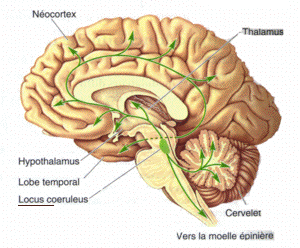
The NE issue implicated the locus coeruleus, a brain region that has been implicated many times in these diseases. (Image by Diego69 from http://www.baillement.com/anatomie/systemes.html at Wikimedia Commons)
Most of the norepinephrine produced in the brain is produced in the locus coeruleus (LC). Found near the bottom of the brain, the LC is located in a part of the brainstem called the pons. Heavily involved in the stress response, the LC is connected to many parts of the brain, including the limbic system and the prefrontal cortex, and plays a role in many issues in post-infectious diseases such as arousal, the sleep-wake cycle, attention, memory, and neuroplasticity.
The brain’s “immune sentinel”, the LC, coeruleus, is hit early and hard during an infection. Because the brain needs lots of norepinephrine to produce a fever, activate the immune cells and, in general, to produce “sickness behavior”, the LC gets pushed into overdrive.
All that activity means the LC are loaded with mitochondria which need to fire continuously. Their high energy needs and the high stress state they’re put in leave the LC neurons in a “metabolically fragile” state. Basically, everything has to go right. If strong antioxidant systems can’t cope with the free radicals produced during high levels of energy production, mitochondrial damage results, and ATP production drops, and so does dopamine into the vesicles where norepinephrine is made.
Studies indicate that the antioxidant systems in these diseases have been hit hard, resulting, if these study findings are correct, in a chronically activated AND depleted locus coeruleus. Reduced NE causes the brain to chronically activate these neurons in an attempt to get them back up to speed. The chronic activation prevents the glymphatic system from engaging and clearing the brain of the bad stuff (lactate, glutamate byproducts, lipid peroxides, microglial inflammatory signals it’s been accumulating in its hyperactivated and depleted state).
Could the locus coeruleus be the weak link in the brain?
If autoantibodies to various receptors (𝛼1 and β2-adrenergic receptors, M3/M4 cholinergic receptors, NMDA / AMPA synaptic receptors) block those receptors, as is thought in ME/CFS, the LC responds by increasing its firing, thus exacerbating the problem.
The locus coeruleus is a small nucleus in the brain stem. Direct imaging of the LC is difficult, but studies have implicated the LC/brainstem in ME/CFS, FM, and chronic pain. MRI studies suggest that neuroinflammation/microglial activation has occurred in that area, and that brain circuits leading to the LC have become abnormally activated in ME/CFS.
The “flattened sleep architecture”, reduced slow wave sleep, and increased nighttime sympathetic nervous system activation fit perfectly the idea that chronic LC activation is preventing the glymphatic system from opening and flushing the brain of toxins (see below).
Because the LC regulates blood pressure + heart rate upon standing, a chronically activated LC could result in increased heart rate during standing, reduced vascular tone, and sympathetic overdrive.
A Vicious Circle
Microglial activation is all that’s needed to produce a state of chronic, self-reinforcing illness. (The microglia are the immune cells of the brain.) The cytokines activated microglia emit all increase locus coeruleus firing.
The reactive oxygen and nitrogen species (free radicals) that activated microglia produce can take a hammer to the mitochondria, reducing ATP production and preventing the vesicles from filling with enough norepinephrine. Those free radicals can also disrupt glymphatic detoxification by impairing astrocyte functioning. The high levels of the excitatory amino acid glutamate produced create a hyperexcited state that results in sensory overload.
Rest does not cure ME/CFS because the activated microglia do not rest. Because two mast cell products, histamine and tryptase, increase LC firing and disrupt the blood-brain barrier, respectively, they only add to the stuckness.
That’s a lot, but we’re not at all done with the possible consequences of an NE filling problem in the locus coeruleus. It could also produce toxic brains.
Toxic Brains

Dr. Perrin proposed that the NE depletion in the vesicles could disrupt the glymphatic system, resulting in a toxin-ridden brain.
Noting that norepinephrine produced by the locus coeruleus controls cerebrospinal fluid flows, Dr. Perrin asked whether the NE problem could lead to a dysfunctional glymphatic system. (He proposed this problem could be at the heart of many neurological disorders.)
It turns out that norepinephrine determines whether the glymphatic system is in an “open (cleaning) vs closed (not cleaning)” state. A drop in locus coeruleus (LC) NE release at night allows the glymphatic system to shift into cleaning mode.
A chronically activated LC, though, prevents the glymphatic system from engaging, leaving the ME/CFS/long-COVID patients not just wired but tired, but with a toxin-laden brain. The failure of that nightly neural housekeeping results in the accumulation of nasty metabolic byproducts (lactate, glutamate, lipid fragments). Unrefreshing sleep, neuroinflammation, worse brain fog in the morning, feelings of pressure/fullness in the head, and sensory overload are logical outcomes.
Intracranial Hypertension
Given the poor brain cleansing and toxin buildup, it only makes sense that intracranial hypertension – high cerebral spinal fluid pressure – could result. As waste products accumulate, the brain retains more fluid. If the astrocytes don’t “relax,” the CSF won’t get flushed out of the brain. Too much CSF retention will increase CSF pressure.
Possible symptoms include feelings of head pressure/fullness, feeling worse when lying down, feeling better after sleeping with your head slightly elevated, brain fog, pulsatile tinnitus (pulsing tinnitus sounds), neck or occipital tightness arising from a compensatory tension that tries to increase cerebral spinal fluid.
Hyperadrenergic POTS
What about the form of POTS – called hyperadrenergic POTS – which is characterized by high levels of norepinephrine in the bloodstream. At first glance, it doesn’t fit this low NE in the vesicles of the LC scenario.
In fact, it may fit it perfectly. Hyperadrenergic POTS is simply a slightly different compensatory approach to the same problem. Once again, low NE levels in the vesicles trigger neurons in the locus coeruleus to fire excessively. In hyperadrenergic POTS, the firing is so rapid that the normal reuptake system, which is designed to keep NE in the nerve synapse (which requires ATP), fails, and NE spills out into the blood, where it’s not helpful.
Instead of responding precisely, they’re firing indiscriminately and inefficiently. They’re like panicked machine gunners who spray the bushes every time a twig snaps. Instead of being too strong, the SNS is actually too weak.
The Paradox
There’s a paradox here, though. If low NE vesicular content requires a higher signal for activation, why are the neurons firing excessively? They should be inert, and they would be if they weren’t wrapped up in a network.
When the ever watchful brain senses more NE is needed, it puts its foot on the NE gas pedal, telling those neurons to produce. The neurons’ inability to respond to the signals causes the brain to push the NE gas pedal even more. That causes the neurons to fire continuously.
Their flailing about introduces “noise” into the system, which makes things worse. The brain interprets the instability and lack of precision present as a threat and calls for even more firing to resolve it, and, sensing danger, turns the microglia on to boot.. The inflammatory cytokines and oxidative stress they produce further strain the LC neurons and damage the mitochondria.
This “high noise”, low signal situation could explain why many people are so sensitive to lights, odors, and sounds. The core problem in the brain isn’t that it’s overstimulated; it’s that it’s not stable enough.
Even here in the central nervous system, in the end, we get back to a very common theme – a lack of power/energy – that’s shown up in the muscles, the immune system, etc. The nervous system is over-reactive because it is under-powered. The brain circuits that filter out and process sensory stimuli simply aren’t getting the energy they need to work properly. This reminded me of Bob Naviaux’s report that low-energy situations result in tension, not relaxation.
- Next Up: Pt. 2: Treatment Implications
Resources
- Check out the excellent Dysautonomia Project website – which is a companion to Goldstein’s 2015 Dysautonomia Project Book, which has gotten very positive reviews. As Sieglende pointed out, the 2nd edition of the book is just coming out. Order before 11/15/25 and you can get $10 off the price ($15 instead of $25).





Very interesting thanks.
The brain is the key
Yes, I agree! Dr Jay Goldstein also wrote about this 30 years ago…
Inhibition of PKM2 through SIRT1 would increase ATP production. Is that correct?
SIRT1 improves lactate homeostasis in the brain to alleviate parkinsonism via deacetylation and inhibition of PKM2
https://pubmed.ncbi.nlm.nih.gov/39128469/
Jo, I didn’t mean for my message to be a response to yours. Sorry for any confusion.
Betrayal of the Brain by Dr. Jay Goldstein. I was lucky to be his patient…I flew from NJ after 9/11 when his calendar was clear!
I have pictures…
I thought Dr Goldstein was definitely on the right track years ago, then never heard any more about him and got the idea he had died. But I am thrilled to find out he is still “on the job” because if I had to pick the “winning horse”, I’d have picked him.
Hi Cecilia,
Sorry, but Dr Jay A Goldstein did die in 2021. He wrote ‘Betrayal by the Brain.’
Dr. Goldstein believed that ME/CFS was the result of an insult to the limbic system, located deep within the brain. The limbic system is involved with memory, emotion, and regulation of the autonomic nervous system. This last function is of critical importance to maintaining homeostasis in the body, as the autonomic nervous system regulates appetite, body temperature, blood pressure, blood sugar, sleep, wakefulness, heart rate, digestion – in short, nearly every physiological function necessary for maintaining life.
Dr. Goldstein’s theory, as laid out in his book, Betrayal by the Brain, was that ME/CFS is essentially a communication problem between the limbic system and the rest of the nervous system. His “limbic hypothesis” essentially states that no matter what the underlying cause of ME/CFS, the result is an injury to the limbic system, which subsequently causes widespread neuroimmune dysfunction. He identified ME/CFS as a neurosomatic illness, that is, a disorder of central nervous system processing. Dr. Goldstein based his theory on what he knew of the brain, which was substantial, as well as what he had observed of his patients’ reactions to various psychotropic medications. Recent studies have shown that in his approach Dr. Goldstein was far ahead of his time.
Thank you, Jo! Yes, the Autonomic Nervous System was clobbered in my case. I have been considered to have “Autonomic Failure”—an excessively dramatic name, I feel—and Small Fiber Neuropathy, really Polyneuropathy, too for years. Lots of symptoms and lacks. I don’t know how much longer I can drag myself through my Activities of Daily Living, which are about as pared down as I can make them.
Thanks for another great review! It’s exciting when something new (old) is presented and provides better clarification of what’s going on.
Let’s hope that this leads further work in a more rapidly productive way, so more precise diagnosis becomes possible and treatment options increase.
Interesting. I have a few hard to explain experiences with norepinephrine too. The above wouldn’t explain it, but neither does the classic view on ME/CFS plus too much norepinephrine.
I found a nice addition: https://jpet.aspetjournals.org/article/S0022-3565(24)33188-X/abstract
“Taken together, these findings provide direct evidence that mitochondrial impairment and metabolic stress cause striatal DA efflux via the DAT and suggest that disruptions in DA homeostasis resulting from energy impairment may contribute to the pathogenesis of neurodegenerative diseases.” (with DAT being dopamine transporter)
In simpler language:
=> mitochondrial dysfunction can dump dopamine from the neurons /?vesicles inside neurons? into the liquid in between brain cells (extracellur space / extracellular liquid).
=> that should show up as increased levels of dopamine in cerebral spinal fluid.
=> IF significant amounts of dopamine were expelled from neurons into the extracellular liquid AND it still shows up as normal in cerbral spinal fluid, then it IMO should be actually quite *reduced* in the neurons themselves.
=> IF so, both dopamine and norepinephrine would get a significant hit in ME/CFS brains.
All the above assumes (significant) mitochondrial dysfunction in (that part of the brain), but that is a very common assumption in ME/CFS.
The annoying thing here is, if dopamine levels were too low, simply trying to increase them in the brain would have a good chance to backfire (Issie had repeated experiences with that). The reason? There are other papers showing that too much dopamine in the extracellular liquid are rather damaging to neurons and their mitochondria. So increasing dopamine without *first* managing to decease mitochondrial dysfunction *could* lead to more dopamine leakage, then more mitochondrial dysfunction and then even more dopamine leakage :-(.
Kudo’s to these researchers BTW
I would love to know what got Aregawi and Goldstein interested in ME/CFS. Now that they’ve found something, let’s hope they continue.
It looks like Goldstein was on the NIH intramural MECFS study team according to this website: https://me-pedia.org/wiki/NIH_Post-Infectious_ME/CFS_Study.
On this NIH webpage, you can see the comments of the researchers involved in the NIH intramural study, including Dr. Goldstein’s comments on norepinephrine.
https://www.nih.gov/advancing-mecfs-research/events/mecfs-symposium-may-2-2024
Cort, very very good publication. Thanks.
David S Goldstein’s books are hiding in the direction.
“THE DYSAUTONOMIA PROJECT Second Edition” is just one.
Maybe this is why the Perrin Technique works for some, manual drainage of the CSF from the brain ?
This is a very good point, which I never mentioned before.
Before my Chiari malformation decompression surgery, I experienced several episodes of cerebrospinal fluid (CSF) leaking from my nose, which temporarily relieved the pressure in my head.
I would think so.
Thanks! The Dysautonomia Project website is really something! https://thedysautonomiaproject.org/about/ I just ordered the book. 🙂
Thank you. I’ll review it thoroughly tomorrow, as it’s already nighttime in Europe. One more note to keep in mind: “midbrain inflammation.
Cort, another possibility I would add is an enlarged amygdala, which can heighten the fight-or-flight response and potentially interfere with the regulatory functions of the pituitary gland and hypothalamus.
In my case, when I am overwhelmed by demands, this dysregulation has contributed to profound energy depletion, impaired concentration, and word-finding difficulties associated with short-term memory. I note this because my own MRI demonstrated amygdalar enlargement. This pattern could also be indicative of underlying ADHD.
Identification of such structural or functional abnormalities typically requires high-resolution fMRI—performed with and without contrast—in conjunction with exposure to both aversive and soothing visual stimuli during the scan.
Dr. Goldstein has always been quite interested in exercise intolerance and dysautonomia. But it was easier to get dysautonomia in Parkinson’s research done – notice the Parkinson’s tie even in this work.
Dysautonomia was such a poorly funded field that, as I understand it, the post-docs they’d bring into NINDS wouldn’t stay as researchers focused on autonomic dysfunction.
But as to the work, Cort, the metabolic pathways you describe could indicate why Synthroid is helpful for some: a majority of one type of thyroid hormone receptor is expressed in the brain. And these thyroid hormones influence basal metabolic rate or resting energy expenditure. Turning up the metabolic rate in the brain with thyroid hormones may help the upkeep of NE to release.
Great piece. Thanks for writing it.
Very interesting and I think could also be happening plausibly in FM.
I just thought that dumping dopamine in the extracellular space, rather then use it as targeted signalling molecules, might cause ADHD like lack of focus and an uncoordinated brain.
From https://febs.onlinelibrary.wiley.com/doi/full/10.1111/febs.17339:
“In concordance with the increase of extracellular dopamine levels in the PFC, NCX3+/− mice exhibited the activation of dopamine D1 receptor signaling pathways, which promote hyperactivity, cognitive deficit, social dysfunction associated with ADHD. ADHD, attention-deficit/hyperactivity disorder.
=> So IMO it is possible that a hyperactive brain with cognitive deficit (non identical but similar-ish to wired brain with brain-fog in ME/CFS) might not be due to excess noradrenaline as we thought (and as suggested by these researchers in this blog) but by dopamine being dumped untargeted into the extracelluar space. It’s not a 100% match but conceivable.
Targeted dopamine helps with focus a lot. The opposite, untargeted dopamine likely does close to the opposite.
When will part 2 be availabe?
If you mean the bigger work I am slowly working on, I honestly have no idea. It’ll depend on my varying energy levels and will power. Working out inconsistencies / contradictions between parts is the biggest problem. I am slowly getting there well enough.
Kind regards,
dejurgen
Thank you for your reply.
At the end of the article it said:
“Next Up: Pt. 2: Treatment Implications”
That is what I was asking about. Is that available or when will it be?
Be up in a couple of days.
Cort, I’m back to check and I can’t see Part Two of this article! I’d be really interested to read it. Thank you.
What you wrote Cort (“The only part of this chain that requires ATP is the conversion of dopamine to norepinephrine. Because NE is metabolized in vesicles of the locus coeruleus, a proton pump is needed to move dopamine into those vesicles. It takes about 1 ATP molecule to transport 1 molecule of dopamine into the vesicles.”) seems to be compatible with my hypothesis:
As you write, you talk about a proton pump to move *dopamine* into veshicles. That is in effect a Dopamine Transporter or the DAT of the research I mentioned.
The mechanism sounds similar to what happens with glutamate. scavenging extracellular glutamate into the cells happens by a glutamate transporter, requiring ATP. When ATP production falters, the glutamate transport reverses. Then glutamate is released into the extracellular space and neurons get hyperexited to the extend they can die (known as glutamate excitotoxicity, https://en.wikipedia.org/wiki/Excitotoxicity).
In the case of dopamine requiring ATP to get into the veshicles, it sounds there are three problems:
1) lack of production of norepinephrine, as you explained
2) dumping of dopamine into extracellular space, as the paper I refered to in my first comment says
3) lack of dopamine in the same veshicles, the place from where dopamine is released in ‘correct’ signaling (leading in effect to *reduced* ‘correct’ / ‘focused’ dopamine signaling)
For 3: see https://en.wikipedia.org/wiki/Vesicular_monoamine_transporter :
“It transports monoamine neurotransmitters – such as dopamine, serotonin, norepinephrine, epinephrine, and histamine – into the vesicles, which release the neurotransmitters into synapses, as chemical messages to postsynaptic neurons.”
All could IMO be happening as observed in the research of this blog: normal dopamine in CSF, rather low NE is CSF. Dopamine in neuronal vesicles for normal dopamine signaling (and conversion to NE) however would be low. It would in this hypothesis only show up as normal is CSF due to pretty large dumping (loss from neurons into the extracellular space) without correct signalling first.
Good you mentioned it, that step requiring ATP is near nowhere to be seen or discussed in info or papers.
There is also a link between wrong Dopamine 1 Receptor activation, ADHD, microglia activation and deficits in processing speed and attention ability: https://www.nature.com/articles/s41380-020-0784-7
I am not trying to say it is all about dopamine rather then NE, but that one part of the problem (the NE side) seems to have a mirror side too (DA problems). I assume the researchers will discuss the NE side?
My understanding is that dopamine outside of storage vesicles is toxic (highly oxidate) and would surely be a major issue in itself (not mentioned).
Dopamine outside storage vesicles is not toxic in of itself – in that it needs to be outside of the vesicle in the cytoplasm/synapse to activate post-synaptic receptors and its really only very oxidasive after very high release such as from meth usage etc.
When did an anecdote of one person’s experience with increased dopamine synthesis or release constitute a fact? Every medication that would increase central dopamine has other actions often involving TAAR1 activation and norepinephrine release as an example. But you can make an assumptions based on one anecdote.
Dr. Le Grande has some great videos on YouTube, all the chemicals mentioned in this post, these are no doubts related to ADHD or Autism.
He tests patients blood not spinal fluid, in reputable labs. He replaces these low findings with natural supplements.
I believe he has ADHD or Autism. I know many people in the UK have Autism ADHD illnesses.
None find the medicines as being helpful, many stop taking them from horrendous side effects
I scored also on another blog or website on ADHD it showed I was 120% from all the questions. I was totally shocked. Is ME/CFS/EDS ADHD all along? It is likely in many & is common in EDS as well.
I think LC is also ADHD. Diseases with so many names or labels. One way to test ME/CFS/EDS/LC/ADHD is test the blood chemicals prior & after surgeries for Nutcracker Syndrome.
Not many Doctors know how to test for MALS or NCS, it is a ‘positional illness’ identical to POTS/Syncope. They miss it on lying down imaging/CT’s
MALS and nutcracker are peripheral blood flow issues due to the physical compression of arteries to the gut (reducing blood flow to the gut) while POTS is a nervous system regulation issue.
They are two very different mechanisms.
Yes, Helen, I know POTS & NCS/MALS are different disorders. Some Doctors suggest POTS is the heart, not the brain.
This study seems like it could provide an interesting and productive new research pathway. Yes, let’s hope they continue.
I have one small question about CSF building up in the brain. You mention several symptoms, but I’m also wondering if this is where constant rhinitis could come into play? Is that also a symptom of excess CSF? My daughter has this constantly. An ENT ordered a CT scan of her sinuses that showed excessive mucosal thickening, but an Osteopath who treats her also told me that the nose is a secondary drainage pathway for the brain, that is not needed by most people, but in this case is. Not sure how to treat in order to get her breathing through her nose again and not through her mouth, which only exacerbates the fight or flight mechanism.
Interesting. Constant rhinitis showed up for me when ME/CFS hit as well.
For me, too
And me.
Me too but taking fenbendozole seems to keep it dampened down
My nose ranges from completely plugged to perfectly clear to everything in that range throughout the day and night on an ongoing basis
I do have a dustmite allergy which may explain why when winter hits and the artificial heat comes on, I always go downhill all winter.
I live in saskatchewan, Canada.we have very,very cold winters that last for 6-8 months of the year.
I was one of those people that slept outside in a tent.as soon as I would enter my home I could feel my health go down in minutes…leave the house and my health would recover…then the long winter hit and ive been stuck ever since
You’re getting cleaner, fresh air outside; it could be
hyperventilation syndrome.
Your breathing patterns are dysfunctional.
I also have dust allergies; smoke fires trip me off
If the nose is frequently dripping more after eating (and even more so eating hot / warm food), a mix of food intollerances can be involved. Food intollerances can be very hard to detect. At least they were with me.
I have constant nasal stuffiness too … but so do a lot of people with LC and ME/CFS.
Antihistamines and Flonase help only slightly.
Thanks for sharing your experience! This is why I just don’t think it’s a histamine reaction.
I use(d) to have near always one nostril completely blocked. It wasn’t always the same. The other kept open by breathing through the nose. Taking histamines only improved it a bit. I only took modest amounsts however in order to reduce side effects.
Much better avoiding food intollerances helped already some. Mainly the constant teeth ache and sensitivity decreased due to it (sinus inflammation). Very strict avoiding of pollen exposure further improved it a lot. That includes reducing in-house exposure. Years of chest, lung and heart pain (feeling like cramps) reduced a lot by it, as well as night sweats and waking up breathing like a horse. My energy and recovery starts to improve too.
I certainly don’t say your daughter has this too, but I learned by experiences that intollerances and allergies can be very insidious in ME/CFS and can behave rather different then they are described in medical literature.
The problem barely reduced in winter, when pollen is low. In autumn air polution is at it’s highest and that hits me too.
I learn I still get get when pollen is at a scale of 2/10 or even 1/10 on the pollen radar (both stand for no or near no pollen) too. And it’s not just air pollution that does it. I notice the difference in time between 1/10 and 2/10 in time until I get hit with symptoms.
My pollen symptoms start at a ridiculous low level of pollen, and then only slowly get worse when pollen rise. That made it so hard to learn I had a severe problem with it. When not dealing very well with it, symptoms are near constant and vary remakably few with increasing exposure. Something similar happened with my food intollerances. That is why I for years even thought I had no problems with allergies at all. I was very wrong.
…I still get hit…
I have had one nostril blocked up, too. I started taking Butcher’s Broom for it’s norepinephrine effect, and noticed that it would unblock that nostril. I saw the reason for that in a video by Nerd. I have to look for the video as I can’t remember the details.
Interesting. There is some modest indication it would help with venous inefficiency and refilling. https://pubmed.ncbi.nlm.nih.gov/21617611/ and https://pubmed.ncbi.nlm.nih.gov/12040966/. Side effects are poorly studied however.
Venous inflamation / swelling / spontaneous nose bleeds went hand in hand with my worst nasal symptoms (due to untreated pollen allergy in my case).
How and how much did you take it?
I had been taking 2 500mg capsules of the powder extract along with 1 tyrosine, morning and before bed. It actually helped with restless legs, too. I don’t take it all the time now, but I am going to get back on it.
The video I watched was about adrenergic receptors, by ninjanerd. It’s been a while since I watched it. Most of it was over my head, but very interesting. Here’s the link if you want to watch it. https://www.ninjanerd.org/lecture/adrenergic-receptors/
I don’t understand why in the article it says that, “A drop in locus coeruleus (LC) NE release at night allows the glymphatic system to shift into cleaning mode.”
“regular contractions of blood vessels in the brain, stimulated by the periodic release of a chemical cousin of adrenaline, noradrenaline (norepinephrine), push the fluid along.”
Sleep disturbances and certain medications—including zolpidem, orexin receptor antagonists, antipsychotics with adrenergic antagonism, and anesthetics—may block NE release from the LC or inhibit noradrenergic neurotransmission, thereby disrupting normal glymphatic clearance.
LC-mediated NE release may trigger lymphatic clearance .
Norepinephrine is necessary for the glymphatic clearance, but maybe I am misunderestanding something.
I looked into it. https://www.cell.com/cell/abstract/S0092-8674(24)01343-6, the graphical abstract ilustrates it well. About once every minute NE increases and decreases in the brain. That makes the blood vessels in the brain expand and contract every minute. That, when well coordinated, creates a sort of pumping function a bit comparable to repeatedly squeezing and releasing the plastic balloon in a classic blood pressure meter. With each squeeze water from blood gets pushed into the CSF and ‘old’ CSF gets squeezed out of the brain taking with it waste.
So it’s the constant slow variation at night that helps, not a single drop or rise. But when NE is short, it is reasonable to assume that variation reduces too.
That said, with less pumping waste should stack higher. So if dopamine waste in CSF is only normal, then it indicates that dopamine release to the CSF is likely also reduced somewhat.
I also have chronic nasal inflammation, with a constantly blocked nose, but it doesn’t run, it’s rather dry, summer and winter alike.
Ronnie’s comment is interesting, saying that Fenbendazole seems to alleviate his nasal symptoms. Knowing that it is an antiparasitic, I wonder if there is a lead to explore in terms of parasites that could be linked to many diseases, such as certain cancers, Parkinson’s, many skin diseases, Alzheimer’s… even multiple sclerosis, where, during an autopsy, Helminthes (the bad ones) were found in 100% of the bodies.
J’ai également une inflammation chronique nasal, avec le nez bouché en permanence, mais il ne coule pas, est plutôt sec, été comme hiver..
Intéressant , le commentaire de Ronnie, qui dit que le fenbendazole semble atténuer ses symptômes nasaux. Sachant que c’est un antiparasitaire, je me demande si il n’y a pas une piste à creuser du coté des parasites qui seraient liés à beaucoup de maladies , comme certains cancers, parkinson, beaucoup de maladies de peau, Alzheimer…, même la sclérose en plaques , où, lors d’une autopsie, on a retrouvé des Helminthes ( les mauvais) dans 100% des corps.
Interesting remarks of both you and Roonie. I digged a bit deeper into it.
It seems to have a chance to indirectly affect immune functioning. If that is the pathway it is probably quite dependent on individual epigenetics as the pathway is indirect.
https://pubmed.ncbi.nlm.nih.gov/31181622/
“The protein levels of p53 and p21 increased upon the treatment with albendazole and fenbendazole, indicating activation of the p53-p21 pathway”
(cancer related paper, but p53 activation due to the drug as main pathway)
https://www.nature.com/articles/s43018-024-00796-z
“Here, we discuss how wild-type and mutant p53 affect the functions of many immune cell types. We start with the roles of wild-type p53 in regulating the immune system.”
(also cancer paper, but linking p53 to regulating many immune cells now)
Thank you, Dejurgen. If I understand correctly, parasites and cancer use the same metabolic pathway and utilise phosphorylation at the mitochondrial substrate level in tissues, hence the success of mebendazole and fenbendazole in certain cancers? Now the question is: can parasites play a role in ME/CFS?
As far as I know, no scientist has looked into this subject yet.Merci Dejurgen.
Si j’ai bien compris, les parasites et le cancer utilisent la même voie métabolique, et utilisent la phosphorylation au niveau du substrat mitochondrial dans les tissus, d’où le succès du Mebendazole & Fenbendazole dans certains cancers ? Maintenant la question est ; est ce que les parasites peuvent jouer un rôle dans l’EM/SFC ?
Pour l’instant, à ma connaissance, il n’y a aucun scientifique qui s’est penché sur le sujet.
It seems to be different properties of the same drug.
In parasites the drug interferes with tubulin according to Wikipedia. Tubulin is a material that parasites need for building certain structures.
In our cells, the drug interferes with a protein called p53. p53 helps regulating apoptosis (controled cell survivial or death). In cancer apoptosis can help to let die bad cells rather then let them expand.
The role in immune cells is less clear; I can only read the abstract of the paper for free. But I know in the immune system chosing when to expand cell numbers or let die older immune cells is important in regulating immune strength. So here it could be the role of p53 in apoptosis too.
The common thing between the drug effecting parasite tubulin and our p53 here may be that p53 depends on (our own) tubulin to work properly.
So there does not *need* to be a direct role between parasites and ME/CFS here either to help explain Roonie’s experiences. If it would be the drug’s immune modulating properties, it would IMO likely indicate reducing a sort of allergy or intollerance rather then fighting an actual infection.
Personally I estimate that parasite infections only form a minority in ME/CFS cases. Reason: many *but not all* parasites help tame excess immune activation (which I estimate to be able to help calm ME/CFS) in order to survive. But some parasites are more aggressive.
Controling (reducing) the clonal expansion rate of our own immune cells due to toxicity may be a common reason why certain anti-parasitic drugs seem to be also anti-inflammatory.
What kills at normal dose *could* in some cases limit growth rates at low dose. And with immune activation, often certain cells tend to multiply fast in order to fight a pathogen. Reducing that rate with a drug slowing the vitality (making them less healthy) of immune cells *might* in some cases help prevent excessive immune activation. It’s a tricky domain requiring perfect dosing and is prone to side effects however. Leave that to professional research I’d say!
Speaking of Goldsteins, Jay Goldstein was talking about the brain and ME/CFS in the early to mid 1990s. He was WAY ahead of his time and unfortunately 35 years have been wasted looking at areas other than the brain. And in particular, viruses and the immune system.
Good to see some researchers in recent times start to focus there. Jarred Younger being especially notable.
I don’t rule out the immune system at all yet. When there is an unresolved immune problem, the immune system risks to be activated too long too strong. Then the immune system risks to become the main source of damage. (Note that people with deadly peanut allergy can be killed quicker by their own immune system then how quick a pathogen can do so.)
One (sort of last choice) way of doing so is depriving (much to all of) the immune system of energy to activate beyond a certain baseline (in effect to give it baseline energy but cut it off at a fairly low maximum energy production). That can be done by curbing aerobic ATP production and oxygen supply and anaerobic energy production. We see all three limited in ME/CFS.
The clear two downsides are:
1) The patient has very limited maximum energy production, in combination with limited baseline energy production for activities of life.
2) Worse: the patient has very weak immune function, leaving him *too* prone to infection and things like cancer development.
Mitochondrial dysfunction plays three roles here:
1) It strongly cuts maximum energy production in combination with limiting base energy production. That limits the strength at witch the immune system can create damage around the body.
2) mitochondrial dysfunction also shifts mitochondria away from mainly producing ATP to mainly producing low grade ROS to fight pathogens, e.g. from energy production to a sort of alternate immune system ‘solving’ the lack of normal immune functioning.
3) it helps slow down cell metabolism (together with ME/CFS reducing blood supply), helping contain a number of forms of cancer development.
And these dysfunctional mitochondria could be the source of too few ATP in neurons to transport dopamine. It’s an interconnected mess. It can be both the brain and the immune system I’d say.
Covid for example often causes more damage and death by overactivation of the immune system then by viral damage itself. Long Covid often happens with patients who had modest strength Covid with near no damage. It *could* have been the immune system switching early to this supposed inhibition / Dauer mode.
Having a prior EBV infection is muliplying chances to get MS (auto immune disease) and a certain type of cancer manyfold. Going to supposed inhibition / Dauer mode could be a drastic measure to curb the risks of our own immune system. Adult (stronger) EBV infections are a common cause of ME/CFS.
My endocrinologist, along with reading some of Dr. Goldstein’s publications, is what led me to start asking on the PR forum—since 2021—whether anyone has had catecholamine or adrenocorticotropic hormone (ACTH) testing.
I personally experienced what it feels like, and how long it takes, to recover from an Addison’s crisis and its lingering symptoms, leading to immunodeficiency.
I’m very glad that hormones are finally entering the discussion around ME/CFS.
I test low on ATCH and cortisol but my endocrinologist has no idea why. It’s not Addison’s. It’s not adrenals. Interesting.
Hi Sara,
In Addison’s disease (primary adrenal insufficiency), cortisol levels are low while ACTH levels are high, as the pituitary attempts to stimulate the underactive adrenal glands.
The next step would be to a brain MRI to evaluate the pituitary and hypothalamic regions for any abnormalities.
Additionally, it’s important to check for electrolyte imbalances, such as low sodium, and assess blood glucose levels, which may also be low in adrenal insufficiency.
Do you have any known thyroid issues?
Íve had an MRI, normal except for a partially empty sella. I’ve had numerous thyroid tests and all are okay. I do supplement with electrolytes. Thanks for your info and help!
This is jiving either Nath’s findings, isn’t it
‘With’ Nath’s findings
Wow, Cort, this is a well-written piece. Thanks! This is the cause of our illness, but why? What causes this vicious cycle? I think someone said you can break this by lowering cortisol levels to zero. But then we’d die.
“Risk death” precisely with the fasting mimicking diet!
Could you elaborate on why this may be useful? And also on how “fasting mimicking” is different. I’ve done fasting in the past, but just can’t seem to go there since LC.
So interesting! I have had ME/CFS for almost 20 years now. There was a time when I could get subcutaneous injectable AMP, adenosine monophosphate, which is a precursor to ATP. I felt much better when I was on it. However, apparently it is no longer legal or available in this country. I have often wondered what happened with that.
You can’t even really find articles about it. But I do think it was one thing that helped me at one point in time. Thank you so much for this article and for all the articles that you write on this blog. This is definitely the best place to go For information and insight on so many things related to these illnesses.
I am taking once-weekly methotrexate at the moment, as an immune-modulating treatment, and one of its helpful mechanisms is thought to be increasing adenosine levels in the body.
(Meaning that it definitely increases adenosine, which reduces inflammation, but scientists haven’t quite pinned down whether that is why methotrexate works, as it does quite a few other things as well, and they don’t know which ones have the beneficial effects.)
One downside of taking methotrexate is that fairly frequent blood tests are required for monitoring. This can be hard to manage if you are very ill and can’t get a home phlebotomy service.
This explanation definitely feels right. I can’t wait to find out what the treatment options would be if this is the cause.
Great article! Thanks, Cort. I had to smile when this thought popped into my head. The early, and very dismissive shrinks were technically right, but so far from the truth. “It’s all in our heads”, LOL.
PANS/PANDAS patients also often exhibit a weak “sickness response” and disturbed sleep. Dr. Rosario Trifiletti has been studying why it is that so many of these patients don’t get a fever. I’ll bet he’d be excited to see this study!
With all this being said, would Urolithin A be a worthwhile supplement to take for the mitochondria?
I’m very brain fogged right now, so I just read the gist, & may not totally have understood something. That said, it’s very interesting & seems to make a lot of sense, even with my brain fog. I’m curious if this has anything to do with the fact that many of us are extremely sensitive to epinephrine (in dental shots, for exp), & if so how it ties in. I also wonder if this could mess could be triggered by head &/or neck injuries.
I had a severe whiplash in a car accident, triggering my nearly 30 years of moderate to severe ME/CFS. I certainly believe head/neck trauma can create the same malfunction a virus can. Much of the research focus has been on post-viral cases, to the exclusion of physical trauma onset. If the “answer” doesn’t account for cases like mine, it’d be missing the mark imho. I also don’t think I belong to a separate subset as my symptoms are classic ME/CFS. I believe the breakthrough will encompass both viral onset & physical trauma (especially head/neck).
Deanne, my ME was also triggered by a car accident, with head & neck injuries, among others. Living in a lot of black mold was a contributing factor, too. And, I definitely have classic ME, as well. That’s why I was wondering if this explanation could be triggered by head & /or neck injuries. If not, then I would think that it isn’t correct, but I suspect that it is a good possibility that this DOES explain at least part of what’s going on in ME. I just wish that the overall research would stop focusing so much on viral triggers, as I know of many who had other triggers for their ME. Viral triggers are definitely there, but they are not the only one.
I figured you were probably like me, given your question. It’s important to remind others we exist.
From my limited understanding of Cort’s terrific article, it seems like this explanation would encompass folks like us. Hope researchers keep going down this path.
Hi Deanne,
Given you believe the whiplash to be the onset of your symptoms… are you across the info that some people have resolved all their longstanding and diverse symptoms of seeming ME/CFS by having their atlas bone realigned.
(Please forgive me if it’s not ‘bone’….its definite the atlas disc/bone …at the base of the head/top of the spine.
Who knows if that may be your ‘miracle’ cure. I do wish you a miracle.
Thank you, Linda. I think you’re referring to Chiari Malformation. Unfortunately I was checked for that years ago to no avail.
I was diagnosed back in the late 90s by one of the few ME/CFS experts at that time. He was sure I have ME/CFS. I just happen to agree lol
Deanne-whiplash was involved with my downfall but following Long Covid protocols have moved me forward. I’m sure there is a CSF leak issue involved but haven’t pursued medical treatment because it seems hit or miss if you get proper treatment. There are so many trauma cases like this.
I actually went blind for a short while together with vertigo immediately after an adrenaline injection at the dentist in the 80s and therefore I have never had another one. The experience was terrifying but i didn’t have ME then.
Since 2001 I have needed either hydrocortisone or Prednisolone plus thyroid medication as I couldn’t do anything till I had the treatment. I also have 2 SNPs for late onset adrenal hyperplasia so this might be the reason I have ended up steroid dependent and on beta blockers to keep the adrenaline under control.
Pam C, I’ve had very bad reactions to epinephrine (adrenaline), too. And, even though I have anaphalactic reactions to a bunch of thigns from mast cell activation disorder & allergies, I absolutely cannot use an epi pen, nor can I have topical anesthesia that includes epinephrine, because of how badly I react to it. The only thing that I can use is dye-free benedryl, & there is talk of that being removed from the market. Anyway, I know of many others who also react badly to epinephrine, which is why I brought that up.
Also, when will part 2 come available? Thank you!
Shortly – couple of days.
Thanks so much! I had also asked about Urolithin A being beneficial for the mitochondria in CFS…
Would this mean the Stellate Ganglion Block is actually helping strengthen the sympathetic nervous system by temporarily resetting it? I assumed the SGB was helping strengthen the parasympathetic but that doesn’t fit this theory.
I asked ChatGPT about this. while it’s still speculative SGB could be affecting this problem in several ways. First off, as you suggested, it may reset the SNS. While it probably does not affect brain NE, by helping the SNS to be more efficient (produce less noise) it could be taking pressure off of the locus coeruleus in the brain.
Mestinon probably has a similar effect – harmonizing the SNS – and taking pressure off the LC.
Thank you. I’m seeing a SGB specialist Monday, so I’m just hoping it doesn’t make things worse by making the parasympathetic system stronger.
I had CFS with PE from LC. I have had 4 SGBs and they have changed my life. I was going to wait until part 2 came out to comment on it.
I am fully functioning, but have needed to increase my stamina after not being able to do much for 3 years.
I started feeling better after a week after the 1st block. I started going back down and had another block 6 weeks later and started feeling better a week later. Again, I started going down again after 2.5 months and had 2 blocks in a week, both sides instead of just the right side. I’m continuing to do well and haven’t felt the need for another block, as of yet. I feel like I am continuing to improve. I’m exercising, although, this has been gradual from being inactive for 3 years.
My husband and friends have said that they feel like they have me back.
The blocks do not hurt, but feel strange because the neck is such a vulnerable spot.
I feel like the luckiest person in the world. I hope the block helps others and that more successful treatments are quickly found.
Very excited about this piece. Wonder if this could tie into the findings that the brain fails to respond adequately to exertion (references below).
Possibly there is just not enough norepinephrine being pumped out from the locus coeruleus? In turn, this lack of a NE surge would mean that other brain centers cannot orchestrate an efficient stress response. The latter, however, is needed to protect the body against all the oxidative and “inflammatory” load that exercise brings along and which can damage vulnerable tissues (PEM being the clinical correlate of this unbuffered assault).
References for “brain fails to respond to exertion”:
– van Campen 2020 and 2021; Medow 2014: lack of adjustment of cerebral blood flow in response to orthostatic stress
– Schönberg 2024: lack of oxygen level adaptations in the brain after cognitive exercise
– Rayhan 2021: lack of adjustment of the “resting state” network in response to physical exercise (instead, the Default Mode Network remains activated
More on this line of reasoning:
https://www.kinder-verstehen.de/wp-content/uploads/Mini-Hypothesis-ME.pdf
I was thinking the same thing. Seems like it is a piece of the puzzle.
I don’t know if this was mentioned in the article, but in fibromyalgia as well as in many people with CFS, low norepinephrine is the cause of severe muscle/nerve pain in the body. That’s why they are prescribed medications such as Savella or Cymbalta that increase norepinephrine to help with pain.
I have both ME and fibromyalgia and have been taking Cymbalta for 10 years. It has been very helpful for pain, but there’s a great deal of opinion that trying to discontinue the drug can be very difficult.
Great blog Cort!! Again that’s why I think i knocked mine on the head with the constant use of ldn even waking and taking during the night when symptoms returned as it constantly gave those gligal cells time to return to normal, because that’s what ldn does it turns off that constant inflammation of the immune system attacking itself.
Now off the ldn im doing very well, if I was really smart I’d still drop a littleldn ,here and there, but im done with it, using all manner of new age somatica and self love + love of the creator and awareness to curb the stress of modern life, dont forget to look at the sunrise everyday, the sunset and be in nature often! Exercise is now my friend again.
I should reiterate that my protocol works best done with caffiene too, which of course raises norepherine.
Probably why nicotine patches help some as they do too.
My Ldn protocol is mean
What dosage of LDN were you taking? It did nothing for me at night and gave me a headache if I took it in the daytime.
I took approx 5 mgs every 3 to 4 hrs,even through the night, must be taken with caffiene, approx 80 mgs over 24 hrs.
You have to understand the science behind it, as explained. I didn’t have a doctor, just worked it out from experience and internet research.
Do you mean .05 mg? I had to get mine from a compounding pharmacy and had to have a prescription for it. How did you get it without a doctor?
Hi Linda, no 5ms ,I posed as a alcoholic, email me for protocol vgray1221@gmail.com
Vanessa, I have started this protocol with 5mg every 4 hours, even overnight. I’m just a couple of days into it. How long did it take you to start feeling results from it?
I have been taking LDN for about six months already and my dose before this protocol was 7.5mg/day.
Hi Bev, always proceed with caution, email me so I can send you the protocol, if yr heart rate drops too much, make sure you are taking caffiene too, I used coke a cola, not ideal but all I could use, even through the night, I’d love to know how you progress, the two together are key I believe, the caffiene, small doses also helps calcium influx, I did it for about 18 months, then did Primal Trust Academy, and was able to stop ldn etc, I consider myself healed now!
Hi Bev, always proceed with caution, email me so I can send you the protocol, if yr heart rate drops too much, make sure you are taking caffiene too, I used coke a cola, not ideal but all I could use, even through the night, I’d love to know how you progress, the two together are key I believe, the caffiene, small doses also helps calcium influx, I did it for about 18 months, then did Primal Trust Academy, and was able to stop ldn etc, I consider myself healed now! vgray1221@gmail.com
This fits me to a T!!! I know almost nothing about nothing, but this, this is me. If only I could get at catecholamines test. Been asking for 2 years.
Interesting .. I don’t understand it all but I think he’s onto something . I took a Mucuna puriens supplement once and had a BAD experience.. I couldn’t stop yawning over and over for at least an hour but I didn’t feel tired. Quite the opposite ..I felt like my brain had been jacked up with some poison.. My thoughts were racing so fast I couldn’t get a hold on them and I felt like I was going crazy. It’s very hard to explain. but it seems obvious to me that dopamine, glutamate, norepinephrine and the like are somehow definitely involved. I might add that MSG gives me the worst migraines .
Mucuna pruriens contains L-DOPA (levodopa), which is a direct precursor the brain and body use to produce the neurotransmitter dopamine
I believe this is the breakthrough we need. It’s certainly an explanation for why D-ribose is a central treatment for fatigue, as it provides for ATP for dopamine to norepinephrine conversion. I’m now guessing that LDN, curcumin and MCAS stabilisation compounds will be useful for calming the stress responses in the SNS. I hope to see these further researched in relation to these findings. This study can also point to more useful bio markers. Very exciting!!
You can do it just with ldn and caffiene, see my comment.
Yes, tell us how you got ldn without a dr.
Ive been trying to find a prescribing doctor but nobody even close to near me
I really really think it’ll help me
Hey Buckey, the things you have to do hey, so I posed as a alcoholic and was able to get the 30 pack of naltrexone for next to nothing, every month, and I got my hubby to do it too, so I had enough to use daily, i diluted a 50mg tab in 50mls of water and dosed orally with a 1 ml syringe, best used with caffiene, I’ve written a whole abstract on it, one day Cort might publish it. All the best! The reason ldn works so well is it opens calcium ion channels, all cfs peeps, the ones that were tested were closed ,without calcium cells can not heal or function properly, ldn blocks the opiod receptor and this opens the calcium ion channels.
How can one get involved in additional clinical research. And is anyone talking about the link to the COMT mutation that impacts companion and NE production. After a bout of EBV in my late 50s, I have struggled with ME/CFS symptoms and recently revisited my 23andme raw data and noted the similar findings for those with MTRR, VAT and COMT mutations.
COMT only accounts for a fairly small amount of relevant catabolism.
Cool article resonates with my very severe ME very well.
Thank you Cort for this particular piece – and all of them, it goes without saying. However, even though I don’t fully understand all the science, this time it completely resonates with my 20+ years of living with ME. For example, until now I haven’t read anything about the mornings/waking up symptoms in the way that they are described here, but now I know it’s real and is ‘just’ a result of the ME/CFS. Brilliant!
Cort, the many many many abbreviations were an accessibility issue for me in this one. Especially when LC stopped meaning long covid and started meaning locus poens. If this was also an issue for other people, it might be helpful to write things out longhand.
I just got mixed up by the LC (long COVID/locus coeruleus) issue as well ;). Thanks for the reminder.
Funny thing I have noticed over the years i have been affected with ME/CFS…. From having been the biggest ‘cry baby’, when i was younger, highly emotional often crying so much and not being able to stop, to NOW: not being able to cry, unless my adrenaline is triggered by a sudden scare. I just can’t cry otherwise. Not even seeing something really upsetting, i get sad, but tears are absent.
Maybe something???
Interesting to read about the flight or fight aspect. Recently, i joined a local ME support group.
All of us have had traumatic childhoods for example abuse at home. Could past trauma be causing ME???
Research has shown that war veterans can end up in wheelchairs through what they have experienced in war.
Cort, I love your posts! Thanks for another great one here. I have a request for you to consider for future posts: when you mention other studies, do you mind providing citations? Even an author and year would be amazing. For example, one paragraph in the “A Post-Infectious Failure Point?” section starts with “Studies indicate that the antioxidant systems in these diseases have been hit hard, resulting, if these study findings are correct, in a chronically activated AND depleted locus coeruleus.” Two paragraphs down starts with “Plenty of study evidence implicates the LC in ME/CFS.” I’d love to look up the studies you’re referencing, but I can’t find them based solely on what’s in this post. I totally understand that this might not possible because it’s a lot of work on your end, but I thought I’d throw it out there. Sending you all the best!
I dug up some of the citations and had to reword the paragraph a bit because I could not find the studies that supported a statement or two (ach!). That may be because the LC is a small nuclei in the brainstem and brain imaging studies apparently have trouble assessing it – so it may be that some of what I wrote applies to the brainstem in general.
Thanks for the article Court. The part2 treatment options will be interesting.
The cholinergic dysfunction from receptor damage is part of this imbalance. Thus the benefits of low-dose nicotine.
Damaged receptors causes overproduction and depletion while keeping it from functioning.
But the muscular damage which plays a part in PEM is a part which is mostly outside the nervous system. Especially in females with Long COVID.
I hope that the TBI style brain training and lymphatic drainage will also be part of the treatment mix.
Yes, this is just one possible aspect. I think its encouraging, though, that it seems, at least at this point, like at its core, it’s another energy production problem –
Thuis sounds very familiaire to me! As if I knew it all the time, being illiterate in medical science…..
would this suggest that antidepressant meds that boost dopamine would help?
I doubt dopamine reuptake inhibitors would help. Those likely further reduce dopamine transport (including into the vesicles needed for producing norepinephrine). There are other drugs that increase dopamine… but this class…
Nicotine increases dopamine, and that is why I think it helps many people including myself.
It also has anti-inflammatory properties.
It’s great. I use it but it’s not so good for the cardio system. Any way to offset that?
Oliver…ive been meaning to ask you…we’re you ever on tetracycline or Cyprus?
Or any other of those drugs bob navieux mentions?
Hiya . I’m pretty sure that I will have been exposed tetracycline.
I also come from a heavy drinking culture in thr north of England.
I only drank like everyone else tho. And I’m sure they all were exposed to similar drugs.
I’ve known alchaholics with severe liver damage who are out and about everyday.
So if the liver is implicated, it’s got to be in a wierd way.
I’m not discounting what you’re saying at all tho. Just trying to figure what could be different
Cort, thank you for ranting about not separating out the ME/CFS subset of LC from the rest (“Why it’s taken this long for the field to recognize that all long-COVID patients are not alike, and that willy-nilly herding them into research studies and clinical trials is a recipe for slow progress, is beyond me.”
It is beyond me, too, Cort. Like you I’m ranting every day about admittedly highly motivated though simple-minded MECFS researchers who are relentlessly comparing apples and oranges and then surprised that they’re getting poor results.
It’s not just about distinguishing between different patients and disease courses, though, but also about holding apart the different phases of the disease WITHIN the patients. PEM or not-PEM makes a fundamental difference in all metabolic and immunological parameters. I really don’t understand how anyone can lump them all together. It’s the antithesis of rigorous science and one of the reasons why MECFS research is progressing at a snail’s pace.
Emphatically agreed!
Fascinating; thank you for this. Would be really interested to understand your thoughts on treatment implications in part two.
This is extremely interesting and exciting research, thank you for sharing.
I’ve had some success with the thiamine derivative TTFD in treating brain fog and fatigue. TTFD is fat soluable and able to cross the blood brain barrier. According to Dr. Lonsdale, thiamine has a particular affinity for the brain stem.
I just checked to see if there was any information related to thiamine and the locus coeruleus, and the first paper I came across talks about TTFD increasing dopamine. It definitely had an immediate and significant effect on me – not all positive, it was rocky at first. But that plus LDN have given me the most improvement.
Interesting to see how different pieces of the puzzle start to fit together.
https://neurosciencenews.com/vitamin-b1-dopamine-wakefulness-28967/
That’s very interesting thanks. Might try this
It should be interesting to see how the new drug Tonmya will work with all the complicated neural interactions in the brain and if, in fact, it will be able to give people the deeper, more refreshing sleep that is an elusive target for many of us.
Very interesting. Thank you for another good article, and thanks to the researchers looking into this angle.
Interesting that fibro is also associated with low T3 -> T4 conversion. Could this be related?
Could Fibromyalgia be primarily a neurotransmitter conversion disorder?
Glutamate -> GABA
T4 -> T3
Dopamine -> Norepinephrine
I am LOW in all three of these!
For me, no explanation is complete until it explains the timing of changes in our health. For example, does this model account for the delay before the full onset of PEM?
A synchronicity, i just read this article on a traditional plant that increases Noradrenaline. ‘Kanna’ after trying for the first time to good effect.
https://www.sciencedirect.com/science/article/pii/S0378874125006592?ref=pdf_download&fr=RR-2&rr=99f6cacb1f3ed0d5#bib28
How did it help?
I had a marked increase in cognitive and physical energy within an he of supplementing. I am going to continue taking a small dose each morning for a couple weeks and see how it goes. It has other MOAs so it may be attributed to those, so im not going to get too excited yet. Ill let you know how it goes.
Thanks. Please do
Do you know if they measured acetylcholine and epinephrine metabolits?
Peripherally they can but doing so in the CNS requires much more complicated processes.
The biggest point missed here is that norepinephrine in the brain and CNS activates Alpha 2 adrenoreceptors in the LC and brainstem preferentially and that activation LOWERS sympathetic outflow to the periphery and suppresses peripheral norepinephrine release.
Thus if central norepinephrine is suppressed in the CNS (which is a position Ive argued for since my response to Pseudoephedrine) then there would be less central alpha 2 transduction and increased peripheral sympathetic outflow even as the CNS has very low NE levels.
This was actually demonstrated in a rat model of POTS caused by NET gene silencing, where they had increased serum Norepinephrine outside the cytoplasm, even as in the synapse it was declining and in the CNS it was almost non existent.
I am not sure this scenario would have much to do with the autoantibodies you mention to other targets and probably has more to do with abherant cytokine signaling over time.
Finally a cohort of CFS patients were found to have low cardiac MIBG reuptake which would suggest peripheral presynaptic denervation and maladaptive denervation hypersensitivity which is another explanation for ‘wired but tired’.
Do you have a referrence paper that explains more about:
“Thus if central norepinephrine is suppressed in the CNS (which is a position Ive argued for since my response to Pseudoephedrine) then there would be less central alpha 2 transduction and increased peripheral sympathetic outflow even as the CNS has very low NE levels.”?
I’d be happy to read it.
Kind regards,
dejurgen
It would be great if the book was available as an ebook, as even with the discount the postage to the UK makes it over £45!
I wonder how midodrine interacts with this low norepinephrine state?
Very interesting.
I started taking dextromorphan recently, and it improved certain brain fog symptoms / other symptoms within weeks.
Implied, but I didn’t specify in the above post.
Dextromorphan can increase norepinephrine levels.
This one was tough to read through. I don’t think I understood it all. But thoughts that popped up in my head were: CCI, stressinduced exhaution disorder, hEDS comorbidity etc, but also those catacholamines relation to depression and that psycological theme to explain ME/CFS. And to all those brain retrain and DNRS methods that some ME/CFS sufferers benefit from.
Does this have anything to do with psycological treatments? Or maybe refrase it differently for another thought, is psychological actually physical?
Could the brainstem explain that there are so many causes (oh yes jumping into that pond) or contributing causes/predisposions amongst the ME/CFS – group and not only infections? And what is the causes suggested for a “low” SNS or low “NE”?
Lots and lots of thoughts. How large group were in the studies by the way?
And also the comment on Parkinson/dopamine in the text is interesting. And how does these findings correlate with itaconate shunt, the muscle findings by Systrom, muscle findings by Wüst etc? It will be interesting to follow.
Good last question. We don’t know!
We’ve never believed the fight-flight-response was overactivated, Cort. You have, maybe. And some Long Covid Youtube doctors ; )
I’ve always said that I have – probably HHV-6b – herpes brain inflammation and that my poor neurons were not overactivated but actually on fire.
This lines up neatly with the LIFT trial aims to see why Mestinon can sometimes help. I’ve started on Huperzine A which is an over-the-counter alternative and have so far noticed my resting heart rate has gone down from 72 to 65 and I seem to have a little more stamina. So excited to see the research getting some convergence on what exactly is going on.
Did part 2 ever get posted? Very interested in treatment implications
I believe there was a Pt II but it was on other presentations. As soon as I hear more about the NE issue, though, I will report it. 🙂
As of March 2026 I have dealt with CFS/Exercise intolerance for 30.5 years, I am male, and 71 years old. After being a strong runner for years now my ability to even walk much was fast declining. In March I learned about studies using NADH and CoQ10 to assist in the production of ATP, and I tried them on myself. This really started helping me! After 3 months I could walk a few miles again without “Over-training” effects and missing a nights` sleep due to (I guess) a high cortisol stress response. The NADH studies only used it up to 8 or 12 weeks so continuing was a bit scary. I should also mention I have used forskolin which increases cAMP for about 5 years to help with kidney resorption of water. Something occurred around 5.5 months … AI says it was a Redox problem related to the NADH and oxidants, I felt miserable so stopped the NADH but continued the forskolin. What I found is surprising… my energy level has dropped some as expected BUT NOW when I exercise and I get my heart rate up for some time and then stop the exercise I realize I am NOT having a “overtraining response”. My cortisol has apparently not shot up due to the exercise stress… I do not feel wired. Why did this change? Was it the increased ATP that interrupted the fight or flight or was it the Redox issue I experience?
Until this year I have not been aware of the studies and research going on in the ME/CFS and long Covid world. I do now realize I have so much to learn and I apologize if my comments are not appropriate here but until now I have only had “AI” to help me get meaningful help. No doctors in my area know much about these topics. I have felt hopeless.
I will answer any questions to the best of my ability.
Thanks!
Tom
Congratulations, Tom and thanks for sharing your progress. I hope it continues 🙂
Thanks Cort… I`ve ordered the 2nd edition of the TDP book and look forward to reading it .
Tom
Great! Good luck with it 🙂