




Geoff’s Narration
The GIST
Muscles on a Chip
Whoa, another muscle study. We recently reported on a proteomic study suggesting that muscle repair problems contribute to post-exertional malaise in ME/CFS. Now, we have a direct muscle test – and even better – we get to see whether something in the blood is whacking the muscles.
The things medical research can do… The “Metabolic adaptation and fragility in healthy 3D in vitro skeletal muscle tissues exposed to chronic fatigue syndrome and Long COVID-19 sera” did one really novel thing in ME/CFS and long COVID (“build a muscle on a chip)” and thing that’s getting almost commonplace – exposing something to serum from people with ME/CFS and/or long COVID.

The Spanish researchers built human muscle tissue and then exposed it to serum from patients with ME/CFS and long COVID.
The “muscle on a chip” process (or, if you prefer, the “3D bioengineered in vitro skeletal micro-physiological system”) consists of building, in the lab, miniaturized skeletal muscle tissues that are designed to behave like muscles.
In this case, a Spanish research group led by Sheeza Mughal at the University of Barcelona took healthy muscle cells, placed them in a collagen/fibrin matrix, and then activated them with electrical impulses.

Next, they exposed them to serum from ME/CFS for 48 hours and then assessed how strong the muscles were, what kinds of genes had become activated, and how muscle structure had changed.
Why go to all this trouble? In part because the process is so “clean”. Instead of exposing rodents – which are different from humans – to patient serum, this process exposes human tissues to patient serum. The researchers can then stress the muscles in the lab in various ways. Because they have standardized healthy immune tissue, they don’t have to worry about possible cofounders like activity levels, comorbid diseases, etc.
The downside is that a laboratory can never truly replicate what’s occurring in the body. The upside is a clean approach that allows researchers to probe, in many ways, what may be happening in these diseases.
The GIST
- The things medical research can do… The “Metabolic adaptation and fragility in healthy 3D in vitro skeletal muscle tissues exposed to chronic fatigue syndrome and Long COVID-19 sera” did one really novel thing in ME/CFS and long COVID (“build a muscle on a chip”) and a thing that’s getting almost commonplace – exposing something to serum from people with ME/CFS and/or long COVID.

The Spanish researchers built human muscles and then exposed them to serum from ME/CFS and long-COVID patients.
- In this study, a Spanish research group took healthy muscle cells and then exposed them to serum from ME/CFS and long-COVID patients and healthy controls for 48 hours.
- Then they tested them. First, they found that muscles exposed to ME/CFS and long-COVID serum produced less force, were weaker, and less resilient. Interestingly, the muscles exposed to the ME/CFS patients’ serum were the weakest of all.
- While the muscle strength test showed similar results (albeit with more muscle weakness when exposed to ME/CFS serum), the gene expression analysis found that different genes were activated or silenced in the two groups.
- The authors reported that the findings suggested that “fundamentally different anti-stress mechanisms” were at play in ME/CFS and long COVID (LC).
- The muscles exposed to the ME/CFS serum had turned on genes that remodeled the matrix surrounding the muscles, and turned down genes associated with mitochondrial activation. This was an intriguing finding, given a recent finding indicating that the matrix around the muscles may be impeding blood flows to the muscles.
- The muscles exposed to long-COVID serum, on the other hand, were trying to activate the mitochondria and produce more energy. It’s possible that these differences could reflect disease duration: the mitochondria in ME/CFS patients had burned themselves out while the mitochondria in long-COVID patients were still trying to generate power.
- In both diseases, though, the mitochondria in the muscles appeared to be under severe stress. The mitochondria in muscle tissues exposed to ME/CFS serum were “wired” to the gills; i.e., they were eating up oxygen at a high clip. The increased expression of an enzyme suggested one possible reason: too much calcium was accumulating in the muscle cells, causing fatigue, consistent with Wirth and Scheibenbogen’s hypothesis. (Blog coming up.)
- A ChatGPT analysis of the study methodology found that the study was well constructed and done, but brought up some concerns with a statistical problem called pseudoreplication, which can inflate results.
- An assessment of past “transfer” studies in which tissues or mice are exposed to ME/CFS or long-COVID plasma, serum or blood, found many enticing results. The small studies, the different assays, and methodologies used, though, make it hard for the field to move forward quickly. One large, multi-center, standardized study that can tell if “something in the blood” is, indeed impacting these diseases and what it is, would move this field forward dramatically.

By the end of the blog, the light bulb came on – one big study (just one!) – would dramatically propel this field forward.
Donation Drive Update!
Thanks to hundreds of supporters, the drive is booming – we are now over 60% of the way to our goal.
This was another long blog – much longer than intended, actually – but that’s what so often happens. There was the methodology to check out (thanks, ChatGPT!), then a look at what past studies found, and that led to an overview, and a conclusion – just one large, well-organized study would dramatically propel this oh-so-intriguing part of the ME/CFS field forward.
If you want an analysis that goes beyond the simple facts of a study and looks to the past and the future, you’re in the right place. Please support us!
HEALTH RISING IS NOT A 501 (c) 3 NON-PROFIT
Results
Feeble Muscles
These researchers exposed the muscle to serum from four ME/CFS patients, five long-COVID patients, and four healthy controls for 48 hours. Then they electronically stimulated the muscle. After being stimulated for too long, the muscles will either run out of energy or lose structural integrity. In either case, they will “relax” and no longer be able to contract effectively.

Muscles exposed to ME/CFS or long-COVID serum lost the ability to contract (produce energy) effectively.
The researchers used a “time in peak” measure to assess how long they could maintain peak performance. Both ME/CFS and long-COVID serum dramatically reduced the muscle’s ability to contract and generate force over time, to reach peak force, and to contract quickly (important determinants of strength).
The ME/CFS and long-COVID serum then caused the heretofore healthy muscles to become less resilient and weaker. Interestingly, the muscle tissues exposed to ME/CFS serum were the least resilient and weakest of all. The healthy control serum had no negative effects on the muscles.
That finding spurred the researchers to dig deeper. A transcriptomic analysis assessed the effect the ME/CFS and long-COVID serum had on the gene expression of the healthy muscles; i.e. which genes the serum had turned on or off.
While there was substantial overlap between the ME/CFS and long COVID-findings, researchers dug deeper to see if they could uncover “subtle underlying biological trends or tendencies” that differed between the tissues exposed to the ME/CFS or long-COVID serum.
Different Diseases = Different Processes at Work?
They found them. The authors proposed that while commonalities were found, “fundamentally different anti-stress mechanisms” were at play in ME/CFS and long COVID (LC).
Tissues exposed to ME/CFS serum showed activation of genes involved in muscle structure, including the extracellular matrix (ECM) that supports muscle function and contraction. The ECM protects the muscles, provides their “springiness”, provides a scaffold through which blood vessels go, and helps them get bigger and stronger. Mitochondrial genes, by contrast, were downregulated.
The authors proposed that the ME/CFS serum produced an “environment characterized by chronic stress, impaired metabolic activity, and ongoing or maladaptive tissue remodeling.”
Intriguingly, Slaghekke’s as-yet-unpublished findings from the 2025 Charité Conference suggested that the extracellular matrix in ME/CFS patients had had been profoundly affected. Her findings, which prompted her to say, “I’ve never seen collagen deposition like this before”, suggested that the ECM was impeding blood flows to the muscles. Rob Wust said he was “super-excited” by her findings.
These were similar findings to a German 2023 study which found that muscles of long-COVID patients had fewer capillaries and thicker capillary basement membranes, and linked them to inflammation.
The long-COVID sera in this study, though, activated genes that “enhanced mitochondrial fatty acid metabolism, electron transport, and protein synthesis”.
It appeared that tissues exposed to long-COVID serum continued to increase mitochondrial metabolism, whereas tissues exposed to ME/CFS serum did not.
Or…Different Stages of the Same Disease Process?
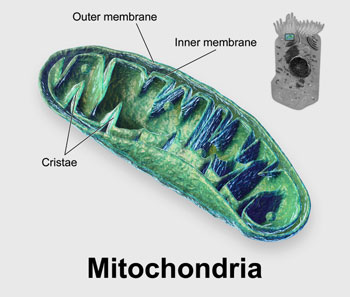
It appeared that the muscles exposed to the long-COVID serum were still trying to activate the mitochondria. (Image-
Mitochondria_Medical-gallery-of-Blausen-Medical-2014_Blausen_0644_Wikimedia_Commons.jpg)
While the authors did not suggest it, one wonders if the dichotomy could reflect the longer illness duration present in ME/CFS. At first, in long-COVID cells, try to compensate by turning mitochondria up (more fatty-acid metabolism, electron transport/OXPHOS), and protein synthesis (a “revving up” / repair attempt).
As they burn out, a metabolic downshift coincides with structural remodeling that produces more collagen deposition in the membranes, aka Aschmann and Slaghekke, which interferes with blood flows.
When it came to the mitochondrial respiratory chain complexes, i.e., the complexes that make the electron transport chain – both sera produced the same effect – a dysregulation in the last step in the ATP production process.
An upregulation in TCA cycle and glycolytic gene expression in muscles exposed to ME/CFS and LC-19 sera indicated the muscles were trying to increase energy production. Increased levels of a factor called lysine methyl transferase in ME/CFS and long COVID-exposed muscle tissues suggested that an attempt to stabilize the mitochondria had taken place.
A Core Problem? Calcium Dysregulation
Then came the calcium findings. The upregulation of an enzyme (ATP2AI) that pumps calcium ions into the membranes (sarcoplasmic reticulum), and downregulation of ATP2B4 which removes calcium from the cell, suggested that increased intracellular calcium levels – which have been known to produce fatigue – were present.
These high intracellular calcium levels appear to support Wirth and Scheibenbogen’s hypothesis that mitochondrial calcium dysregulation plays a core role in ME/CFS.
Emergency Compensatory Response
The muscle tissues exposed to ME/CFS or LC sera showed clear signs of significant stress. Muscles try to bulk up (become “hypertrophic” and, in order to share resources, the mitochondria tend to fuse in an attempt to “catch up”. This can be a healthy response, but the upregulated TCA and glycolytic gene-expression data, along with myotube degradation over time, suggested that the muscles were struggling; i.e., they were in an emergency compensatory response.
Wired and Tired Muscle Mitochondria

Running on empty – again.
Then we returned to the wired and tired phenomenon, in which a factor is wired at rest but then tanks when put under stress. The Seahorse mitochondria tests indicated that even at baseline, the mitochondria in muscle tissues exposed to ME/CFS serum were “wired” to the gills; i.e., they were eating up oxygen at a high clip. (So much for being at “baseline”.) The long-COVID muscle mitochondria were better off.
A stress test suggested that the upregulation was all for naught as much of the ATP being produced was leaking out (ouch!). (Again, this problem was worse in the ME/CFS serum-exposed tissues).
Overall, the rapid deterioration of healthy muscle tissue exposed to ME/CFS/long-COVID serum indicated (once again) that, while deconditioning may be present in some people, it cannot be causing the muscle/energy problems in these diseases.
Caveats
I asked ChatGPT to assess the study’s effectiveness and validity. (I can’t even begin to assess this.) I would not have believed what a rabbit hole this sent us down.
ChatGPT felt that the random assignment, blinded analysis, multiple independent runs, multiple exposure durations, the way the serum was handled, all spoke to a robust study. The small sample size (ME/CFS=5; HC=4), which dropped to N=3 in some parts of this study, made it a “pilot study”.
An hour later, after I’d uploaded virtually the entire methods section and most of the images, ChatGPT was still flummoxed on a key point. It simply wanted to know “whether each dot in the graphs represented a donor mean” or whether they represented data points from each test run. This was a crucial distinction.
The researchers did many measurements per tissue but only had a few donors. The best practice in that case would be to turn the many measurements per tissue/donor into a mean result per donor and assess that. If instead they assessed those assessments separately, that could produce something called “pseudoreplication”.

ChatGPT worried about “pseudoreplication”.
In pseudoreplication, multiple dependent data points – all of which came from the same participant – are treated as if they are independent when they’re actually reflections of each other. Since statistical tests like ANOVA require independent samples, pseudoreplication seriously screws up the probability ratings.
Because (unless I never got the right data to ChatGPT) it was impossible to determine the data points origins, ChatGPT warned about the dangers of pseudoreplication.
In the end, though, it called the study a “well-executed proof-of-concept/pilot study” that was best treated as hypothesis-generating. The contractility data was the most persuasive, and the structure/metabolism/transcriptomics data (which came from a smaller sample size) was suggestive.
Noting that the findings overwhelmingly support prior research findings. Once again, we saw ME/CFS/long-COVID serum produce profound effects – this time on healthy human muscle tissues. Reduced muscle contraction over time in both diseases, but more in ME/CFS, fits perfectly with study findings of reduced energy production.
Indeed, some gene-expression findings suggest that patients with LC may simply represent an earlier, less severe form of ME/CFS.
The most intriguing results may have been the emphasis on extracellular modeling, which may have blunted blood flows to the muscles, aka the Slaghekke findings, and the increased calcium findings, which spoke to a core part of the Wirth/Scheibenbogen hypothesis.
One can only hope that these Spanish, or other, researchers get the funding they need to expand on these intriguing findings.
Not so Passive! The Passive Transfer Findings Mount up!
Studies that determine what effect transferring serum or IgG antibodies from ME/CFS or long-COVID patients into mice, muscle tissues, the mitochondria, etc., have produced a great deal of excitement – and for good reason. They suggest that something in the blood – which presumably can be identified – is causing or greatly contributing to these diseases.

The mostly positive results are encouraging…but we need more.
As I remember, it all started about ten years ago when both Ron Davis and Fluge/Mella reported that transferring serum/blood from ME/CFS patients into a lab culture produced dramatic effects. At that point, it seemed like an important answer was in more or less clear sight: something in the blood was causing or greatly contributing to ME/CFS. All we needed to do was determine what it was.
I also remember Ron Davis saying something to the effect that doing so “was not a trivial problem”, and, indeed, ten years later, we still don’t know what the mystery substance is. The idea that something in the blood is contributing to these diseases has, however, only gained traction over time.
Regarding ME/CFS and long COVID – the subjects of this study – this is what studies have found.
- 2016 – Fluge/Mella reported that exposing muscle cells to ME/CFS serum increased lactate production and mitochondrial activity.
- 2020 – ME/CFS serum fragmented mitochondria and produced an antiviral state in the lab.
- 2022 – Endothelial cells exposed to long-COVID serum exhibited reduced nitric oxide (NO) functioning.
- 2022 – Endothelial cells exposed to ME/CFS plasma showed reduced nitric oxide (NO) production.
- 2023 – Exposing endothelial cells to long-COVID serum produced inflammation.
- 2023 – ME/CFS serum produced increased reactive oxygen species production in human microglial cells.
- 2024 – Long-COVID plasma activated platelets.
- 2024 – Exposing the endothelial cells from human brains to serum from long-COVID patients induces inflammation.
- 2024 – Transferring long-COVID IgG antibodies into mice produced increased pain sensitivity, loss of balance/coordination, and a trend toward weakness, and small fiber neuropathy.
- 2025 – An attempt to replicate Fluge and Mella’s 2016 finding failed.
- 2025 – Exposing “muscles on a chip” to ME/CFS or long-COVID serum produced weakened muscles.
- 2025 (?) – Exosomes isolated from patients with ME/CFS stimulated the microglia to produce IL1B.
2026 Update – the latest study from Prusty potentially linked antibodies to mitochondrial fragmentation and blood vessel issues.
Sigh…A Familiar Pattern
It’s nice to see all these findings, but there is a but…We’ve seen this pattern of many small studies producing positive results before. The news is encouraging, but the studies are too small, and employ too many different methods and assays, etc., to produce major funding. The field continues to progress; researchers continue to conduct their research; contributions continue to be made; yet the findings rarely reach the point where they can directly benefit patients.

One large, rigorously done, multi-center study would save years of research and tell us what we need to know.
For any finding, for instance, to “take”, it needs to be replicated by 2–3 independent labs that use the same assays and blinded samples. I don’t know, but I wonder how many times, if ever, that’s ever been done in ME/CFS.
What we need is a serious effort to break the logjam: a multi-center, blinded, consortium-based serum/plasma “challenge” study that handles the samples in the same way, uses standardized assays, determines if a dose-response pattern is present, identifies a specific component that’s causing trouble, and then removes it to see if the same response occurs. Surely we have enough evidence to support a major study like that.
This study would test a variety of tissues (platelets, endothelial NO, BBB endothelial activation, cardiomyocytes, 3D muscle) against a range of agents (IgG, EVs/exosomes, complement, etc.). Once it was clear which component affected which tissue, researchers would attempt to identify the active agent; i.e., which antibodies, EVs, proteins, or small molecules were causing the problem. Then the suspect factor would be introduced and removed multiple times to assess the robustness of the finding.
If we did that, we would know if something in the blood is contributing to ME/CFS or long COVID, and if it was, we would have a treatment target, and the opportunity to directly affect patients.
- Coming Up – Wirth and Scheibenbogen believe they know why people with these diseases can get so ill
The light bulb came on – one big study (just one!) – would dramatically propel this field forward.
Donation Drive Update!
Thanks to hundreds of supporters, the drive is booming – we are now over 60% of the way to our goal.
So, this was another long blog – much longer than intended, actually – but that’s what so often happens. There was the methodology to check out (thanks, ChatGPT!), then a look at what past studies found, and that led to an overview, and a conclusion – just one large, well-organized study would dramatically propel this oh-so-intriguing part of the ME/CFS field forward.
If you want an analysis that goes beyond the simple facts of a study, and looks to the past and the future, you’re in the right place. Please support us!
HEALTH RISING IS NOT A 501 (c) 3 NON-PROFIT




Thank you Cort for all your great work. I just dinated very happily.
I wish many of us will be able to donate.
For those who can
PLEASE DONATE!
Even 5. 10, or 15 $ will contribute to Cort’s contributions to our health.
HAPPY HOLIDAYS
Ha! Thanks, Angelika – I really appreciate that! 🙂
Comment *¿ Cuál es el laboratorio español que ha hecho este estudio? Me gustaría contactar con ellos. Soy española y sufro SFCEM desde hace casi 10 años.
La clínica que trabaja con sindrome de fatiga cronica en Barcelona, que esta involucrado en el estudio es:
Hospital Clínic Barcelona – Servicio de Medicina Interna
https://www.clinicbarcelona.org/servicio/medicina-interna
Mirar en detalles: https://pubmed.ncbi.nlm.nih.gov/40744071/
Creo que es el doctor Fernández Solá, del Barnaclinic
This is a very interesting study. Can these findings also apply to Fibromyalgia, which often is included in ME/CFS studies. It would certainly help address the similar/same issues of chronic fatigue, muscle weakness, body aches, overall pain and long recovery time after exercise, among other symptoms. I am grateful that ME/CFS as well as Fibromyalgia are now being treated seriously and investigated.
I would think so. If memory serves more transfer studies cand probably more muscle studies have been done in FM than ME/CFS
To be clear, the study summarized did not apply AI; that is just the site’s author getting sidetracked by his new toy — exactly the way AI should NOT be used. A fallacious means to compensate for a lack expertise and education. Any scientist could tell you the research design is sound, and reputable journals also help ensure that through the editorial process.
Brian is back! Yes, its true – I simply don’t have the knowledge to assess the statistical validity of these studies and I had never heard of pseudoreplication before this. I did check it out, though and it seemed to make sense. I hope it was clear that it wasn’t that pseudoreplication was present; it was that it was hard to tell if it was or not.
You are undermining your credibility as a science blogger by using AI in this, and most ways, you do.
Friendly advice from a clinical psychologist; I AM accountable for what I communicate and.my actions
Thank you for explaining all of this and connecting it to so many recent studies! It’s clear that something is definitely causing fatigue and PEM.
The larger studies you mentioned would be nice, however, we are not all identical widgets – we are genetically unique with decades of unique environmental exposures so it’s unlikely we will all behave the exact same way.
The important thing is that there are abnormalities that are driving our symptoms. What is causing the abnormalities in the first place? How do you stop it and remove the cell dangers Naviaux discussed? Knowing that our cells and mitochondria recycle regularly, how can we encourage them to recycle with better quality so our bodies can recover?
I think what we’re looking for is a recovery process, one that can be individualized for each patient, with a toolbox of tools to be applied at different points in the process as the patient’s body needs it.
I’ve spoken with several patients who have been successful at lifting weights, even though aerobic exercise is out of the question.
I’ve lifted weights throughout my illness, not much at my sickest, but gradually improving as I recovered. This was on addition to supporting my immune function, attacking multiple infections and providing significant nutritional support to replenish my body’s increased demand for nutrients, particularly mitochondrial nutrients, antioxidants, amino acids and lipids. This has given me back 95% of my function – aerobic exercise is still a challenge and extreme physical stress has brought on fatigue/PEM, more so than a normal person.
This science is so important at providing clues of how to tackle the bigger problem and create a recovery roadmap that individuals can personalized to their needs.
I beg to differ. Scientists do use AI because it can analyse millions of pieces of data and draw conclusions.
I even read a study where chatgpt was used to to validate a study and it produced the exact same result.
Cort is not a scientist; he is a medical blogger.
The best medical blogger I know.
Yes he is Thank You !!!
It’s evident you have concerns about AI – like any tool, it can have negative as well as positive effects. Openly disparaging Cort only reveals your anger, and perhaps fear. Your “advice” simply does not read as “friendly” at all.
But your tiresome attacks are also unnecessary & negative – can’t you make your concerns known without the personal attacks? Cort continues to be open and transparent about how he uses AI in his work (as he did here). It is clear he used AI – because he said so; it’s equally obvious the study itself did not use AI.
And use of this tool has nothing to do with credibility – it does not change his background in science nor the depth & breadth of his knowledge from decades of incisive articles about ME, gleaned from intense reading & his vast network of contacts in the science, policy, medical and advocacy, etc. realms.
Surely you, with your background as a clinical psychologist, have more to offer – more to add to the conversation – than your unprofessional sniping?
I am not “disparaging” the author; your reading comprehension needs improvement. I am criticizing an aspect of his written work, which any journalist worth their salt would at least consider. Cort erroneously assuming that an AI tool is able to “assess” the validity of a particular study is foly — and would garner a grade of “F” in any credible journalism course.
Brian, would you please check your tone and refrain from personal insults or “flames” such as “your reading comprehension needs improvement” or “talk about hyperbolic nonsense” etc.? I often think that the comment section of this blog is remarkable in that it is practically always polite, and your posts stand out in that they are not and have a tone of aggression.
Your views, also if they differ, are always appreciated. But please take extra care to express your concerns in a polite manner, will you? Many people sick with ME/CFS like myself can’t stand conflict well any more, so it’s very important to me that the comment section remains the safe, positive and factual space that it is for patients coming to this blog.
The comment section is in my opinion an integral part of this blog, often providing helpful treatment experiences from other patients, but also kind of an “swarm corrective” to whatever in a study or blog eaders might not agree with from their own experience (e.g. reports on side effects not mentioned in a study proposing a medication).
Personally, I strongly oppose AI for replacing creatives’ work, but do see a value in using it as an additional tool for analysing information, as long as remaining aware of the limits of AI. For example, if AI claims an issue with methodology, then I find it important to double-check if what the AI has pointed to makes sense before publishing such a concern about a study.
As a severe ME/CFS patient, I highly appreciate Cort’s work as a scientific blogger, as it enables me to follow the gist of what’s new in ME/CFS research, and is also increasingly able to point out connections between different studies.
Just wanted to let everyone know there are at least two Brian’s here. I’m not the Brian who is a clinical psychologist talking about AI; I’m the Brian with the pigeons who always admits to being a layman.
Pigeons…cool…I had pigeons growing up
It’s OK to point our your concerns but stating that someone’s “comprehension needs improvement” is rather insulting and unnecessary! No need to get personal.
By the way, a reseacher once told me that the blogs were great but that my weak spot is not being able to tell good studies from bad studies; i.e. studies that are well done and others that are not.
A study published in a medical journal is not a necessarily a mark of excellence. Another researcher warned me about “pay to publish” journals that will publish virtually anything. I am planning to look into this deeper.
The claim that a science blogger damages credibility by transparently using AI is simply wrong. Credibility comes from accuracy, clarity about uncertainty, and honest disclosure, not from refusing modern analytical tools. AI is already used across research, statistics, and publishing as an assistive tool, and dismissing it outright reflects misunderstanding rather than rigor. Critiquing the use of a tool instead of the substance of what was said is not a meaningful scientific argument.
I work in healthcare and would politely disagree. Most Doctors have no idea what’s coming down the pipe with AI in the healthcare sector and how it will soon supersede them in almost all respects. Same is true for Lawyers, software engineers, journalists. The age of extremely well paid jobs for those with scarce knowledge is dead and buried. Welcome to the world of infinite abundant free knowledge for all and clever agents to help you understand it.
‘Microsoft’s new system is underpinned by a so-called “orchestrator” that creates virtual panels of five AI agents acting as “doctors” — each with a distinct role, such as coming up with hypotheses or choosing diagnostic tests — which interact and “debate” together to choose a course of action. To test its capabilities, “MAI-DxO” was fed 304 studies from the New England Journal of Medicine (NEJM) that describe how some of the most complicated cases were solved by doctors. This allowed researchers to test if the programme could figure out the correct diagnosis and relay its decision-making process, using a new technique called “chain of debate”, which makes AI reasoning models give a step-by-step account. The orchestrator made all LLMs perform better, but worked best with OpenAI’s o3 reasoning model to correctly solve 85.5 per cent of the NEJM cases. That compared with about 20 per cent by experienced human doctors, but those physicians were not allowed access to textbooks or to ask colleagues in the trial, which could have increased their success’
AI analysis is a perfectly reasonable adjunct with the usual caveats. It’s currently a toddler, albeit growing up fast, and also a very clever one.
Keep up the good work Cort.
PS I’m not saying that we won’t require Doctors.
Hyperbole abounds in this space.
Your confidence in these tools is being influenced by unbelievably massive campaigns by tech companies and VC firms with vested interests (many $billions) in these things being highly profitable. The people setting the narrative are the people who need the narrative to be that these are revolutionary.
Brian’s assertion that using them at all fully invalidates Courts years (decades?) of experience and careful thoughtfulness in support of this community is equally hyperbolic and problematic.
There are valuable tools here for summarizing information, but LLMs ONLY summarize information that already exists. They can mimic historical patterns of deduction, but they are not inductive, they do not think or reason, and the perception that they do is going to be a big problem in the next few years.
I think it’s valid Court uses this to do a ‘first-pass’ to see if there are any overt concerns with methodology (based on the tool’s ability to scan millions of data points in the historical statistical validity literature). But any result ONLY suggests there MIGHT be something to double-check and that those hoping to use / rely-on this study should investigate that further and determine if the flag is relevant – it’s a perfectly reasonable question to ask the authors and may simply require the most minor text edit to clarify.
On the flipside, a serious issue here is that the ABSENCE of flags by the tool does NOT mean there are no methodological concerns, but humans seem likely to assume if the tool doesn’t throw a flag then there are no concerns.
Overall, I think it’s reasonable to assume that this tool can amplify Court’s ability to evaluate study quality, as long as he remains endlessly vigilant and cautious. It doesn’t turn Court into a statistical expert, but it might help flag some things he might not have the ability to recognize as a lay-person (that doesn’t seem like the right word… is there a category between lay-person and expert? “Learned?”… Idk).
While the information retrieval / organization capabilities of these tools may well be useful, like many, I do worry that current uses are a beach-head for trusting these tools too much, in too many scenarios for which they are not well-suited, and to further abstract accountability from individuals – Eg, if we start trusting the tool to do more and more of the peer review, who is accountable when it inevitably fails, is corrupted for profit, or otherwise falls short of expectations?
These are practical and philosophical questions we’ll be dealing with for the next while.
Personally, I’m torn… as a person with limited energy reserves, I see the potential value here. But as someone proud of my thinking / reasoning ability, I worry the temptation to offload those valuable (but energy-expensive) abilities to these tools will be too great, and said abilities will atrophy in me (many studies show that people start to lose their thinking / cognitive abilities as they offload them to these tools – an example from MIT – https://arxiv.org/pdf/2506.08872)…
We’re entering a very weird world…
I’ve recently started using Chat GPT and Gemini and find them incredibly helpful with daily feedback when inputting my data from the visible app during the day and smartwatch at night. I think they can be an invaluable tool for those of us with ME CFS.
“Invaluable”? Specifically how?
Talk about hyperbolic nonsense.
Categorical dismissal of AI is not a critique with any substance. It has already proven valuable to both researchers and patients by identifying patterns in biomedical data that humans missed. In my own case, AI was instrumental in pointing me toward ME/CFS, with the diagnosis later confirmed by INIM.
They are able to analyze all my data daily in a detail manner, then give me feedback on packing for the day. They have fine tuned my supplements for optimal benefit. When taking a trip with my wife, they come up with an itinerary that accounts for my ME. Most importantly, they are very supportive, understanding and available daily. Also they are fully aware of ME without me having to explain what it is. This is more than what I get from doctors and it’s less energy consuming than scrolling for answers on social media. Of course I evaluate all the advice critically first before deciding which one’s to follow. I no longer feel alone in this journey.
I’ve had a very similar experience ) I cycled through the ‘best hospitals in the US’ for 5 years with zero results. Then ChatGPT correctly identified that I had ME/CFS the very first time I used it to describe my symptoms. It’s since been confirmed by INIM and another Dr as well. Now it’s a great daily resource for pacing and symptom management. One might even say ‘invaluable’ ; )
I get your real concern about using AI – and I recognize that you have some points – and, as I said, I am going to do a course on AI and create a page on how its being used in the blogs (after the drive). I know this issue is of great concern to you, but please try to refrain from personal attacks; i.e. “hyperbolic nonsense”.
AI ironically is most likely what will take you out of MECFS, so learn to appreciate it
I used AI daily as well. I’m currently using to put together a solar system for a trailer and for a van. It’s been incredibly helpful. I’m checking it with ChatGPT and Gemino Pro and they are coming up with similar suggestions. I used it to assess why a rear tail light stopped functioning even after the light bulb was replaced, why the engine in my van seized, etc.
I also inputted all my medical data into it and asked what it thought was up, and it concluded the same thing that Dr. Ruhoy did.
I’ve found it helpful in many ways.
Hi Cort, AI (and all its clones) are fascinating toys, but by no means universally accurate. I decided to look up five issues that our organization has worked on (many for years). In not one case, was the information correct and it all ended with the company line of what the government wants us to believe about a controversial subject.
The conclusion of a study or an AI inquiry is only as good as the data it is analyzing. Garbage in; garbage out. And where is that information coming from…scanning the internet?
Please kindly don’t slam Cort. He is doing his best to use all of the tools available to him and perhaps you might use your superior knowledge to advise him, rather than criticize. Thank you.
I agree with you, Brian.
Being a scientist myself with background in data science and some knowledge of LLMs, I find it increasingly disturbing how people use them and just believe the results. Reduces the credibility of an otherwise excellent text.
Thanks for this! Fascinating. You make an interesting point regarding duration of illness in me/cfs versus LC. Does the study list duration of illness for the various subjects? I hope they’re able to do a larger study.
It doesn’t. That would be a great subject for a larger study.
Hi Cory, thanks as always for your excellent reporting on ME/CFS.
I just read STAT Article where NIH Ninds Director
Walter Koroshetz was ousted today.
What do you know?
All I know is that despite all our troubles at the NIH he was a real supporter. So was the ousted NIH DIrector. Dr Marazzo at NIAID is as well and she’s still there. Time will tell but I can’t but think that is not good news for ME/CFS.
Yes Cort, the uncertainty of change is usually bad news in regards to NIH. Dr Jeanne Marrazzo was also fired back in March 2025 by RFK Jr.
shortly after she filed a whistleblower complaint. A current lawsuit pending for political retaliation. She was originally the Director of UAB Infectious Diseases. I was hoping she would come back here to UAB because she is an excellent and compassionate Dr,
I hate to see scientific integrity get silenced.
What about treating with a combination of Elamipretide (SS-31) and Trimetazidine (TMZ)?
Okay, we have about a dozen tranfer experiments now. Wonder why no one ever considered the obvious in a disease characterized by PEM: compare the effects of sera harvested during PEM and sera harvested during “baseline” days. Shouldn´t be that much of a problem given the fact that every single patient comes in these two versions, should it?
The muscle-on-a-chip findings are particularly striking when viewed alongside the recent paper by Liu et al. (2025), which demonstrated that immunoglobulin-containing antigen/antibody complexes derived from ME/CFS and PASC patient sera can enter human cells, localise intracellularly, and directly disrupt mitochondrial function while altering inflammatory signalling.
In that study, patient-derived IgG complexes were shown to impair mitochondrial membrane potential, reduce ATP production, and provoke aberrant cytokine release in recipient cells—establishing a concrete, serum-borne, antibody-mediated mechanism of cellular toxicity.
The Spanish group’s observation that Long COVID sera alone can induce muscle dysfunction raises the possibility that a similar toxic IgG antigen/antibody-mediated entry mechanism may be operating in skeletal muscle cells, with downstream mitochondrial impairment contributing to exertional intolerance and post-exertional symptom exacerbation. To date, however, this specific mechanism has not been directly tested in muscle tissue.
Targeted experiments examining immunoglobulin uptake, mitochondrial localisation, and metabolic consequences in muscle-on-a-chip systems would therefore represent a logical and potentially decisive next step in linking circulating immune factors to the core energy-limiting features of both ME/CFS and Long COVID.
And this is exactly what Prof. Bhupesh Prusty talked about doing as the next step in the progression of his investigations (in conjunction with Dr Carles Rentero at the University of Barcelona) at the end of his Fatigatio EV talk in 2024.
https://www.youtube.com/live/q1T_dtgBqsk?t=7584s
As there appears to be a constituent of plasma (or possibly the absence of a constituent) in ME/CFS & LC sufferers that is causing problems, has anyone considered simply going empirical and looking in detail at these differences using broad/based analytical processes such as chromatography to directly compare plasma from normal vs. sufferers? Analysis using AI/machine learning may enhance the results of such a study. Another empirical approach would be to fragment serum/plasma into constituents by any process from centrifuging to filtration, then running similar tests on these to narrow the search for the culprit component (s)?
Broad, empirical fractionation approaches of exactly the kind you describe have been pursued and are very much part of the current research landscape. Modern plasma proteomics, metabolomics, lipidomics and immunopeptidomics already rely on chromatography, ultracentrifugation, size-exclusion, affinity capture and mass spectrometry, often coupled to machine-learning methods to distinguish patients from controls.
The difficulty has not been an absence of analytical power, but rather that ME/cfs and Long-COVID appear to involve functionally active immune complexes and context-dependent effects, rather than a single abundant toxin that is easily separable. In several recent studies, pathogenic effects only emerge when patient plasma, serum, or purified immunoglobulins are placed in contact with living cells, where uptake, intracellular localisation and mitochondrial disruption can occur.
This is why cell-based assays (e.g. endothelial, neuronal, muscle-on-a-chip systems) have become increasingly important complements to fractionation and omics approaches. Fractionating plasma can help narrow candidates, but biological activity can be lost if complexes are disrupted or key cofactors removed.
In short, your proposed strategy is sound and is already being applied — but the field is converging on the view that functional bioassays and high-resolution analytics need to be used together, rather than either approach alone, to identify the causative components and mechanisms.
During the closing remarks of Prof. Prusty’s talk he shows a slide (at 2:06:45) which illustrates the antigen/antibody immune complex binding onto an FcgR receptor on a cell. Pay particular attention to the position on the antigen/antibody complex at which that receptor is shown to be binding to the antibody – i.e. the hinge !
Thanks for helping to explain this Paul. I thought five years or so ago we would have the answer quickly. But, it’s not a “trivial” thing to do, as Ron Davis said.
Take a look at Prof Prusty’s Sept 2025 Fatigatio symposium talk on the subject of “IgG immune complex from ME/CFS patients alters mitochondrial architecture and function”
https://www.youtube.com/watch?v=aDVfpsGo0B0&t=152s
This subject needs to be given far more media coverage and it’s scandalous that non of the high impact journals has yet chosen to publish his paper on this subject.
They’re going to look really quite stupid when more researchers prove him right!
I do not quite understand the finding that there is increased oxygen use by the muscles. I thought that persons with ME had lower oxygen use, because of lower mitochondrical aerobic metabolism.
Your discussion at the end of the article is very interesting. Maybe what is needed is more patient input at major funding agencies (like NIH) that helps define the funding targets ($) and subjects/goals of their funding programs to reflect the priorities and needs of patients. Maybe patient advisory councils?
I have been a patient reviewer for grant proposals at PCORI (Patient Centered Outcomes Research) for several years and this has been enlightening. There, patients review and comment on proposals from the patient perspective and grant writers are required (or highly incentivized because it is part of the scoring rubric) to include patients to have a meaningful role in the design and conduct of biomedical studies. Maybe we need more of that sort of a model, in addition, at NIH.
Could you name the researchers and their institutions instead of saying “a Spanish research team”. I’m sure that team can be identified same as the other research teams
🙂 “In this case, a Spanish research group led by Sheeza Mughal at the University of Barcelona took healthy muscle cells” – Thanks for the idea 🙂
Hope can be a very fragile thing in this illness, with so many false dawns. Yet I have always maintained some hope. And it’s science that provides it.
I am hoping that 2026 is the year that we see some meaningful progress with treatment possibilities.
Studies / trials that I am most interested in:
– PolyBio’s antiviral trials
– The trial being done at Harvard on an immune modulating drug (sorry forgot name)
In 2025 I changed my view a bit on the underlying driver of the illness. For many years, I have thought that an initial immune insult triggers ME/CFS, but does not perpetuate it.
I now think it’s probably both.
I continue to believe that it’s the brain that is the seat of many of the symptoms, but I am now more of the view that it is viral and / or immune factors perpetuating the brain issues.
The biggest progress of the last couple of years, for me, has been repeated findings of T cell exhaustion. Although the autonomic nervous system could be playing a role in this, I think it’s more likely that an antigenic factor is playing a bigger role.
I have come around to the possibility of reactivated viral factors playing a key role. If this is so, then I hope that Polybio’s trials of antivirals to address viral reactivation in long covid are successful, and translatable to ME/CFS.
I am less optimistic on the GLP-1 drug approach, and am on the fence on Rapamycin.
Would be interested in your thoughts, Cort, on the things you are most hopeful for in 2026.
Thanks for your work.
Gee
Thanks for NOT printing my post
That’s a great question – and a big one – and would make a great blog. Thanks for the idea.
Hypocapnia? Leads to an increase in blood PH, affecting calcium.
I am going to be entering my fourth year of debilitating illness – ME/CFS and long covid. I have lost just about everything in the past 3 years – marriage, family ( people tend to walk away when you are ill), profession ( 30 years a pharmacist), health, finances. I am about 65% housebound at this time. Alone. Not really able to care for myself. Life has been one a fragile shell. I am feeling very depressed tonight about entering another year with NO answers. I have spent money I did not have trying various therapies , treatments. Latest round of supplements goes not appear to be doing much.
Sure, reading the research is great. But I am ready to give up. Hope is fleeting. Strength is diminishing. Can take only so much before every day living is an insurmountable challenge.
You mattered to lots of people as a pharmacist. You matter to me as another human and someone that is suffering. All any of have to be “healthy” again is hope. I look for a “Thought for the day” to help me stay the course until help comes. You matter!
Thank you
Melanie….have you looked into the information about ivermectin. It’s one of the safest drugs (not really a drug). Despite not hearing much about ivermectin on this site, ive heard of countless recoveries of long covid by taking ivermectin.
You could jump to the independent medical advisory (IMA) Formerly the flccc and learn about ivermectin.
One single dose pulled me from a very,very dark place of severe me/cfs.
I continue to take ivermectin.. im 70% improved
I kept trying every suppliment under the sun…spent thousands $
But a single dose gave me lasting results. I thought….What have i got to loose.
Only offering information
Thank you
A lab grown muscle model sounds great. Might also be able to possibly test some drugs to counter effects?
Thank you for all the blogs, and particularly the Gist box!!
THe good old GIST box! :). Yes, they do use these muscles on chips to test drugs as well. They could expose the muscles to ME/CFS and long COVID sera and then see if they could reverse the process. It’s a great idea.
Yes, the GIST box is very important to me :-). I am by now sick enough that I can usually only read the gist box (and then sometimes jump to specific parts of the blog if I want to delve deeper into something mentioned in the summary). The accessibility features of this blog (like the gist for those whose visual processing still works best, or the audio for people whose auditory sense still is most exertion tolerant – I’m useless with auditory ;-)) are really great, thanks to the whole team for this. These enable severe patients to still keep up with research who otherwise couldn’t.
Thank you once again Cort. I have donated. So many of us are so grateful for what you do here and the little glimmers of hope and validation that your research brings.
Thanks so much Vanessa! We keep seeing progress that’s for sure. At some point it will translate into treatments I just don’t know when. The progress is very encouraging, though. 🙂
Poisoned! If you read enough accounts of people with ME/CFS, you will see this comment over and over…a poisoned feeling.
So there is something in the blood that can obviously be transferred according to the elegant muscle study discussed in this blog.
Why haven’t we figured out what it is after all this time? You can detect viruses, fungi, bacteria, mycoplasma, parasites and toxins in the blood.
I don’t recall studies diligently looking at this.
If you want to know how important it is to detect what is in the blood, read the “Poisoning of Michigan” (Amazon), the account of what happened when fire retardants were accidentally mixed up with animal feed that went out all over the state.
Fire retardants are extremely toxic and long acting.
When the farm animals ate feed with the fire retardants, they began to develop AIDS like illnesses and they also had miscarriages and deformed offspring.
A cow is expensive. When they looked too bad to sell, the farm families ate them. Then, farmers became ill like the animals, many symptoms resembling ME/CFS.
No one would look for fire retardants in a cow, but a local farmer who had been a chemist for Dow Chemical suspected chemical poisoning.
They took fat samples from the cows and tested them using two machines, a mass spectrometer and a gas chromatograph. By a stroke of luck, these machines were calibrated wrong and the pattern of PBB, the extremely toxic fire retardant emerged.
The late Dr. Irving Selikoff from Mt. Sinai’s Environmental Unit in New York brought a team of specialists to the community and tested 1000 members of the farm families. They discovered that they had immune dysfunction in common.
It is time to stop telling us what ME/CFS symptoms are like and to start seriously searching for the cause. I really don’t think it would be that hard to find. The Michigan tragedy happened in the 70’s…50 years ago. We should have better ways of detecting what is in blood now or we are spinning our wheels and wasting precious research funds.
So, is MECFS an autoimmune disease?
Research in Bergen, Norway has identified a link between exposure to
contaminated city water (specifically the Giardia lamblia parasite) and a higher long-term prevalence of fibromyalgia (FM) and other chronic conditions. There was a significantly higher prevalence of fibromyalgia among the Giardia exposed group (8.6%) compared to the control group (3.1%) 10 years later. There was also a higher incidence of ME/CFS and IBS in Bergen as well.
Someone posted on Facebook about your article here that mentioned research about misshapen red blood cells, Cort. I am currently struggling with iron deficiency anemia, getting infusions of iron and info about red blood cells would be helpful for my hematologist to look at. Do you have a link to that research that you could share please? Everyone, it seems that Cort is running short on donations for the coming year, so I hope more people will step up in the coming month. I was late to donate but just did recently. If you are like me, you rely on Cort’s reporting over and over again, so if you’re able I hope you’ll pitch in whatever you can! Thanks, Cort, for all you do for us! I hope you are AWAP now!
Dr Leslie Simpson, working in Dunedin New Zealand, as early as the 1980’s, found misshapened red blood cells in ME/CFS patients. I had my blood tested then and it came back with a high percentage of deformed cells. Prof. Ron Davis is currently researching the possibility of using this feature to diagnose ME/CFS
The “muscles on a chip” study was indeed a very good pilot project, but the extremely small sample sizes are made more problematic by the huge variability in symptoms experienced by individual long COVID and MECFS sufferers. As you stated, a much larger sample size is needed, perhaps pooling the blood of patients with similar symptoms and disease duration.
Thank you for all the effort of trying to explain what’s being done for all us people who suffer needlessly.
For Godsake , we walked on the moon!
Thanks! Good analogy! 🙂