




Geoff’s Narration
The GIST

The connections are piling up, making it hard to tell where any one finding will lead – hence this blog.
This is a kind of strange blog series. Takeaways from the major long-COVID trials are going to morph into a possible new immunomodulatory strategy to treat ME/CFS (but not long COVID?) in the next blog.
Having one line of evidence translate into something entirely unexpected is just the way things are going now, and that’s good news. We want surprising connections showing up…
Six Years!
Long COVID has now been around for six years (!). The first long haulers showed up around March 2020. One resource reported that the term long COVID was coined by a patient, Dr. Elisa Perego, on Twitter to describe her own experience of not recovering.


Large clinical trials are still rare relative to the scope of long COVID, but they are starting to pick up.
We owe Dr. Perego, if she did indeed come up with the name, a sincere thank-you. Long-COVID patients didn’t have to deal with a term like “chronic fatigue syndrome” for 4 decades. Moving again, at the speed of light relative to what happened in ME/CFS, the World Health Organization (WHO) quickly established a clinical code for long COVID in September 2020. Of course, that was little comfort to people unlucky enough to come down with long COVID.
With estimates suggesting that 20–25 million people in the U.S., ~2–3 million in Canada, and ~20–40 million in Europe are currently living with long COVID, long COVID’s impact has been huge.
Diseases this large are typically swarming with clinical trials and, for a number of reasons, that hasn’t happened yet. While it was clear early on that long COVID, ME/CFS, and fibromyalgia were close cousins, long COVID was largely treated as a new disease. With studies often taking 3-5 years to complete, it’s taken time for medical researchers to uncover molecular targets they can aim drugs at.
This overview shows a relatively low clinical trial success rate, but that’s not surprising for trials that simply aim to reduce symptoms. The more research that gets done, the more precise and effective clinical trials should be.
The Tier 1 Long-COVID Clinical Trials
This overview will focus on “Tier 1” trials – the big trials that can enroll hundreds of patients and are randomized and placebo-controlled. These large trials are important because they are the only results we can more or less count on.
Note, though, that even in these trials, only Paxlovid, with its three trials, has an evidentiary base that was considered “strong”; i.e., it takes a lot to build a convincing case for a treatment.
One thing to remember – your experiences with these treatments may be different. Even though long COVID is caused by a single virus, once that virus hits the general population, it can produce different types of long COVID.
The Tier One Studies: Large, Randomized, Placebo-Controlled Trials
| Intervention | Target | Trial(s) | N | Result | Evidence Strength |
| Paxlovid (treatment) | Viral persistence | STOP-PASC (Stanford, 2024); PAX LC (Yale, Lancet Inf Dis 2025); RECOVER-VITAL | 155 + 100 + 964 | ❌ NEGATIVE — No symptom improvement in established long COVID | Strong — Three independent RCTs, consistent null |
| Fluvoxamine (treatment) | Fatigue / multi-mechanism | REVIVE-TOGETHER (Brazil, Annals Int Med 2026) | 399 | 🟢 POSITIVE — Modest fatigue reduction (MD −0.43 at d60), benefit waned after stopping | Moderate — Single RCT, single country |
| Metformin (treatment) | Established long COVID fatigue | REVIVE-TOGETHER arm (2026) | ~133 | ❌ NEGATIVE — No fatigue benefit for established disease | Moderate — Single RCT arm |
| SIM01 Synbiotic | Gut microbiome | RECOVERY trial (Hong Kong, Lancet Inf Dis 2024) | 463 | 🟢 POSITIVE — Improved fatigue (OR 2.27), memory (1.97), concentration (2.64), GI (2.00), general unwellness (2.36) at 6 mo | Moderate-Strong — Single-site, symptom-only (no QoL/functional benefit) |
| Cognitive Rehabilitation (BrainHQ, PASC-CoRE, tDCS) | Brain fog | RECOVER-NEURO (NIH, JAMA Neurol 2025) | 328 | ❌ NEGATIVE — All 5 arms showed modest improvement; no intervention beat others | Moderate-Strong — Large multi-site NIH RCT |
| Ivabradine | Long COVID POTS | RECOVER-AUTONOMIC (ACC 2026) | 381 | ❌ NEGATIVE — Lowered heart rate but no symptom improvement | Moderate — Multi-site RCT |
| Temelimab (anti-HERV-W) | Neuropsychiatric symptoms | Switzerland Phase 2 | 203 | ❌ NEGATIVE — No improvement vs placebo on fatigue or most secondaries | Moderate — Large Phase 2, negative |
| Coenzyme Q10 (high-dose) | Mitochondrial dysfunction | Aarhus/Gødstrup (Lancet Reg Health Europe 2022) | 121 | ❌ NEGATIVE — No benefit over placebo (large placebo response observed) | Moderate — First RCT in long COVID |
Only 2 of the 8 trials were considered “successes,” and these successes were pretty moderate. There’s no such thing as a true failure in medicine, though, because each failure tells us something. A door that closes allows another door to open.
THE GIST
-

One theme – expect surprises.
It’s been six years (!) since long COVID appeared on the scene. With tens of millions affected, long COVID is a major disease, and we would expect dozens of major trials to be underway.
- That hasn’t happened yet. Long COVID is still too new, and we probably don’t understand it well enough for the major pharmaceutical companies to get involved.
- Long COVID has, however, had ten “Tier I” clinical trials published. These are clinical trials that are large enough – usually containing hundreds of patients – and have been done rigorously enough (placebo-controlled, randomized trials) that we can have some confidence in their results.
- Of the ten, only two were successful – a fluvoxamine and a probiotic/prebiotic trial – and they were modest successes. (See the blog for the list.)
- While we only have ten large (or largish) trials, the results are telling some things. They include:
- Short-term antivirals (Paxlovid/Metformin) are a bust. Either several antivirals need to be bundled together (one projected trial is hopefully underway), and/or they need to be given for much longer periods.
- What prevents long COVID doesn’t necessarily treat it. Both metformin and Paxlovid had some success in preventing long COVID, but both failed to treat it because by the time you get to long COVID, things have drastically changed.
- In contrast to the cytokine storms and rampant viral replication found in COVID-19, viral replication is probably very low, the immune system is probably more exhausted than activated, and other problems (blood vessel damage, blood clots, central sensitization, autoimmunity, EBV reactivation (???)) are now present.
- Broader-based treatments are probably more effective – it was notable that every treatment that focused on a narrow part of long COVID (Paxlovid, Ivabradine, temelimab, CoQ10) failed, while two treatments (fluoxamine, prebiotic/probiotics) that hit several factors had at least modest results.
- Gut microbiome manipulation can help. While the improvements in fatigue and cognition after 6 months of a prebiotic/probiotic regimen (see blog) were modest, they were still evident. The ability of the combination to move the needle on key deficits in the long COVID microbiome (short-chain fatty acids, butyrate, acetate) – which also show up in ME/CFS and fibromyalgia – was impressive.
- Drug companies conduct long COVID trials at their peril – one drug company thought it had all its ducks in a row: it had identified a target, enrolled patients with that target, and hit them with the right drug – and the trial failed miserably. The company is now laying off employees en masse.
- Postural Orthostatic Tachycardia Syndrome (POTS) is more than about increased heart rates – Given how commonly ivabradine is used to treat POTS, the failure of the big RECOVER Initiative trial to improve symptoms must have raised eyebrows. This is the first major trial to assess this drug, though, and it failed. Like other orthostatic intolerance diseases, POTS is probably more a disease of reduced blood flows to the brain than anything else.
- The fluvoxamine surprise – the positive effects of fluvoxamine were modest, but they were there. The fact that fluvoxamine is a potent sigma‑1 receptor (S1R) inhibitor that can affect several factors (mast cells, endoplasmic reticulum (ER) stress, the unfolded protein response, inflammatory cytokine signaling, EBV reactivation) potentially points to the FIASMA class of drugs.
- A novel immunomodulatory strategy for ME/CFS (but not long COVID)? – something different may be going on in ME/CFS, and that is the subject of the next blog

Support Health Rising and Keep the Information Flowing!
Health Rising is not a 501 c (3) non-profit
Takeaways
Even this short list of large trials provides some interesting takeaways.
Short-Term Antiviral Treatments Are a Bust

We’re definitely done with the short-term antiviral trials.
It was probably ludicrous to believe that a 15-day or so trial of an antiviral would fix long COVID, but it had to be tried, and it was – at least three times – in studies involving over 1,000 participants.
The antiviral approach to long COVID is not dead, though. Some reports suggest that longer-term Paxlovid regimens may be more effective, and Dr. Klimas is evaluating a monoclonal antibody that targets a coronavirus variant. Putrino is slated to test Pridgen’s triple antiviral cocktail.
Treatments That Help to Prevent Long COVID Do Not Necessarily Treat it
That treatments that help prevent long COVID cannot necessarily treat it provides a major insight.
Paxlovid’s three trials and REVIVE Together’s metformin trial (n=399) and a Korean metformin trial (n=396) indicated that treatments that help to prevent long COVID do not necessarily help treat it. Metformin’s inability to treat established cases of long COVID in the Brazilian arm of the REVIVE trial was particularly notable, given its effectiveness at preventing long COVID and the many ways it may help.
The idea is that by the time long COVID has asserted itself, the horse has left the barn. Bits of the virus may be causing problems, but viral replication itself is not a big deal.
Metformin’s potent anti-inflammatory properties may have worked in COVID-19 but failed in long COVID because, while they were effective in tamping down the cytokine storm that occurs during COVID-19, they’re not effective in tamping down the kind of inflammation (T-cell exhaustion, autoimmunity, immune dysregulation) that’s present in long COVID.
By the time we get to long COVID, then, a different state of illness characterized by neuroinflammation, central sensitization, autoimmunity, and/or metabolic damage is present. This is not to say that Metformin – which does a lot of good things – might not be helpful as an adjunct. By itself, though, it doesn’t appear to move the needle. (Note that we are still awaiting the results of the U.S. arm of the REVIVE study.)

Drugs that do quite well at preventing long COVID have failed to treat it.
The idea that what started off the illness is not what is causing it is encouraging for people with ME/CFS, fibromyalgia, etc., patients who may not, after all, need to hunt down the pathogen or toxin or whatever it is that started their illness. They just need to better understand the chronic illness state that keeps it in place. As Akiko Iwasaki notably asserted some time ago – long-COVID researchers need to get beyond the spike protein.
Time will tell on that. A great deal of work is underway to understand the impact that bits of the coronavirus in the body have on long COVID.
Narrower Treatments Are Not as Effective as Broader Treatments
Thus far, broader-based treatments appear to be more effective.
Several studies show that taking Metformin during COVID-19 reduces the risk of long COVID by a whopping 40-50%. One might have thought that Paxlovid – an antiviral that specifically targeted the coronavirus replication – would be more effective, but it had only modest effects in preventing long COVID in sicker and older patients.
While Paxlovid directly targets coronavirus replication, Metformin affects coronavirus replication, reduces inflammation, alters innate immune signaling, and cellular energy metabolism; i.e., besides knocking down coronavirus replication, Metformin may also have reduced the damage the virus causes to blood vessels and reduced clotting and mitochondrial stress.
Ditto with the failed CoQ10 trial. It seems kind of insane that anyone would think a single supplement would move the needle on as complex a disease as long COVID. Whether CoQ10 in conjunction with other treatments is helpful in a specific subset of long-COVID patients is another question.
The Right Kind of Gut Microbiome Manipulation Can Help
The large randomized, placebo-controlled, Hong Kong study found taking a SIM01 probiotic containing 10 billion colony-forming units twice daily for 6 months produced moderate, clearly detectable improvements (15-20%) in fatigue and cognition, in particular, but did not improve global quality of life or exercise capacity over 6 months or other symptoms (joint pain, dyspnea, insomnia, muscle pain, cough, hair loss, chest pain, mood).

Long term gut manipulation using bifidobacteria (pictured) and prebiotics doesn’t appear to be the answer – but can help.
The study’s ability to improve short-chain fatty acid synthesis, including butyrate and acetate, indicated that over time, the right kind of microbiome supplementation can shift major gut pathways. The kind of shift produced should reduce inflammation and perhaps leaky gut and improve tryptophan metabolism. The short-chain fatty acid findings are amongst the most consistent in all these diseases.
The SIM01 provides specific Bifidobacterium strains plus prebiotic fibers → engraftment of these strains → cross‑feeding that boosts butyrate‑producing Firmicutes (F. prausnitzii, others). Exactly duplicating it might not be easy, or even preferable, because the strains and ratios used were derived from metagenomic data on “healthy” Hong Kong Chinese microbiomes. Microencapsulation to improve the delivery of the probiotics to the colon.
SIMO1 contains 20 billion CFU/day total of Bifidobacterium adolescentis, Bifidobacterium bifidum, and Bifidobacterium longum (no Lactobacillus), as well as prebiotics (galacto‑oligosaccharides (GOS), xylo‑oligosaccharides (XOS), resistant dextrin /polydextrose).
Both Bifidobacterium bifidum and Bi. longum in multibillion capsules and prebiotics are readily available. While microencapsulation is not available, using enteric‑coated or “delayed‑release” capsules might help. They should be taken with food and paired with prebiotics. You’d want to start low and assess your symptoms over 6 months.
The Heterogeneity Problem Must be Resolved
It’s possible that some of the failed clinical trials would have been successful had they targeted the right patient subset.
At least four major mechanisms (viral persistence, autoimmunity, gut issues, dysautonomia) have been proposed for long COVID, each of which would be treated differently.
Thankfully, uncovering subsets is becoming a strong research focus. The entire reason for PrecisionLife’s entrée, for instance, into the ME/CFS/long-COVID field is that it believes it can distinguish distinct mechanistic subsets and identify treatments for them.
Increased Heart Rates Are a Secondary Factor in POTS
In its first large test in POTS, Ivabradine did reduce heart rates but did not reduce symptoms.
The Ivabradine failure, though, came as a big surprise, as Ivabradine is commonly used in POTS. Even Ivadradine’s failure, though, was illuminating. Ivabradine did what it was supposed to do – it lowered heart rates – but did not significantly improve symptoms. That suggests there’s a lot more to POTS than increased heart rates.
Indeed, Novak has asserted that the key factor in POTS and other forms of orthostatic intolerance (problems standing) is reduced blood flows to the brain. Fixing that is where the real juice lies in orthostatic intolerance.
A Cautionary Tale – A Pharmaceutical Company on the Ropes
Anti-HERV endogenous retroviruses pack our genome, and the idea that they have escaped and are causing problems has been floating around the ME/CFS field for at least a dozen years.
The thinking is that inflammation, immune dysregulation, etc., are causing fragments of these old retroviruses to produce proteins that tweak the immune system. The findings have been mixed, but more recent research suggests there’s something to it in both ME/CFS and long COVID. The issue is far from settled in both ME/CFS and long COVID, though.
The “total failure” of the HERV-K temelimab long-COVID study highlighted how tricky – and consequential for companies – drug trials can be. A Spanish pharmaceutical company, GeNeuro, thought it had the cat in the bag when it identified a large number of long-COVID patients with an HERV-Env-W protein in their blood.
It threw a bunch of money into the large trial, which ended up being as complete a failure as a trial could be (no endpoints reached). Now the company is cutting back personnel, and we’ll see if it survives. A review of the trial stated:
“GeNeuro’s experience underscores the significant challenges and uncertainties involved in developing effective treatments for long COVID. Despite promising initial data and a clear scientific rationale, the path to successful therapeutic interventions remains fraught with difficulties.”
The Fluvoxamine Surprise
Metformin failed twice to treat long COVID. Fluvoxamine, on the other hand, which was not shown to help prevent long COVID, succeeded. Fluvoxamine’s success was modest, but it’s only one of two treatments that have shown promise in large, rigorous trials. Thus, even its moderate success can provide us with clues about what’s going on in long COVID.
The effect was not large, but it was there. The .43-point and .58 point difference that Fluvoxamine produced at day 30 and 90 on the 7-point fatigue scale means the improvement in fatigue was noticeable. The .58 point improvement would be considered “borderline clinically meaningful”. Likewise, the improvement in quality of life was modest at day 30 but diminished afterward.

Fluvoxamine’s modest success pointed an arrow at other classes of drugs.
Fluvoxamine is a selective serotonin reuptake inhibitor (SSRI) that increases serotonin levels in the brain. It’s FDA-approved for compulsive obsessive disorder and used in depression, anxiety, PTSD, eating disorders, etc. Given that antidepressants have not proven very helpful in long COVID or ME/CFS, it seems pretty clear that fluvoxamine’s antidepressant properties were not responsible for its modest success.
Fluvoxamine, though, is also a FIASMA (functional inhibitor of acid sphingomyelinase) drug, and a potent sigma‑1 receptor (S1R) inhibitor that’s able to impact several factors (mast cells, endoplasmic reticulum (ER) stress, the unfolded protein response, inflammatory cytokine signaling, EBV reactivation) that have been implicated in long COVID and/or ME/CFS. Its ability to affect these factors is presumably why it moved the needle on long COVID.
Note that because fluvoxamine inhibits the enzyme that metabolizes caffeine, the effects of caffeine may be stronger and last longer when taking the drug.
The FIASMA (Functional Inhibitors of Acid Sphingomyelinase) Drugs
Fluvoxamine’s partial success suggests that similar but more potent drugs that inhibit acid sphingomyelinases – the FIASMA class drugs – could be helpful for long COVID.
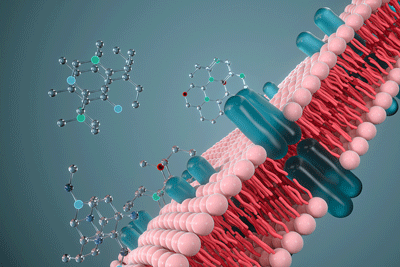
Fluvoxamine’s success pointed an arrow at the cellular membranes.
Because acid sphingomyelinases promote the entry of the SARS-CoV-2 virus that causes COVID-19 into the cells, acid sphingomyelinase inhibitors make sense in acute COVID-19. (They failed to prevent long COVID, however.) Indeed, thus far, the Tier I clinical trial evidence suggests that viral replication may not be a big deal in long COVID. (Low-level but persistent virus or bits of virus may be the key.) It’s possible, though, that sphingolipid/ceramide issues persist and are causing damage in long COVID.
Sphingolipids provide structural elements of cell membranes, and ceramides – a specific kind of sphingolipid – provide the core structural units of most sphingolipids. Because ceramide levels rise when cells are under stress and directly impair mitochondrial efficiency, the idea that increased ceramide levels might be contributing to ME/CFS and long COVID makes sense. Indeed, they’re one of the few lipids that can both transmit stress signals and create stress by disrupting energy metabolism.
Early ceramide accumulations in long COVID or ME/CFS could produce the endothelial and microvascular damage, neuroinflammation, and metabolic stress that locks these diseases into place.
The Drugs
Enter the FIASMA drugs. These drugs (amiodarone, amitriptyline, amlodipine, carvedilol, chlorpromazine, clomipramine, desloratadine, fluoxetine, fluvoxamine, hydroxyzine, loperamide, loratadine, melatonin, paroxetine, and sertraline) reduce the activity of the sphingomyelinase enzymes, which produce ceramides.
The most potent FIASMA inhibitors appear to be amitriptyline, clomipramine, fluoxetine, fluvoxamine, paroxetine, sertraline, and chlorpromazine. (Melatonin, amlodipine, and carvedilol are considered very weak acid sphingomyelinase inhibitors.)
Low-dose amitriptyline is an interesting option given that it’s sometimes used off-label in ME/CFS, fibromyalgia, and chronic pain. Dr. Klimas called it a “messy, old-fashioned drug with a tremendous history” that in a low dose, “is pretty good with pain”, and is a “pretty decent antihistamine” and an anticholinergic that can help with dysautonomia. She uses it for a while to get things under control, but that’s about it.
Hydroxyzine is a mast cell stabilizer and antihistamine used by some ME/CFS experts. Other mast cell affecting drugs (H1/H2 antihistamines, cromolyn, ketotifen, etc.) make sense, as does a multiple sclerosis drug called dimethyl fumarate which has been suggested for fibromyalgia.
The FIASMA drugs may be a possibility in long COVID – and some are used in ME/CFS – but hold on, two recent studies suggest something very different may be happening in ME/CFS (and that’s what the next blog is about).
Conclusion

One theme: these are complex diseases – expect surprises before it’s all said and done.
Even this small number of “Tier 1” studies provided some potential insights.
Long COVID has evolved enough from COVID-19 to be a distinct disorder that requires its own unique treatments. Some treatments do appear to be helping, albeit in moderate amounts. Multifactorial treatments may work better than narrowly focused ones. Unless RECOVER made a mistake with Ivabradine, the results of the small clinical trials that have characterized ME/CFS, POTS, and fibromyalgia efforts may all be suspect, and that cuts both ways with both positive and negative results.
The good news is that several large, randomized, placebo-controlled trials are underway in long COVID. Not as many as the disease deserves, but more than before, and importantly, some are more targeted.
Finally, expect surprises, and surprise will be the theme of the next blog, which concerns a study that suggests that a novel immunomodulator factor may work in ME/CFS – but not in long COVID.




Looking forward to the next blog
There’s some interesting research occurring on medications that may benefit neuroinflammation. This is an interesting article in pre-print on a nasal-administered drug on long covid. Akiko Iwasaki is one of the researchers. Early days, but interesting
https://www.biorxiv.org/content/10.64898/2026.04.07.716934v2
I’m fortunate to be in the care of the BC Centre for Long Covid, ME/CFS and Fibromyalgia. The medical team has recently changed its protocol to treat MCAS first, then POTS, then remaining CSS. To manage my POTS (and severe brain pressure), my dr said +9-10g salt per day. This is based on the premise that I have low blood volume, thus low percussion to brain and extremities. The change has been immediate – almost no brain pressure and my BP and HR are levelling out. I drink the salt water mixed with flavouring through the day to keep things even.
Interesting! Good to see – I’m not surprised of work in this area. Neuroinflammation could affect so many diseases.
” These findings identify nasal administration of aCD3 mAb as a noninvasive strategy to control neuroinflammation, restore the neurogenic niche, and offer a novel approach to treating cognitive impairment in Long COVID.”
Something to keep an eye on for sure.
The fluvoxamine result was surprising to me because in the early days of long covid (2020-2021) it was a very popular treatment and everyone tried it. Interesting that the data supports it now but the anecdotes just never seemed to be there.
Are there any Pharma drugs available to treat long Covid? Cases World Wide 704 Million. 400 Million suffer from long Covid. When will there be Pharma drugs available.
Saffron could be used instead of fluvoxamine. And the seed probiotic brand has most of the strains in the Hong Kong one and you can use phgg to feed the good bacteria.
Seed brand probiotics contain ingredients that promote histamine intolerance. Had to switch to Biome V which contains bifido primarily
If you want to expand the power of your probiotics by billions, you can make your own yogurt.
Incubation for at least 36 hrs at 99 degrees will multiply your probiotics by billions
You can make the yogurt from not only milk but bone broth etc.
Dr william Davis has the instructions on you tube
My wife has typical LC symptoms. Chronic fatigue, poor balance, magnetic gate, falling, poor memory. Looked like Parkinson’s, until Neurologist performed a DatScan last week. Mychart said “no visible ganglia uptake” Neuro has not reviewed test DaTScan results. Do you think my wife’s symptoms are LC with this ganglia problem or LC is not her disorder? Thanks
I’ve had Long Covid with terrible fatigue and dizziness and medical gaslighting, since spring 2924, Recently, reading about treatment successes, I’d pinned my hopes on GLP-1s to help. I’m housebound, except for the good day. My hopes also picked up when my previously dismissive PCP gave me a few boxes of vials of tirzepatide that had been given him by a drug reg. I bought syringes and injected myself with a low dose, not a quarter of the commercial 2.5 mg dose of Zepbound. A day later, I was supposed to drive two hours to Phoenix, AZ to get moderate hyperbaric oxygen and various red light treatments, which actually make me feel better afterward, unlike traditional meds. I had to cancel because of terrible fatigue, dizziness and out of control diarrhea. A week later after stopping the tirzepatide, I’m still having bad gastro issues, insomnia, and overwhelming fatigue and dizziness. I’m not taking this stuff again until I feel better. I think those researchers and MDs at Scripps have to admit to themselves that GLP-1s are not the end all to be all. An expensive blockbuster drug whose company is trying to find even more uses for, the patent not expiring for another ten years. Some people are helped, and maybe that is what Elli Lilly is looking for. I’m sticking with alternative medicine now since I don’t trust mainstream medicine and research. At all. On to grounding and red light products.
As I have said before, I am not comfortable at all with the hype around GLP-1s for ME/CFS. I have also said before that the drug companies are incentivised for these drugs to be used more widely across more conditions.
There may be some sort of rationale behind potential utility, but it’s still very speculative.
And as you experienced, side effects can be very significant.
There are some limited anecdotes of some ME/CFS patients getting some benefits. But anecdotes are worth very little.
We should be very cautios with psych drug studies. The industry managed to get whole classes of drugs approved and marketed as powerful and effective against conditions like depression. Now we know that they’re not better than placebo and only the side effects are real. Neurotransmitter explanations for depression could not be substantiated.
Now increasing numbers of children and adults with illnesses like autism and adhd are drugged when there are strong arguments that these aren’t even clear syndromes.
On the madinamerica.com website you can learn how to detect hidden biases in psych drug studies and cut through psychiatric babble.
Is the Fluvoxamine result really meaningful? The trial only used people in the first year of their diagnosis of whom (according to WHO) 85% will recover likely meaning that they have typical post viral fatigue rather than anything more pernicious and ME-like. That aside they only used self reported fatigue scales and if you give someone who is suffering from ongoing fatigue something that generally improves mood then aren’t they quite likely to report less subjective distress from the fatigue even if there is no physical change?
It was placebo-controlled – I guess that takes care of “would have just gotten better anyway” issue (?). As to the fatigues scales – I imagine that some kind of fatigue scale is used in just about every ME/CFS and long COVID trial. I think trials will be relying on symptom scales to track treatment effectiveness until we find a biomarker or biomarkers that can consistently indicate how effective a treatment is. In other words, we’re stuck with them for now.
I was thinking more of the chronic fatigue vs chronic fatigue syndrome issue. If 85% of people with a long covid diagnosis get better in the first year then that looks like they have typical post viral rather than ME so is the outcome of this study applicable to people with ME? If it were repeated with people who were a year plus into diagnosis that might be more applicable?
Subjective experience is always going to be an issue but particularly with drugs like fluvoxamine who’s main role is to change subjective experiences. There are some more objective measures (like those that PACE said they were going to use then dropped!) which might be better proxies in cases like this?
I’ve never been able to disentangle who has ME/CFS vs ME vs chronic fatigue. I’ve basically just thrown up my hands. If someone takes the time and money and spends the money to see an ME/CFS expert, I just assume they have ME/CFS (unless another diagnosis is found).
Still, having a placebo group should allow them to account for any improvements that naturally occur over time. As to whether people with early long COVID have the same thing as ME/CFS my guess is that there are differences and, in fact, the next blog demonstrates one that may be present. So there may be an apple to oranges problem.
I think we’re going to have subjective measures for quite a while but I agree, why not also measure activity levels, and use monitoring devices to assess sleep, heart rate, HRV (???)
The people on placebo and metformin also got a lot better. Fluvoxamine showed statistically significant benefit over those two but it wasn’t particularly meaningful.
That’s why I wrote that it was a modest benefit. Clearly, the large long COVID trials have a long way to go. Still, it was a large study and I think we can trust that it moved the needle in the right direction – hence the idea of trying other drugs that act more powerfully.
I get ‘tired’ of the word ‘fatique’… 🙂
It doens’t describe ME at all.
Antiviral drugs do not provide a cure according to the results of REVIVE Together and a Korean metformin study. Many ME/CFS patients report that their symptoms worsen significantly after a COVID infection. Have there been studies on what an antiviral drug does in this group of patients during a COVID infection?
Not that I know of.
Great work, Cort, thanks. It seems like no one else either cares about this stuff or can integrate it like you do. I’m afraid that things are moving too slowly for most of us. Dr. Fauci’s virus, on top of fibromyalgia, is a pretty complex illness group, I think.
Hi Cort
Please can we get an update on where things are going with Amatica?
It would be good to hear how many people they have onboarded and if they are noting anything of interest.
Results from Shungu’s NAC trial might be out this year?
GlyNAC is on my list of things. Apparently the glycine improves the bioavailability of the NAC
Matthias….NAC is the one supp.that changed everything for the better with me,also TUDKA
Thanks Roonie. What symptoms did each of them help with?
I have tried NAC before and it didn’t help. But I have read that GlyNAC (glycine+ NAC) can work better
You are probably a different subset than me.
I had/have? Fatty liver,enlarged spleen
Had an ulcer way back when all this started in 1981
When i was given molibdimum in my iv I had hives all over my upper chest the size of grapefruit.
When i received my 3rd covid injection (vax) again, a huge underarm lump the size of a grapefruit.
When i got covid they thought I had hundreds of blood clots on my lungs….after ct scan they realized it was another severe reaction causing the hundreds of lymph lumps.
My illness is clearly in my lymph system.
Interesting that my very first issue happened while welding
(Heavy metals?)
But honestly I also believe these childhood vaccines were my initial demise. Didn’t do well in school…failed gr 7 and 9 and always had, my entire life a dull ache on the left side of my lower skull. Childhood vaccines that include mercury, mercury in tooth fillings…can’t be good IMO
Interesting that mercury has silently been banned for dental amalgams
…..just to add…I did in 1993 go through what “they” call the cytokine storm.had no idea a human could become that ill.
I do believe, in hindsight that I was very close to death.At my worst I was 86 lbs…a walking death with total body wide pain,bleeding gums,white furry tounge, lumps all over ranging from 2″ inches to tiny lumps.a total body rash from head to toe.low red cells,low white cells. I have PTSD from the whole experience. Im still in disbelief that I got gaslit for decades over all of this. To this day they continue to say there is nothing wrong with me.i don’t go to them anymore unless absolutely necessary
Matthias…the other suppliments that helped me is Berberine.i have a customer in Wyoming that is a wildlife biologist that put me onto Berberine….he cured himself of lyme and many others.
Im also on l- methylfolate and b12 re: the MTHFR gene…see vancouver natropath Ben Lynch videos on how damaging synthetic folate is
A small study found that NAC plus guanfacine was helpful with brain fog, I believe.
I think there’s a fairly big Shungu study though? I understand that many years ago he found high levels of lactate in the brain of ME/CFS patients and lower levels of glutathione. He did a small initial study on NAC which looked promising but is doing a much bigger study. I think the results were initially expected last year but that has extended to this year?
Yes, there is or was. At some point, I heard there was a problem but I don’t know what it was. It should be done by now, I think.
I took Ivabradine post COVID neuropathic POTS. Dr Grubb prescribed it. It definitely helped my heart rate and gave me some energy back as opposed to being on propranolol. I felt awful on beta blockers. My BP was too low. I couldn’t walk because of shortness of breath. Stairs were absolute nightmare. Ivabradine helped with that but I still had crushing fatigue after any trial of “exercise” which was the Levine protocol. I don’t know why my neuro prescriber it. Dr Grubb told me I was experiencing inflammation and protocol would make it worse. Once I stabilized I stopped Ivabradine after 6 months. Went on Plaquenil 1/2 dose for a year and had less crashes. Increased to full dose 200 mg and I’m maintaining without any significant crashes. Every October I crash hard!! I have environmental allergies and the Fall weather in Michigan knocks me down every year. I’m interested to see how I fare being on full dose Plaquenil this year. This was the last line of multiple meds I tried… mestinon, midodrine, Prozac, Wellbutrin , propranolol, modafanil, many many supplements. I see a neuro chiropractor and we did vagus nerve stimulation, brain tapping, eye movement training which helped. He says I presented as TBI. Balance was off. Eye movements were lagging. He sees a lot of post COVID. Many children. I was referred by Dr Grubb and a neurologist. So I decided to break out my wallet and see him. It’s definitely helped. I have some vague nerve techniques I learned from him. Helps when flared.
Dr Grubbs located in Upstate NY? I see a Dr Grubbs, Oncologist in Adk. Courious. Thx
How the heck isn’t the Q10 study getting any effect? I’ve got ME and get quite a big improvement using 4 X 100 mg Q10 from Pharma Nord every day
I’ve tried to donate but it keeps asking for a phone number and I can’t locate where the input is – sorry 😵💫
Thanks for trying! I don’t think it should ask for your phone -only your email address – I will get Stavya on this!