




Geoff’s Narration
The GIST

Mitochondrial treatments usually fail to make much of a difference in these diseases. Could a unique new drug – IVO-21 – be different?
Solve M.E. really hit it out of the park with their May 26th Catalyst Award, “Mitochondrial Stabilizer IVO-21 as Therapy for ME/CFS”, which they explored in a recent webinar (see below).
We see different kinds of treatment options pop up from time to time, but this one is unique. Sometimes MD’s come up with possible treatment options and produce clinical trials. This is not surprising. After all, they have first-hand experience treating patients. You would think they would come up with new options.
As grounded as they are in the patient experience, however, they’re usually not researchers, and that makes a difference. Deeply embedded in the biology, researchers have analytical and statistical skills honed by the rigor of getting a PhD and succeeding in a research environment. They are a different kind of animal.

Dr. Jay Chung
Dr. Jay Chung is that kind of animal, and his IVO-21 drug comes from a different place than most of the drugs being trialed or considered for these diseases.
First, though, more about Chung – who has quite a resume. He has a bachelor’s degree in electrical engineering and computer science from MIT, an MD and PhD in genetics from Harvard Medical School, and an endocrinology fellowship at the National Institute of Diabetes and Digestive and Kidney Diseases (NIDDK).
He’s currently a senior investigator and chief of the Laboratory of Obesity and Aging Research at the National Heart, Lung, and Blood Institute (NHLBI). He’s won the James Tolbert Shipley Prize for excellence in research, the NHLBI Director’s Award, and the Orloff Scientific Award.
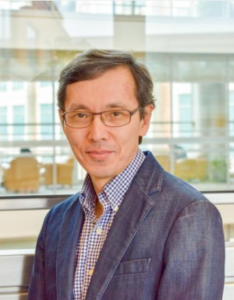
Whoa! Another NHLBI mitochondrial researcher is studying ME/CFS!
What all this means is that Chung’s insights into a potential therapy come with extra rigor. Doctors have an edge because they’re seeing how patients fare day in and day out. They’re seeing things from the outside in. Chung, on the other hand, brings decades of deep physiological understanding. He’s approaching ME/CFS from the inside out.
Like Paul Hwang, MD, PhD, Chung is an intramural researcher at the NHLBI, which historically has had almost nothing to do with ME/CFS. Interestingly, the first intramural researchers from the NHLBI to take on ME/CFS are both mitochondrial researchers.
Neither happened upon ME/CFS because of Nath’s intramural NIH study, which, in its limited testing, found no evidence of mitochondrial dysfunction. These NIH researchers came to ME/CFS on their own.
THE GIST
-

Whoa! Another mitochondrial NHLBI researcher is studying ME/CFS!
Solve M.E. really hit it out of the park with their May 26th Catalyst Award, “Mitochondrial Stabilizer IVO-21 as Therapy for ME/CFS.“
- IVO-21 is different. It’s not a supplement or a drug that’s being repurposed to treat ME/CFS. It’s a new drug that resulted from years of work by Dr. Jay Chung, MD, PhD, an accomplished intramural mitochondrial researcher at the National Heart, Lung, and Blood Institute at the NIH.
- Dr. Chung believes he’s hit on a new paradigm for treating inflammatory illnesses like ME/CFS, fibromyalgia, long COVID, and scores of other diseases.
- The key is a strange kind of DNA we carry in almost all our cells called mitochondrial DNA (mtDNA). The mtDNA story stretches back over a billion years to when a protobacteria merged with an ancient cell to form the mitochondria that power our cells.
- Note the bacterial connection! Our immune system, of course, is on constant guard against bacteria. Unlike the helix-like DNA in our chromosomes, bacterial DNA forms a circle, and when our immune system encounters circular DNA, it attacks.
- The mtDNA doesn’t provoke an immune response when it’s inside the mitochondria, but when it leaks outside of the mitochondria into the interior of the cell – which it does when the mitochondria are unusually stressed – the innate immune system mounts an immediate response.
- Dr. Chung’s IVO-21 drug aims to stop this leakage of mtDNA from the mitochondria into the cell interior.
- The key factors are proteins called VDACs which are found in the membranes that surround the mitochondria. Usually, these proteins act as conduits for ATP and other factors to move from the mitochondria into the cell. When the mitochondria are under stress, though, these proteins can form macropores that allow the mtDNA to escape.
- As noted above, once mtDNA gets into the cell, it provokes an inflammatory response, but it can go further than that. If mtDNA gets out of the cell and into the bloodstream, it becomes a “DAMP” (damage-associated molecular pattern), which triggers further immune activation.
- Dr. Chung’s animal studies suggest that mtDNA may be triggering the type of clotting seen in ME/CFS and long COVID.
- IVO-21 may also be able to enhance autophagy – a crucial process by which damaged and inflammatory mitochondria are recycled. The Simmaron research team has found impaired autophagy in ME/CFS, and its rapamycin trial aims to enhance autophagy and improve energy production in ME/CFS.
- That’s not all. Chung’s preliminary findings suggest that IVO-21 may also reduce levels of the WASF3 protein, which Dr. Hwang believes inhibits mitochondrial energy production in ME/CFS. (See earlier blog).
- Early results also indicate that VDAC protein levels are dramatically increased in ME/CFS, suggesting that the mitochondria are indeed under stress.
- Chung and his team believe IVO-21 could be a paradigm shift and provide a new way to treat many inflammatory diseases. Their patent application specifically mentions ME/CFS, fibromyalgia, and long COVID, as well as many well-known autoimmune and immune diseases.
- Their work began with Parkinson’s disease and neuroinflammation, but they believe that, depending on which tissues show mitochondrial stress and mtDNA release, this process could affect everything from leaky gut to a leaky blood-brain barrier to neuroinflammation, etc.
- The IVO-21 drug recently got a big boost when the National Center for Advancing Translational Sciences (NCATS) at the NIH provided funding to help move it into clinical trials. This will help tremendously as the drug begins extensive (and expensive) toxicology tests.
- If it passes those tests, and Dr. Chung believes it will, IVO-21 will move into Phase I and Phase II human trials. It will probably take 2 or 3 years to get to these trials.
- Solve M.E. is gambling that IVO-21 will pass toxicology tests and is therefore now funding ME/CFS mouse trials. If the drug proves to be successful in the mouse trials, Solve M.E.’s support could make ME/CFS shoot to the top of the queue when human trials start – an unusual place for this disease (!).
- If IVO-21 succeeds, it is projected to be affordable. This is because, while the drug is new, the manufacturing process is not expected to be difficult, the chemicals used to produce it are not expensive, and it should be available as a pill.
- It’s remarkable to see two senior intramural mitochondrial researchers, Dr. Chung and Dr. Hwang, working at an NIH Institute (NHLBI) that has essentially ignored ME/CFS now digging into it!
- Serendipity played a role with both of these researchers. Dr. Hwang came across an ME/CFS patient while studying a family with a cancer gene mutation, and Dr. Chung got involved when Mary Riew, a Solve M.E. Board member, chatted him up about ME/CFS at a wedding reception!
- We can thank Mary for piquing Dr. Chung’s attention, and Solve M.E. for funding this fascinating potential treatment.
Support Health Rising and Keep the Information Flowing!
Health Rising is not a 501 c (3) non-profit
Dr. Chung’s Solve ME/CFS Presentation
Dr. Chung provided a most interesting start to his presentation. He went over the four immune hypotheses: viral persistence, viral fragments, autoimmunity, and viral reactivation.
First, he mostly threw out the viral persistence hypothesis, then he discarded toxins, then he asserted that ME/CFS was probably not just a post-infectious disease…The man was on a roll!
He noted that antiviral, immune, and metabolic therapies have not proven out. A mitochondrial researcher, he pointed out that, thus far, mitochondrial and metabolic therapies (CoQ10, NAD+, acetyl-carnitine, D-ribose, metformin) have had pretty middling results.
The trigger doesn’t matter, he proposed, because ME/CFS and long COVID are occurring at a very deep level. They’re not just immune, or brain, or muscle diseases – they’re “cellular-stress” diseases – which means they can affect any part of the body that experiences too much cellular stress.
It all begins, Dr. Chung believes, with those tiny organelles that power our cells and ultimately our bodies – the mitochondria. Talk about deep – it all started over a billion years ago. Formed by the fusion of ancient bacteria and an ancestral cell type, our mitochondria differ from other organelles found in our cells.
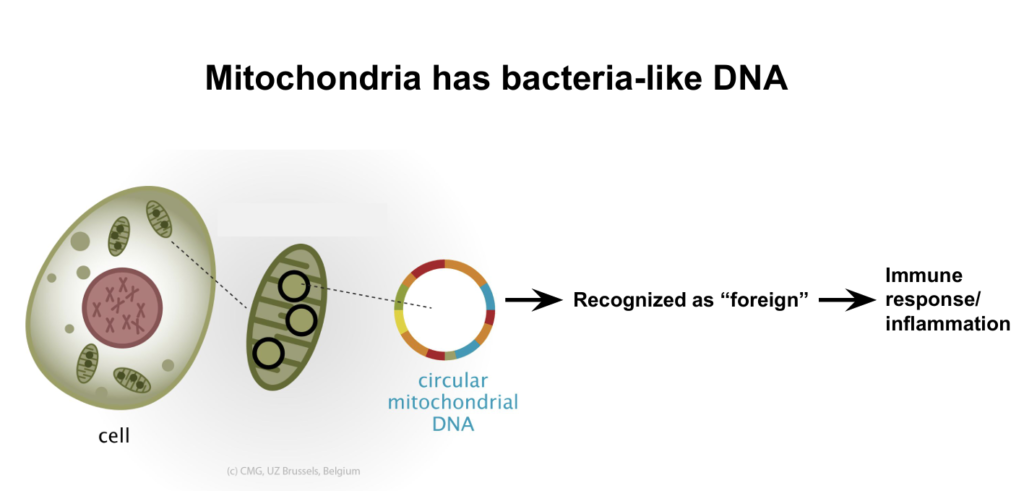
The circular form mtDNA takes immediately triggers the innate immune system. (From Dr. Chung’s Solve M.E. presentation.)
Instead of the helix shape our DNA comes in, mtDNA – which came from an ancient bacterium – forms a circle, causing the cell’s immune system to attack it.
Chung is right on the bleeding edge of our understanding of how this happens. His 2019 paper, “VDAC oligomers form mitochondrial pores to release mtDNA fragments and promote lupus-like disease,” described how oxidatively stressed mitochondria release short mtDNA fragments into the cell, triggering interferon production (inflammation) and an antiviral response.
Since we clearly don’t want the cell to start battling itself, the question becomes: how does this highly virulent material (mtDNA) get from its happy place – inside the mitochondria – into where it’s not wanted – the cell?
Since mtDNA is highly disruptive, the cell has produced two membranes, the second of which is called the voltage-dependent anion channel, or VDAC, to prevent this from happening.
Usually, these VDAC channels are helpful and, in fact, play a crucial role in cellular function. They are channels through which ATP, ADP, and other factors move from the mitochondria into the cell interior (cytosol). When the mitochondria come under stress, from oxidative stress, calcium overload, etc., the proteins that make up the VDAC can form macro-pores, through which mtDNA can escape.
In Chung’s 2023 paper, “Molecular mechanisms of mitochondrial DNA release and activation of the cGAS-STING pathway“, he described the (excruciatingly) complex biological pathways in the cell that produce the mtDNA-triggered inflammation. The paper noted that the macrophage-produced inflammasome “requires the release of oxidized mtDNA”. That finding alone, if I’m reading it right, would have mtDNA release driving a nice chunk of the innate immune response – which we pretty much know is overactivated in ME/CFS.
The authors concluded that uncovering this pathway produced a “paradigm shift” in how mtDNA may cause disease. They stated that “inhibitors of VDAC macropore formation, along with inhibitors of inflammatory pathways, could provide new ways to treat inflammatory diseases.”
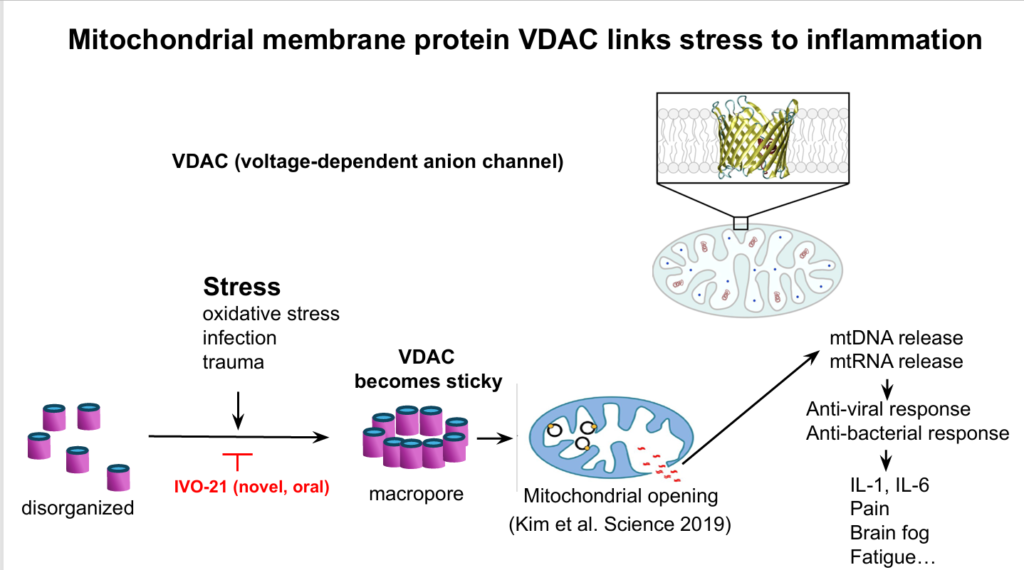
When the mitochondria come under stress, the VDAC proteins can form macropores, which allow mtDNA to leak out of the mitochondria into the interior of the cell – provoking an inflammatory response. (Image from Dr. Chung’s Solve M.E. presentation.)
The inflammatory process does not necessarily stop at the cell wall, however. If mtDNA is released outside the cell, it does the same thing it did inside the cell: it creates havoc. Called a “DAMP” (damage‑associated molecular pattern), it produces further inflammation. Several molecules (ATP, HSPs, etc.) are considered “DAMPs,” but mtDNA arguably produces the strongest reaction.
mtDNA – the Clotting Factor?
These escapees signal that cellular damage has occurred and immediately trigger an innate immune response. A 2026 review, “Clotting the Gap Between Mitochondria-Mediated Immunity and Mitochondrial Transfer“, by Chung and company, showed how extracellular mtDNA release may play a key role in long COVID and ME/CFS by inducing platelet dysregulation and clotting.
Platelets are unusual. Lacking a nucleus and filled with mtDNA, they are prime innate immune system triggers. Because platelets are a major source of circulating mitochondria, they could be dumping large amounts of mtDNA into the bloodstream. That would surely trigger the innate immune response, stimulate neutrophils, encourage NET formation (remember the NETs?), and increase inflammation and clotting, and contribute to the microvascular problems, reduced muscle perfusion, etc., found in long COVID and ME/CFS (!).
IVO-21
Chung’s IVO-21 drug is a mitochondrial stabilizer that firms up the outer mitochondrial membranes (VDAC) to prevent mtDNA from entering the cell interior, causing inflammation, mitochondrial stress, and ultimately reduced energy production.
He’s shown in animal models that IVO-21 blocks mtDNA release and two cytokines, IL-6 and IL-1b, which he believes contribute to PEM.
Stopping inflammation/mitochondrial energy drain isn’t the only tool in IVO-21’s toolkit, though. IVO-21 is also able to enhance autophagy – the process by which damaged mitochondria are safely removed from the cell. Because damaged mitochondria produce inflammation and reduce energy output, the cell must regularly remove them (or recycle them, actually).
The damaged mitochondria are moved into a lysosome, which uses an acid bath to break them down and recycle them. Chung’s findings suggest that IVO-21 can enhance the lysosome’s ability to safely break down damaged mitochondria. Gunnar Gottschalk and Avik Roy of Simmaron have found reduced mitochondrial autophagy in ME/CFS. The ongoing rapamycin trials are trying to fix that.
The WASF3 Connection
It gets even more interesting – and connected. Health Rising recently covered Paul Hwang’s fascinating WASF3/ER stress finding, which could produce reduced mitochondrial energy levels across the body. Chung found that treating immune cells from ME/CFS patients with IVO-21 reduced WASF3 levels.
How it does this isn’t clear, but by reducing inflammation, IVO-21 may be relieving the ER stress Hwang believes is causing WASF3 levels to rise in ME/CFS.
Overstressed mitochondria could trigger inflammation by releasing mtDNA into the cell. The inflammation then disrupts the endoplasmic reticulum, allowing WASF3 levels to climb. High WASF3 levels then shut down mitochondrial antioxidant and energy production and produce more inflammation, keeping the vicious circle going.
Chung also found VDAC levels that were 2 1/2 times higher in ME/CFS patients. This doesn’t necessarily mean they were forming the macropores (VDAC oligomers) through which mtDNA escapes into the cell, but it does indicate that the mitochondrial membranes in ME/CFS were under stress.
Next steps would presumably include assessing whether VDAC oligomers or macropores are present, how much mtDNA is found in the cytosol of ME/CFS patients’ cells, whether increased mtDNA is found in the blood, and whether IVO-21 can reverse all of this.
Paradigm Changer?

Chung’s work potentially points to a new way to treat inflammatory diseases.
IVO-21 is not simply a drug Chung picked up off the shelf. He synthesized it in his lab to stabilize mitochondria and prevent mtDNA release. In their 2025 paper, Chung et al. proposed that IVO-21 could represent a paradigm shift in treating disease. Not many things could be considered paradigm changers, but Chung’s mtDNA concept and the production of IVO-21 could conceivably be.
Their 2026 IVO-21 patent application identified 25 broad disease categories which included over 200 diseases. They explicitly included diseases like ME/CFS, long COVID, fibromyalgia, POTS, and other post-infectious syndromes in their application.
The patent application indicates that using cells or animal models, Chung has successfully tested in IVO-21 a wide variety of conditions, including T-cell exhaustion, thromboinflammation, kidney injury, heart failure, obesity/insulin resistance, and others. The fact that Chung has achieved strong results across such disparate areas of the body suggests he is targeting a core cellular process.
The diverse array of diseases aligns with how Chung explains the wide variety of symptoms in ME/CFS: he believes they arise in tissues where mtDNA-initiated inflammation occurs.
If mtDNA release is preventing autophagy from clearing out damaged mitochondria in the endothelial cells, for instance, problems with blood flows will result. If that’s happening in the brain, it can lead to cognitive and other problems.
Because every cell in our body has mitochondria (except red blood cells), the potential range of damage is immense. Chung noted that mtDNA leakage could contribute to a leaky blood-brain barrier, a leaky gut, and even changes in the gut microbiome. (IVO-21 does cross the blood-brain barrier. In fact, Chung’s lab’s first target was neuroinflammation.)
When asked about emotional stressors, Chung noted that if an emotional stressor was tied to inflammation, it could cause mitochondria to rupture (leaking mtDNA). He reported that stress hormones have been directly linked to mitochondrial dysfunction.
Through the “Valley of Death” VO-21 Goes

NCATS support means IVO-21 will not have to face some of the financial hurdles that other new drugs face.
IVO-21 got a big boost when the National Center for Advancing Translational Sciences (NCATS) gave it funding to assist in moving the drug to clinical trials. Founded in 2011, NCATS’s mission is to speed the development of diagnostics and treatments.
Many potential new drugs die because they can’t make it through the “valley of death”, where new drugs need to undergo expensive animal and other testing before they can make it to human trials.
Depending on how much NCATS is involved in IVO-21, NCATS support could save millions of dollars in outside drug development costs, which would otherwise eventually be passed on to consumers, and it should speed up the process.
Still, it will take time. Comparing drug development to pregnancy, i.e., Chung said there are no shortcuts – it’s going to take time.
Because IVO-21 is a new drug, it will first need animal and toxicology testing (1-2 years), then phase I human safety trials (1 year), and then phase II human trials to assess efficacy and dose. It will take 2-3 years to reach human trials.
While we would all love for things to move more quickly, IVO-21 will benefit, however, from being embedded in a rigorous testing environment. We will learn a lot about it.
Solve M.E.’s Crucial Role
If NCATS is already involved, what is Solve M.E. funding? NCATS supports general drug development, but Solve M.E. is funding testing of IVO-21 in ME/CFS mouse models to determine whether the drug improves energy production and reduces inflammation. Solve M.E. is essentially betting that IVO-21 will make it through the toxicology testing phase (Chung thinks it will) and that, if it does, Solve M.E.’s proof-of-concept trial in an ME/CFS mouse model will give it a leg up in human trials.
Envision this. IVO-21 flies through the animal and the ME/CFS mouse model testing. What is the NIH to do then? It’s been saying for decades that it fully recognizes that there are no FDA-approved drugs for ME/CFS, that these drugs are vitally needed, and that it will fund an ME/CFS clinical trial if one that checks the boxes shows up. And now it has a successful proof-of-concept trial from a senior NIH researcher, that was funded by an ME/CFS organization, no less.
Could it really not fund this trial? Hey, the NIH may not be willing to turn its back on 40 years of neglect, but as time goes on, one thing is sure: it will get harder and harder to do that. Let’s hope that if this situation comes up, it makes a break with the past, does the right thing, and funds an ME/CFS trial.
Cost

An affordable drug would be a huge help for many people with these diseases.
The webinar did not address one of the potentially remarkable and helpful things about this drug – its putative low cost.
The patent application – which explains how the drug is synthesized – may provide a clue. Chung worked on this drug after experimenting with azole-type antifungal drugs such as ketoconazole. Although none worked, he got the idea to synthesize a new azole-type drug.
Because IVO-21 is a synthetically produced small molecule, instead of an antibody, protein, gene therapy, cell therapy, or other biologic, it should be considerably less expensive to produce it. The chemicals needed to produce IVO-21 are not rare and do not appear to be particularly expensive. The drug appears, at least for now, to work in low doses, and the ability to take it in pill form also cuts costs. Plus, as noted, NCATS is shouldering at least some of the development work needed to bring the drug to market.
Time will tell when and if IVO-21 actually reaches the manufacturing stage how expensive it ends up being.
Remarkable Possibility
We don’t know whether macropores are leaking mtDNA into ME/CFS patients’ cells, or whether IVO-21 will pass its toxicity tests, but the drug seems to present a remarkable possibility given the potential IVO-21/WASF3 connection.
What I particularly like about this drug regarding ME/CFS is its rich biological background and the extensive testing it will receive. Because it appears to be getting excellent funding and comes out of an extensive research framework, one way or another, we should know yea or nay on it. (In other words, IVO-21 is not going to be Ampligen (!).)
What a remarkable coincidence that two intramural mitochondrial researchers working in the same NIH institute – but focused on different areas (aging/cancer) – have become interested in ME/CFS. Even more unlikely, their work may very well coincide! IVO-21 could be the answer to WASF3, and WASF3 could help explain why mtDNA is having such an effect.
This is the kind of synchronicity we should expect to see more and more. As we learn more about ME/CFS, more researchers will be drawn to it (even from Institutes like the NHLBI), and more of these unexpected synchronies will show up. When senior researchers like Chung and Hwang out of the blue get interested in ME/CFS, you know we’re making progress.

Solve M.E. Board Member Mary Riew was the spark behind the Chung grant. 🙂
The intersection of these two researchers suggests that while ME/CFS may be unusual in some ways, it isn’t the outlier some have made it out to be; it shares biological pathways with other diseases, and that’s how we get hooked into potential treatments.
As so often happens in medicine, serendipity also played a role. Serendipity showed up for ME/CFS and Hwang when a woman in a family he was studying to learn about cancer happened to have it. It showed up for Chung during a wedding when Solve M.E. Board member Mary Riew talked with Dr. Chung about his work and encouraged him to apply for a Catalyst grant. You never know what may happen when you share about this disease. We can thank Mary for getting Chung involved, and Solve M.E. for funding this fascinating grant.
(It was a good year for the Catalyst grants. The “Sequence ME & Long Covid” grant, which helped DecodeME expand its whole-genome ME/CFS project, was another knockout!)



I am following the mtDNA research for some time and consider it to play an important role in ME/CFS too.
At the very least, research already has shown that extracellular mitochondrial DNA (mtDNA) is involved in ME/CFS. https://pubmed.ncbi.nlm.nih.gov/36153118/
Title “Exosome-associated mitochondrial DNA from patients with myalgic encephalomyelitis/chronic fatigue syndrome stimulates human microglia to release IL-1β”
Quote “Here, we show that mitochondrial DNA (mtDNA) associated with serum exosomes, is increased in ME/CFS patients only after exercise. Moreover, exosomes isolated from patients with ME/CFS stimulate significant release of IL-1β from cultured human microglia.”
In more simple English:
* mitochondria do release mitochondrial DNA and it not only escapes from the mitochondria but also from the cells they live in but (according to this study) only after exercise (mental exertion too IMO).
* extracellular mitochondrial DNA (mitochondrial DNA that escapes out of cells) stimulates microglia (the brain’s dedicated type of immune cells behind the brain-blood-barrier) to produce quite a bit of IL-1β and that is a sign of clear inflammation / immune activation within the brain
* Combined: exercise (but not rest) releases mtDNA; that creates with a modest delay plenty of inflammation in the brain. This sounds a lot like the early stage of PEM after exercise: quickly after the first oxerexertion all sorts of things start to go wrong ‘in the brain’ and pain levels and lack of strength and coordination begin to rise massively.
Now if having a drug that blocks these VDAC’s to form pores in the mitochondrial membrame is going to be a cure all is another question. I suspect it will help some but also that ME/CFS is more then this alone. Many other diseases have increased mtDNA release as a characteristic (“Their 2026 IVO-21 patent application identified 25 broad disease categories which included over 200 diseases” is a good indicator here) and few of them have our typical PEM as a symptom.
On a side note: free mtDNA is also a repair signal. On one hand this makes blocking it too strong a bit tricky. On the other hand it could *help* explain the large amounts of FM and ME/CFS case after serious (head) injury. In brain injury mtDNA release is part of the whole inflammatory (and with it *attempt* to repair) cascade. https://www.pnas.org/doi/10.1073/pnas.2527009123
Title “Neuron-derived mitochondrial DNA (mtDNA) activates microglia via the Z-DNA binding protein 1 (ZBP1)-mediated pathway in mild traumatic brain injury”
Quote “After mTBI, damaged mtDNA is packaged into extracellular vesicles and triggers inflammatory signaling through the cytoplasmic sensor protein called Z-DNA binding protein 1 (ZBP1). Depleting ZBP1 reduces early inflammation but worsens later memory-related cognitive deficits, confirming the importance of early protective immune responses.”
And that quote already points to a potential tricky part of blocking pore forming (too much): you blunt the early protective phase too, risking more longer term problems. So I think one has to be already ‘clean and close to spontaneous healing’ or one has to do it in combination with ‘supporting therapies doing the right things to reduce the need for repair’.
Would it make sense that after a TBI allow the repair to happen and then down the line introduce this medication as the closer?
Traumatic Brain Injury can take quite some time to heal, if it heals at all.
Damaged mtDNA is a signal in repair. The downside seems to be that this signal is ‘self-persistent’ e.g. it can stay on for years even when it is no longer needed. That would sort of overlap with TBI induced FM or ME/CFS. The thing is that, from a ‘system control’ (or engineering) point of view, it is *exactly* this nature that helps as a *needed* timer function.
Let me try and explain. Ideally I’d need a plot to do so, so I’ll use ‘X’ signs for my plots as in early computing. The left starting ‘X’ indicates the zero point / zero magnitude of the graph (note, as spaces ‘ ‘ do not take as much width as ‘X’, these first points may be a bit skewed when viewing). The vertical axis is magnitude, the horizontal time.
Without this self-reinforcing nature of mtDNA release (meaning that an injury derived burst in free mtDNA releases), the graph would be like:
X
X X
X X
X X
XXX XXXXX
With this self reinforcing nature, the behavior over time *could* look like this IF there were no other ‘problematic factors’:
X X
X X
X X
X X
X X
X X
X X
X X
XXX XXXXXXX
Here you see the magnitude going higher due to the self-reinforcing nature. But that would be ‘designed’ to be the actual needed size by modifying the design (so as high as should be, already calculating the response for this ‘ideal’ self-reinforcing nature). More importantly: in engineering (and in nature as nature shows very stable / resilient desings I’d guess) this behavior should (without strong genetic mutations) always be made to ‘fade away’ all by itself after the original cause disappeared.
Now this immune / repair ‘sensor’ formed by extracellular mtDNA plus all what acts upon it is sensitive to additional factors like simultaneous viral infections, *other* additional causes of stress, aging, chronic overexertion (as ‘recorded’ in mitochondrial and vascular quality prior to TBI) and so on. This is not a mistake, but needed to adapt healing to patient status and healing progress.
Results: option A) same curve as above but going higher (more inflammation) and fading out slower (but still over time going to normal / pre-injury. Think of Covid taking weeks or months to recover from symtomps including fatigue. Option A) IMO happens when there are ‘few’ additional ‘vulnerabilities’ (to ME/CFS or LC symptoms).
Results: option B) the increased actual damage (blood vessel damage, tissue scars and remodeling) plus risk factors plus this self-reinforcing loop become so much that the loop stays ‘near-unsolvable’ to resolve. Think the initial cause ending up in ME/CFS, LC…; this gives the following plot (magnitude decreased a bit to fit already long comment) (basically saying: without help the body finds no way to fully heal and goes into partial and protective hibernation):
X X
X X
X X
X X
X XXXXXXXXXXXXXXXXXXXXXXXXXXXXXXX
X
X
X
XXX
And when then doing a big change that would get you a lot healthier if you’d never had ME/CFS or LC to start with (like going from a poor diet to a very good diet), you still end up well above the threshold of actual damage plus risk factors plus self-reinforcing loop and this becomes something like (if you don’t succeed to elliminate near all ‘weaknesses’):
X X
X X
X X
X X
X XXXXXXXXXX
X XXXXXXXXXXXXXXXXXXXXXX
X
X
XXX
You’ll get an improvement but far smaller then expected when you’d never got ME/CFS or LC to start with. You need a stack of well chosen target improvements (and avoid costly backfiring!) in order to try and break the threshold for a ‘real’ reset. That’s what we so often experience. My best guess is that most medications will show similar behavior, with some a larger bump in improvement then others, so long their side effects are tolerable. Few medications will heal to the point of full recovery without additional measures. Few improvements will last well when the medication is terminated. But every improvement is welcome and much needed.
Now going back to your original question:
This long tail, that is a natural result of this self-reinforcing nature of these feedback mechanisms, is largely a desired and *adaptive* thing that (when patients do recover) is IMO often a fair timeline of the actual time needed to heal and recover. In TBI and Covid patients, this can be rather short (some people largely recover quickly from concussion or Covid, less then a week) or rather long (some take many months or more). So you’d IMO had to be able to guess this time window correctly and precision dose the medication over time in order to allow good healing and not risk making it worse. In practice: Those that would heal quickly by themselves *might* heal even quicker (but not necessairly as complete; possibly some extra remaining brain damage) if they’d just take a ‘standard’ dosing a certain time after the TBI. For those that would end up with FM or ME/CFS without them, timing would be rather difficult and could make long term outcomes even worse.
Hope my view is a bit clear.
Dang. The software removed my spaces.
@Cort: please remove my first response and leave the following corrections with ‘O’ instead of ‘ ‘)
@Cort: Second attempt also looks bad, please remove too.
Traumatic Brain Injury can take quite some time to heal, if it heals at all.
Damaged mtDNA is a signal in repair. The downside seems to be that this signal is ‘self-persistent’ e.g. it can stay on for years even when it is no longer needed. That would sort of overlap with TBI induced FM or ME/CFS. The thing is that, from a ‘system control’ (or engineering) point of view, it is *exactly* this nature that helps as a *needed* timer function.
Let me try and explain. Ideally I’d need a plot to do so, so I’ll use ‘X’ signs for my plots as in early computing. The left starting ‘X’ indicates the zero point / zero magnitude of the graph (note, as spaces ‘ ‘ do not take as much width as ‘X’, these first points may be a bit skewed when viewing). The vertical axis is magnitude, the horizontal time.
Without this self-reinforcing nature of mtDNA release (meaning that an injury derived burst in free mtDNA releases), the graph would be like:
°°°°°°°X
°°°°°X°°°X
°°°°X°°°°°°°X
°°°°X°°°°°°°°°°°°X
XXX°°°°°°°°°°°°°°°°°°°°°°XXXXX
With this self reinforcing nature, the behavior over time *could* look like this IF there were no other ‘problematic factors’:
°°°°°°°°°°°°°°X°°°°X
°°°°°°°°°°X°°°°°°°°°°°°X
°°°°°°°°X°°°°°°°°°°°°°°°°°°X
°°°°°°X°°°°°°°°°°°°°°°°°°°°°°°°X
°°°°°X°°°°°°°°°°°°°°°°°°°°°°°°°°°°°°X
°°°°°X°°°°°°°°°°°°°°°°°°°°°°°°°°°°°°°°°°°°°X
°°°°X°°°°°°°°°°°°°°°°°°°°°°°°°°°°°°°°°°°°°°°°°°°°°°°°°X
°°°°X°°°°°°°°°°°°°°°°°°°°°°°°°°°°°°°°°°°°°°°°°°°°°°°°°°°°°°°°°°°°X
XXX°°°°°°°°°°°°°°°°°°°°°°°°°°°°°°°°°°°°°°°°°°°°°°°°°°°°°°°°°°°°°°°°°°°°°°°°°XXXX
Here you see the magnitude going higher due to the self-reinforcing nature. But that would be ‘designed’ to be the actual needed size by modifying the design (so as high as should be, already calculating the response for this ‘ideal’ self-reinforcing nature). More importantly: in engineering (and in nature as nature shows very stable / resilient desings I’d guess) this behavior should (without strong genetic mutations) always be made to ‘fade away’ all by itself after the original cause disappeared.
Now this immune / repair ‘sensor’ formed by extracellular mtDNA plus all what acts upon it is sensitive to additional factors like simultaneous viral infections, *other* additional causes of stress, aging, chronic overexertion (as ‘recorded’ in mitochondrial and vascular quality prior to TBI) and so on. This is not a mistake, but needed to adapt healing to patient status and healing progress.
Results: option A) same curve as above but going higher (more inflammation) and fading out slower (but still over time going to normal / pre-injury. Think of Covid taking weeks or months to recover from symtomps including fatigue. Option A) IMO happens when there are ‘few’ additional ‘vulnerabilities’ (to ME/CFS or LC symptoms).
Results: option B) the increased actual damage (blood vessel damage, tissue scars and remodeling) plus risk factors plus this self-reinforcing loop become so much that the loop stays ‘near-unsolvable’ to resolve. Think the initial cause ending up in ME/CFS, LC…; this gives the following plot (magnitude decreased a bit to fit already long comment) (basically saying: without help the body finds no way to fully heal and goes into partial and protective hibernation):
°°°°°°°°°°°°°°X°°°°X
°°°°°°°°°°X°°°°°°°°°°°°X
°°°°°°°°X°°°°°°°°°°°°°°°°°°X
°°°°°°X°°°°°°°°°°°°°°°°°°°°°°°°X
°°°°°X°°°°°°°°°°°°°°°°°°°°°°°°°°°°°°XXXXXXXXXXXXXXXXXXXXXXXXXXXXXXXXXX
°°°°°X
°°°°X
°°°°X
XXX
And when then doing a big change that would get you a lot healthier if you’d never had ME/CFS or LC to start with (like going from a poor diet to a very good diet), you still end up well above the threshold of actual damage plus risk factors plus self-reinforcing loop and this becomes something like (if you don’t succeed to elliminate near all ‘weaknesses’):
°°°°°°°°°°°°°°X°°°°X
°°°°°°°°°°X°°°°°°°°°°°°X
°°°°°°°°X°°°°°°°°°°°°°°°°°°X
°°°°°°X°°°°°°°°°°°°°°°°°°°°°°°°X
°°°°°X°°°°°°°°°°°°°°°°°°°°°°°°°°°°°°XXXXXXXXXX
°°°°°X°°°°°°°°°°°°°°°°°°°°°°°°°°°°°°°°°°°°°°°°°°°°XXXXXXXXXXXXXXXXXXXXXX
°°°°X
°°°°X
XXX
You’ll get an improvement but far smaller then expected when you’d never got ME/CFS or LC to start with. You need a stack of well chosen target improvements (and avoid costly backfiring!) in order to try and break the threshold for a ‘real’ reset. That’s what we so often experience. My best guess is that most medications will show similar behavior, with some a larger bump in improvement then others, so long their side effects are tolerable. Few medications will heal to the point of full recovery without additional measures. Few improvements will last well when the medication is terminated. But every improvement is welcome and much needed.
Now going back to your original question:
This long tail, that is a natural result of this self-reinforcing nature of these feedback mechanisms, is largely a desired and *adaptive* thing that (when patients do recover) is IMO often a fair timeline of the actual time needed to heal and recover. In TBI and Covid patients, this can be rather short (some people largely recover quickly from concussion or Covid, less then a week) or rather long (some take many months or more). So you’d IMO had to be able to guess this time window correctly and precision dose the medication over time in order to allow good healing and not risk making it worse. In practice: Those that would heal quickly by themselves *might* heal even quicker (but not necessairly as complete; possibly some extra remaining brain damage) if they’d just take a ‘standard’ dosing a certain time after the TBI. For those that would end up with FM or ME/CFS without them, timing would be rather difficult and could make long term outcomes even worse.
Hope my view is a bit clear. Feedback is a rather difficult topic!
Traumatic Brain Injury can take quite some time to heal, if it heals at all.
Damaged mtDNA is a signal in repair. The downside seems to be that this signal is ‘self-persistent’ e.g. it can stay on for years even when it is no longer needed. That would sort of overlap with TBI induced FM or ME/CFS. The thing is that, from a ‘system control’ (or engineering) point of view, it is *exactly* this nature that helps as a *needed* timer function.
Let me try and explain. Ideally I’d need a plot to do so, so I’ll use ‘X’ signs for my plots as in early computing. The left starting ‘X’ indicates the zero point / zero magnitude of the graph (note, as spaces ‘ ‘ do not take as much width as ‘X’, these first points may be a bit skewed when viewing). The vertical axis is magnitude, the horizontal time.
Without this self-reinforcing nature of mtDNA release (meaning that an injury derived burst in free mtDNA releases), the graph would be like:
°°°°°°°X
°°°°°X°°°X
°°°°X°°°°°°°X
°°°°X°°°°°°°°°°°X
XXX°°°°°°°°°°°°°°°°°°°°XXXXX
With this self reinforcing nature, the behavior over time *could* look like this IF there were no other ‘problematic factors’:
°°°°°°°°°°°°°°X°°°X
°°°°°°°°°°X°°°°°°°°°°X
°°°°°°°°X°°°°°°°°°°°°°°°X
°°°°°°X°°°°°°°°°°°°°°°°°°°°X
°°°°°X°°°°°°°°°°°°°°°°°°°°°°°°°°X
°°°°°X°°°°°°°°°°°°°°°°°°°°°°°°°°°°°°°X
°°°°X°°°°°°°°°°°°°°°°°°°°°°°°°°°°°°°°°°°°°°°X
°°°°X°°°°°°°°°°°°°°°°°°°°°°°°°°°°°°°°°°°°°°°°°°°°°°°°X
XXX°°°°°°°°°°°°°°°°°°°°°°°°°°°°°°°°°°°°°°°°°°°°°°°°°°°°°°°°°°°°°XXXX
Here you see the magnitude going higher due to the self-reinforcing nature. But that would be ‘designed’ to be the actual needed size by modifying the design (so as high as should be, already calculating the response for this ‘ideal’ self-reinforcing nature). More importantly: in engineering (and in nature as nature shows very stable / resilient desings I’d guess) this behavior should (without strong genetic mutations) always be made to ‘fade away’ all by itself after the original cause disappeared.
Now this immune / repair ‘sensor’ formed by extracellular mtDNA plus all what acts upon it is sensitive to additional factors like simultaneous viral infections, *other* additional causes of stress, aging, chronic overexertion (as ‘recorded’ in mitochondrial and vascular quality prior to TBI) and so on. This is not a mistake, but needed to adapt healing to patient status and healing progress.
Results: option A) same curve as above but going higher (more inflammation) and fading out slower (but still over time going to normal / pre-injury. Think of Covid taking weeks or months to recover from symtomps including fatigue. Option A) IMO happens when there are ‘few’ additional ‘vulnerabilities’ (to ME/CFS or LC symptoms).
Results: option B) the increased actual damage (blood vessel damage, tissue scars and remodeling) plus risk factors plus this self-reinforcing loop become so much that the loop stays ‘near-unsolvable’ to resolve. Think the initial cause ending up in ME/CFS, LC…; this gives the following plot (magnitude decreased a bit to fit already long comment) (basically saying: without help the body finds no way to fully heal and goes into partial and protective hibernation):
°°°°°°°°°°°°°°X°°°°X
°°°°°°°°°°X°°°°°°°°°°°°X
°°°°°°°°X°°°°°°°°°°°°°°°°°°X
°°°°°°X°°°°°°°°°°°°°°°°°°°°°°°°X
°°°°°X°°°°°°°°°°°°°°°°°°°°°°°°°°°°°°XXXXXXXXXXXXXXXXXXXXXXXXXXX
°°°°°X
°°°°X
°°°°X
XXX
And when then doing a big change that would get you a lot healthier if you’d never had ME/CFS or LC to start with (like going from a poor diet to a very good diet), you still end up well above the threshold of actual damage plus risk factors plus self-reinforcing loop and this becomes something like (if you don’t succeed to elliminate near all ‘weaknesses’):
°°°°°°°°°°°°°°X°°°°X
°°°°°°°°°°X°°°°°°°°°°°°X
°°°°°°°°X°°°°°°°°°°°°°°°°°°X
°°°°°°X°°°°°°°°°°°°°°°°°°°°°°°°X
°°°°°X°°°°°°°°°°°°°°°°°°°°°°°°°°°°°°XXXXXXXXXX
°°°°°X°°°°°°°°°°°°°°°°°°°°°°°°°°°°°°°°°°°°°°°°°°°°XXXXXXXXXXXXXXX
°°°°X
°°°°X
XXX
You’ll get an improvement but far smaller then expected when you’d never got ME/CFS or LC to start with. You need a stack of well chosen target improvements (and avoid costly backfiring!) in order to try and break the threshold for a ‘real’ reset. That’s what we so often experience. My best guess is that most medications will show similar behavior, with some a larger bump in improvement then others, so long their side effects are tolerable. Few medications will heal to the point of full recovery without additional measures. Few improvements will last well when the medication is terminated. But every improvement is welcome and much needed.
Now going back to your original question:
This long tail, that is a natural result of this self-reinforcing nature of these feedback mechanisms, is largely a desired and *adaptive* thing that (when patients do recover) is IMO often a fair timeline of the actual time needed to heal and recover. In TBI and Covid patients, this can be rather short (some people largely recover quickly from concussion or Covid, less then a week) or rather long (some take many months or more). So you’d IMO had to be able to guess this time window correctly and precision dose the medication over time in order to allow good healing and not risk making it worse. In practice: Those that would heal quickly by themselves *might* heal even quicker (but not necessairly as complete; possibly some extra remaining brain damage) if they’d just take a ‘standard’ dosing a certain time after the TBI. For those that would end up with FM or ME/CFS without them, timing would be rather difficult and could make long term outcomes even worse.
Hope my view is a bit clear. Feedback is a rather difficult topic, and adding biology makes it even harder!
Any idea of why mtDNA is only released after exercise? What could be causing this?
To start: mtDNA release by itself isn’t ‘only’ wrong. It’s an important signal used by the immune system. When completely blocking mtDNA release, we cripple parts of our immune system.
It acts for example as a ‘sense amplifier’, a useful tool in detecting small amounts of viral DNA early on and responding strong enough. It also acts as a ‘sense modifier’, amplifying the immune response when the body is in a weak situation. Think of older people with ‘slower’ immune response. Their poor immune system acts slower and their increased ‘ability’ to release mtDNA is IMO (also) a signal to try and respond quicker to compensate for that slowliness.
Now many pathogens including many viri do spread quicker when there is plenty of ATP available. Inhibiting ATP production then can be a good and valid immune response. Reducing the mitochondrial mass and ATP production per mass of mitochondria then is a valid strategy to try and reduce the viral spread. So inhibiting ATP production during acute or latent infection is again not ‘wrong’ per definition.
Now take it a step further. Mitochondria that ‘see’ a too strong or too long maintained ATP demand could ‘suspect’ a virus (or cancer) is trying to spread as that takes plenty of energy. Therefore, it is a valid strategy for those mitochondria to send a clear ‘danger signal’ and mtDNA release is a main clear danger signal they produce.
Now combine that: if a viral infection (or prolongued exhaustion starting from normal health) initially triggers this loop, the body / immune system could determine that the best defense is to try and limit both (anaerobe and aerobe) ATP production and mitochondrial mass and ATP produced per mitochondria. In addition it could try and slow as much as possible processes down in order to reduce not only ATP consumption but also limit the production of all sorts of enzymes and proteins needed to function at normal speed. This helps suppress the production of viral proteins or cancer cells too. When done ‘perfectly right’, the body has just enough energy to wait out the danger / potential infection and can return to normal function after the danger is over. When the infection / danger signal does not get worse, the cells and mitochondria do not need to send much of a danger signal during rest. E.g. plenty of danger signals remain low at rest when the pathogen threat is low-ish but the body still sits in / thinks it is in the danger recovery phase. That means: in this phase, at rest danger signals including extracellular mtDNA *can* be there but at fairly low levels (low enough to not be considered increased).
Then what is the problem? This would be an inhibitory mode able to provide just enough ATP for rest plus slow recovery, but it would have very low (sustained, even for short periods) peak aerobe ATP production before the mitochondria need to produce far more then what they can safely sustain. Therefore they should and do produce free mtDNA as a danger signal (even with very small and short overexertion in ME/CFS).
This looks a lot like the ‘Dauer’ or inhibitory situation we experience. And this hypothesis also helps IMO explain why so many things we do in order to try and increase mitochondrial ATP production fail:
* the main route in Dr. Chung’s hypothesis is that free mtDNA triggers the cGAS-STING route and triggers a flare in inflammation.
* the strength of this response is directly modulated / amplified with how much mtDNA is released; double the mitochondrial mass, double the amount of mtDNA there is potentially to release.
* cGAS is made by cGAS synthase, and that consumes ATP and (closely related, also costing energy) GTP. The more ATP and GTP there is, the more cGAS can be produced.
=> so leaving everything unchanged (not realistic), ‘just’ increasing mitochondrial mass and ATP and GTP production amplifies the immune response to released mtDNA *a whole lot*.
Sure, realistically with healthier mitochondria the amount of mtDNA will decrease a lot too. But it needs to decrease *a whole lot more* in order to have the product amount of mtDNA released * amount of cGAS produced to be lower. You need to be able to do that in a very orderly (well synchronized) fashion for it to be able to be beneficial and that (in practice, ME/CFS is *very* stuborn) seems very hard to do.
Just ‘magically’ trying to reset this ‘wrong’ response may not be enough. IMO with many patients this immune ‘over-responsiveness’ isn’t entirely wrong. See for example the response of Tracy Duvall in this comment section: temporary remission each time followed by getting back stuck in full ME/CFS after an infection. IMO the body (immune system plus autonomous brain part) may (not as much with Tracy it seems, but many other patients who do not get temporary remission) remember they are rather vulnerable to a (repeating, like Covid) infection that the body has ‘demonstrated’ to not be able to handle well. And therefore the body (immune system plus autonomous brain) ‘decides’ to go into a long term safety / inhibition mode. Remember that many ME/CFS patients show exceptional resilience to many common infections once they get ME/CFS so it has clear defensive properties.
¿So you do believe this is the definitive cause behind ME/CFS? Does inhibiting mtDNA would be a permanent fix or just temporary?
What about people who get ME/CFS by vaccines? There is no actual viral agente in there.
I now believe that the body goes into a sort of *functional* inhibition mode to try and deal with (often immune related) problems it can’t really cope with well. And that, in ME/CFS, seems to work by putting us in a rather low energy mode for a long time. The body seems to make sure the feedback loop (vicious circle) is strong enough with us so that we won’t easily break out off it before the body ‘thinks’ it is safe enough to do so.
Release of mtDNA is but one (important) part of this elaborate process and this process is IMO largely supposed to work as it does even in us ME/CFS patients. Therefore my best guess is that ‘just’ blocking mtDNA release won’t be a cure all for everybody. By blocking it you fix one part and break another part. It may have some potential for some, but I’d be (more then happilly) rather surprised if it would be the final cure to ME/CFS .
Anything that can trigger a too big or too long lasting immune response has IMO *some* changce to directly (if the vaccine contains foreign DNA plus adjuvant (immune booster)) or indirectly trigger this portective / inhibitory mechanism *in people vulnerable to it*.
But why it happens with some people and not with others?
Mine was caused by a vaccine with aluminum salts as adjuvant and that it is known to cause ME/CFS.
My nightmare started immediately after the last dose.
Small genetic and epigentic differences?
Some scientists say that genes make up 10% of health outcomes while epigenetic differences make up the other 90%. Epigenetics talks about what influences the expression of your genes. Think about things like difference in microbiome, prior infections, prior injuries, periods of stress or overexhaustion, exposure to toxins, food and exercise patterns…
Those things can cause the immune system to react different when being challenged (as a vaccine is supposed to do in order to train it, and supposed to trigger it in a safer way then getting hit by the pathogen itself but unfortunately nothing is 100.00%). Vaccine plus (AFAIK even early) infection at the same time increases risk, and IMO the same may be true when done during periods of exhaustion.
Hang in there. Every day we get a day closer to solutions. We just don’t know when that day is yet.
Thanks for what sounds like good news, and explaining science I’d never be able to understand on my own.
2-3 years? If IVO-21 really delivers I won’t complain.
Me neither. I don’t know but my guess is that, given the potential of this drug, NCATS is going full tilt on supporting it.
Why wouldn’t they? This drug is coming from within the NIH and could literally be a paradigm changer. Time will tell, but if I were the NIH, I would be slamming funding toward it.
Yes, but what are the odds it proceeds with vigorous testing in ME/CFS instead of some other disease? I have no faith in the system. Hope, but not faith.
That’s the big question. Chung thinks this drug has very wide applications and I would suppose all sorts of diseases would be interested. I don’t know how this goes but if it passes the toxicology tests, I don’t see why this drug couldn’t be immediately tested in many diseases that could provide funding.
Because it was developed in an NIH lab, the NIH must have a proprietary interest in this drug and they mitgh very well choose to fund trials in Parkinson’s or other diseases and not ME/cFS.
ME/CFS, though, would be one disease that would really need a leg up and if we have a successful mouse study, I would hope the NIH would finally do us a good one. Of course, I’ve been hoping that for a long time (lol), but you never know.
Amazing stuff. Well explained, Cort!
Yes it was a great webinar.
His comment around persistent viruses drew a small cheer from me.
Cort, do you know when Dr Mullington’s study on orexin will be out? I contacted her last September, and she said in about a year. It’s September now, so hopefully soon?
You have a good memory! The paper just came up – https://academic.oup.com/sleep/article-abstract/49/8/zsag090/8660839?redirectedFrom=fulltext&login=false – I can only see the abstract. I don’t see anything yea or nea about orexin, though. I will try and find out if its included.
I am a lecturer and I can access the whole paper. There’s nothing about orexin in it so I assume there’s a further paper to come?
I asked her – will let you know. Orexin was the big deal in the study for me.
Yes that was my main interest too. Involvement of orexin in ME/CFS is a very plausible proposition, since it impacts energy / wakefulness, sleep, autonomic system….
Helpfully, it’s also an area coming on leaps and bounds in terms of research and treatment options.
Anything back from Dr Mullington, Cort?
Even if her study doesn’t show disturbed orexin in many or most people with ME/CFS, it could still be a big factor in some of us.
Daytime sleepiness is the biggest issue for both my daughter and myself. In 35 years with the illness, other symptoms have come and gone. But it’s been the daytime sleepiness, along with PEM, that have been the constants.
I wouldn’t be at all surprised if both my daughter and I have Idiopathic Hypersomnia as a comorbidity, and that this may contribute significantly to the sleepiness. But that’s hard to diagnose, especially in a small country like New Zealand where good sleep specialists are few and far between.
It might be false hope, but with the booming field of orexin agonists, I am slightly hopeful.
Ever heared about https://en.wikipedia.org/wiki/Narcolepsy?
Yep. Definitely don’t have that, eg. Cataplexy.
But I suspect Idiopathic Hypersomnia
My daughter and I both suffer from SAD, and interestingly orexin has recently been implicated in that, as well as IH and narcolepsy.
I am going to be a guinea pig and experiment with some things that potentially modify orexin ie. bright light therapy, BCAAs.
Am really keen to hear Mullington’s results on orexin
I’d like to say a huge thank you, not only to Cort for covering this, but also to the couple who’s wedding Dr Chung and Mary Riew attended. All this seems to be thanks to that event.
Hope is a fantastic thing to have, and this gives me a lot.
Isn’t that something? This is often how it goes. Someone shares about ME/CFS and the word spreads and people get involved. Remember that once researchers know more about ME/CFS, they’re often fascinated by it. The problem has always been getting funding.
100% agree.
I was just so impressed with Dr Chung’s presentation
Thanks Cort; lots of encouraging stuff here. The fact that Dr Chung has developed a possible treatment, and not just come up with a theory (like so many “researchers” do), is huge. And the alignment between his work and Dr Hwang’s is also encouraging. Fingers crossed that this bears fruit and leads to an effective treatment.
It was so good to hear that he actually created this drug to attack this problem – and the alignment goes even further: there’s the potential Chung and Hwang connection, and then there’s the potential Hwang – Goldstein (norepinephrine) connection. 🙂
Never seen this from the NIH before. Now that their own researchers are studying ME/CFS, they need to step up and fund some big studies….
“then there’s the potential Hwang – Goldstein (norepinephrine) connection”
norepinephrine pulses do create ‘pulsating (pressure) waves’ at night that help pump waste in spinal fluid out of the brain via the glympathic system. That waste includes exctracellular / free mtDNA. I’ve recently written something about it plus reference here so won’t try and find it back now.
It also fits in with Dr. Phair’s itaconate shunt hypothesis. Interferon production stimulates itaconate production and if I recall correctly this is also something Dr. Phair did discuss in a video on his itaconate shunt hypothesis.
The Dr. Chang 2023 paper mentioned by Cort (https://pmc.ncbi.nlm.nih.gov/articles/PMC10037406/) shows it in figure 1, bottom: IRF3 is triggered and that stimulates Type I interferon production. It’s part of the complex cGAS-STING signalling pathway (see title of fig 1).
That “STING” part in the pathway stands for “Stimulator of interferon genes” and is (almost, very few steps, teaming up with something called cGAS) directly stimulated by mitochondrial DNA.
The potential connections spread! Thanks for pointing those out 🙂
Thanks, dejurgen, for addressing this connection to Rob Phair’s and Itaconate Shunt Theory. It was my first question when I (attempted to) read Cort’s summary. My attention span is so short these days… :/
That’s how I bumped into the mitochondrial DNA (plus also RNA, there is more to be found here) route. So departing from the need to find a good source for itaconate production, interferon became a prime candidate. And from the many candidates I searched for an *enduring* source of interferon, many options kept on failing because they shouldn’t ‘lock in’ in a vicious circle. I kept on failing to find a reason why they’d lock in in such a broad range of patients with different onset and comorbidities.
From an engineering point of view, this tenacious feedback loop almost had to require some very ‘short’ as in close by in space and time connection. And with larger options failing again and again, mitochondrial DNA and RNA leak provides these routes. Of coarse, building upon previous work of actual researchers including the 2023 work of Dr. Chung (sorry for the previous misspelling of his name) and many others.
Short summary: I reached to a similar (and obviously less experimental) hypothesis BUT coming from another angle and in my book, reaching the same / a similar endpoint by fairly indepent routes is a good pointer for potential.
Always a good sign! Let’s hope! 🙂
I’m also so grateful to Solve ME & these 2 researchers – and to Cort for bringing it to us.
This explanation really seems to land – here’s hoping!
Now this is a blog worth reading! Thank you, Cort! Finally some substance.
yes there seems to be quite a lot of ‘going round in circles’ in the ME/CFS research space – immune exhaustion blah blah blah. It’s great to see something that’s novel, yet concrete, and with some hope!
Cort, this may suggest an immediately available way to probe part of the IVO-21 mechanism while we wait for IVO-21 itself.
A 2026 study identified VDAC1 as a direct functional target of berberine. Berberine binding inhibited VDAC1 oligomerization, preventing oxidized mitochondrial DNA from escaping into the cytosol and reducing downstream inflammatory signaling. That sounds remarkably similar to the central VDAC mechanism Chung is pursuing with IVO-21.
There may also be an interesting connection with Paul Hwang’s WASF3 work. Hwang found that ER stress increases WASF3, which disrupts mitochondrial respiratory supercomplexes and impairs respiration. When ER stress was pharmacologically reduced, WASF3 fell and mitochondrial function improved.
TUDCA is a readily available bile acid and chemical chaperone with substantial experimental evidence for reducing ER stress.
That raises an intriguing possibility: berberine and TUDCA might attack two different points in the same vicious cycle.
Mitochondrial stress → VDAC1 oligomerization → mtDNA escape → inflammation → ER stress → WASF3 ↑ → respiratory-supercomplex disruption → impaired oxidative phosphorylation → more mitochondrial stress.
Berberine potentially intervenes at the VDAC1/mtDNA end; TUDCA at the ER-stress end upstream of WASF3.
I haven’t found evidence that this combination has been tested in ME/CFS. But the individual mechanistic links come from independent lines of research, which makes the convergence particularly interesting. Both compounds are already readily available, unlike IVO-21.
I recently began taking TUDCA, 250 mg twice/day, which has been spectacularly effective for some (but not all) ME/CFS patients. I believe it is making a difference in my case (I am noticing more energy and body heat, among other things) but it’s too early to know for sure. I have ordered berberine to add to my routine. I’ll keep you posted on my n = 1 clinical trial.
I’ve never heard of TUDCA until today. Can you point me towards forums or websites or anything showing success in me/cfs patients? I just want to read more from people who are trying it. Thank you!
Yes. There has actually been quite a bit of discussion of TUDCA among people with ME/CFS, particularly on the Phoenix Rising forums.
One long-running discussion is called “Unfolded Protein Response and A Possible Treatment for CFS.” There is also a newer thread called “Efthymios’s AI aided protocol,” which has quite a few firsthand TUDCA reports. Efthymios Kalafatis (mariovitali on Phoenix Rising) has said that TUDCA was a key part of his remission.
The reports aren’t uniformly positive, which is useful to know. Some people report improvements in fatigue, mental clarity, GI symptoms or general function; some notice little; and some have stopped because of side effects such as reflux.
There is also a Health Rising forum thread specifically titled “TUDCA to treat ME/CFS.”
So there is a fair amount of patient experience out there. I only started looking into TUDCA myself very recently, so I’m still digging through it too.
Phoenix Rising — Efthymios’s AI aided protocol
Phoenix Rising — Unfolded Protein Response and A Possible Treatment for CFS
Health Rising forum — TUDCA to treat ME/CFS
(Sorry, I don’t know how to paste these with live links, but you should be able to find them by searching.)
I’m experimenting on myself with TUDCA also. I started with 1/2 of a 250 mg capsule. I just opened the capsule, used one end of the capsule to measure and dumped the rest out. I didn’t see any noticeable difference after that first dose. Second day I took the whole capsule. I had some energy & desire to do a few things around the house but that night I didn’t sleep well. I felt like I had taken a little caffeine. The third day I took another whole capsule. That afternoon I was watching the grandkids and had an unusual desire to run around with them, kick the ball, chase them, etc. This is extremely unusual for me and I got winded easily, but still didn’t feel like sitting in the recliner. My body wanted to move or do something, anything, but they wanted to watch TV. I was terribly bored and begged them to play a game or something! I got a little frustrated because I didn’t have any way of getting rid of this feeling of wanting to move. It scared me a little as I usually spend most of my time in the recliner. I stopped taking it, but this is what I’m going to do next. I’m going to buy some empty medicine capsules and divide the 250 TUDKA capsules into smaller dosage. I’m going to it take earlier in the day so that it’s out of my system by bedtime. I will find my baseline dose. If I have more to do on that day I will take a second small dose if needed. After I try this for a while and see how it goes I might add berberine. What do y’all think. I’m a 70 year old female with POTS/autonomic dysfunction, ME/CFS, Fibromyalgia, small fiber neuropathy all as a part of Sjogren’s disease.
Thank you, Ginger for your experience with tudca. I’m about to take it. Let me know how it is with continued use.
I will. Keep us posted about your trial too. Sorry, I misspelled TUDCA above in my post.
Hi! Just a warning to not take berberine willy-nilly without checking interactions!
Please see my full comment under Jerry’s comment above.
Ginger, this is amazing! Thank you for sharing your experience. I plan on trying berberine for a month and then adding in TUDCA. I will start each at a low dose and increase gradually if I don’t have any bad effects.
I love the image of you chasing your grandkids all around and they are like, “What got into grandma? She usually just sits in the recliner.” hahaha 🙂
It was pretty funny lol. I even climbed & rolled over the back of the couch when chasing the grandkids. I will have to take it slowly so my body can rebuild some conditioning or I might break something! I took 1/2 250 mg capsule this morning so everyone look out. Grandma is on the loose!
Hi, this is very interesting, I will do some more research thank you. Does the Tudca stimulate the mitochrindria? What would the addition of the berberine do for you please?
Hi Teresa. TUDCA doesn’t directly stimulate the mitochondria. The idea is that it may remove something that is holding them back.
In ME/CFS research, endoplasmic reticulum (ER) stress increased a protein called WASF3, which interfered with the mitochondrial machinery that produces energy. TUDCA reduced that ER stress.
Berberine may enter the same vicious cycle from the other side. Recent research suggests that it blocks a gateway in the outer mitochondrial membrane called VDAC1 from forming larger openings that allow damaged mitochondrial DNA to leak out of the mitochondria and trigger inflammation.
The interesting possibility is that these are two parts of the same feedback loop: cellular stress impairs mitochondrial energy production, while distressed mitochondria release signals that promote more inflammation and cellular stress.
So I’m experimenting with attacking that cycle at two different entry points: TUDCA → less ER stress/WASF3 → better mitochondrial energy production; berberine → less mitochondrial DNA leakage → less inflammation and cellular stress.
I’ve only just started combining them, but so far the effect on my energy has been impressive. But as I said, I’ve only just started this combination and it’s very early days with it.
Great work Terry! I love this sort of stuff. Giving some things a go based on plausible mechanisms. I look forward to further reports.
In this respect, I am interested in epicatechin. Why? Research shows it acts on a number of things implicated in ME/CFS – cerebral blood flow, neurovascular coupling, endothelial function, microglia. My plan is to order some in a few weeks, once funds permit.
Hi! Just a warning to not take berberine willy-nilly without checking interactions!
Main reasons to avoid it:
Pregnancy and breastfeeding: Not recommended. Berberine crosses the placenta and may increase the risk of jaundice in newborns. It is also not used in young children.
Drug interactions:
Berberine inhibits several liver enzymes (CYP3A4, CYP2D6, CYP2C9) and the transporter P-gp, which can raise the levels of other drugs. This includes cyclosporine, tacrolimus, warfarin, some statins, and certain antidepressants and sedatives.
Blood sugar and blood pressure medication: Berberine lowers both.
Combined with diabetes drugs (especially metformin, sulfonylureas, and insulin) it can cause hypoglycemia, and with blood pressure medication it can cause hypotension.
GI side effects:
Diarrhea, nausea, gas, abdominal pain, and constipation are common, especially at higher doses (often 1000-1500 mg/day).
Liver and kidney disease: Should be avoided or used only in consultation with a doctor.
G6PD deficiency:
There are warnings against use because of the risk of red blood cell breakdown.
Before surgery:
Usually stop about 2 weeks beforehand, because of the effect on blood sugar and possible interactions with anesthetics.
Other caveats:
Long-term safety data is limited. Most studies last only a few months.
Supplements are poorly regulated, so content and purity vary between products.
If you take regular medication, check with a doctor or pharmacist before starting. Interactions are the most common practical reason to avoid it.
Thank you for the great information! I do investigate the research on whatever I take, but this is very helpful.
Tuva, thank you for this reminder that just because a supplement is “natural” and sold over-the-counter doesn’t mean it won’t have unintended effects. I am Type 1 diabetic and on insulin, so I am going to test out a low dose of berberine and see what it does to my blood sugars/ insulin doses before I raise it!
Wow. Berberine and TUDCA. Very interesting, Jerry. Thanks for that!
Thank YOU, Cort. This site and the work you are doing are life-changing. I’m indebted to you in a major way.
Heartfelt best wishes,
Jerry Freemank
Firstly, I love that you are trying this!
However, I note that the study on berberine used a derivative of berberine – BBR684. So I’m not sure if supplementing berberine itself would be effective. Regardless, berberine has anti-inflammatory effects so it might still provide some sort of beneft.
How is the TUDCA going?
I’m taking 250 mg of TUDCA and 250 mg of berberine twice a day. Spectacular results. Total game-changer. I feel NORMAL! I’m roaring through work that had been sitting here for years waiting for me to take it on.
I’ll add two caveats. I’ve only been taking the TUDCA/berberine combination for a short time, so we will need to see this continue long term before drawing any conclusions. And I’m taking some things to address neurotransmitter function that are also working well. Uridine + cocoa (yes, cocoa for the caffeine, theobromine, anandamide, etc.), which I’ve been working with for about two months and still titrating. The synergy between the dopaminergic supplements and the mitochondria normalizing supplements (the berberine/TUDCA) seems to be especially powerful.
Note that berberine does some VERY heavy lifting.
It addresses one of the break points in the endoplasmic reticulum stress loop (I think “ER Stress Loop” is a good shorthand for the combination of mitochondrial glitches berberine and TUDCA address from two different directions).
It enhances insulin sensitivity, which makes more metabolic energy available in the cellular burning of glucose fuel.
It inhibits the P2X7 purinergic signaling receptor, which is a major receptor for extracellular ATP danger signaling involved in the Cell Danger Response.
It appears to me there is a combination of adaptive, down-regulating mechanisms at the basis of ME/CFS and related illnesses. Three of these are the Cell Danger Response, the Itaconate Shunt and the ER Stress Loop. If we can address more than one of these simultaneously, I think we have a fighting chance of turning off the no-longer-appropriate, maladaptive patterns and get back to something like normal homeostasis. And note, berberine/TUDCA address two of them (ER Stress Loop and Cell Danger Response).
Whoa, Jerry! That is really something! Thanks for sharing that – I’m going to give it a try 🙂
Jerry, Thank you for your post and for referencing my work and case.
I added to the AI framework I am currently using the pathway sequence you mentioned
(Mitochondrial stress → VDAC1 oligomerization → mtDNA escape → inflammation → ER stress → WASF3 ↑ → respiratory-supercomplex disruption → impaired oxidative phosphorylation → more mitochondrial stress.)
Per AI suggestion, we should also be looking at Urolithin A (UA) since UA-enhanced mitophagy can reduce cytosolic mtDNA and mtDNA-driven cGAS-STING inflammation.
Berberine made me feel like a new man…for a couple of weeks
Dramatic improvement but not sustained sadly for me
Berberine is known to lower blood glucose and improve insulin sensitivity, and there are cautions about combining it with diabetes medications for that reason. I wonder whether you may have passed through a “Goldilocks zone” – initially improving glucose metabolism and energy, but eventually pushing blood glucose too low for optimal energy production.
I’ve had paradoxical U-shaped responses like that myself with metformin and semaglutide. I found I had to experiment with dosages to maintain the positive effects. So far with berberine I’m doing well with 250 mg twice a day. However I am alert to the possibility that I may need to adjust the dosage later on.
Thanks for the response. You could very well be right. I felt oxygenated and energised. Seems to correlate with what youre saying
One other possibility occurred to me. Berberine may change the underlying physiology it is acting on over time, so the dose that initially produces a dramatic improvement might eventually become more than is needed to maintain it.
Berberine is interesting pharmacokinetically because, despite very low levels in the blood after oral dosing, animal studies show that it distributes widely into tissues including the liver, muscle, heart, brain and pancreas, where concentrations can be considerably higher than in plasma and can persist for quite a while. Human studies of repeated dosing also show greater exposure after continued use.
At the same time, continued berberine use can improve insulin sensitivity and glucose metabolism. So I wonder whether something analogous to a “backfill shift” could occur: the physiology gradually changes, while the original dose stays the same. The dose that initially puts someone in a Goldilocks zone might eventually push them past it.
In other words, loss of the initial benefit might not always mean that berberine has stopped working. The Goldilocks zone itself may have shifted downward. If my present response begins to fade, reducing rather than increasing the dose will be one of the possibilities I consider.
These sorts of results are interesting, and not wasteful, as they might really help us understand the illness better and how we find sustained treatments.
My daughter had really good results with creatine, probably for 4/5 weeks, before they subsided. Her energy went from about 3 out of 10, to 6 out of 10
It was a little disappointing, but it also provided hope as it told me that there really is potential for something eventually to really provide sustained symptomatic relief
I took TUDCA some time ago, saw no noticeable improvements. I take Berberine now more to help with blood sugar, although I am not diabetic but with lack of movement my blood sugar readings are staying high for hours and in morning, so I started to take Berberine. No improvements in M.E symtpoms. However I’ve never taken both TUDCA and Berberine together. I have severe M.E
I think because of the extremely multifactorial character of ME/CFS it may require multiple remedies simultaneously.
I have had some of my best results up to now from taking hormones (hydrocortisone; testosterone; and thyroid, which I no longer take).
At the same time as I am taking the TUDCA/berberine combination to address the ER stress loop mitochondrial glitch I am also taking uridine monophosphate and cocoa (for the caffiene/theobromine/anandamide/etc.) to help with neurotransmitter function (especially dopamine).
I’m continuing to have excellent results.
I’ve started walking again, which for the last three years or so I’ve been unable to do much. In the last three days I’ve very comfortably and enjoyable walked 3/8, 2/3 and 2/3 miles with the sense that I’m getting a boost from the activity rather than having to recover from it.
I forgot to mention, I’m also taking colchicine, 0.6 mg and allopurinol, 100 mg for gout. The colchicine may be helping to quench some of the inflammatory activity and it’s even possible that the allopurinol is having a beneficial effect on mitochondrial function. The gout flare was just a random issue that came up but the meds prescribed for it may actually be helping my ME/CFS.
Great progress but it’ll be too late for me.
Let’s hope not, Lee! Keep your eyes peeled – there are lots of trials going on in long COVID particularly. All you need is enough to keep you going until something really significant – whether its IV0-21 – or something else. You never know what will pop up – IVO-21 shows up that.
Please hang in there!
Hey, Lee – check out Jerry’s results using analogous supplements. Worth a try- no?
From Jerry’s comment:
“I’m taking 250 mg of TUDCA and 250 mg of berberine twice a day. Spectacular results. Total game-changer. I feel NORMAL! I’m roaring through work that had been sitting here for years waiting for me to take it on.
I’ll add two caveats. I’ve only been taking the TUDCA/berberine combination for a short time, so we will need to see this continue long term before drawing any conclusions. And I’m taking some things to address neurotransmitter function that are also working well. Uridine + cocoa (yes, cocoa for the caffeine, theobromine, anandamide, etc.), which I’ve been working with for about two months and still titrating. The synergy between the dopaminergic supplements and the mitochondria normalizing supplements (the berberine/TUDCA) seems to be especially powerful.
Note that berberine does some VERY heavy lifting.
It addresses one of the break points in the endoplasmic reticulum stress loop (I think “ER Stress Loop” is a good shorthand for the combination of mitochondrial glitches berberine and TUDCA address from two different directions).
It enhances insulin sensitivity, which makes more metabolic energy available in the cellular burning of glucose fuel.
It inhibits the P2X7 purinergic signaling receptor, which is a major receptor for extracellular ATP danger signaling involved in the Cell Danger Response.
It appears to me there is a combination of adaptive, down-regulating mechanisms at the basis of ME/CFS and related illnesses. Three of these are the Cell Danger Response, the Itaconate Shunt and the ER Stress Loop. If we can address more than one of these simultaneously, I think we have a fighting chance of turning off the no-longer-appropriate, maladaptive patterns and get back to something like normal homeostasis. And note, berberine/TUDCA address two of them (ER Stress Loop and Cell Danger Response).
Lee, I assume you’re talking about the introduction of a prescription drug based on this research. It will be too late for me too, but I’m already benefiting profoundly from the research (see my other comments in this thread).
Whenever I see work being done that has prescription medication as an objective, I look at the mechanism of action of the drug and the biochemistry it is addressing and search for OTC nutraceuticals that might have similar mechanisms of action. For the ER Stress Loop (the name I propose for the biochemical dysfunctional pattern this research investigates) I have been able to identify TUDCA (a bile acid available as an OTC supplement) and berberine (also available as an OTC supplement). I’m taking 250mg of each twice a day with, at least so far, really spectacular results.
Efthymios, thank you. Urolithin A is very interesting, but unfortunately it is too expensive for me to add to my experiment right now.
However, your suggestion prompted me to have AI search the literature again, and it found that berberine itself promotes mitophagy and mitochondrial quality control. That adds another potentially important mechanism to the rather remarkable list of ways berberine may be pushing the molecular biology involved in ME/CFS back toward homeostasis:
1. Mitophagy and mitochondrial quality control. Berberine promotes selective removal of damaged mitochondria through pathways including AMPK and PINK1/Parkin. This could potentially reduce the damaged mitochondrial population capable of releasing mtDNA and perpetuating inflammatory signaling.
2. Mitochondrial biogenesis and renewal. Berberine activates AMPK/SIRT1/PGC-1α signaling and has been associated with increased mitochondrial biogenesis. Thus it may help couple removal of dysfunctional mitochondria with replacement by healthier ones.
3. AMPK activation and cellular energy regulation. Berberine strongly engages AMPK, a central cellular energy sensor governing metabolic adaptation, mitochondrial turnover and substrate utilization.
4. P2X7/NLRP3 inflammatory signaling. Berberine suppresses NLRP3 inflammasome signaling in experimental models. Since extracellular ATP/P2X7 activation is an important upstream trigger of NLRP3, this potentially intersects with the purinergic Cell Danger Response model we have been discussing.
5. Inflammatory signaling more broadly. Berberine modulates NF-κB and other inflammatory pathways and reduces inflammatory cytokine signaling in numerous experimental systems.
6. Oxidative stress and redox homeostasis. Berberine engages NRF2 and related antioxidant/stress-response systems and can reduce mitochondrial reactive oxygen species under metabolically stressed conditions.
7. Endoplasmic-reticulum stress. Berberine has also been reported to reduce pathological ER-stress signaling and improve autophagic/proteostatic responses, potentially attacking another part of the proposed mitochondrial stress → ER stress feedback loop.
8. Insulin sensitivity and metabolic flexibility. Through AMPK and related pathways, berberine improves insulin signaling, glucose handling and lipid metabolism. That potentially reduces another source of cellular metabolic stress.
What makes the new mitophagy connection particularly interesting is that it isn’t simply another way of suppressing inflammation. It potentially acts upstream by removing damaged mitochondria that may be generating the danger signals in the first place.
So your urolithin A suggestion may have given us another important clue to why the inexpensive berberine + TUDCA combination I am already testing is producing such a profound effect. Berberine may be simultaneously improving mitochondrial quality control and renewal while acting on metabolic and inflammatory signaling, while TUDCA attacks the ER-stress side of the proposed vicious cycle.
The more we look at berberine, the more interesting it gets.
When looking at berberine, I stumbled on a plant with overlapping properties: https://en.wikipedia.org/wiki/Silybum_marianum and an important chemical in it https://en.wikipedia.org/wiki/Silibinin.
Seems to have mitochdonria related properties just as well
https://www.sciencedirect.com/science/article/abs/pii/S0008874926000420
https://pmc.ncbi.nlm.nih.gov/articles/PMC6906813/
https://www.sciencedirect.com/science/article/abs/pii/S0003986119311452
It’s not a recommendation to use it, but might help in your search. I do not consider all what I read to be beneficial. For example it seems to promote mitochondrial renewal by inducing mitochondrial fission. But mitochondrial fission leads to fragmentation if it is not followed up by clearance of dysfunctional mitochondria and renewal or fussion afterwards.
Thanks for pointing me toward silibinin. I did some digging, and this is much more interesting than I expected.
I have been experimenting with berberine because it seems almost like a Swiss Army knife for several of the biochemical abnormalities implicated in ME/CFS. What surprised me is how much silibinin overlaps with it – while also bringing some potentially complementary effects of its own.
Here is the comparison I came up with:
Berberine
– Activates AMPK and inhibits mTOR signaling
– Improves insulin sensitivity and glucose metabolism
– Modulates mitochondrial metabolism and energy sensing
– Inhibits NLRP3 inflammasome signaling
– Has evidence for inhibiting P2X7-related purinergic signaling
– Has experimental evidence for reducing mast-cell activation and mediator release
– May intersect with regulation of CLYBL, the mitochondrial enzyme that clears downstream metabolites of the itaconate pathway, through AMPK/acetylation signaling – although I have not found evidence yet that berberine directly increases CLYBL activity
Silibinin / silymarin
– Activates AMPK and inhibits mTOR signaling
– Improves insulin signaling and glucose metabolism
– Inhibits NLRP3 inflammasome signaling
– Has experimental evidence for reducing mast-cell activation and histamine/inflammatory mediator release
– Reduces pathological ER stress in several experimental models
– Modulates mitochondrial fission rather than simply promoting fragmentation
– Activates PINK1/Parkin-mediated mitophagy – potentially helping identify and clear damaged mitochondria
– Has been shown in some models to preserve mitochondrial membrane potential and ATP production and reduce mitochondrial oxidative damage
– Has evidence for suppressing mitochondrial-DNA-triggered STING/NLRP3 inflammatory signaling
– One recent study identified Annexin A6 as a direct silibinin target, with downstream effects on PI3K/AKT/mTOR signaling and ER/oxidative stress
– I have not found convincing evidence that it directly inhibits P2X7 or directly affects ACOD1/itaconate/CLYBL
That last distinction is particularly interesting to me. Berberine may have an advantage on the extracellular ATP/P2X7 side and possibly an intersection with the itaconate pathway, whereas silibinin seems to bring a particularly strong mitochondrial-quality-control component through PINK1/Parkin mitophagy.
So rather than simply being another version of berberine, silibinin may overlap with it on AMPK/mTOR, inflammation, insulin signaling and mast-cell biology while adding another blade to the Swiss Army knife: mitochondrial quality control.
Your warning about mitochondrial fission sent me looking specifically at that issue. The evidence I found is reassuringly more nuanced. In one experimental model, silibinin-induced DRP1-dependent fission was followed by PINK1/Parkin mitophagy; blocking the fission also blocked the subsequent mitophagy. In another recent model, silibinin actually reduced excessive pathological mitochondrial fission while improving membrane potential and ATP production. So it appears to be influencing mitochondrial quality-control dynamics rather than indiscriminately fragmenting mitochondria.
Very interesting lead. Thanks! (I ordered a kilo of milk thistle extract, which contains standardized amounts of silibinin.)
It was just announced that President Trump has ordered an executive order to create a new White House board to oversee and approve all grants awarded by the National Institutes of Health (NIH), a move intended to tighten political control over the agency’s $48 billion budget.
Ughh. The Office of the Budget Director, I think it was, wanted to unilaterally slash NIH funding. (Who are these people?) but Congress blocked him by fully funding the NIH.
They also passed legislation preventing his plans to have political appointees oversee the grants. This is apparently Trump’s attempt to bypass that.
I don’t think Trump really cares about DEI. He’s using this in order to force the University’s to capitulate to his demands. They are already slashing Harvard’s medical research grants….
The next “silver bullet”…
When will be learn that there is no silver bullet, but rather a series of bits of incremental progress alternating with some (fewer) dead ends/setbacks.
I don’t know if there will be a silver bullet – I think there will be several bullets. Since we have so few right now – let’s hope this turns out to be one of them.
Actually let me rephrase that – I think there are/will be silver bullets for some people and others will require several bullets.
Hi Cort,
I agree, and I hope you are right.
With regard to my analogy, I think you mean “important contributions” (to treating ME/CFS), not “silver bullets”*. Maybe I was a bit unfair referring to Dr. Chung’s work as the latter.
*From what I know, a “silver bullet” is a simple, quick, and/or supernatural fix for a complex or difficult problem, completely dealing with the problem (usually, without much effort). I believe that phrase is derived from monster lore, specifically defeating vampires.
Silver buckshot is what I tell my friend who is stuck on the idea of a silver bullet. Many things working together!
I thought (but I’m not sure if I’m getting confused with something else) that there was a push to get rid of the (currently) required animal testing prior to human clinical trials because doing so will not only speed things up and require less funding, but animals are a poor comparison choice to humans in terms of safety and efficacy of a drug. Does anyone know if that’s still on the table to potentially happen soon?
Fantastic news about IVO-21!
There is a push for doing more modeling instead of animal studies but I think it will take a while particularly with new drugs. We’ve been doing animal studies for a long, long time and I imagine the FDA and research communities feel more comfortable with them, particularly with regard to drug trials. Still, let’s hope we can eventually switch to modeling studies.
Reading this I’m wondering if these two learned doctors line of thinking relates to a “subset” of ME/CFS sufferers? Or does their work validate the much broader concept put up by Liz Worthy and Camille Birch; namely that by various pathways (post viral/post trauma/post partem etc) we all end up in “the same bucket” that is ME/CFS…. and that what we all have (all end up with) through various etiological pathways is, essentially, an acquired mitochondrial disorder???
The video would suggest “acquired mitochondrial disorder”. Is worth watching it if you can manage.
yes, I am strongly of the view that there are multiple causative factors.
For me, it was mainly viral – but leading up to that I also had a surgery and also stressful life experiences, so I think it might have been a combination.
I think it’s very likely mitochondria is a key player, as well as systemic inflammation, the autonomic nervous system and the CNS/brain. I think for *some* people viral reactivation is also part of the picture. I don’t think there’s a linear causative pathway, rather various feedback loops. The key question for treatment, I think, is how do you mitigate those adverse feedback loops? It’s why I think the condition is difficult to treat. But there might be one or more interventions (eg. IVO-21) that make a serious dent in the adverse feedback loops, and provide significant relief, if not cure.
https://scitechdaily.com/five-very-different-diseases-may-share-a-hidden-biological-link/
‘The shared systems included immune and inflammatory signaling, energy production by mitochondria, and metabolism, the chemical processes that keep cells functioning. The analysis also identified connections involving stress responses and communication between the nervous system and hormones.’
Genes converging in shared systems / networks for ME/CFS, Long Covid, MS, RA, PTSD….
Hi Cort,
Why did it take so long for the roles of IL-1 and IL-6 to become a significant subject of discussion in LC and ME?
During the COVID-19 pandemic, in 2021, Dr. Shankara Chetty developed an outpatient treatment protocol for COVID-19 that included antihistamines and corticosteroids.
I don’t have elevated IL-1, but knowing that I have elevated IL-6, significant histamine intolerance, lupus, and vascular problems, I began taking cetirizine at night and have continued doing so. Cetirizine is a second-generation antihistamine, and there is evidence that H1 antihistamines can have effects beyond simply blocking histamine, including modulation of some inflammatory signaling.
For me, cetirizine has helped improve many—although certainly not all—of my symptoms, including sleep. The improvement in sleep in particular seemed important: I became functional again, and my brain began to function much better.
I have mentioned cetirizine and the importance of restorative sleep in several forums, including PR, but these suggestions were largely disregarded despite the emerging evidence supporting investigation of histamine and inflammatory pathways.
My persistent skeletal-muscle weakness, however, has not improved. Given my PPS, I do not expect that symptom to respond in the same way. But the improvement in my cognitive functioning has been substantial.
I keep wondering why IL-1, IL-6, histamine-related pathways, and the potential importance of restorative sleep did not receive more attention much earlier in LC and ME research.
And looking ahead, what can we realistically expect from IVO-21? Could it address the full spectrum of mitochondrial dysfunction seen in these illnesses, or only certain aspects of it?
Hi Sieglinde,
I take Cetirizine sometimes too so it was interesting to read your post. It was actually Claude (AI) that first suggested it to me! I use a Garmin watch to track my sleep and when I am having a bad time getting out of ”low battery”, taking Cetirizine seems to help get me back on track. I also take L-Theanine and Taurine before bed. All of these only work if I have rest points in the day as well, and consciously get my body to switch from red to blue on my watch. Recently the Cetirizine has helped me go from a stretch of 30 battery, to back into the 50s and early 60s.
Good to hear. I had an cetirizine infusion and fell into a deep sleep. It was wonderful. I’ll try theanine and taurine 🙂 Which Garmin watch do you have?
Hi Cort, I have the Garmin Lily. It has a body battery which is really useful – though when I keep getting 30s I could chuck it out the window! But, seriously it really does help with pacing, and most days it does reflect how you feel. A 50s battery you know the day will be a struggle, and it does help give you the will power to slow down/moderate your day. It also shows stress as red, rest as blue and it is gratifying when you do breathing exercises, or even something as simple as the breath of joy and see yourself going into the blue. With PotS this really helps – as you have to “manually” put your body into parasympathetic. I think it would have really made a difference if I had had one when I first got M.E.
Hi Emma Keeling-Look
I’m very glad to hear this! Everyone who has asked me how I got better, I’ve told them about cetirizine. Several of them tried it and later told me, “It works for me too.”
From my own experience, I can say that my histamine-related and colon symptoms have improved significantly. My reactions to food are now almost completely gone, and my encephalitis-related symptoms and neck pain have nearly disappeared. I’m also sleeping 7–8 hours a night and waking up with much more energy.
And surprisingly, it has been the least expensive treatment I’ve ever had.
The main problems I’m still dealing with are adrenal insufficiency and skeletal muscle weakness. But overall, the improvement has been remarkable for me, and cetirizine seems to have played an important part in that. Now I only take half a cetirizine tablet when I feel I need it.
Hi Emma Keeling-Look,
I forgot to mention that I cannot take taurine (an amino sulfonic acid) because of the kidney problems I’ve experienced since having COVID.
However, I’m very glad you find taurine helpful.
My goal was to reduce circulating cytokines, and I found cetirizine to be the most helpful approach for me.
Hi Sieglinde, I didn’t know taurine can effect the kidneys, will check that out thanks. (I have Long Covid PotS, as well as background/longterm ME). I am trying to reduce inflammatory cytokines as well so take a Cytoplan Curcumin Plus, PEA- LUT and NAC.
Oh I have long thought that IL-6, especially in the brain, could be playing a key role in the illness.
There was some research a year or so back implicating a direct connection between IL-6 in the brain and muscle fatigue. There seems to be cross talk
Hi Sieglinda,
I also take cetirizine (10 mg/day), and I also have recently added famotidine (20 mg/day) which is an H2 antihistamine. The combination of the two has definitely made a difference and helped me have more energy. I still have ME/CFS, but it has gone from “moderate” to “mild” in terms of my symptoms. The combination of these two was recommended on MCAS forums, and since I have a lot of MCAS symptoms I decided to try it.
Of course, always look into drug interactions and potential side effects before starting something new!
Hi Chris,
Thank you for the H2 antihistamine tip.
Are you taking famotidine?
I’ll definitely try to find a low-dose option, since it blocks H2 histamine receptors associated with mast cells.
Yes, I am taking famotidine 20 mg a day before bed. It seems to help with my energy levels as well as my acid reflux (GERD). I just buy it over-the-counter and it’s really cheap. You might be able to find 10 mg and 20 mg versions. Good luck!
I’m familiar with Dr. Chetty’s Covid work. Your post caught my attention because, as it happens, I am taking colchicine after a flare of gout while I work on lowering my blood uric acid. I will be on colchicine for six months or so to deal with the gout, but I’m wondering if perhaps I should stay on it long term.
Colchicine powerfully reduces inflammatory signaling, and I wonder if it may be contributing to the positive experiences I’m having with the berberine/TUDCA combination by tamping down some of the inflammation involved in the Itaconate Shunt, ER Stress Loop and Cell Danger Response mechanisms.
Hi Jerry,
I don’t know what dose of colchicine you’re taking, although 0.5–1.0 mg/day has been relatively well tolerated in clinical studies. https://pubmed.ncbi.nlm.nih.gov/18638431/
There is an interesting mechanistic possibility here: colchicine reduces innate inflammatory signaling, while berberine and TUDCA may affect metabolic and ER-stress pathways. So it’s plausible that their effects could be complementary.
Your experience taking colchicine together with berberine/TUDCA could therefore provide an interesting observation relevant to your hypothesis, although it wouldn’t by itself establish which mechanism is responsible for any improvement.
One thing I would be careful about is colchicine’s relatively narrow therapeutic window and its potential for serious toxicity and drug interactions, particularly under circumstances that increase colchicine exposure.
Regarding uric acid, you may find it useful to read more about it here.
https://swaresearch.blogspot.com/2024/07/understanding-uric-acid-levels-testing.html
Do you have good medical supervision while taking it?
Yes, I’m working closely with my PCP. I’m taking 0.6 mg/day of colchicine. Interestingly, there is the possibility that TUDCA may have some benefit in supporting healthy liver function.
Hi, this is so encouraging!! Do you have any advice about how one can get involved in Dr. Chung’s human trial study? Thank you
Because IVO-21 is a brand new compound it needs to get past the animnal and toxicology testing first. From what I can tell the first human trials that could take place would be in a year or two. Hopefully IVO-21 passes the first testing phase with flying colors and the ME/CFS mouse study goes well, and we see an ME/CFS trial pop up. If that happens- it would be a year or two – certainly I will relay the information 🙂
Cort, I served as a co-chair of the NIEHS Partners for 15 years. One year, at our annual meeting in Washington, I asked Dr. Linda Birnbaum, who was the current director of the National Institute of Environmental Health Sciences why the NIESH didn’t do more human studies. She said the path from toxicology and animal studies through phase three human studies is about 10 years if it doesn’t fail along the way. I won’t hold my breath for this new treatment.
And I second Roonie. What is the cause?
When developing the mRNA vaccine against the coronavirus, they simply skipped the long phase. So, it can all be done much faster if they want. Is that wise? No.
Gijs, you are so right. Vaccines usually take 10-15 years to develop and there are good reasons for that.
Brilliant! Your blog is the only source of information that gives me hope. Thank you for all that you do for this community.
Thanks Cort. Sounds promising. Hopefully it will be affordable. Even cheap to produce drugs can become unaffordable when patents are involved.
https://www.facebook.com/share/v/1bRY3GDYip/
GET ON WITH THE ROOT CAUSE
But we don’t have ME/CFS mouse models…
https://danaullman.substack.com/p/imagine-the-emergence-of-21st-century?utm_source=share&utm_medium=android&r=496s4
To really change things we need a Homeopathic Revolution!!
I asked Dr. Chung the following questions:
1) Several labs have found that cells from healthy people change to look like ME/CFS cells when exposed to ME/CFS blood – and vice versa, I think. Thus, many of us are waiting for that key factor in the bloodstream to be identified. Could an experiment identify whether it’s mtDNA/RNA?
2) PEM is not evident to us symptomatically until 1-2 days after the triggering exertion. Does this fit with the timing of mtDNA/RNA release and subsequent inflammation? The exception to this delay is when I’m already in PEM and overexert further; then the increased suffering starts right away (and lasts longer).
3) I wonder whether the ‘vicious cycle’ is sufficient to explain plateaus and remissions, which many of us have had. Some patients enjoy years-long interludes of good health before some event returns them to full-on ME/CFS. Each of my two remissions lasted a couple of months until a new infection (campylobacter and Covid-19) put me back on my back. Likewise, for many of us the changes in our long-term baseline are clearly linked to infections.
In either case, I wonder whether there is something related to the mechanism you’ve identified that would 1) keep it ‘stuck’ at a certain level as a baseline and 2) make it easier to be triggered again, despite a remission.
Here are Dr. Chung’s replies:
1) It certainly could be mtDNA, or in combination of other cellular “debris” such as mtRNA, which is also immunogenic.
2) It would take 1-2 days for the vicious cycle to wind up fully.
3) The vicious cycle could exist in several states. In a mild form, it could have a priming function for a more severe reaction. In other words, you could be in a “primed” state until Covid comes along.
Two researchers at Yale have developed a treatment for brain fog or burning brain in Long Covid and/or ME/CFS. The studies are small but very promising and the two drugs are easily available, one OTC and the other by prescription or compounding pharmacy if you are sensitive to extra ingredients in mass produced drugs.
https://medicine.yale.edu/news-article/potential-new-treatment-for-brain-fog-in-long-covid-patients/
I plan to start this protocol as soon as the products come in. Fingers crossed that something we don’t have to wait years for helps now.
I have had mee/cfs over 20 yrs my daughter who is 40 also has it. As you know it effects the same but different ways I am bedridden and she is isolated working from but it is getting harder for her. I want to know if we can sign up to be art of the human trial when it gets to that level of research testing trial. We need help…
The IVO-21 trial will take a while but Dr. Hwang will be doing a trial of a different drug for ME/CFS at the NIH. I’ll take with him later this year about that and will let everyone know. Hang in there! 🙂
I have been diagnosed with both ME/CFS and hypermobility, plus POTS, etc. So, I’m always on the lookout for connections. Dr. Chung’s findings are interesting in this way as last year, Boston University researchers found that hypermobility may actually also be at the cellular level and have related mitochondrial dysfunction https://www.researchgate.net/deref/https%3A%2F%2Fdoi.org%2F10.3390%2Fcimb47020134?_tp=eyJjb250ZXh0Ijp7ImZpcnN0UGFnZSI6InB1YmxpY2F0aW9uIiwicGFnZSI6InB1YmxpY2F0aW9uIn19
rather than merely a connective tissue disorder. Which could explain, why so many of us hypermobile folk end up with ME/CFS.
Wow! That’s very interesting! Thanks for sharing that 🙂