
Cognition II: Cortisol, Fibromyalgia, ME/CFS … and Functional Cognition Disorder (?)
Right on the heels of a study showing that people with fibromyalgia have trouble focusing or paying attention comes another study linking cognitive problems to a balky stress response. Say What? Attention Deficits Highlight Why Fibromyalgia (and ME/CFS) Are Such...
Cognition I: Say What? Attention Deficits Highlight Why Fibromyalgia (and ME/CFS) Are Such Different Diseases
How fibromyalgia, chronic fatigue syndrome and allied diseases are so different from diseases like rheumatoid arthritis Fibro-fog, brain-fog, chemo-fog… It can get pretty dim out there if you have fibromyalgia (FM), chronic fatigue syndrome (ME/CFS) and environmental...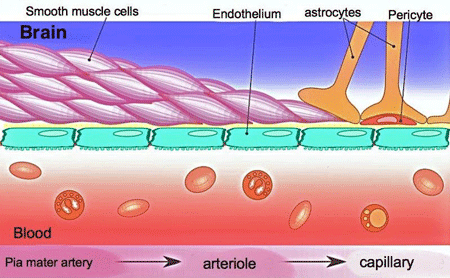
Avindra Nath on “A Neurologic Crisis” Plus Leaky Brains in Long COVID, ME/CFS and Fibromyalgia?
Brain autopsy results indicate that COVID-19 patients may have thinned blood vessels in the brain which are prone to leak and trigger small strokes in the brain. A similar finding showed up in a chronic fatigue syndrome (ME/CFS) almost 30 years ago. Blood vessel problems may be rife in both diseases.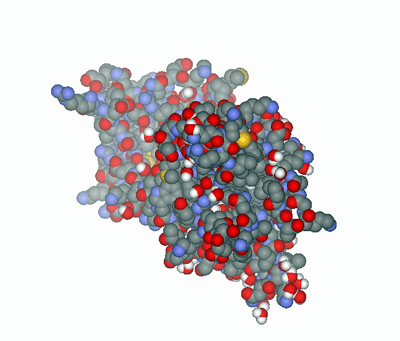
The Tie That Binds? BDNF, Fibromyalgia, Chronic Fatigue Syndrome (ME/CFS), Neuroinflammation and Exercise
The increased BDNF levels in chronic fatigue syndrome and fibromyalgia could be the link between exercise, neuroinflammation and pain in these diseases.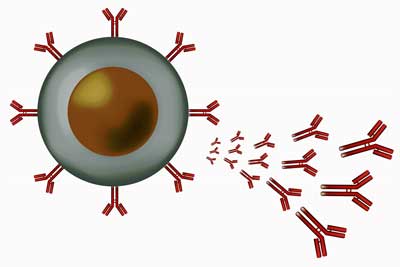
Bad B-cells, Malfunctioning Mitochondria and “Could Happiness Help?” The IACFS/ME ME/CFS Zoom Conference Pt. III
The 2020 IACFS/ME Zoom conference found evidence of B-cell abnormalities that might be tied to autoimmunity, problems with mitochondrial energy production and a finding which suggested that having more uplifiting events may actually help.Lives Interrupted Latest Story

Daily survivor
Indianapolis, United States
Former occupation: Finance and Banking
$820,053
StudyME

Enroll in the OMF’s StudyME project and help bring about a cure for ME/CFS, fibromyalgia, POTS and long COVID.